

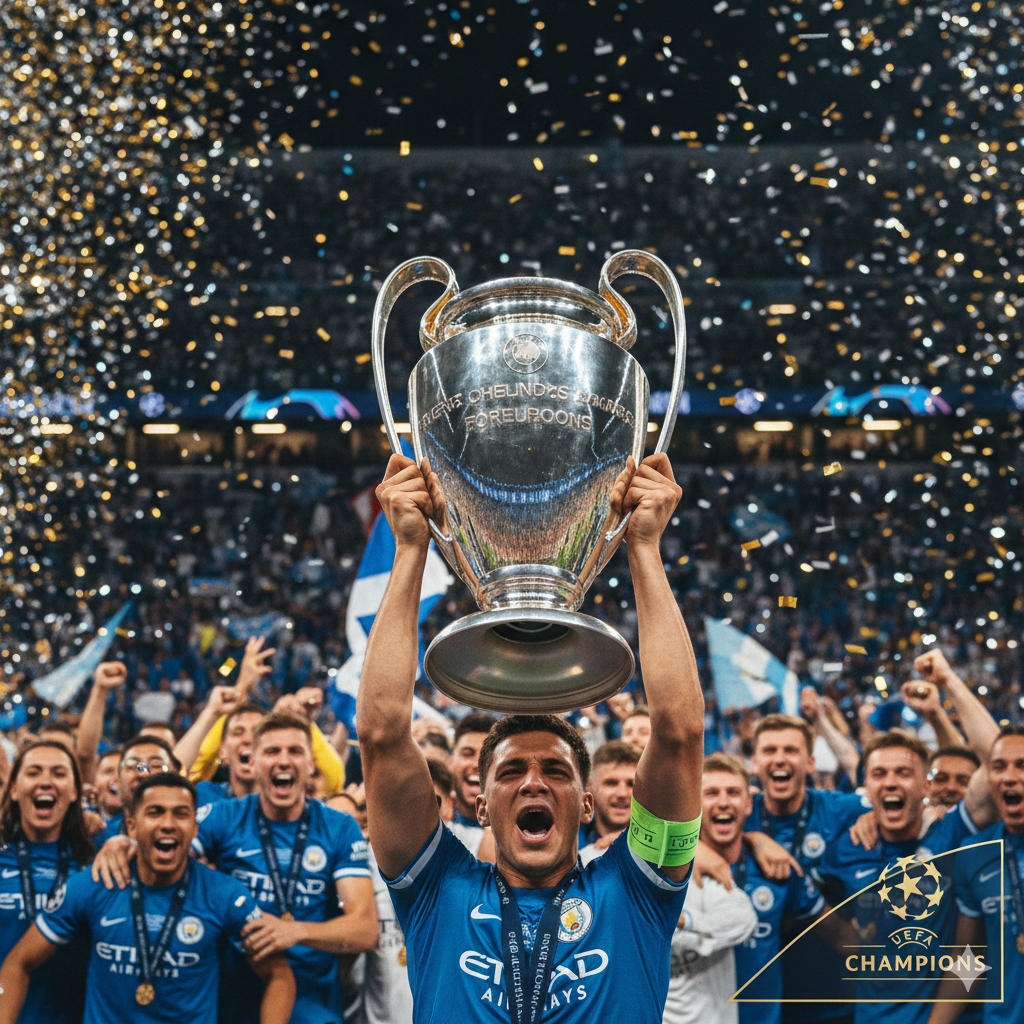
The floodlights of the final stadium, the spine-tingling crescendo of the anthem, the sight of gold and silver raised above a sea of confetti, these are the images that define the UEFA Champions League. More than a mere football tournament, it is the ultimate proving ground, a perpetual quest for European supremacy that pits the continent’s elite against one another. To be counted among the UEFA Champions League champions is to achieve footballing immortality, to join an exclusive roll of honour reserved for the truly great.
The history of the competition is a sprawling tapestry woven with tactical revolutions, historic comebacks, and the enduring dominance of a select few clubs. This deep dive explores the dynasties, the dark horses, and the defining moments that have cemented the status of every team to have lifted the coveted trophy, from the days of the European Cup to the modern UEFA Champions League era.
Table of Contents
I. The Genesis: The Reign of the Pioneers (1955–1960)
The story of the competition, initially known as the European Champion Clubs’ Cup, begins in the mid-1950s. Inspired by the idea of a continental championship, led by French sports editor Gabriel Hanot, the tournament was established in 1955. It began as a straight knockout contest, limited to the champions of Europe’s domestic leagues. The very first champions set a benchmark for dominance that has never been truly replicated.
Real Madrid: The First and Enduring Dynasty
The inaugural years belonged exclusively to one club: Real Madrid. With a team featuring the legendary Alfredo Di Stéfano and Ferenc Puskás, the Spanish giants won the first five consecutive titles, from 1956 to 1960. Their 7–3 demolition of Eintracht Frankfurt in the 1960 final at Hampden Park remains one of the most celebrated performances in football history. This initial golden era established Real Madrid’s identity as European royalty and set the standard against which all future UEFA Champions League champions would be measured. Their early triumphs were vital in globalizing the tournament, turning it from a niche competition into a continental spectacle.
II. The Guard Changes: Tactical Evolution and New Winners (1961–1973)
The early 1960s brought a welcome break in Madrid’s stranglehold, signalling that the path to becoming UEFA Champions League champions was opening up. Portugal’s Benfica, guided by the genius of Eusébio, claimed back-to-back titles in 1961 and 1962, defeating Barcelona and Real Madrid, respectively. This demonstrated the inherent volatility and competitiveness that would come to define the competition.
The Rise of Pragmatism and Total Football
The decade introduced distinct tactical battles:
- Italian Steel: The Catenaccio system, championed by Helenio Herrera’s Inter Milan (champions in 1964 and 1965), proved that defensive solidity and devastating counter-attacks could conquer continental football.
- British Breakthrough: The 1967 victory by Celtic, known as the “Lisbon Lions,” was monumental, making them the first British club and the only one composed entirely of players born within a 30-mile radius of the stadium to become UEFA Champions League champions. Manchester United followed in 1968, marking a poignant, decade-defining triumph over Benfica after the tragedy of the Munich air disaster.
- Dutch Mastery: The early 1970s saw the Dutch school of Total Football take hold. Under Rinus Michels and then Ştefan Kovács, Ajax, starring Johan Cruyff, won three straight titles (1971–1973). This team captivated the world with their fluid, position-swapping style, laying the philosophical groundwork for future generations of UEFA Champions League champions.
III. The Era of the Titans and English Dominance (1974–1992)
The mid-1970s ushered in new powers and a period where the European Cup trophy frequently resided in England.
German Engineering and English Grit
From 1974 to 1976, Bayern Munich, led by the incomparable Franz Beckenbauer, secured a three-peat, bringing their tactical rigour and physical power to the fore. This marked the zenith of German football’s influence in the competition.
However, the late 70s and early 80s were emphatically an English affair. Liverpool, under the legendary Bob Paisley, established themselves as one of the most formidable uefa champions league champions of all time, lifting the trophy four times between 1977 and 1984. Nottingham Forest, guided by the mercurial Brian Clough, achieved the stunning feat of winning the European Cup back-to-back in 1979 and 1980, a run of success that is almost unthinkable for a club of that size in the modern era. Aston Villa (1982) added to the English haul.
A Final Transition
The late 80s witnessed the emergence of AC Milan under Arrigo Sacchi. Their victories in 1989 and 1990 were built on a revolutionary pressing system and a legendary Dutch trio: Marco van Basten, Ruud Gullit, and Frank Rijkaard. This Milan side is widely regarded as one of the most tactically perfect teams in history, demonstrating a new level of physical and technical professionalism required to be perennial UEFA Champions League champions. The 1991 final saw Red Star Belgrade (now Crvena Zvezda) become champions, the last from Eastern Europe. The European Cup era concluded in 1992 with Barcelona winning their first title, managed by Johan Cruyff and featuring his ‘Dream Team’, a victory that was a fitting bridge to the modern format.
For a detailed look at all the winners and finalists before the rebrand, you can check the extensive records kept by historical football organizations (UEFA Champions League winners list: Which teams have won the European Cup or Champions League?).
IV. The Modern Colossus: The UEFA Champions League Era (1992–Present)
In 1992, the competition was officially rebranded as the UEFA Champions League, replacing the straight knockout rounds with the now-familiar group stage. This change was commercial, strategic, and transformational, guaranteeing more matches between Europe’s giants and catapulting the tournament’s revenue and global visibility to astronomical levels.
The Dawn of the New Millennium
The early years of the UEFA Champions League saw a wider distribution of winners before the financial clout of the major leagues began to centralize power. Olympique de Marseille won the inaugural title in 1993, while Ajax’s young side, led by Louis van Gaal, secured a famous victory in 1995.
The late 90s brought the return of the heavyweights: Real Madrid ended a 32-year drought in 1998, ushering in the modern era of Los Galácticos. Manchester United’s dramatic 1999 final against Bayern Munich, sealing a historic Treble with two injury-time goals, is arguably the most famous final of the entire competition’s history and a testament to the never-say-die spirit of true UEFA Champions League champions.
The Dominance of the ‘Big Three’
The 21st century has been largely defined by the intense rivalry and overwhelming success of three clubs in particular: Real Madrid, Barcelona, and Bayern Munich, with AC Milan and Liverpool maintaining relevance through iconic victories.
- Real Madrid’s Second Wind: From 2014 to 2018, Real Madrid secured four titles in five years, including an unprecedented three in a row under Zinedine Zidane (2016–2018). Their ability to navigate the knockout stages and perform under immense pressure has earned them a reputation as the ultimate cup competition specialists, further solidifying their claim as the club with the most UEFA Champions League titles.
- Barcelona’s Philosophy: Under Pep Guardiola, Barcelona became the most influential team of their time, winning in 2009 and 2011 with a focus on tiki-taka, high pressing, and control that redefined modern football. Their total of five titles places them firmly among the elite UEFA Champions League champions.
- The Rekordmeister: Bayern Munich’s victories in 2001, 2013, and their dominant, perfect 2020 campaign cemented their status as a consistently formidable force. Their success is built on a blend of tactical flexibility and physical intensity, making them a consistent threat.
The Miracle Wins and Dark Horses
Despite the financial stratification of the modern game, the UEFA Champions League has still provided moments of fairytale glory:
- Porto (2004): José Mourinho announced himself on the world stage by guiding a seemingly modest Porto side to an unforgettable victory, one of the greatest upsets in modern memory.
- Liverpool (2005): The “Miracle of Istanbul” saw Liverpool overturn a 3–0 half-time deficit against AC Milan to win on penalties, a final often cited as the competition’s most thrilling comeback.
- Chelsea (2012 & 2021): Chelsea’s first title, achieved through sheer defensive grit and a penalty shootout win against Bayern in their own stadium, proved that resilience could trump technical supremacy. Their second win in 2021 underscored the depth of the English Premier League’s power.
To understand how the modern financial structure affects competition, a detailed economic analysis of the clubs’ revenues and spending power provides valuable context (Record annual revenue increase reported in latest European Club Finance and Investment Landscape).
V. The Exclusive Club of the Multiple Winners
Only a handful of clubs have truly dominated the competition, earning the privilege of wearing the “multiple-winner badge” on their kit. The sheer effort required to become uefa champions league champions even once is immense, making consecutive wins a monumental achievement.
| Club | Total Titles | Defining Era(s) |
| Real Madrid | 15+ | 1956–1960 (5 straight); 1998–2002; 2014–2018 (3 straight) |
| AC Milan | 7 | Sacchi’s dominance (1989, 1990); Capello’s pragmatism (1994); Ancelotti’s resurgence (2003, 2007) |
| Bayern Munich | 6 | Beckenbauer’s 70s side (3 straight); Heynckes/Flick Trebles (2013, 2020) |
| Liverpool | 6 | Paisley’s English era (4 titles); The Miracle of Istanbul (2005); Klopp’s modern machine (2019) |
| Barcelona | 5 | Cruyff’s Dream Team (1992); Guardiola’s Tiki-Taka era (2009, 2011) |
| Ajax | 4 | Cruyff’s Total Football (3 straight); Van Gaal’s youth brigade (1995) |
The records of these institutions illustrate a crucial point: sustained success requires not just talent, but the ability to continually reinvent, adapt tactics, and maintain a winning culture across generations. The club that truly embodies this consistency is the one that has reigned supreme across all epochs: Real Madrid. Their continued ability to produce UEFA Champions League champions shows a unique relationship with the cup.
VI. The Individuals Who Define the Trophy
The history of the UEFA Champions League is also the history of its greatest performers. The competition is the stage for individual brilliance to be immortalized.
All Champions League Final Goals (2000-2024) – YouTube
Notelicioux · 25K views


- The Record Holders: Players like Cristiano Ronaldo and Lionel Messi have shattered every scoring and appearance record, their legendary rivalry peaking in the knockout rounds. Their consistent excellence, year after year, fundamentally raised the bar for what a modern elite footballer must achieve.
- The Architects: Managers are the unsung UEFA Champions League champions. Carlo Ancelotti stands alone as the most decorated manager, showcasing a career built on tactical flexibility and man-management. Zinedine Zidane’s seamless transition from legendary player to a coach who achieved a three-peat is unparalleled. Sir Alex Ferguson and Pep Guardiola represent different managerial philosophies, both consistently reaching and winning finals.
- The Unforgettable Moments: From Zinedine Zidane’s stunning 2002 volley in Glasgow to Ole Gunnar Solskjær’s 1999 tap-in, the individual acts of genius under pressure become the competition’s lasting memory.These moments are the intangible currency of the UEFA Champions League.
VII. The Enduring Cultural and Financial Impact
The competition’s current format, with its guaranteed group stage games, has created a financial and cultural behemoth. The prize money for becoming UEFA Champions League champions is staggering, influencing domestic league transfers and budgets across the continent. This concentration of wealth is a key reason why the number of clubs realistically capable of becoming uefa champions league champions has narrowed in the modern era.
Yet, despite its commercial success, the tournament retains its original allure. It is the gold standard for club football, a measure of prestige that defines a club’s place in history. Every season, the competition renews its narrative, offering new dark horses, new tactical trends, and the constant promise of unparalleled drama. The quest for the trophy drives innovation, pushes players to their physical and mental limits, and connects fans across borders.
Conclusion: The Eternal Quest for Glory
From the early days of knockout football to the complex, globalized tournament of today, the fundamental goal remains the same: to be crowned one of the UEFA Champions League champions. The trophy represents not just victory, but a club’s ability to conquer the best of Europe, to endure a marathon of high-stakes football, and to write a chapter in an immortal history book.
The future of the competition, with format changes perpetually debated, ensures that the challenge will evolve, but the prestige will not diminish. Every great side from Di Stéfano’s Real Madrid to Pep Guardiola’s Barcelona and the tactical masterclasses of Ancelotti’s modern teams has contributed to a legacy that will forever define European club football. The journey to the final may change, but the hunger for glory, the unique thrill of being UEFA Champions League champions, remains the sport’s most powerful, unifying force.
Elevate Your Game: Get the Winning Edge
You’ve explored the history of the UEFA Champions League champions, witnessing the patterns of dominance and the moments of shock. Now, look forward to the future.
The drama doesn’t end with history; it happens every week. Stop relying on luck and get the insider analysis that separates the true champions from the contenders. Our predictions combine deep historical data with cutting-edge tactical analysis to give you a genuine competitive edge.
Don’t Miss the Next Shock Upset.
Join our exclusive newsletter for the best, most DANGEROUS predictions for every knockout stage and group match, delivered straight to your inbox.
➡️ [JOIN NOW] Unlock Exclusive UCL Predictions & Analysis











Comments 4