

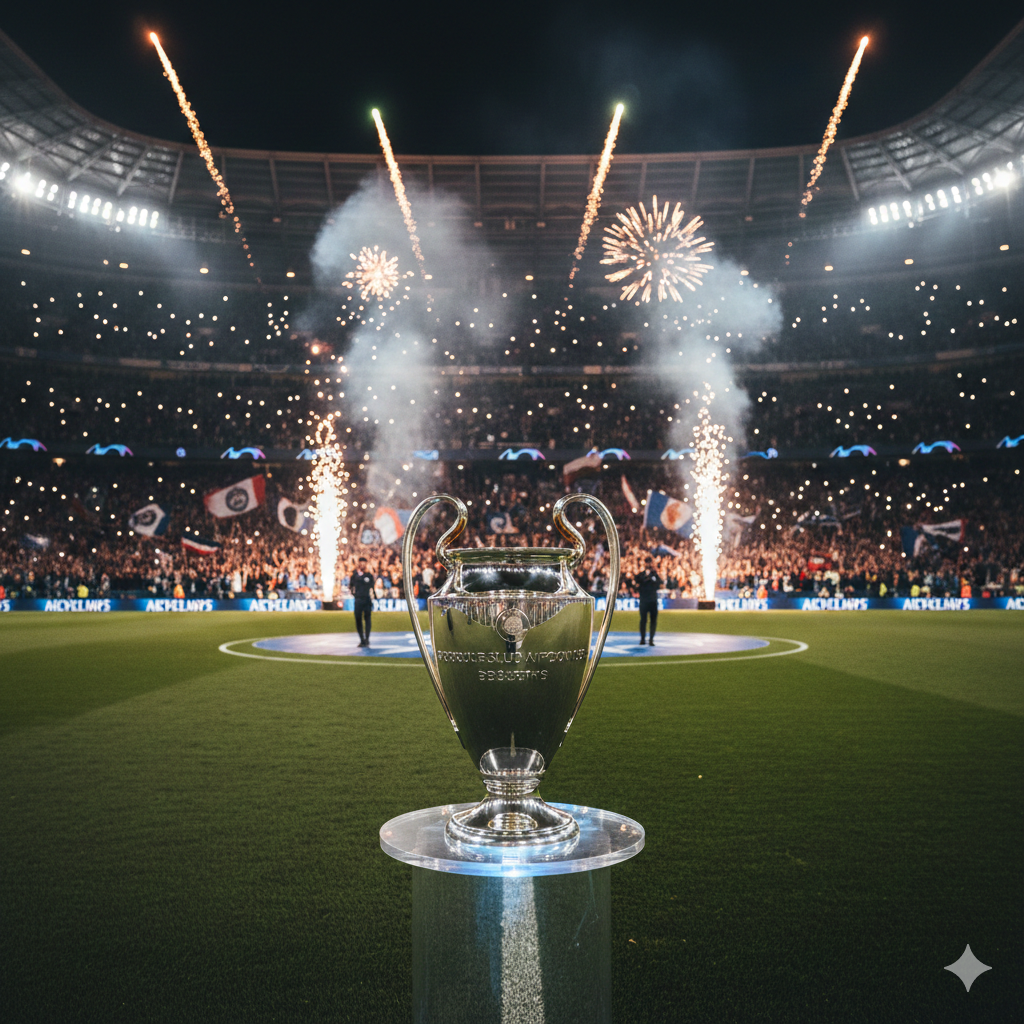
The air crackles with anticipation, the roar of the crowd is a palpable force, and under the brilliant floodlights, twenty-two players stand ready to contest the ultimate prize in European club football. This is the soccer champions league, a competition that transcends mere sport, evolving into a global cultural phenomenon, a crucible where legacies are forged and dreams are realized or shattered in a matter of 90 minutes.
For over half a century, the tournament, currently known as the UEFA Champions League (UCL), has served as the benchmark for excellence, a relentless test of tactical genius, player skill, and mental fortitude. It is here that the giants of the European game collide, where storied clubs like Real Madrid, AC Milan, and Bayern Munich solidify their historical dominance, and where dark horses occasionally rise to stun the establishment. The competition is a spectacular, season-long drama that captivates billions of fans worldwide, making it, without question, the most prestigious club tournament in the world.
Table of Contents
From European Cup to Soccer Champions League: A Storied Evolution
The tournament’s rich history is as compelling as any modern final. Its origins trace back to the mid-1950s, a time when the continent was rebuilding and football was emerging as a unifying force.
The Dawn of the European Cup (1955-1992)
The idea for a continent-wide club competition was largely conceived by Gabriel Hanot, the editor of the French sports newspaper L’Équipe. Inspired by successful South American club competitions and fueled by the desire to see Europe’s top teams truly compete against one another, he proposed the European Champion Clubs’ Cup, or simply the European Cup.
The inaugural season took place in 1955-56, and it was structured as a simple knockout tournament featuring only the reigning champions of each participating national league. From the very beginning, one club established an almost mythical dominance: Real Madrid.
- Real Madrid’s Early Dynasty: Los Blancos won the first five consecutive editions of the European Cup, an unparalleled feat that cemented their status as European royalty. Legends like Alfredo Di Stéfano and Ferenc Puskás illuminated the early finals, showcasing a level of attacking football that was revolutionary for the time.
- Expansion and Shifting Power: As the decades progressed, other clubs etched their names onto the trophy. Portugal’s Benfica broke Madrid’s streak, followed by Italian, Dutch, and English clubs. The 1970s belonged to the ‘Total Football’ of Ajax and the German efficiency of Bayern Munich. The late 70s and early 80s were marked by the rise of English football, with clubs like Liverpool and Nottingham Forest achieving multiple victories.
The Rebranding and Modern Era (1992-Present)
The 1990s brought about a massive shift that completely transformed the competition’s identity and global appeal. In the 1992-93 season, the European Cup was officially rebranded as the UEFA Champions League.
The name change was accompanied by a critical structural overhaul. The biggest difference was the introduction of a group stage before the traditional knockout rounds. This was a masterstroke, guaranteeing more games between top clubs and, crucially, allowing more than just the league champions from the top nations to participate. This expansion dramatically increased the tournament’s commercial value, attracting huge sponsorship and broadcasting deals, and cementing the soccer champions league as a financial powerhouse.
The format has continued to evolve, most recently with the announcement of the “Swiss-model” league phase starting in 2024-25, expanding the main tournament from 32 to 36 teams and replacing the traditional eight groups with a single league table. This continuous innovation ensures the competition remains fresh, competitive, and lucrative.
The Format and Path to Glory of Soccer Champions League
The journey to lift the coveted trophy is an arduous and demanding one, spanning nearly a full calendar year for some clubs.
Qualification: Earning a Seat at the Table
Entry into the Champions League is a reward for domestic success. The number of clubs a country can enter is determined by its UEFA coefficient—a ranking system based on the performance of its clubs in European competitions over the past five seasons.
- Top Leagues: The highest-ranked leagues (like Spain, England, Germany, and Italy) typically earn four direct spots in the group stage.
- Other Routes: Lesser-ranked leagues have fewer automatic spots and often rely on qualifying rounds, which start as early as the summer, featuring a mix of domestic champions and high-placed finishers.
The Group Stage (League Phase from 2024-25)
The competition proper traditionally begins in September with the Group Stage.
- Old Format (Pre-2024-25): 32 teams are drawn into eight groups of four. Teams play each other home and away. The top two teams in each group advance to the knockout rounds, while the third-place team drops down to the UEFA Europa League.
- New Format (Post-2024-25): The 36 clubs will be ranked in a single league table. Each club will play eight different opponents (four home, four away). The top eight clubs automatically qualify for the knockout stage (Round of 16), while clubs ranked 9th to 24th will compete in a two-legged play-off to secure the remaining eight spots.
The Knockout Rounds: Where Legends Are Made
This is where the real drama unfolds. The knockout stage is a straight-elimination bracket, with all ties (Round of 16, Quarter-Finals, and Semi-Finals) played over two legs—one at each team’s stadium. The “away goals” rule was a historic factor, but was abolished in 2021, meaning ties that are level after the second leg proceed straight to extra timeand, if necessary, a penalty shootout.
The tension in these rounds is unlike anything else in world sport. The stakes are immense, and the smallest mistake can send a powerhouse crashing out.
The Final: The Pinnacle of Club Football
The climax of the season is the Final, a single match held at a pre-selected neutral venue, typically a world-class stadium. It is the most watched annual sporting event globally, a spectacle of football, fanfare, and fireworks. The winning club is crowned European champion and lifts the iconic silver trophy.
Moments That Defined the Soccer Champions League
The soccer champions league is not just a competition; it is a repository of footballing history, a stage for the greatest upsets, comebacks, and individual moments of genius.
The Miracle of Istanbul (2005)
Perhaps the most famous final in the history of the competition, and arguably the greatest comeback in the sport. Liverpool faced a dominant AC Milan side in Istanbul. At halftime, Liverpool were trailing 3-0. What followed was an astonishing six-minute period where Liverpool scored three goals to level the match. The game went to penalties, and Liverpool goalkeeper Jerzy Dudek’s heroics sealed the victory. A truly defining moment of resilience and belief.
The Treble-Clinching Final (1999)
In the final between Manchester United and Bayern Munich, it seemed as though the German side had secured the title with a 1-0 lead going into stoppage time. However, in one of the most dramatic finishes ever, Teddy Sheringham equalized in the 91st minute, and then, impossibly, Ole Gunnar Solskjær scored the winner in the 93rd minute. The 2-1 victory secured an unprecedented Treble (Premier League, FA Cup, and Champions League) for Manchester United.
Zinedine Zidane’s Volley (2002)
Goals in the Champions League final are always memorable, but few compare to the technical brilliance of Zinedine Zidane’s winning strike for Real Madrid against Bayer Leverkusen. A high, looping cross from Roberto Carlos seemed harmless, but Zidane positioned himself perfectly on the edge of the box and unleashed an unstoppable left-footed volley into the top corner. It remains one of the most iconic goals ever scored.
La Remontada (2017)
In the Round of 16, FC Barcelona suffered a devastating 4-0 first-leg defeat against Paris Saint-Germain. No team had ever overturned a four-goal deficit in the knockout stage. In the second leg at the Camp Nou, Barcelona mounted an astonishing comeback, culminating in three goals after the 88th minute to win the match 6-1 (6-5 on aggregate). The moment Sergi Roberto poked in the final goal in the 95th minute remains one of the most emotionally charged scenes in the modern game.
The Pantheon of Champions: Record Holders of Soccer Champions League
The Champions League has been dominated by a select few clubs whose history, financial might, and continuous pedigree keep them at the top. The most successful teams, combining the European Cup and Champions League eras, are truly footballing aristocracy.
| Club | Country | Total Titles | Fun Fact |
| Real Madrid | Spain | 15 | Won the first five editions of the European Cup. |
| AC Milan | Italy | 7 | Known for legendary defenses and tactical brilliance. |
| Bayern Munich | Germany | 6 | One of two clubs to win a title after winning every match (2019-20). |
| Liverpool | England | 6 | Famous for historic comebacks and atmosphere at Anfield. |
| FC Barcelona | Spain | 5 | Defined the ‘Tiki-Taka’ era of dominant possession football. |
Real Madrid stands alone at the summit, possessing a record that may never be surpassed. Their consistent ability to perform on the biggest stage, often defying poor domestic form or pre-tournament predictions, has earned them the unofficial title of “Kings of Europe.”
Individual Excellence: The Scorers and the Coaches
The tournament has also served as the primary battleground for the greatest individual rivalries and achievements.
- Cristiano Ronaldo and Lionel Messi have used the soccer champions league as their personal stage, breaking countless scoring and appearance records. Ronaldo remains the all-time leading goalscorer in the competition’s history.
- The most successful manager is Carlo Ancelotti, who has lifted the trophy five times—twice with AC Milan and three times with Real Madrid. His longevity and adaptability highlight the strategic depth required to succeed at this level.
The Tactical Evolution and Current Trends of Soccer Champions League
The soccer champions league is also a cutting-edge laboratory for tactical innovation. Teams must adapt to varying styles from across Europe, forcing managers to continuously evolve their strategies.
Modern Tactical DNA
In the early European Cup days, tactical setups were simpler, often favoring a strong center-forward and wide wing play. The modern game demands far greater complexity:
- High Pressing and Counter-Pressing: Teams like Liverpool and Bayern Munich have popularized intense, coordinated pressing schemes (Gegenpressing), winning the ball back quickly in advanced areas to immediately restart the attack.
- Positional Play (Juego de Posición): Championed by Pep Guardiola at Barcelona and later Manchester City, this philosophy emphasizes creating superior numbers and passing triangles in specific zones of the pitch to control possession and break down defenses.
- Wing-Back Importance: In systems utilizing three-man defenses (like those often seen at Inter Milan), the wing-backs become crucial, responsible for both wide defense and attacking width, demanding incredible stamina and versatility. For a detailed tactical analysis of how top teams utilize different formations, you can explore resources like this excellent tactical breakdown (https://www.theanalyst.com/eu/2024/05/champions-league-final-tactics-breakdown/).
Financial Power vs. Sporting Merit
The financial gulf between the elite European clubs and the rest has grown significantly, a trend amplified by the prize money and commercial revenue generated by the soccer champions league. This concentration of wealth allows a handful of clubs to continually attract the world’s best talent, making it increasingly difficult for smaller clubs to win.
However, the element of surprise remains. Clubs like FC Porto (2004) or a resilient Chelsea (2012) have proven that exceptional tactics, team spirit, and a bit of luck can still overcome vast financial disparities. The tournament’s unpredictability, especially in the knockout rounds, is what keeps fans coming back every year.
Global Impact and Cultural Significance of Soccer Champions League
The Champions League is more than a football tournament; it’s a global cultural event.
The Iconic Anthem and Atmosphere
Every match begins with the same ritual: the teams line up, the flags of UEFA and the participating clubs are unfurled, and the UEFA Champions League Anthem rings out. Composed by Tony Britten, the anthem, which is an arrangement of George Frideric Handel’s “Zadok the Priest,” has become synonymous with elite football and prestige. The stirring music immediately elevates the atmosphere, signaling the start of a contest of the highest order.
Economic Engine
The tournament is an economic giant. Broadcasting rights are sold for billions, driving revenue for UEFA and, more importantly, for the participating clubs. The financial rewards from the Champions League are often the key factor determining a club’s transfer budget and overall financial health, further solidifying its importance within the European football ecosystem. The global television audience for the final consistently exceeds that of the NFL Super Bowl, highlighting its immense reach.
A Unifying Force
For fans, the soccer champions league is a shared passion that crosses borders. In every corner of the globe, fans stay up late or wake up early to follow their favorite club’s campaign. The emotional investment in the tournament is profound, generating lifelong memories of triumphs and heartbreaks. It creates shared narratives and rivalries that enrich the football discourse year-round. To truly understand the intensity of the fan culture, you can look up documentaries that capture the electric atmosphere within the stadiums on European nights.
Looking Ahead: The Future of the Soccer Champions League
The tournament is once again on the cusp of a major transformation with the new format slated for the upcoming seasons. The expansion to 36 teams and the single-league format aim to increase the number of high-stakes matches and provide more opportunities for teams from diverse leagues.
While some purists lament the constant evolution, the changes are designed to safeguard the tournament’s financial dominance and competitive edge in a rapidly changing football landscape. Regardless of the format, the core appeal remains the same: it is the stage where Europe’s elite clubs duel for supremacy.
The roar of the crowd, the flash of the cameras, the sweat and tears on the turf it all converges to produce a single, unforgettable narrative. The soccer champions league is not just a cup; it’s the ultimate aspiration, the dream that every player and fan in European football chases every year. It is a spectacle of unrivaled majesty, and we eagerly await the next chapter in its storied history.
Get the Inside Track: Subscribe for the Best Soccer Champions League Predictions
You’ve read the history, you understand the magnitude, and now you’re ready for the next stage of the drama: the matchday predictions. The soccer champions league is fiercely competitive, but with the right data-driven insights, you can elevate your understanding of who will triumph on those electrifying European nights.
Navigating the knockout rounds where every goal matters and one tactical misstep can end a season—requires more than just gut feeling. It demands deep analysis of player form, injury reports, historical head-to-head records, and crucial tactical breakdowns.
Don’t Just Watch the Drama, Predict It!
We take the rich data and transform it into clear, actionable predictions delivered directly to your inbox. Whether you’re filling out your office bracket, playing an official predictor game, or just want to be the most informed fan in the room, our subscription service is your essential matchday companion.
By subscribing today, you will receive:
- Expert Match Previews: In-depth analysis for every knockout tie and key group stage clash, providing the context that traditional news outlets miss.
- Data-Driven Predictions: Utilizing proprietary models that factor in metrics like expected goals (xG), team momentum, and historic performance under pressure.
- Exclusive Content: Access to weekly tactical videos and articles that break down the winning and losing strategies from the previous matchdays.
Ready to Dominate Your Predictions?
Don’t let the crucial insights pass you by. Join a community of informed football fans who stay ahead of the curve throughout the Champions League season.
Click the button below to sign up and get your first week of premium match previews FREE!










Comments 1