

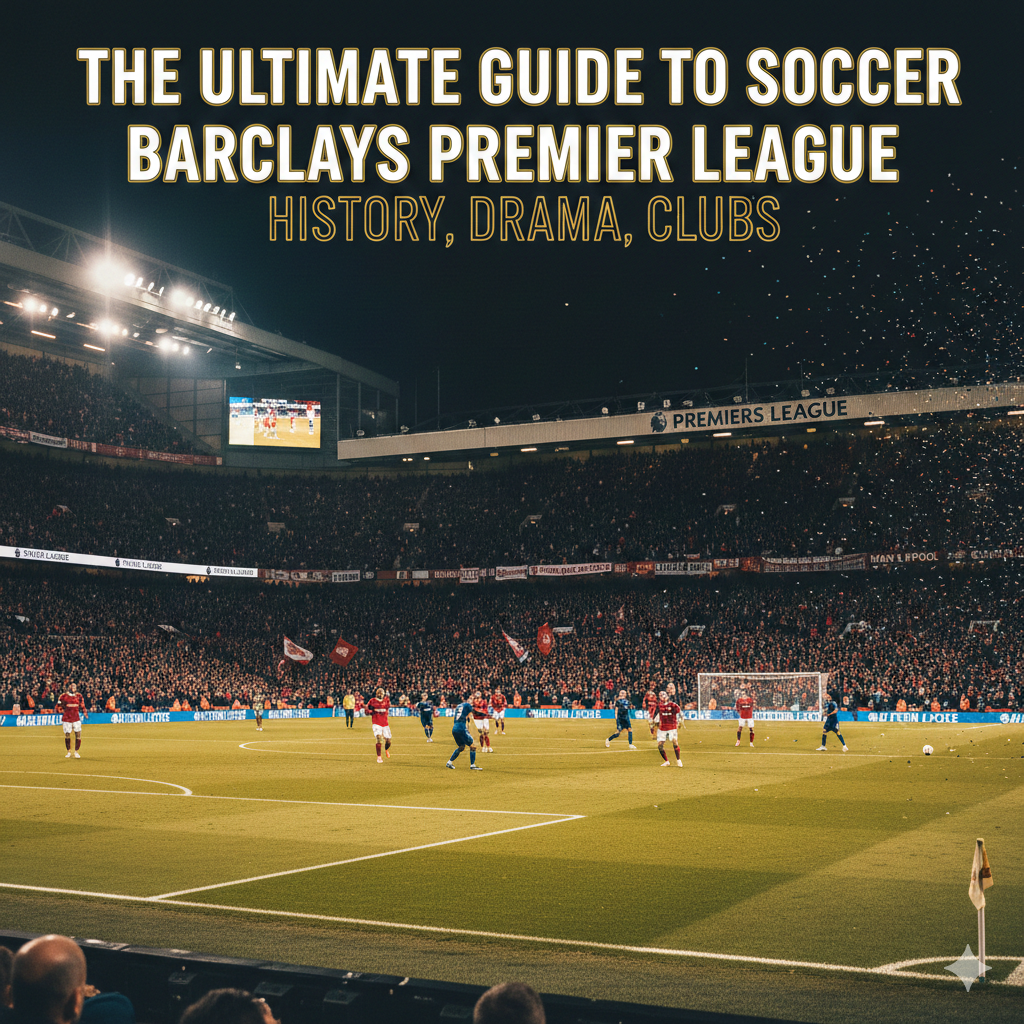
The soccer Barclays Premier League, often called the English Premier League (EPL), stands as one of the most watched, most competitive, and most financially powerful leagues in global sports. From the roaring stadium atmospheres to the nail-biting title races, the Premier League consistently delivers unmatched drama. For millions of fans, the soccer Barclays Premier League is not just a league, it’s a weekly ritual, a cultural phenomenon, and the highest expression of elite football competition.
In this comprehensive guide, we’ll explore the league’s origins, evolution, rivalries, playing styles, broadcasting influence, financial power, and why the soccer Barclays Premier League continues to dominate global football discussions. Whether you’re a casual fan or a die-hard supporter, this in-depth breakdown will give you everything you need to understand how the Premier League became the soccer powerhouse in the world.
Table of Contents
What Is the Soccer Barclays Premier League?
The soccer Barclays Premier League refers to the period when Barclays Bank was the title sponsor of the English Premier League. From 2001 to 2016, the EPL was officially branded as the Barclays Premier League, and the name became iconic due to global marketing campaigns, broadcast deals, and the exponential growth of soccer viewership.
Although the league is no longer officially called the Barclays Premier League, millions of fans still use the name—especially when searching online.
Today, the Premier League remains:
- The most-watched soccer league globally
- A competition with world-class players and legendary managers
- A league known for its fast pace, physicality, and unpredictability
- A global brand with billions in annual revenue
For fans discovering or researching the league, the phrase soccer Barclays Premier League continues to represent the golden era of growth, excitement, and footballing magic.
A Brief History of the Premier League
The League in Crisis: A Pre-1992 Landscape
To understand the Premier League’s explosive success, one must first look back at the state of English soccer in the late 1980s. The First Division, the traditional top tier founded in 1888, was in a period of significant decline. Stadiums were often dilapidated, the atmosphere marred by hooliganism, and match-day revenues were stagnant. Key English clubs were suffering from poor infrastructure and a lack of investment, lagging significantly behind the burgeoning financial powerhouses in Italy’s Serie A and Spain’s La Liga. Attendance was low, and a major catastrophe—the Hillsborough Disaster in 1989—highlighted the urgent need for fundamental safety and structural reforms in English football.
The resulting Taylor Report mandated all-seater stadiums, marking the beginning of the modernization process. However, the root financial issue remained: the clubs felt the old Football League structure was unfairly distributing revenue, particularly from the growing medium of television. Teams like Manchester United, Arsenal, Liverpool, and Tottenham Hotspur, recognizing the enormous commercial potential of their brand and matches, were seeking greater autonomy. They argued that their participation was the primary driver of value, and they should therefore control that value.
The Birth of the Premier League (1992)
The critical shift came in 1992. The leading clubs negotiated a plan to separate from the Football League, pooling their broadcast rights and commercial ventures to maximize their income. This was the birth of the FA Premier League. It was a bold, unprecedented move that effectively ring-fenced the vast majority of the top-flight revenue for the member clubs themselves, giving them the financial power to transform their facilities, attract better players, and market their product more aggressively. The goal was simple yet revolutionary: to bring more money into the game and help England’s top clubs compete against the best teams in Europe.
One of the most pivotal decisions was the initial television deal. Securing an exclusive five-year agreement with BSkyB (now Sky) was revolutionary. This deal provided the initial capital injection the clubs desperately needed, broadcasting matches live on a scale never before seen in the UK. This decision was a paradigm shift for the sport. Instead of just being a local event, the Premier League was now a manufactured television product, ready for both a domestic and international audience.
The money from this first deal was a fraction of what would eventually follow, but it was the spark that ignited the financial arms race that defines the Premier League today. This decision, though controversial, set the league on its path to global dominance. For a deep dive into the business side of the league’s creation, you can read the historical documentation on the Premier League’s Official Site. Official History.
The Barclays Sponsorship Era (2001–2016)
With Barclays becoming the title sponsor, the league experienced:
- Explosive global marketing
- Record-breaking TV deals
- The rise of global superstars
- Clubs becoming global brands
The soccer Barclays Premier League era aligned with the emergence of iconic players like Thierry Henry, Steven Gerrard, Cristiano Ronaldo, and Frank Lampard.
For more history, the official Premier League site offers an excellent archive:
Premier League History
What Makes the Soccer Barclays Premier League So Unique?
Many leagues around the world produce talent and competitive matches, but none match the Premier League’s consistency of excitement and quality. Here’s what makes it special:
1. Elite Competitiveness Across All Clubs
The result of this shared wealth is that any club, from a newly promoted side to a perennial contender, can realistically take points off any other club. The intense pressure, coupled with the high tactical and physical quality from top to bottom, ensures there are no ‘easy’ games, making the weekly fixture list an unpredictable, exciting gamble for fans and pundits alike. Unlike many European leagues where two or three teams dominate, the soccer Barclays Premier League has:
- Multiple title contenders
- Mid-table teams capable of beating top clubs
- Relegation battles that attract huge global interest
2. Global Superstars in Every Squad
From Manchester City to Aston Villa, many teams boast world-class players. The league draws talent from:
- Europe
- Africa
- South America
- Asia
This diversity provides a unique style mix, making every match unpredictable.
3. The Fastest Pace in World Football
Premier League soccer is known for its:
- Fast transitions
- High-energy pressing
- Intense physical battles
This speed and intensity contribute to its global appeal.
4. Stadium Atmospheres and Fan Culture
Iconic stadiums like Old Trafford, Anfield, the Emirates, and Stamford Bridge create unmatched atmospheres. Premier League crowds are famously loud, passionate, and dedicated.
5. Global Broadcast Reach
The Premier League is broadcast in over 190 countries, reaching a potential audience of over 3.2 billion. International fanbases, from Nigeria to India to the U.S., follow the league religiously.
The Premier League is the most-watched sports league globally, broadcast in 212 territories to hundreds of millions of homes, with a potential TV audience estimated to be in the billions. Its cumulative global audience dwarfs that of its European rivals, La Liga and Bundesliga, combined. This international appeal translates directly into revenue.
6. Financial Power
The enormous television contracts are shared more equitably among the 20 clubs than in other top European leagues, where the two or three dominant clubs take a disproportionate share. This distribution means that even the clubs in the bottom half of the Premier League have significant financial resources, allowing them to attract better players, pay higher wages, and remain competitive. This financial baseline helps prevent the league from becoming a predictable two-horse race. For a full breakdown of the financial structure, see this analysis of European football league revenue. Deloitte Football Money League Analysis.
Top Clubs in the Soccer Barclays Premier League Era
While the Premier League features 20 teams each season, a handful have cemented themselves as global superbrands.
Manchester United
Dominant during the early Barclays era under Sir Alex Ferguson, United captured:
- 13 Premier League titles
- Legendary signings like Ronaldo, Rooney, and Van Nistelrooy
United set the global standard for Premier League success.
Chelsea
After Roman Abramovich’s takeover in 2003, Chelsea became a powerhouse and won multiple titles.
Arsenal
Under Arsène Wenger, Arsenal played attractive football, culminating in the 2003–04 Invincibles season—where they completed the season unbeaten.
Liverpool
Known for history and fan culture, Liverpool returned to prominence under Jürgen Klopp, winning the league in 2020.
Manchester City
Now dominant under Pep Guardiola, City has redefined modern possession-based football.
Each of these teams helped shape the global identity of the soccer Barclays Premier League through star power, rivalry, and tactical innovation.
While the drama is spread across all 20 teams, the league’s identity is defined by its giants and their rivalries:
| Club | Notable Rivalry | Key Historical Manager |
| Manchester United | Liverpool (North-West Derby), Man City | Sir Alex Ferguson |
| Liverpool | Manchester United, Everton (Merseyside Derby) | Bill Shankly, Jürgen Klopp |
| Arsenal | Tottenham Hotspur (North London Derby), Man United | Arsène Wenger |
| Chelsea | Tottenham, Arsenal | José Mourinho |
| Manchester City | Manchester United, Liverpool | Pep Guardiola |
These historic and modern rivalries, the North London Derby, the Merseyside Derby, and the intense modern clashes between City and Liverpool, provide the consistent emotional narrative that keeps fans hooked, week after week. They are the bedrock of the league’s worldwide appeal.
The Biggest Rivalries in Premier League Soccer
Rivalries fuel the intensity and narrative of the soccer Barclays Premier League. Here are the most iconic:
Manchester United vs Manchester City
Known as the Manchester Derby, this rivalry escalated with City’s rise in the 2010s.
Liverpool vs Manchester United
The most successful English clubs historically; this rivalry goes beyond football.
Arsenal vs Tottenham (North London Derby)
Emotionally charged and always dramatic.
Chelsea vs Arsenal
Fueled by controversial moments, managerial clashes, and title races.
These rivalries create some of the most-watched matches globally, contributing to the league’s popularity.
Playing Styles in the Barclays Premier League
The soccer Barclays Premier League has evolved tactically over the years. Let’s look at the major eras.
Early 2000s – Fast and Physical
Teams focused on:
- Quick wingers
- Target strikers
- Defensive rigidity
Late 2000s – Technical Influence
Arsenal, Liverpool, and Manchester United introduced more creative midfield systems.
2010s – Tactical Revolution
Managers like Guardiola, Klopp, Mourinho, and Pochettino introduced:
- High pressing
- Fluid formations
- Ball-playing defenders
2020s – Hybrid Styles
The league now blends:
- Possessional football
- High pressing
- Counterattacking systems
- Athletic fullbacks
- Quick transitional play
This variety is why the soccer Barclays Premier League appeals to fans from different footballing cultures.
Promotion and Relegation: The Heart of English Football
One of the most exciting aspects of the soccer Barclays Premier League is the promotion-relegation system.
Relegation
The bottom three teams are relegated to the EFL Championship. Relegation battles often attract huge global viewership, sometimes more than top-of-the-table games.
Promotion
Three teams from the Championship are promoted each year. The Championship playoff final is called:
“The richest game in football”
This system keeps the league competitive from top to bottom.
Why the Premier League Has the Best Broadcast Deals in World Soccer
The economic backbone of the soccer Barclays Premier League is its media deals.
According to Statista, the Premier League generates billions from TV rights, surpassing all other soccer leagues.
(External link: https://www.statista.com)
Why Are EPL Rights So Valuable?
- Global fan demand
- Big-name teams
- Marketable stars
- Drama-filled seasons
- English-language broadcasting advantage
These deals allow clubs to spend heavily on world-class talent.
The Globalization of the Soccer Barclays Premier League
The Premier League wasn’t always a global empire. Barclays sponsorship strongly amplified its international marketing.
Today, the Premier League hosts:
- Pre-season tours across Asia, Africa, and the United States
- International broadcasting partnerships
- Global fan events
Foreign ownership also contributed, with investors from:
- The Middle East
- China
- America
- Europe
As a result, the soccer Barclays Premier League transformed into a cultural export.
Premier League Impact on Youth Development
Academies like Manchester City, Chelsea, and Southampton produce young talent every year. The Premier League introduced:
- Elite Player Performance Plan (EPPP)
- Category-based academy structure
- More training resources
- Access to better coaching
This development pushes English soccer forward both domestically and internationally.
The Role of Analytics in the Modern Premier League
Clubs now rely on data analytics more than ever. This includes:
- Expected Goals (xG)
- Pressing metrics
- Player movement tracking
- Opponent analysis
External resource:
Opta Analyst
Data has transformed scouting, game strategy, and recruitment across the soccer Barclays Premier League.
The Financial Power of the Premier League
The league’s financial model allows even mid-table clubs to sign players worth €40–60 million, something rare in most leagues.
Money comes from:
- TV rights
- Sponsorships
- Matchday revenue
- Player sales
- Commercial deals
This financial strength is why the soccer Barclays Premier League consistently attracts top managers and elite players.
Top Moments in the Soccer Barclays Premier League Era
Here are unforgettable memories that shaped the league:
1. “Agueroooo!” (2012)
Manchester City wins the title in the final seconds.
2. The Invincibles (2004)
Arsenal go unbeaten the entire season.
3. Leicester City’s Miracle (2016)
5000-to-1 outsiders win the league.
4. The Gerrard Slip (2014)
A heartbreaking moment in Liverpool’s title race.
5. United’s Treble Momentum (1999)
Though technically pre-Barclays, it set the tone for the Premier League’s dominance.
These moments helped define the spirit of the soccer Barclays Premier League.
How to Watch the Soccer Barclays Premier League
Depending on your country, viewing options vary.
For U.S. fans:
NBC Sports
For U.K. fans:
Sky Sports
BT Sport
Broadcast partners ensure global access with regular match coverage.
Economic and Social Impact of the Premier League
The soccer Barclays Premier League influences communities through:
- Tourism
- Job creation
- International marketing
- Youth outreach
- Stadium redevelopment
Clubs often run local charity programs, supporting education and community development.
Internal LContinue the Journey: Dive Deeper into the World of Football
You’ve explored the history and the incredible drama that makes the Premier League the global spectacle it is today. But the world of soccer never stops turning. To deepen your understanding of the beautiful game, from statistical analysis to the latest news and predictions, we invite you to explore more exclusive content right here on our site.
Keep the ball rolling and stay ahead of the game with these essential guides and insights:
- Ready to predict the next upset? Read our expert guide to Premier League predictions to sharpen your forecasting skills. → /premier-league-predictions
- Need an edge on today’s fixtures? Check out our Daily Soccer Picks for match insights and analysis you can trust. → /daily-soccer-picks
- See where Europe’s elite stack up: Explore our breakdown of Champions League stats and see how the best teams perform on the continent. → /champions-league-statistics
- Don’t miss a beat! See our latest soccer news updates covering transfers, major results, and managerial changes. → /soccer-news
What’s your favorite Premier League memory? Share your thoughts and predictions in the comments below!
Future of the Premier League: What’s Next?
The next decade of the soccer Barclays Premier League will focus on:
- Technology (VAR improvements)
- Enhanced fan experiences
- International expansion
- More U.S. investment
- Increased focus on sustainability
With rising competition from Saudi Arabia and MLS, the Premier League must innovate, but it remains the global leader for now.
Final Thoughts: Why Fans Still Love the Soccer Barclays Premier League
The Premier League’s success is built on:
- Drama
- Fast-paced football
- Big personalities
- Historic rivalries
- Global accessibility
Even though the official Barclays branding ended in 2016, the phrase soccer Barclays Premier League continues to represent an era of explosive growth, iconic moments, and unforgettable football.
For fans around the world, the Premier League remains the most exciting, most watched, and most passionately followed soccer league on Earth.
The following YouTube video, titled Top 25 moments in Premier League history | Premier League | NBC Sports, offers visual highlights of the most dramatic events discussed in this guide, such as the Agüero goal and Leicester’s triumph. Top 25 moments in Premier League history
Top 25 moments in Premier League history | Premier League | NBC Sports – YouTube












Comments 6