

For over a century, the Serie A has stood as a beacon of tactical ingenuity, defensive mastery, and world-class talent. From the dominance of “La Grande Inter” in the 1960s to the star-studded “Seven Sisters” era of the 1990s, the Italian top flight has consistently shaped the global landscape of football. Today, as we navigate through the 2025/26 season, the league is undergoing a vibrant renaissance, blending its rich heritage with a modern, high-tempo philosophy.
Whether you are a lifelong Tifoso or a newcomer to Italian football, this comprehensive guide explores everything that makes the Serie A one of the most prestigious competitions in the world.
Table of Contents
The Historical Foundation of Serie A
While organized football in Italy dates back to 1898, the Serie A as we recognize it today—a national round-robin format—was established in the 1929–30 season. Before this pivotal shift, the Italian football championship was a fragmented affair, often divided into regional groups where the winners would face off in a final playoff.
The Early Years and the Dominance of Juventus
The first official title in 1898 was won by Genoa, a club that dominated the early years of the sport. However, the introduction of the unified league format saw the rise of the “Old Lady,” Juventus. During the 1930s, Juventus secured five consecutive titles, a feat that solidified their status as a national powerhouse.
The Tragedy of Superga and “Il Grande Torino”
No history of the Serie A is complete without mentioning Torino in the 1940s. Known as “Il Grande Torino,” they were arguably the greatest team in Italian history, winning five straight titles. Tragically, the entire squad perished in the 1949 Superga air disaster. The event left a permanent scar on Italian football but also cemented the club’s legendary status.
The Tactical Evolution: From Catenaccio to Sarriball
Italy has always been the university of football tactics. The Serie A served as the laboratory where some of the game’s most influential systems were perfected.
The Rise of Catenaccio
In the 1960s, manager Helenio Herrera refined the Catenaccio (door-bolt) system at Inter Milan. This defensive-heavy strategy utilized a “Libero” (sweeper) behind the main defensive line, prioritizing organization and ruthless counter-attacks.
The Sacchi Revolution
In the late 1980s, Arrigo Sacchi turned Italian tradition on its head with his AC Milan side. He abandoned man-marking for a high-pressing, zonal-marking 4-4-2 system. This era didn’t just win trophies; it changed how the entire world viewed the Serie A.
Modern Tactical Trends
Today, the league has moved away from its purely defensive reputation. Contemporary managers like Maurizio Sarri(with his “Sarriball” philosophy) and Luciano Spalletti have introduced fluid, possession-based styles. According to UEFA’s technical reports, Italian teams are now among the most proactive in European competition, focusing on high transitions and technical versatility.
The Current State of the League (2025/2026 Season)
As of December 2025, the Serie A is witnessing one of its most competitive title races in decades. The “monopoly” of the past has vanished, replaced by a dynamic “Top Five” that are separated by mere points.
The 2025 Winter Standings
Entering the 2026 calendar year, the battle for the Scudetto—the “little shield” worn by the defending champions—is incredibly tight:
| Rank | Club | Points | Key Player |
| 1 | Inter Milan | 36 | Lautaro Martínez |
| 2 | AC Milan | 35 | Christian Pulisic |
| 3 | SSC Napoli | 34 | Rasmus Højlund |
| 4 | AS Roma | 33 | Matías Soulé |
| 5 | Juventus | 32 | Dušan Vlahović |
The “Sette Sorelle” Returns?
In the 1990s, the league was famous for the “Seven Sisters” (Juventus, AC Milan, Inter, Roma, Lazio, Fiorentina, and Parma). We are seeing a resurgence of this depth. Even clubs like Atalanta and Como 1907 (backed by significant investment) are proving that any team in the Serie A can take points off the giants.
Iconic Clubs and Their Heritage
The Serie A is defined by its institutions. These clubs are more than just sports teams; they are cultural symbols of their respective cities.
- Juventus (Turin): The most successful club in Italian history with 36 official titles. Known for their resilience and “Lo Stile Juve.”
- Inter Milan (Milan): The only club never to have been relegated from the top flight. Their 2010 Treble remains the pinnacle of Italian club achievement.
- AC Milan (Milan): Seven-time European champions, the Rossoneri are synonymous with international prestige.
- SSC Napoli (Naples): A club that carries the soul of Southern Italy. Their 2023 title win was a historic moment that ended a 33-year drought since the era of Diego Maradona.
For more in-depth statistics on club honors, you can visit the official Lega Serie A website.

The Economic Landscape and Transfer Market
In 2025, the financial health of the Serie A has stabilized following a period of restructuring. The league’s total market value now exceeds €5.3 billion, according to Transfermarkt.
Transfer Trends
While the Premier League often outspends its rivals, the Serie A has become the world leader in “smart recruitment.” Italian clubs have excelled at identifying undervalued talent from South America and smaller European leagues, then developing them into superstars.
The 2025 transfer window saw a significant focus on youth development and American ownership influence, with clubs like Milan and Roma leveraging data analytics to build sustainable squads.
Stadiums: The Cauldron of Passion
The experience of the Serie A is inextricably linked to its iconic venues.
- The San Siro (Stadio Giuseppe Meazza): Shared by both Inter and Milan, it is often called “La Scala del Calcio.”
- Stadio Olimpico: The home of Roma and Lazio, famous for the fiery Derby della Capitale.
- Stadio Diego Armando Maradona: A venue that captures the religious-like fervor of Neapolitan fans.
Deep Dive: Cristian Chivu’s Inter Milan Tactics
As the 2025/26 Serie A season heads into the winter break, Inter Milan finds itself perched at the summit of the table. Following the departure of Simone Inzaghi, many questioned if the Nerazzurri could maintain their relentless pace. However, the appointment of Cristian Chivu has seen a masterclass in tactical continuity blended with fresh, aggressive verticality.
Here is a breakdown of the tactical engine driving the current Serie A leaders.
The Foundation: The 3-5-2 Evolution
While Chivu has kept the traditional Inter 3-5-2 formation, the roles within it have become more fluid. Unlike the rigid structures of the past, this version of Inter focuses on asymmetrical attacking transitions.
- The “Hybrid” Back Three: With Alessandro Bastoni and Manuel Akanji flanking the veteran Francesco Acerbi, Inter’s defense acts as the primary playmaker. Bastoni, in particular, has evolved into a “point guard” defender, often surging into the final third to create overloads.
- The Regista 2.0: Hakan Çalhanoğlu remains the heartbeat of the team. In Chivu’s system, he isn’t just a deep-lying playmaker; he is the “escape valve” under pressure. His ability to switch play to the wing-backs—Federico Dimarco and Denzel Dumfries—with one touch is central to their 86.6% pass accuracy.
High-Octane Verticality
The biggest change under Chivu is the speed of transition. Statistics from the first half of the season show that Inter leads the Serie A in “Direct Speed” (meters progressed toward the opponent’s goal per second).
“Inter doesn’t just keep the ball; they weaponize it. Every pass is designed to break a line.” — Tactical breakdown from Total Football Analysis.
When possession is won in the middle third, the midfielders—Nicolò Barella and the newly arrived Piotr Zieliński—immediately look for the runs of the strikers. They bypass the “slow build” in favor of devastatingly quick vertical passes.
The “Lu-Tho” Replacement: Lautaro and the Youth Movement
The departure of veteran stars has opened the door for Francesco Pio Esposito, who has become the perfect foil for Lautaro Martínez.
- Lautaro Martínez (The Finisher): The captain is currently the leading scorer in Serie A. His role has shifted slightly; he now occupies the “center” more consistently, allowing his partner to drift and create space.
- Pio Esposito (The Space Creator): At just 20 years old, Esposito’s tactical intelligence is staggering. He excels at “pinning” two defenders, which grants Lautaro the half-yard of space he needs to be lethal.
Key Tactical Stats (Dec 2025)
| Metric | Inter Milan Average | Serie A Rank |
| Goals Per Game | 2.27 | 1st |
| Big Chances Created | 4.1 | 1st |
| Expected Goals (xG) | 1.89 | 1st |
| Shots on Target | 5.6 | 2nd |
Defensive Resilience: The High Block
While Italian football is historically known for the “low block,” Chivu has implemented a High Pressing system. Inter currently wins the ball back in the final third more than any other team in the league. By squeezing the pitch, they protect their older center-backs from having to defend large spaces, essentially “defending by attacking.”
For a visual look at these passing networks, you can check out the latest data visualizations on FotMob’s Serie A portal.
The “Corto Muso” vs. The New Wave: Milan Derby Tactics
The December 2025 landscape of Serie A is dominated by a fascinating contrast in styles between the two Milanese giants. While Cristian Chivu has turned Inter into a high-pressing machine, Massimiliano Allegri has returned to AC Milan to reinstate his famous “Corto Muso” (winning by a nose) philosophy.
Here is how the two heavyweights compare as they battle for the top spot.

AC Milan: Allegri’s Pragmatic 3-5-2
Allegri’s second spell at Milan has been defined by a return to defensive rigidity. Milan currently boasts the league’s longest unbeaten run (14 matches) by mastering the art of the “clean sheet.”
- The Low Block 5-3-2: Out of possession, Milan’s formation morphs into a compact 5-3-2. The back three of Fikayo Tomori, Matteo Gabbia, and Strahinja Pavlović stay incredibly deep, forcing opponents to play around the perimeter.
- The Modrić Effect: In a surprise move, veteran Luka Modrić joined the Rossoneri as the tactical conductor. He dictates the tempo, ensuring that even when Milan has less than 40% possession, they remain in control of the game’s rhythm.
- The Strike Partnership: Unlike Inter’s verticality, Allegri relies on the individual brilliance of Christian Pulisicand Rafael Leão. Pulisic has been the league’s most efficient finisher, averaging 1.22 goals per 90 minutes.
Inter vs. Milan: Tactical Comparison
| Feature | Inter Milan (Chivu) | AC Milan (Allegri) |
| Defensive Line | High Press / Proactive | Low Block / Reactive |
| Primary Playmaker | Hakan Çalhanoğlu | Luka Modrić |
| Attacking Style | Rapid Verticality | Individual Transitions |
| Key Strength | High Turnovers / Scored 11 in 1st Half | Late Game Management / Solidity |
The 2025 Derby della Madonnina
The tactical clash peaked in the November derby, where Milan secured a 1-0 victory with a record attendance of over 75,000. Allegri’s strategy was clear: neutralize Inter’s high press by using long balls from Mike Maignan directly to the attackers, bypassing Inter’s aggressive midfield entirely.
This “shocking” strategy—avoiding short build-ups altogether—made Inter’s press redundant and allowed Milan to snatch the win via a counter-attack sparked by Alexis Saelemaekers.
Who has the Edge?
According to latest Serie A Performance Data from FBref, Inter remains the more dominant side in terms of Expected Goals (xG). However, Milan’s ability to “suffer intelligently” makes them a nightmare for top-tier opposition.
While Inter leads the league in goals scored (35), Milan’s defensive record (only 13 conceded in 16 matches) suggests that Allegri has successfully rebuilt the “Milan Wall.”
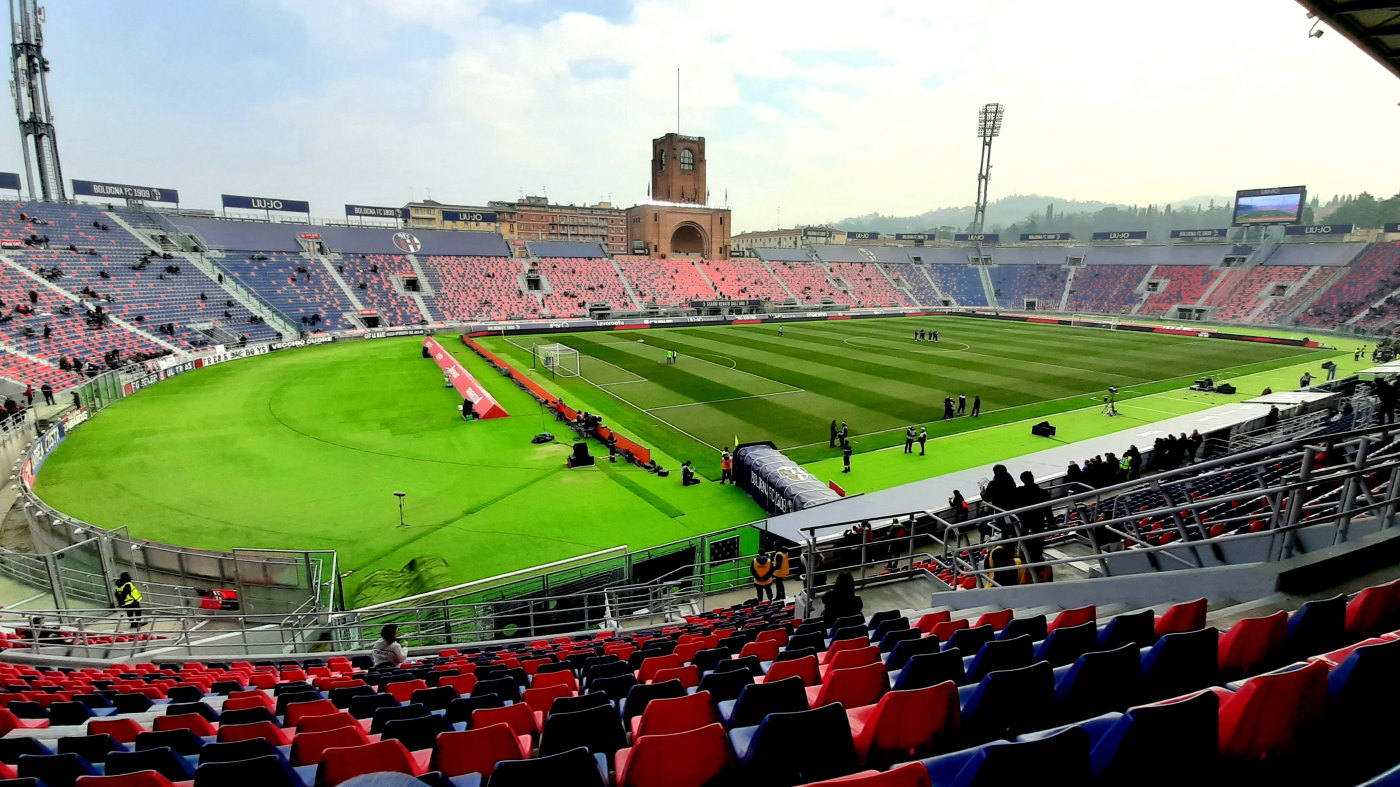
Inter Milan v AC Milan Tactical Camera This video provides a tactical camera view of a recent Milan derby, allowing you to see the team shapes and defensive blocks discussed above in real-time.
FULL MATCH: Inter Milan v A Milan Tactical Camera | Serie A 2025 – YouTube
Football with Dave · 738 views

While Inter and Milan battle for tactical supremacy in the north, Antonio Conte’s Napoli has emerged as the chaotic “third force” disrupting the duopoly. As of late December 2025, Napoli sits in 3rd place, just two points behind Inter, despite a season marked by high-profile transfers and tactical experiments.
Here is how Conte is engineering his title defense at the Stadio Diego Armando Maradona.
The “Galactico” Midfield Experiment
The summer of 2025 saw Napoli pull off the transfer of the decade: signing Kevin De Bruyne on a free transfer from Manchester City.
- The Initial 4-1-4-1: Conte initially abandoned his signature back three to accommodate four central stars: Stanislav Lobotka (anchor), Frank Anguissa, Scott McTominay, and De Bruyne.
- The Tactical Pivot: Following a serious injury to De Bruyne in the autumn, Conte has reverted to a more robust 3-4-2-1. This shift has re-stabilized a defense that suffered a shocking 6-2 defeat to PSV in the Champions League, which remains the low point of their season.
The “Pressing Ambush”
While Chivu’s Inter uses a relentless high press, Conte has implemented what tactical analysts call “Trigger-Based Pressing.”
- The Trap: Napoli often appears passive, sitting in a compact mid-block. However, they wait for specific “triggers”—such as a lateral pass to a fullback or a heavy touch—to engage with synchronized aggression.
- Selective Dominance: Instead of chasing the ball for 90 minutes, Napoli “shapes” the opponent’s choices, funneling them into wide zones where Giovanni Di Lorenzo and new signing Noa Lang (the €25m Kvaratskhelia replacement) launch rapid counter-attacks.
Key Personnel: The “Manchester” Connection
Napoli’s attack is currently spearheaded by a duo familiar to Premier League fans:
- Rasmus Højlund (The Spearhead): Arriving on loan from Manchester United, Højlund has become the league’s most effective “target man.” He currently leads Napoli with 9 goals across all competitions, excelling at “pinning” defenders to create space for late midfield runs.
- Scott McTominay (The Engine): After a Scudetto-winning 2024/25, McTominay has evolved into an “ultra-offensive” midfielder. Under Conte, he is essentially a second striker during the attacking phase, using his physicality to dominate the box.
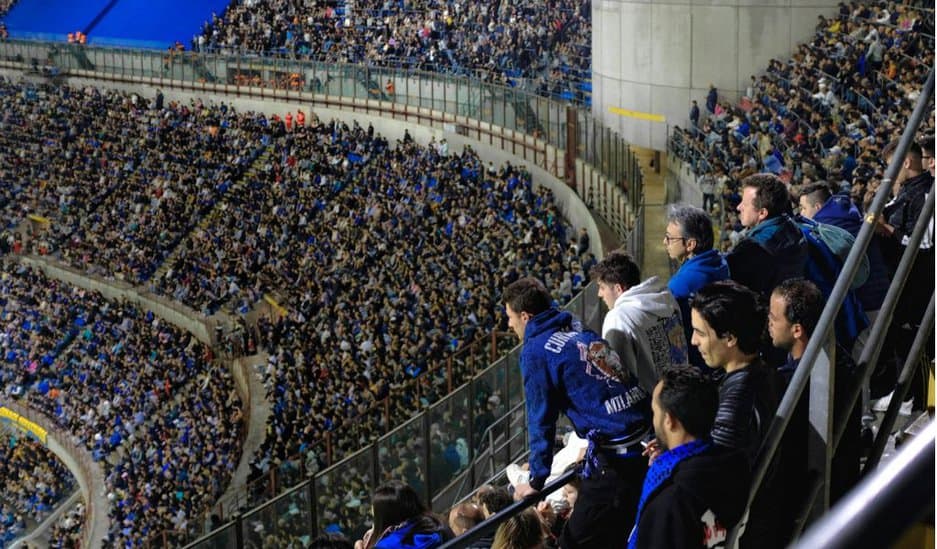
Serie A Standings: The Winter Break Title Race (Dec 2025)
| Position | Team | Points (16 Games) | Primary Tactical Identity |
| 1st | Inter Milan | 36 | Vertical 3-5-2 / High Speed |
| 2nd | AC Milan | 35 | Pragmatic 5-3-2 / “Corto Muso” |
| 3rd | Napoli | 34 | Reactive 3-4-2 / Pressing Traps |
| 4th | AS Roma | 33 | De Rossi’s Positional Play |
The Verdict: Sustainability vs. Volatility
Conte has “miraculously” kept Napoli in the hunt despite losing Victor Osimhen (permanent move to Galatasaray) and dealing with the De Bruyne injury. However, critics point to a “second-season curse” and internal friction—most notably a public fallout between Conte and De Bruyne following a substitution against AC Milan.
If Napoli can maintain their defensive discipline—anchored by the towering 2.02m goalkeeper Vanja Milinković-Savić—they have the squad depth to leapfrog both Milan giants in the second half of the season.
Cristian Chivu has successfully modernized the Nerazzurri without losing the defensive “grinta” (grit) that is essential for winning a Serie A title. If they can maintain this tactical intensity through the grueling spring schedule, a second consecutive Scudetto looks increasingly likely.
Conclusion: Why Serie A Matters Today
The Serie A is no longer just a league of “defenders and slow play.” It is a vibrant, tactically diverse, and commercially growing product that offers some of the most exciting football in Europe. From the historic rivalries to the innovative coaching, it remains a “must-watch” for any true fan of the beautiful game.
As we look toward the conclusion of the 2025/26 season, the question remains: who will claim the Scudetto? In this league, the answer is never simple—and that is exactly why we love it.
Don’t Miss a Single Goal: Join the Inner Circle
As we enter the final stretch of the 2025/26 Serie A season, the margin for error is razor-thin. Whether it’s Inter’s vertical dominance, Milan’s defensive “wall,” or Napoli’s tactical ambushes, staying ahead of the game requires more than just watching the highlights.
Get the Best Predictions Delivered to Your Inbox
Join 15,000+ football fans who receive our weekly “Serie A Tactical Brief.”
- Expert Match Previews: In-depth breakdowns of the weekend’s biggest fixtures.
- Data-Driven Predictions: We use advanced xG and PPDA metrics to predict the Scudetto race and relegation battles.
- Injury & Tactical Alerts: Be the first to know when a manager switches systems or a star player is sidelined.
“The most insightful Italian football newsletter I’ve found. It’s like having a tactical analyst in my pocket.” — Marco R., Milan Tifoso
Subscribe Now for Weekly Serie A Insights
We respect your privacy. Unsubscribe at any time with one click.














Comments 1