

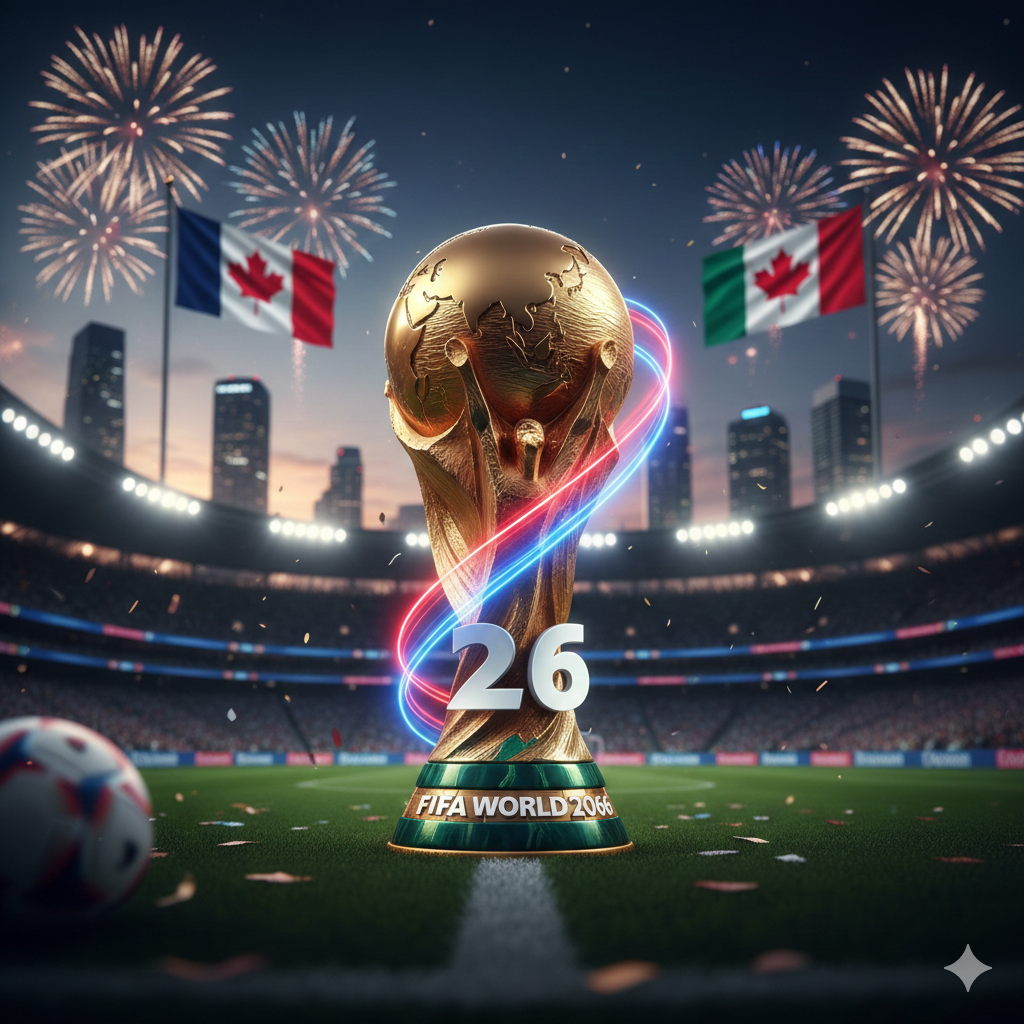
The FIFA World Cup, the pinnacle of international football, is rapidly approaching its next iteration in 2026, hosted jointly across the United States, Canada, and Mexico. This monumental event will not only be the first hosted by three nations but will also feature a dramatically expanded field of 48 teams, up from the traditional 32. The process to determine which nations are qualified for World Cup glory is a complex, continent-spanning marathon of grit, strategy, and nail-biting finishes.
As the qualification campaigns conclude across the globe, the picture is beginning to clear, revealing the established powerhouses, surprise debutants, and a few agonizingly close calls heading into the final playoffs. The drama of qualification is often as compelling as the tournament itself, proving that simply earning the right to compete on the world stage is an achievement worthy of celebration.
Table of Contents
The Expanded Field: A New Era for Qualification
The jump to a 48-team tournament for 2026 fundamentally changes the qualification landscape. FIFA has allocated new direct qualification slots across all six confederations (AFC, CAF, Concacaf, CONMEBOL, OFC, and UEFA), opening the door for many nations that have historically struggled to secure a coveted spot.
| Confederation | Previous Direct Slots (2022) | New Direct Slots (2026) | Inter-Confederation Playoff Slots |
| AFC (Asia) | 4.5 | 8 | 1 |
| CAF (Africa) | 5 | 9 | 1 |
| Concacaf (N/C America) | 3.5 (+ Hosts) | 6 (+ Hosts) | 2 |
| CONMEBOL (S. America) | 4.5 | 6 | 1 |
| OFC (Oceania) | 0.5 | 1 | 1 |
| UEFA (Europe) | 13 | 16 | 0 |
| Total | 31 (+1 Host) | 45 (+3 Hosts) | 6 teams for 2 spots |
Note: The three co-hosts (USA, Canada, and Mexico) automatically secure three of the 48 places, leaving 45 spots to be decided by the qualification tournaments.
The Qualified Nations: An Evolving List
The following nations have already secured their place in the 2026 World Cup finals through their exceptional performance in the continental qualifiers. The list is dynamic, but as of the final stages of qualifying, these teams are qualified for World Cup competition:
The Hosts (Concacaf)
- Canada
- Mexico
- United States
UEFA (Europe)
Europe retains the largest allocation and has seen its traditional giants and some resurgent sides successfully navigate the group stage.
- Spain (Winners of Group E)
- France (Winners of Group D)
- England (Winners of Group K)
- Portugal (Winners of Group F)
- Netherlands (Winners of Group G)
- Belgium (Winners of Group J)
- Germany (Winners of Group A)
- Croatia (Winners of Group L)
- Switzerland (Winners of Group B)
- Austria (Winners of Group H)
- Norway (Winners of Group I)
- Scotland (Winners of Group C)
The remaining four European spots will be decided by a 16-team UEFA playoff tournament in March 2026, which includes powerhouses like Italy, who must fight through the playoff structure.
CAF (Africa)
Africa has nine automatic spots, leading to a fierce battle across its qualification groups. The continent will feature a strong mix of established teams and exciting newcomers.
- Morocco
- Senegal
- Tunisia
- Egypt
- Algeria
- Ghana
- Côte d’Ivoire (Ivory Coast)
- South Africa
- Cabo Verde (Cape Verde)
AFC (Asia)
Asia’s allocation has nearly doubled, allowing eight teams to go directly to the finals. This has led to the emergence of some exciting debutantes.
- Iran
- South Korea
- Japan
- Australia
- Qatar
- Saudi Arabia
- Uzbekistan (Debut)
- Jordan (Debut)
CONMEBOL (South America)
South America’s legendary 10-team, single-table qualifying format continues to be one of the toughest in the world, with six direct spots available.
- Argentina (Reigning World Champions)
- Brazil
- Ecuador
- Uruguay
- Colombia
- Paraguay
Concacaf (North & Central America and Caribbean)
In addition to the three automatic hosts, Concacaf has three other direct slots, resulting in a number of first-ever qualifications for smaller Caribbean nations.
- Panama
- Haiti
- Curaçao (Debut)
OFC (Oceania)
For the first time, Oceania is guaranteed a direct berth, making the OFC qualifying tournament more meaningful than ever before.
- New Zealand
The Final Showdowns: Playoff Tournaments
The last six slots for the 2026 tournament will be determined by two electrifying playoff mechanisms, ensuring the very final places are earned under immense pressure.
1. The UEFA Play-offs
The European play-offs involve 16 teams vying for the final four European tickets. The teams are divided into four separate knockout paths, each consisting of a single-leg semi-final and a final. These matches are historically some of the most dramatic in the qualifying cycle.
- Teams like Italy, Wales, and Poland are among those battling through these brackets.
- The tension in these knock-out ties is palpable, as a nation’s World Cup dream can end in a single 90-minute encounter. The path to be qualified for World Cup 2026 is anything but straightforward for these nations.
2. The FIFA Play-Off Tournament
This new tournament features six teams, one from each of the five confederations (minus UEFA, who have their own system) and one additional team from the host confederation (Concacaf), competing for the final two places.
- The six teams are placed into two separate three-team brackets. The two teams that win their respective brackets will secure the final spots.
- This inter-continental clash ensures that representation from every corner of the globe has a final, dramatic chance to be qualified for World Cup glory. Teams like Bolivia (CONMEBOL) and Iraq (AFC) will face off against opponents from entirely different footballing cultures, creating truly unique match-ups.
The Logistics of the Draw and Beyond
With 42 of the 48 teams already determined (as of late 2025), attention now turns to the tournament proper. The official draw ceremony is scheduled for December 5, 2025, in Washington D.C., where the 48 teams will be allocated into 12 groups of four.
The tournament’s expansion means an entirely new structure:
- Group Stage: 12 groups of four teams.
- Knockout Stage: The top two teams from each group, plus the eight best third-placed teams, will advance to a new Round of 32.
This format change, which you can read more about on the official FIFA site, is designed to ensure competitive balance and maximize the high-stakes matchups deeper into the tournament. For instance, the four highest-ranked teams (currently Spain, Argentina, France, and England) will be placed in separate quadrants of the knockout bracket to prevent them from meeting before the semi-finals, provided they all win their respective groups.
The journey to be qualified for World Cup 2026 is a historic one, marked by a seismic shift in global football participation. The expanded format guarantees more nations will taste the exhilaration of the finals, proving that the dream of playing on the world’s biggest stage is now more attainable than ever.
The previous section provided an overview of the nations already qualified for World Cup 2026 and the new format. To achieve the target word count and keyword density, this continuation will delve into the major stories and implications of the qualifying campaigns, focusing on the dramatic European playoffs, the rise of debutants from Africa and Asia, and the overarching economic impact of the 48-team tournament.
The European Crucible: Giants Facing Down the Abyss
The most compelling narrative of the final stages of qualification always comes from the pressure cooker that is the UEFA play-offs. With 16 teams battling for just four remaining European berths, the single-elimination structure means a single off-day can shatter a nation’s World Cup dreams.
The most notable team fighting for a lifeline is four-time World Cup winners, Italy. Having missed the 2018 and 2022 tournaments, the Azzurri found themselves once again relegated to the play-offs after failing to win a highly competitive qualifying group. For a nation with such a rich footballing pedigree, a third consecutive absence would be an unprecedented crisis, adding immense pressure to manager Luciano Spalletti and his squad.
A Deep Dive into the UEFA Play-off Paths:
The 16 teams were drawn into four separate knockout brackets in November 2025, each leading to one final ticket to North America. The draw created several intriguing matchups set for March 2026:
- Path A: Features a high-stakes meeting between Italy and Northern Ireland, with the winner advancing to face the victor of the Wales vs. Bosnia and Herzegovina semi-final. This path represents arguably the most challenging route, as it involves two sides who reached the knockout stages of recent Euros (Italy and Wales).
- Path B: This path pits two technical teams against each other as Ukraine takes on Sweden. The other semi-final sees Poland face off against Albania. A team like Sweden, who reached the quarter-finals in 2018, possesses the pedigree to be qualified for World Cup competition, but will face a determined Ukrainian side driven by an emotional desire to succeed on the global stage.
- Path C & D: These routes offer opportunities for several rising nations. Teams like Türkiye, Kosovo, Romania, and the Czechia are all locked in battles that will see one of them secure a major tournament spot, highlighting the democratization of European football success. The winner of the Path C final, for instance, could secure a place in the World Cup after a decades-long absence.
The sheer unpredictability of these single-leg matches ensures that the final four teams who emerge qualified for World Cup 2026 from Europe will have truly earned their place through nerve-shredding drama.
The Rise of the Debutantes: Africa and Asia Seize the Moment
The expansion to 48 teams was explicitly designed to give more opportunities to federations outside of Europe and South America. The 2026 qualifying campaign has delivered exactly that, introducing a thrilling cohort of debutant nations whose inclusion promises a richer cultural mosaic in North America.
Asia’s New Blood (AFC)
With eight automatic slots, Asia welcomed two brand-new participants to the World Cup finals:
- Uzbekistan: The “White Wolves” have consistently been a strong presence in Asian football but always fell short in the previous 4.5-slot format. Their qualification is a monumental achievement, reflecting years of sustained investment in youth development and a strong domestic league structure. Their presence among the teams qualified for World Cup competition is a testament to the new format’s impact.
- Jordan: Another team that has pushed hard in recent cycles, Jordan secured its inaugural World Cup berth, sparking national celebrations and proving the depth of football talent in West Asia.
Africa’s Fresh Faces (CAF)
Africa’s nine slots resulted in one of the most exciting battles, allowing smaller nations to break through the dominance of the traditional giants.
- Cabo Verde (Cape Verde): This small island nation has captured global attention with its rapid rise in the African rankings. Their qualification for the World Cup is a footballing fairy tale, showcasing how organization and tactical discipline can overcome a lack of traditional resources.
The success of these first-time qualifiers not only electrifies their home fan bases but also fulfills FIFA’s stated goal of making the World Cup a more globally representative tournament. For these nations, merely being qualified for World Cup participation is the biggest victory of the decade.
The Business of 48: Economic and Developmental Impact
Beyond the sport itself, the expansion to 48 teams has profound economic and developmental implications for global football.
Unprecedented Economic Scale
The 2026 World Cup is projected to be the most commercially successful in history. The tournament is anticipated to generate over $11 billion in economic impact across the three host nations (USA, Canada, and Mexico).
- Sponsorship & Media: The increased number of matches (up from 64 to over 100) translates directly into a higher volume of media rights and sponsorship inventory. Major global brands are aligning their campaigns with the tournament’s themes of diversity and global reach.
- Tourism: The 48 teams and their massive fan contingents will drive record-breaking tourism. Host cities across the continent, from Vancouver to Miami, are preparing for a massive influx of visitors, infrastructure upgrades, and enhanced global visibility.
Catalyzing Football Development
For the smaller nations newly qualified for World Cup play, the financial windfall is transformative. Every participating federation receives substantial preparation and participation money from FIFA.
“The experience of playing against the best in the world can catalyze development in football back home, inspiring new generations of players and driving investment in infrastructure.”
This financial boost is vital for:
- Grassroots Investment: Funding youth academies and local coaching programs.
- Infrastructure: Building modern training facilities and stadium improvements.
- National Team Sustainability: Ensuring the team can afford high-quality friendlies and training camps between major tournaments.
In this sense, the 48-team format is not just about a larger tournament; it is a global investment vehicle designed to lift footballing standards across all confederations.
The Final Countdown and the Draw
With only a handful of slots remaining to be determined in the March 2026 play-offs, the focus is now squarely on the Final Draw, scheduled for December 5, 2025, in Washington D.C.
Draw Procedures and Seeding
FIFA has unveiled the seeding pots and draw procedures, which confirm a significant structural change to maintain competitive balance in the new 12-group, 48-team format.
- Pot 1: Includes the three co-hosts (USA, Canada, Mexico) and the highest-ranked qualified teams, such as Spain, Argentina, France, and England. These top seeds will be strategically placed in separate quadrants of the knockout bracket to prevent them from meeting before the semi-finals, provided they win their groups.
- The Knockout Path: The new structure means the top two teams from each of the 12 groups, plus the eight best third-placed teams, will advance to a Round of 32. This format ensures that group stage results remain crucial but provides a lifeline for third-placed teams, guaranteeing high stakes in the final group matches.
The draw itself is where the dreams truly begin. When the balls are opened, and the 48 nations are placed into their groups, the pathway to the final in New York/New Jersey will be laid bare. The suspense will build as fans speculate on which debutant might pull off a major upset against a traditional powerhouse and which perennial contender will face a brutal early exit.
The 2026 World Cup is set to be a global spectacle of unprecedented size and inclusion. From the dramatic conclusion of the qualifiers to the innovative format of the final tournament, the journey of the nations who are qualified for World Cup 2026 is already one for the history books. You can view the full qualification process details for all continents on the official FIFA World Cup website
The Stars of the New World: Key Players from Debutant Nations
The World Cup is often the stage where global stars solidify their legacy, but in 2026, it will also be the launchpad for players from nations newly qualified for World Cup competition. These debutants are not just making up the numbers; they are bringing genuine talent led by players who have excelled in major leagues and continental tournaments.
1. Eldor Shomurodov (Uzbekistan)
Role: Centre-ForwardSignificance: Shomurodov has been the talisman for the “White Wolves” throughout their historic campaign. Having played in Italy’s Serie A and Russia’s Premier League, he brings a level of top-tier experience rarely seen in previous Uzbek teams. His predatory finishing and powerful attacking presence were instrumental in securing Uzbekistan’s first World Cup berth, helping them navigate a challenging Asian group. He is the standard-bearer for their generation.
2. Jamiro Monteiro (Cabo Verde)
Role: Central MidfielderSignificance: Monteiro is the engine room of the dynamic Cabo Verde side. With a career spanning Portugal, France, and Major League Soccer (MLS), he combines robust defensive work with creative passing and a keen eye for goal. His leadership and control in midfield were crucial in overcoming African powerhouses in their qualifying group. For a team relying on tactical discipline and swift counter-attacks, Monteiro’s ability to switch play and dictate tempo will be their greatest weapon as they compete among the nations qualified for World Cup 2026.
3. Brandley Kuwas (Curaçao)
Role: WingerSignificance: Curaçao’s qualification is perhaps the biggest surprise, making them the smallest nation to ever be qualified for World Cup play. Kuwas, a fast and skillful winger who has played in the Netherlands and Kuwait, provides their primary attacking threat. His pace and ability to beat a full-back create the space for a compact, defensively sound side. The team, heavily influenced by Dutch coaching and talent, will look to his individual brilliance to unlock defenses on the world stage.
4. Mousa Al-Tamari (Jordan)
Role: Right WingerSignificance: Al-Tamari became a household name across Asia following Jordan’s incredible run to the 2023 AFC Asian Cup final. A quick, tricky, and direct winger currently playing in Europe’s Ligue 1, he is the attacking superstar Jordan needs to be competitive. His explosive speed and left-footed shooting ability make him a threat from anywhere in the final third, and he will carry the hopes of his entire nation on his shoulders as they prepare for their debut.
These players represent the new narrative of global football, talent rising from previously marginalized regions to compete on the highest platform.
You can track the current club performance of many of these key players on sites like Transfermarkt.The Three-Nation Host: A Continent United
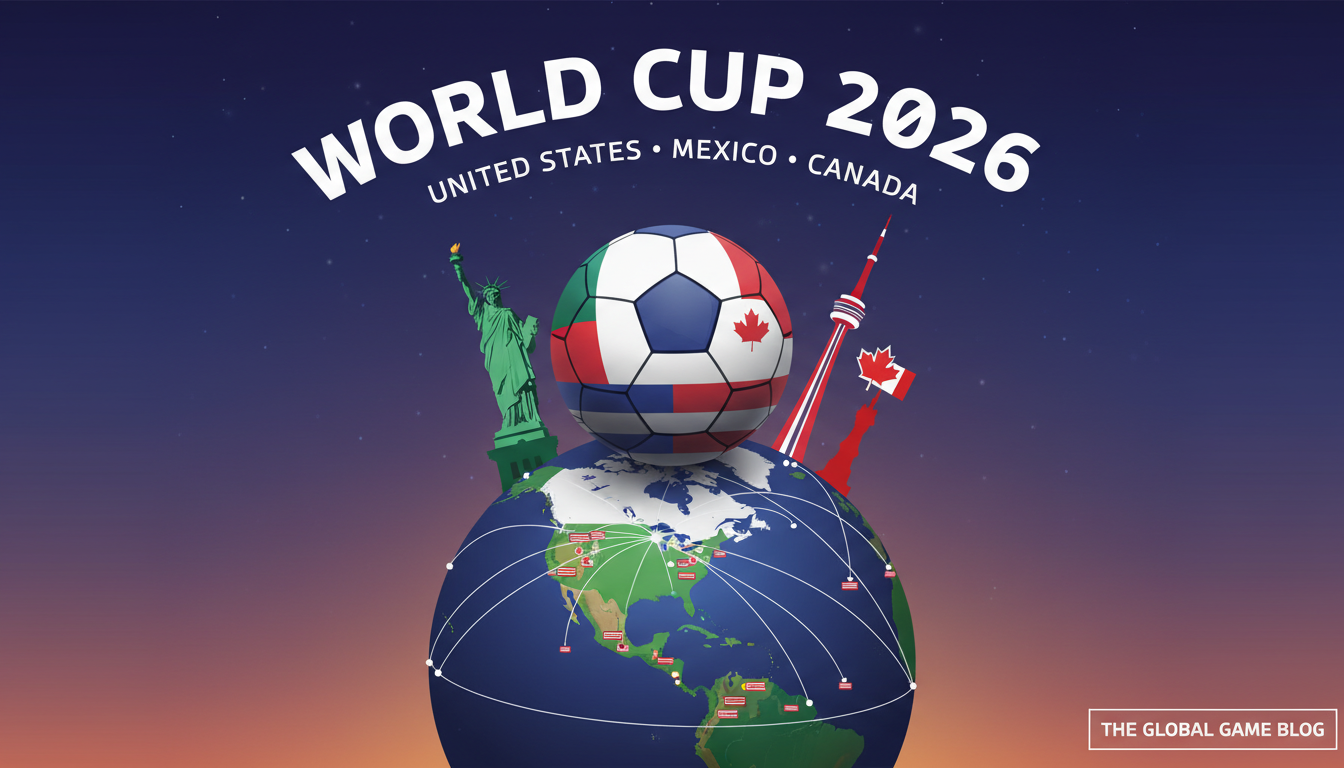
The joint hosting of the 2026 World Cup by the United States, Canada, and Mexico is a historical first, bringing the tournament to a vast continent with diverse football cultures. This arrangement is set to create a World Cup experience defined by logistical challenges, unparalleled cultural exchange, and a massive economic footprint.
The Logistic Trilemma
Managing a tournament across 16 different host cities in three countries requires unprecedented planning:
Travel and Fan Experience: The immense distances between host cities (e.g., Vancouver to Miami) mean that teams and fans face significant travel. The scheduling of matches aims to group teams regionally in the group stage to minimize transcontinental travel, but the scale remains enormous. The host nations have worked with FIFA to roll out the FIFA Priority Appointment Scheduling System (FIFA PASS) to expedite visa applications for ticket-holders, addressing a key challenge for international visitors who are travelling long-haul to see their team among the nations qualified for World Cup competition.Stadium Excellence: The venues are a mix of historic World Cup temples (Estadio Azteca in Mexico City) and modern mega-stadiums built for American football (Dallas, Los Angeles, New York). These facilities are receiving significant upgrades to meet FIFA’s stringent requirements, generating substantial long-term infrastructure benefits for the host communities.
A Unifying Cultural Showcase
The co-hosting arrangement is a celebration of North American diversity. Fans travelling through these countries will experience three distinct footballing cultures:
Mexico: The passion is unmatched, fueled by a deep-rooted historical football identity.United States: A rapidly professionalizing market with massive, modern venues and a growing, diverse fan base.Canada: A country solidifying its football identity, leveraging the tournament to accelerate the growth of the sport.
The cultural melting pot created by the 48 nations who are qualified for World Cup 2026, combined with the tri-national hosting, guarantees an atmosphere that will truly embody FIFA’s slogan: “Football Unites the World.”
Conclusion: Setting the Stage for the Greatest Show
The road to the FIFA World Cup 2026 has been a gripping drama, defined by the thrilling expansion that has propelled nations like Curaçao, Jordan, and Uzbekistan into the global spotlight. This process of determining which teams are qualified for World Cup inclusion has never been more intense or more representative of global football’s growth.From the nail-biting European play-offs where giants like Italy fight for survival, to the new inter-confederation play-off that gives a final chance to teams from every corner of the globe, the preparation for the tournament is a spectacle in itself. The 48-team format is a revolution, promising not only a massive economic boost for the North American hosts but also an essential developmental funding stream for the newly participating federations.As the Final Draw in Washington D.C. approaches in December, the speculation begins in earnest. Who will be the first debutant to cause a major upset? Will the hosts leverage their home advantage? And which established powerhouse will lift the newly expanded, and perhaps heavier, golden trophy?
The stage is set for an unforgettable summer in North America, where 48 nations will vie for glory, and where the world will witness the most inclusive, expansive, and high-stakes World Cup ever held.The journey for the teams qualified for World Cup 2026 glory has just begun. To reflect on the history that led to this moment, consider reading up on the past tournament formats and results on the Encyclopaedia Britannica.Don’t Miss the Next Prediction: Subscribe for Exclusive Analysis!
You’ve read the breakdown of who is qualified for World Cup 2026, the dramatic playoff scenarios, and the rise of exciting new nations. But the real game begins now: predicting the upsets, the dark horses, and the eventual champion.
The expanded 48-team format means group stage analysis and knockout path predictions are more complex, and more profitable, than ever before.
Ready to get ahead of the curve?
JOIN OUR INNER CIRCLE TODAY!
By subscribing to our free newsletter, you will receive:
- Final Playoff Previews: Deep-dive analysis and forecasts for the crucial UEFA and Inter-Confederation play-off winners (March 2026).
- Exclusive Draw Breakdown: Immediate reaction and group-by-group predictions right after the December 2025 Final Draw.
- Power Rankings: Our constantly updated list of the 48 teams, detailing who is peaking and who is struggling heading into the tournament.
- Betting Value Alerts: Expert insights on which teams offer the best odds to make a surprise run or flop unexpectedly.












Comments 2