

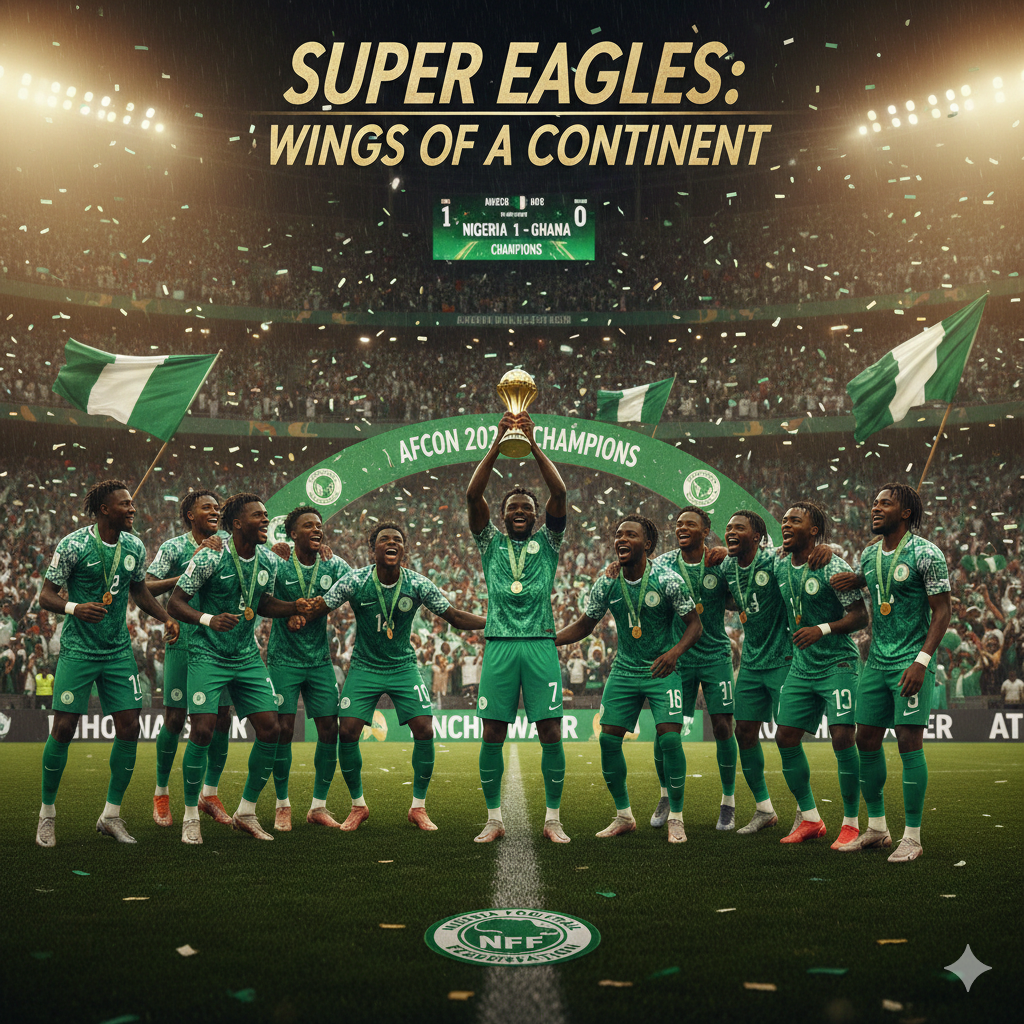
The Nigeria national football team, affectionately known worldwide as the Super Eagles, represents more than just a sports squad; it is a symbol of national identity, resilience, and the vibrant spirit of Africa’s most populous nation. From their humble beginnings in the 1940s to becoming a global football powerhouse in the 1990s, the Super Eagles have consistently captivated fans with their flair, speed, and indomitable will.
In this comprehensive guide, we explore the rich history, legendary figures, and the tactical evolution of the Nigeria national football team, a side that has redefined African football on the world stage.
Table of Contents
A Journey Through Time: The History of the Super Eagles
The origins of the Nigeria national football team date back to 1949, when the country was still a British colony. Then known as the “Red Devils” due to their red jerseys, the team embarked on a historic tour of England, playing barefoot against several amateur clubs. This tour laid the foundation for what would become a professional powerhouse.
The 1960s and 70s: Finding Their Feet
After independence in 1960, the team transitioned to the green and white colors of the national flag and adopted the nickname “Green Eagles.” During this period, the Nigeria national football team began to make its mark regionally. They secured a gold medal at the 1973 All-Africa Games and consistent third-place finishes in the 1976 and 1978 Africa Cup of Nations (AFCON).
1980: The First Taste of Continental Glory
The turning point came in 1980 when Nigeria hosted the AFCON. Led by the tactical brilliance of Christian Chukwu and the pace of Segun “Mathematical” Odegbami, the team defeated Algeria 3-0 in the final in Lagos. This victory sparked a football revolution in the country, cementing the Nigeria national football team as a giant of the continent.

The Golden Generation: 1994 and the Rise of the Super Eagles
If 1980 was the spark, 1994 was the explosion. This era saw the rebranding of the team to the Super Eagles, a name that reflected their newfound dominance. Under the guidance of Dutch coach Clemens Westerhof, the Nigeria national football team achieved a level of success that remains the benchmark for African football.
1994 AFCON and World Cup Debut
In 1994, the Super Eagles won their second AFCON title in Tunisia. Shortly after, they made their debut at the FIFA World Cup in the United States. They didn’t just participate; they dominated their group, including a 3-0 thrashing of Bulgaria and a spirited performance against Argentina.
The Atlanta 1996 Olympics
While technically an U-23 achievement, the “Dream Team” that won gold at the 1996 Atlanta Olympics featured many core members of the senior Nigeria national football team. Defeating footballing royalty like Brazil and Argentina in the knockout stages made Nigeria the first African nation to win Olympic football gold.
Icons of the Pitch: Legendary Players
The history of the Nigeria national football team is written by the boots of some of the world’s most talented players.
Rashidi Yekini: The Ultimate Poacher
Nigeria’s all-time leading goalscorer, Rashidi Yekini, remains an eternal icon. His celebration—clutching the net after scoring Nigeria’s first-ever World Cup goal in 1994—is one of the most enduring images in football history.
Jay-Jay Okocha: So Good They Named Him Twice
Widely regarded as the most technically gifted player in African history, Austin “Jay-Jay” Okocha was a master of the “showbiz” side of football. His dribbling and creativity for the Nigeria national football team earned him a spot in the FIFA 100 list of the world’s greatest living players.
The Leaders: Nwankwo Kanu and John Obi Mikel
- Nwankwo Kanu: A two-time African Footballer of the Year and Olympic gold medalist.
- John Obi Mikel: The midfield general who anchored the team for over a decade, leading them to the 2013 AFCON title.
| Player | Caps | Goals | Notable Achievement |
| Ahmed Musa | 111 | 16 | Most Capped Player |
| Rashidi Yekini | 62 | 37 | All-time Top Scorer |
| Vincent Enyeama | 101 | 0 | Legendary Goalkeeper |
| Victor Osimhen | 46 | 31 | 2023 African Player of the Year |
Tactical Evolution and Management
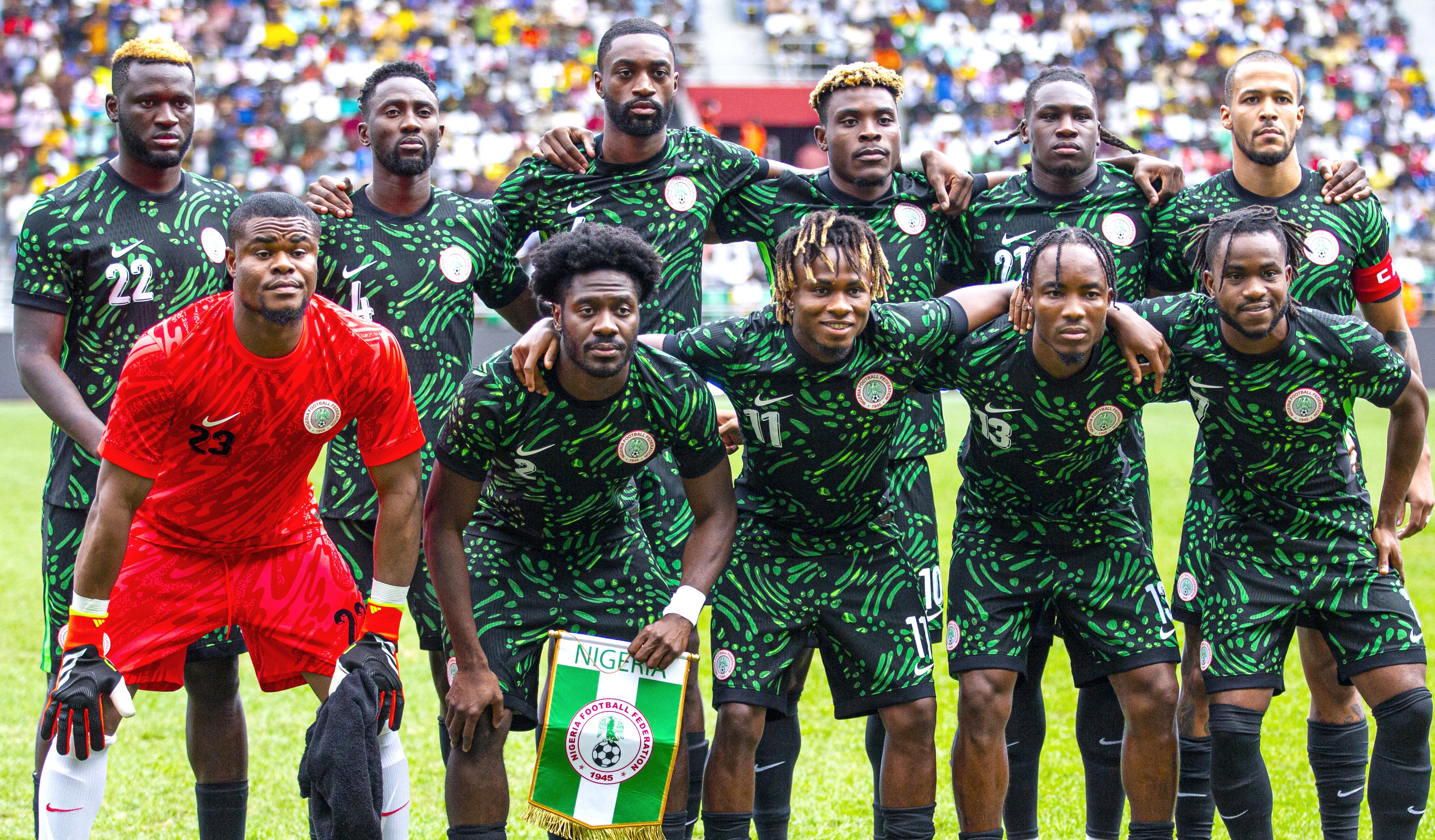
The Nigeria national football team has traditionally been known for its wing play—utilizing explosive speed on the flanks to deliver crosses to physically imposing strikers. However, recent years have seen a shift toward a more balanced, European-influenced tactical setup.
The Stephen Keshi Era
The late Stephen Keshi, known as the “Big Boss,” holds a unique place in history as one of only two men to win the AFCON as both a player (1994) and a manager (2013). His focus on blending local-based talent with foreign stars revitalized the Nigeria national football team during a period of transition.
Current Outlook (2025)
Currently, the Super Eagles are transitioning under new leadership. With a squad boastfully deep in attacking talent like Victor Osimhen and Ademola Lookman, the focus remains on defensive solidity to match their offensive prowess.
Rivalries: More Than Just a Match
The Nigeria national football team shares intense rivalries with several neighbors, most notably:
- Ghana (The Jollof Derby): A rivalry fueled by history, culture, and footballing pride. Matches between the Super Eagles and the Black Stars are among the most watched in Africa.
- Cameroon (The Indomitable Lions): Cameroon has often been the “bogeyman” for Nigeria, defeating them in three AFCON finals (1984, 1988, and 2000).
The Super Eagles Community and Fans
You cannot talk about the Nigeria national football team without mentioning the fans. From the “Nigerian Football Supporters Club” with their brass bands and constant drumming to the millions of fans in the diaspora, the energy surrounding the team is electric.
For the latest updates on the squad and upcoming fixtures, you can visit the official Nigeria Football Federation (NFF) website.
Statistical Breakdown: The Super Eagles at AFCON (2019, 2021, 2023)
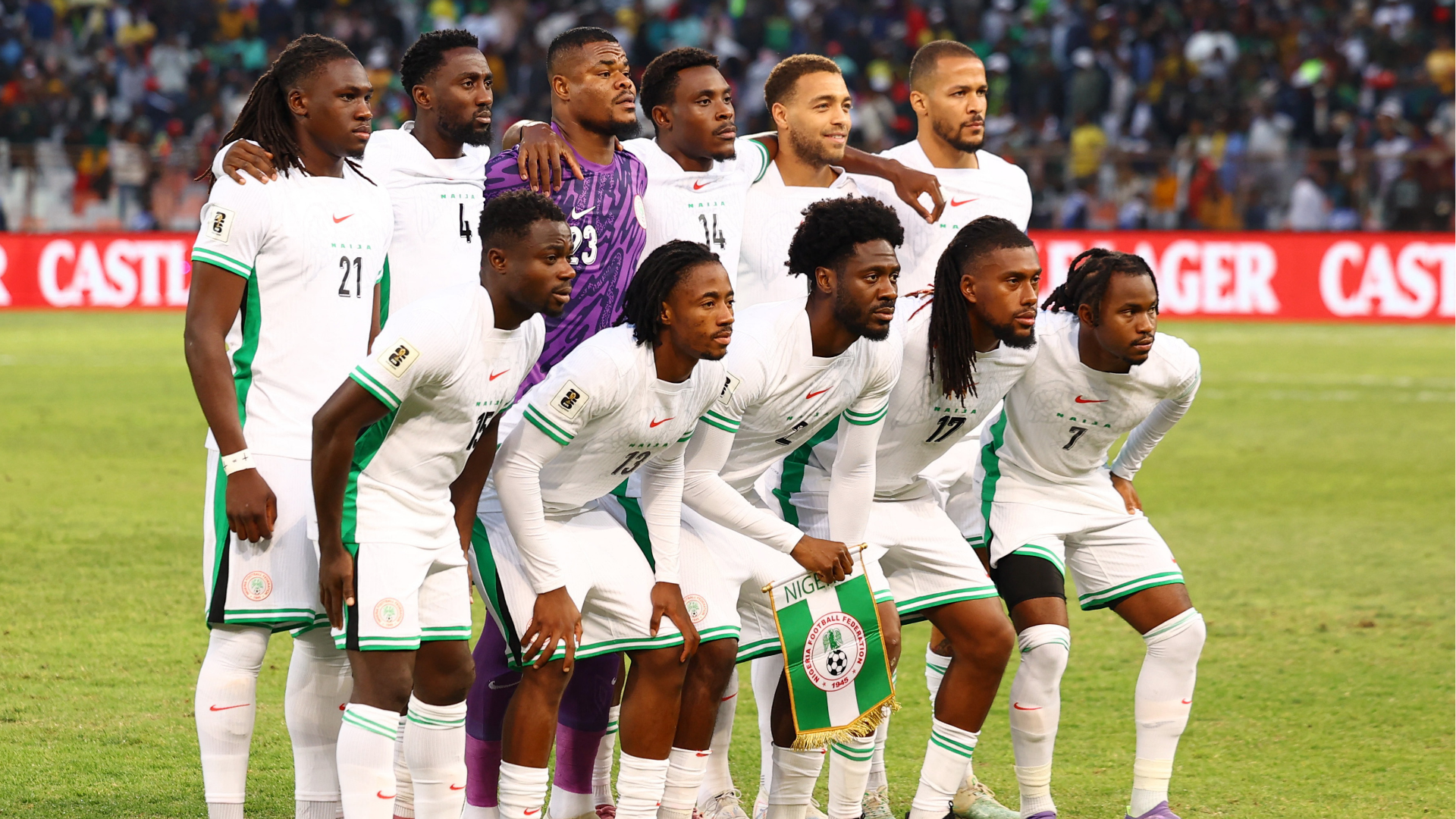
The recent trajectory of the Nigeria national football team in the Africa Cup of Nations (AFCON) reflects a period of high consistency, characterized by deep knockout-stage runs and a steady influx of world-class attacking talent.
While the elusive fourth continental title has remained just out of reach, the statistics highlight the Nigeria national football team as one of the most efficient defensive and offensive units in African football over the last six years.
1. Performance Overview Table
| Tournament | Host Nation | Finishing Position | Record (W-D-L) | Goals For | Goals Against |
| AFCON 2019 | Egypt | 3rd Place (Bronze) | 5 – 0 – 2 | 9 | 7 |
| AFCON 2021 | Cameroon | Round of 16 | 3 – 0 – 1 | 6 | 2 |
| AFCON 2023 | Ivory Coast | Runners-up (Silver) | 5 – 1 – 1 | 8 | 4 |
2. Deep Dive into the Statistics
AFCON 2019: The Resurgence
Under Gernot Rohr, the Nigeria national football team relied heavily on clinical finishing. Odion Ighalo finished as the tournament’s top scorer with 5 goals.
- Key Stat: Nigeria scored in 6 out of 7 matches played.
- Tactical Note: The team favored a 4-2-3-1 formation, focusing on quick transitions.
AFCON 2021: The Group Stage Perfection
This tournament was a statistical anomaly for the Nigeria national football team. They were the only team to win all three group stage matches, including a dominant win over Egypt. However, a tactical lapse and a long-range shot led to a premature exit against Tunisia.
- Key Stat: 100% win rate in the group stage.
- Efficiency: Nigeria averaged 15.5 shots per game, the highest in the tournament during the group phase.
AFCON 2023: The Defensive Masterclass
The most recent tournament saw a tactical shift under José Peseiro. The Nigeria national football team moved to a 3-4-3 (or 5-4-1) system, prioritizing defensive solidity over expansive play.
- Clean Sheets: Nigeria kept 4 consecutive clean sheets between the group stage and the semi-finals.
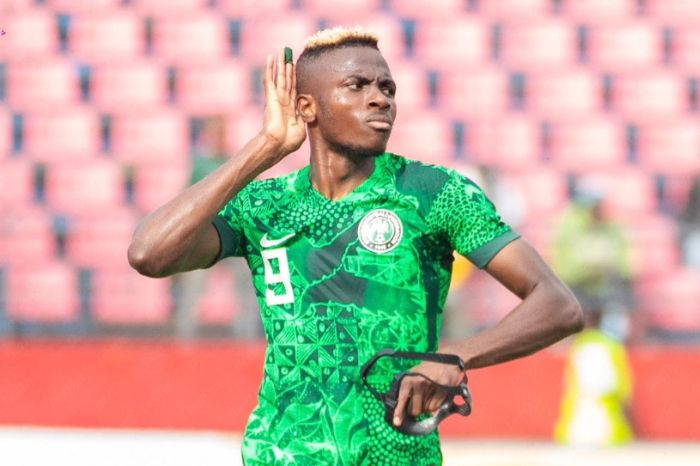
- The MVP: William Troost-Ekong became the first defender in years to win the Player of the Tournament award, scoring 3 goals (mostly from penalties).
- Offensive Output: While Victor Osimhen only scored once, his “gravity” pulled defenders away, allowing players like Ademola Lookman to flourish (3 goals).
3. Cumulative Impact (2019–2023)
Across these three tournaments, the Nigeria national football team has maintained a formidable win rate. Out of 18 matches played in these editions, the Super Eagles won 13, drew 1 (later won on penalties), and lost only 4.
This level of consistency has kept the Nigeria national football team at the top of the CAF Rankings, often appearing in the top five African nations according to the official FIFA World Rankings.
4. Looking Ahead: The Goal for 2025
With the 2025 AFCON on the horizon, the statistical trend suggests that the Nigeria national football team is due for a gold medal. The blend of defensive discipline seen in 2023 and the attacking fluidity of 2021 makes them the team to beat.
Market Value Analysis: Nigeria vs. The Giants of Africa (2025)
The Nigeria national football team has long been considered one of the most valuable “exports” of the continent, with its players populating the most prestigious leagues in Europe. However, as of late 2025, the financial landscape of African football has become increasingly competitive.
When we look at the squad market values heading into the AFCON 2025 in Morocco, a clear “Big Three” has emerged in terms of financial valuation: Senegal, Morocco, and Nigeria.
1. Squad Market Value Comparison (AFCON 2025)
According to recent data from Transfermarkt and other financial valuation platforms, here is how the Nigeria national football team stacks up against its primary rivals:
| National Team | Total Squad Market Value | Most Valuable Player |
| Senegal | €453.00 Million | Nicolas Jackson (€85M) |
| Morocco | €424.95 Million | Achraf Hakimi (€80M) |
| Ivory Coast | €339.03 Million | Ousmane Diomande (€40M) |
| Nigeria | €286.55 Million | Victor Osimhen (€75M-€95M) |
| Cameroon | €255.40 Million | Bryan Mbeumo (€75M-€96M) |
2. The “Osimhen” Factor
The market value of the Nigeria national football team is heavily influenced by its talisman, Victor Osimhen.
- The Valuation Debate: While traditional platforms like Transfermarkt value Osimhen at approximately €75 million following his move to Galatasaray, other metrics like TransferRoom’s xTV place his impact closer to €95 million.
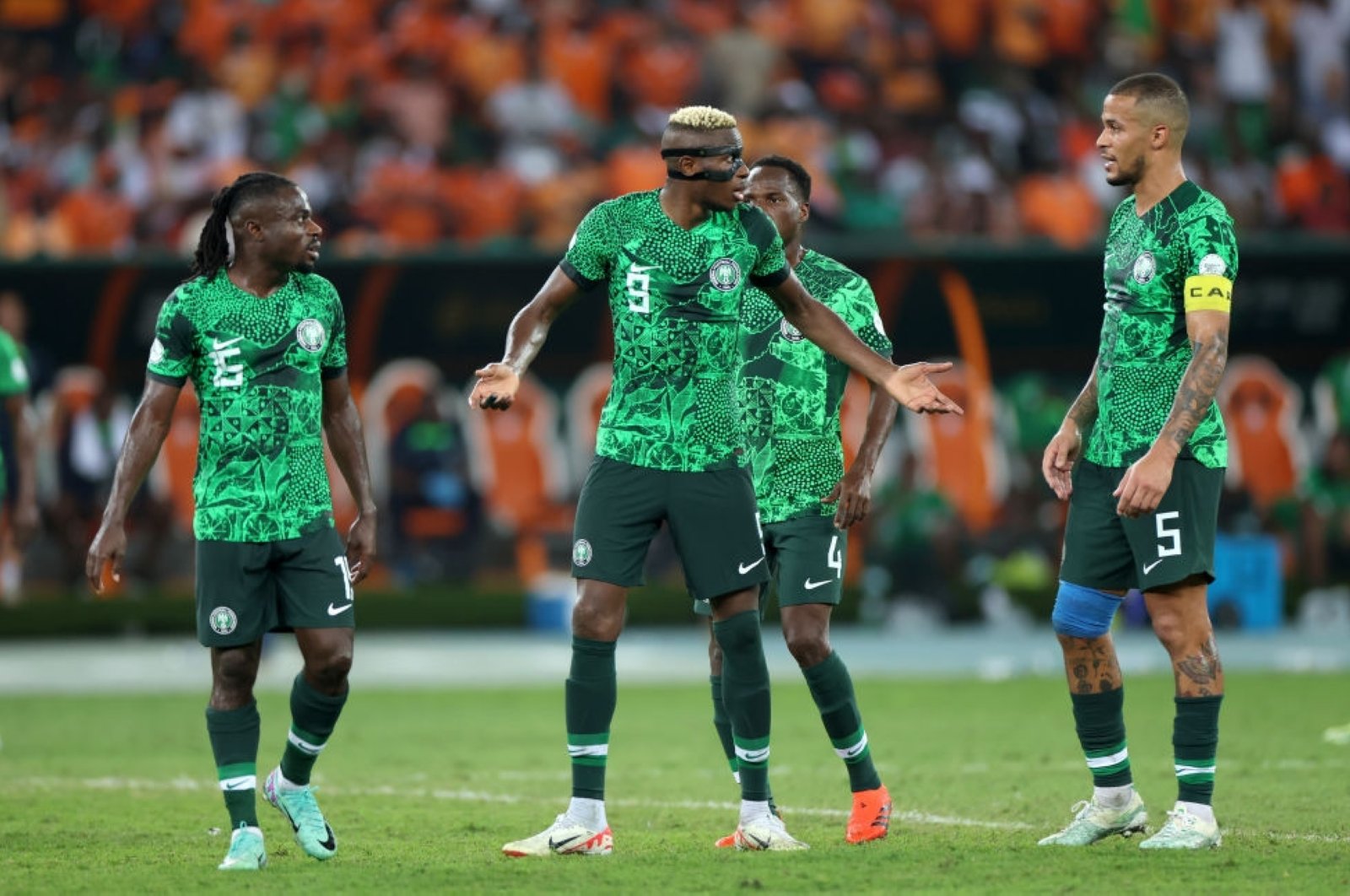
- Concentration of Wealth: Unlike Morocco or Senegal, whose value is spread more evenly across a world-class defense and midfield, Nigeria’s market value is heavily concentrated in its “Front Three.” Players like Victor Boniface and Ademola Lookman have seen their valuations skyrocket in 2024 and 2025, contributing to the Nigeria national football team remaining a top-four powerhouse in value.
3. Why the Gap?
You might notice that despite having the 2023 African Player of the Year, the Nigeria national football team currently trails Senegal and Morocco in total value. There are two primary reasons for this:
- Defensive Valuation: Morocco and Senegal boast defenders playing for elite clubs (e.g., Achraf Hakimi at PSG, Kalidou Koulibaly’s legacy, and newer stars in the Premier League). High-value defenders and goalkeepers often provide a more stable “floor” for squad value.
- Squad Depth in Europe: While the Nigeria national football team has a starting XI that can beat anyone, Senegal and Morocco have a higher number of “fringe” players valued between €15M–€25M playing in the Bundesliga, La Liga, and Ligue 1.
4. Investing in the Green and White
The global commercial appeal of the Nigeria national football team remains unrivaled in Africa. Their jerseys are consistently among the highest-selling national team kits globally.
If you are looking to support the team during the 2025 campaign, you can find the latest official Nigeria home and away jerseys and other fan gear through major sports retailers. The 2025 “Agidi” inspired kits have already become a collector’s item among football fashion enthusiasts.
Summary: Value vs. Performance
History has shown that market value does not always translate to trophies. The Nigeria national football teamfamously defeated a more “expensive” Ivory Coast side in the 2013 AFCON and held their own against a star-studded Argentina in multiple World Cups.
As the Super Eagles prepare for the 2025 tournament in Morocco, they may not be the “richest” team on paper, but with the combined firepower of the most valuable strike force in Africa, they remain the team no one wants to face in a knockout match.
The Current Era: Eric Chelle and the Path to Redemption (2025)
As of December 2025, the Nigeria national football team is at a critical crossroads. Under the leadership of head coach Éric Chelle, who was appointed in early 2025, the team has been undergoing a period of tactical restructuring and “fresh blood” integration.
The 2026 World Cup Heartbreak
The most significant storyline for the Nigeria national football team in late 2025 has been the dramatic conclusion to the 2026 FIFA World Cup qualifying campaign. Despite a late-season surge featuring dominant wins over Benin (4-0) and Lesotho (2-1), the Super Eagles were ultimately eliminated in a heartbreaking penalty shootout against DR Congo in the CAF playoff final on November 16, 2025.
However, the story hasn’t quite ended. The Nigeria Football Federation (NFF) has filed an official complaint with FIFA regarding player eligibility in the DR Congo squad, a situation that fans are watching closely as it could potentially offer a backdoor entry into the intercontinental playoffs.
The AFCON 2025 Mission in Morocco
With the World Cup situation in the hands of administrators, the immediate focus for the Nigeria national football team has shifted to the 2025 Africa Cup of Nations, currently taking place in Morocco.
Group C Fixtures & Results:
- Dec 23, 2025: Nigeria vs. Tanzania (Opening Match)
- Dec 27, 2025: Nigeria vs. Tunisia
- Dec 30, 2025: Uganda vs. Nigeria
The 28-man roster for this tournament features a bold mix of seasoned veterans and five uncapped newcomers, including Blackburn Rovers defender Ryan Alebiosu and midfield prospect Ebenezer Akinsanmiro. This selection reflects Chelle’s philosophy of blending elite European experience with hungry, young talent.
Current FIFA Ranking and Global Standing
Despite the disappointment of missing out on automatic World Cup qualification, the Nigeria national football teamhas seen a steady rise in the FIFA World Rankings.
- Current Rank (Dec 2025): 38th in the world.
- Continental Rank: 5th in Africa (behind Morocco, Senegal, Egypt, and Algeria).
The rise to 38th is a testament to the team’s strong performance in the latter half of the year, including a trophy win at the Unity Cup in London in May 2025 and a series of high-scoring qualifying matches.
The Squad: Key Figures in 2025
The current Nigeria national football team is built around a “spine” of world-class performers:
- Stanley Nwabali (Goalkeeper): Solidified his spot as the undisputed No. 1 with heroics in the World Cup qualifiers.
- Wilfred Ndidi (Captain): The Besiktas midfielder provides the veteran leadership and defensive screening vital to Chelle’s system.
- Ademola Lookman: Following his historic exploits with Atalanta, Lookman has become the creative engine of the Super Eagles.
- Victor Osimhen: Despite a move to Galatasaray, Osimhen remains the focal point of the attack and the team’s primary goal threat.
Final Thoughts: A Soaring Future
The Nigeria national football team remains a “Sleeping Giant” that is beginning to wake. While the road through 2025 has been paved with both triumph and controversy, the sheer volume of talent in the current roster suggests that the Super Eagles are on the verge of another “Golden Era.”
Whether through a successful AFCON campaign in Morocco or a potential reprieve in World Cup qualification, the heartbeat of Nigerian football has never been stronger.
Conclusion: The Future of Nigerian Football
As we look toward the future, the Nigeria national football team remains a beacon of hope for African football. With a new generation of stars playing at the highest levels of European club football, the dream of a “Super Eagles” appearance in a World Cup semi-final or final feels closer than ever.
The journey from the “Red Devils” to the Super Eagles is a testament to the power of sport to unite a nation. Whether playing in Lagos, Abuja, or on the global stage, the Nigeria national football team continues to soar, carrying the hopes and dreams of millions.
The historic goals of the Super Eagles This video provides a nostalgic look at the 1994 World Cup, capturing the moment the Super Eagles truly announced themselves to the world.
NIGERIA’S FIRST WORLD CUP WIN! 1994 FIFA World Cup Extended Highlights – YouTube

Never Miss a Goal: Get the Best Super Eagles Predictions
Are you looking to stay ahead of the curve for the next Nigeria national football team match? Whether it’s high-stakes AFCON clashes or crucial World Cup qualifiers, having the right insights can make all the difference.
By subscribing to our exclusive Super Eagles Insider, you’ll receive:
- Expert Match Previews: Deep dives into the Nigeria national football team tactics and starting lineups.
- Data-Driven Predictions: Advanced statistical modeling for every major fixture.
- Injury & Squad Updates: Real-time news on stars like Victor Osimhen and Ademola Lookman before anyone else.
- Betting Insights: High-value tips and odds analysis from the most reputable sources, including Bet365 and local favorites.
Join 50,000+ Super Eagles Fans Today! Don’t leave your match-day experience to chance. Enter your email below to get the world’s best Nigeria national football team predictions delivered straight to your inbox every week.









Comments 1