

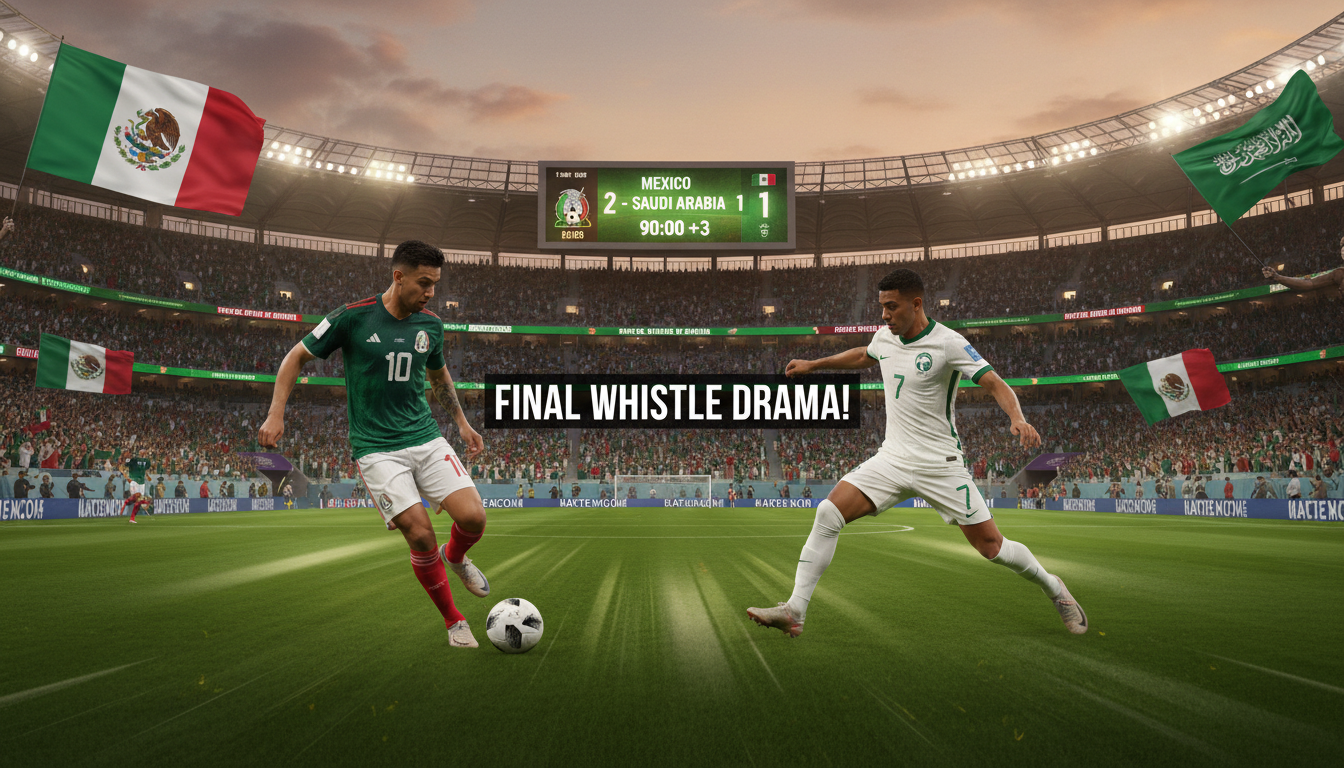
Mexico v Saudi Arabia. The stage was set, the stakes were high, and the anticipation palpable. This World Cup group stage match promised drama, and it delivered, even if the final result didn’t quite go as planned for either team in their quest for the knockout rounds.
The Pre-Match Landscape
Before delving into the specifics of the match, it’s crucial to understand the context. Both Mexico and Saudi Arabia entered the game with their World Cup futures hanging in the balance. Mexico, under the guidance of coach Gerardo Martino, had struggled to find their rhythm, drawing against Poland and losing to Argentina. Their usually potent attack was misfiring, and the pressure was mounting. You can find more World Cup details at FIFA’s official website.
Saudi Arabia, on the other hand, had stunned the world with their opening victory against Argentina but subsequently lost to Poland. Their spirited performance and tactical acumen under Hervé Renard had earned them plaudits, but they needed a positive result against Mexico to keep their hopes alive. The key was to keep their composure. They were eager to keep the momentum going. To view more information about Saudi Arabian football history, you can visit RSSSF.
Key Players and Tactical Approaches
Mexico’s hopes rested heavily on the shoulders of players like Hirving Lozano, Raúl Jiménez (though his fitness was a concern), and veteran goalkeeper Guillermo Ochoa. Martino’s tactical approach was expected to be more attacking-minded than in previous matches, with a focus on quick transitions and exploiting the flanks. ESPN’s Mexico team page provides an overview of their squad and recent performances.
Saudi Arabia’s strength lay in their disciplined defense, organized midfield, and the pace of their wingers, particularly Salem Al-Dawsari. Renard’s tactical approach focused on frustrating Mexico’s attack, hitting them on the counter, and capitalizing on set-piece opportunities. Information about the Saudi Arabian team can be found on ESPN’s Saudi Arabia team page.
The Match Unfolds
The match began with Mexico asserting their dominance, controlling possession and creating early chances. Saudi Arabia, true to form, sat deep, absorbing the pressure and looking to spring counter-attacks. The opening exchanges were tense, with both teams showing a degree of caution.
Mexico’s Goal Blitz
The deadlock was finally broken in the 47th minute by Henry Martín, who has an excellent record for Club America. A well-worked move down the right flank resulted in a low cross, which Martín expertly guided into the net. The goal injected confidence into the Mexican side, and they quickly doubled their lead just five minutes later. This time, it was Luis Chávez who unleashed a stunning free-kick from distance, leaving the Saudi Arabian goalkeeper with no chance.
These two quick goals transformed the complexion of the match. Mexico, now with a comfortable lead, pushed forward in search of more goals, knowing that goal difference could be crucial in determining their qualification fate. Saudi Arabia, shell-shocked by the sudden turnaround, struggled to regain their composure.
Saudi Arabia’s Late Fightback
However, Saudi Arabia refused to surrender. In the dying moments of the match, Salem Al-Dawsari scored a consolation goal, showcasing his individual brilliance. While the goal was a mere consolation for Saudi Arabia, it had significant implications for Mexico’s qualification hopes, as it ultimately dashed their chances of progressing to the knockout stage based on goal difference.
Even with the match ending 2-1, let’s explore highlights on YouTube to further recap this exciting match.
Tactical Analysis
Mexico’s victory was built on their improved attacking performance and their ability to convert chances. The introduction of more attacking players into the starting lineup paid dividends, as they created more opportunities and put Saudi Arabia’s defense under constant pressure. The tactical shift seemed to work effectively.
However, their defensive vulnerabilities were still evident, particularly in the late stages of the match. Saudi Arabia’s goal exposed their susceptibility to counter-attacks and their lack of concentration in crucial moments. This is something that had to be worked on for future competitions.
Saudi Arabia’s game plan was largely ineffective, particularly after conceding the first goal. Their defense struggled to contain Mexico’s attacking threat, and their counter-attacks lacked the sharpness and precision needed to trouble the Mexican defense. Renard’s substitutions failed to have the desired impact, and their overall performance was a far cry from their impressive victory against Argentina.
Key Moments and Turning Points
The two quick goals at the start of the second half were undoubtedly the key moments of the match. They swung the momentum firmly in Mexico’s favor and forced Saudi Arabia to chase the game, playing into Mexico’s hands. Chávez’s free-kick, in particular, was a moment of individual brilliance that will be remembered for a long time.
Saudi Arabia’s late goal, while not changing the outcome of the match for them, had a significant impact on Mexico’s qualification hopes. It highlighted Mexico’s defensive frailties and ultimately proved to be the decisive factor in their elimination from the tournament.
Player Performances
Several players stood out in the match. For Mexico, Luis Chávez was the star of the show, scoring a sensational goal and dictating the tempo of the game. Henry Martín also deserves credit for his well-taken goal and his overall contribution to the attack. Goalkeeper Guillermo Ochoa made a few crucial saves, but his distribution could have been better. For team news, Sky Sports is a good source.
For Saudi Arabia, Salem Al-Dawsari was the standout performer, scoring a brilliant goal and consistently threatening the Mexican defense. However, many of his teammates struggled to make an impact, particularly in the attacking third. The defense was overwhelmed by Mexico’s attacking pressure and failed to provide adequate protection for their goalkeeper.
Impact of Substitutions
Mexico’s substitutions were largely effective, with players like Uriel Antuna adding fresh impetus to the attack. However, Martino’s decision to withdraw key players in the late stages of the match may have contributed to their defensive lapses. The squad changes could have been more impactful.
Saudi Arabia’s substitutions failed to have the desired impact, with none of the introduced players making a significant contribution to the game. Renard’s tactical changes were unable to stem the tide of Mexican attacks or spark a revival in their own attacking play.
The Aftermath and Implications
Mexico’s victory was ultimately bittersweet, as they failed to qualify for the knockout stage despite winning the match. Their goal difference was not enough to surpass Poland, who advanced to the next round alongside Argentina. The mood in the Mexican camp was one of disappointment and frustration.
Saudi Arabia’s defeat marked the end of their World Cup campaign. Despite their stunning victory against Argentina, they were unable to maintain their momentum and ultimately fell short of expectations. However, their performance in the tournament earned them respect and admiration from fans around the world.
Looking Ahead
For Mexico, the focus will now shift to rebuilding and preparing for the next World Cup. Martino’s future as coach is uncertain, and there are likely to be significant changes in the squad. They need to address their defensive vulnerabilities and find a way to unlock their attacking potential consistently. More information about football federations can be found at The IFAB.
Saudi Arabia will look to build on their World Cup experience and continue to develop their football program. They have a talented generation of players, and with the right guidance and investment, they have the potential to become a major force in Asian football. The Saudi League has been improving, and its impact is undeniable. You can compare this match to other memorable games at WorldFootball.net.
Concluding Thoughts
The Mexico v Saudi Arabia match was a thrilling encounter that had significant implications for both teams. Mexico’s victory was not enough to secure their qualification, while Saudi Arabia’s defeat marked the end of their World Cup journey. The game was full of drama, excitement, and tactical intrigue, and it will be remembered as one of the highlights of the group stage. Many considered this game to be an upset.
Ultimately, while Mexico’s performance showcased improvements, it also exposed their persistent weaknesses. For Saudi Arabia, the match was a reminder of the challenges they face in competing against the world’s best teams. This Wikipedia page on the World Cup provides further historical context.
Detailed Match Statistics
To further analyze the match, let’s delve into some key statistics:
- Possession: Mexico 62%, Saudi Arabia 38%
- Shots: Mexico 26, Saudi Arabia 8
- Shots on Target: Mexico 10, Saudi Arabia 3
- Corners: Mexico 11, Saudi Arabia 2
- Fouls: Mexico 14, Saudi Arabia 17
- Yellow Cards: Mexico 3, Saudi Arabia 4
These statistics highlight Mexico’s dominance in possession and their greater attacking intent. However, they also reveal Saudi Arabia’s resilience and their willingness to fight for every ball. The number of fouls committed by both teams indicates the intensity and competitiveness of the match.
Expert Opinions and Reactions
Following the match, there was a mixed bag of reactions from football experts and fans. Many praised Mexico’s attacking performance but criticized their defensive vulnerabilities. Some questioned Martino’s tactical decisions and his overall management of the team. Experts have been giving their insight and analysis as well. Goal.com is a great source for expert opinions.
Saudi Arabia’s performance was met with a mixture of disappointment and understanding. Many acknowledged their valiant effort but recognized that they were simply outclassed by a stronger team. Some praised Renard’s tactical approach and his ability to motivate his players, while others questioned his substitutions and his overall game plan.
Fan Perspectives
Mexican fans expressed their frustration and disappointment at their team’s failure to qualify for the knockout stage. Many felt that the team had underachieved and that Martino had failed to get the best out of his players. There were calls for a change of coach and a complete overhaul of the squad.
Saudi Arabian fans, while disappointed with the defeat, remained proud of their team’s performance in the World Cup. They celebrated their victory against Argentina and acknowledged the progress that the team had made under Renard’s guidance. They looked forward to the future and the potential for further growth and development.
Future Encounters
While this was a significant World Cup encounter, the rivalry between Mexico and Saudi Arabia is unlikely to end here. The two teams may meet again in future international competitions, providing further opportunities for drama and excitement. This match will be one to remember. Let’s see how the teams will adjust their gameplay in the future.
It’s difficult to predict the outcome of future matches between these two teams. Mexico will need to address their defensive vulnerabilities and find a way to unlock their attacking potential consistently. Saudi Arabia will need to continue to develop their football program and build on their World Cup experience.
The Enduring Legacy
The Mexico v Saudi Arabia match will be remembered as a thrilling encounter that had significant implications for both teams. It showcased the passion, drama, and excitement that make football such a compelling sport. The result of this match will continue to be felt for years to come. It will affect future games and strategies.
The game also highlighted the importance of tactical flexibility, player performances, and the impact of substitutions. It served as a reminder that in football, anything is possible, and that even the most dominant teams can be vulnerable. It highlighted the unpredictable nature of the game. More information about sports in general can be found on Sports Illustrated.
A More Detailed Look at the Goals
Let’s break down each goal in more detail:
- Henry Martín (Mexico): The goal originated from a well-coordinated attack down the right wing. A precise through ball found its way to a Mexican player who delivered a low, driven cross into the six-yard box. Martín, positioned perfectly, made a darting run and expertly flicked the ball past the Saudi Arabian goalkeeper with a deft touch. The goal was a testament to Mexico’s improved attacking fluidity and Martín’s predatory instincts.
- Luis Chávez (Mexico): This was a truly spectacular goal. Mexico won a free-kick approximately 30 yards from goal. Chávez stepped up and unleashed a thunderous left-footed strike that swerved and dipped over the wall, leaving the goalkeeper with absolutely no chance. The ball nestled into the top corner, sparking wild celebrations among the Mexican players and fans. The power and precision of the shot were remarkable.
- Salem Al-Dawsari (Saudi Arabia): In the dying moments of the match, Saudi Arabia launched a late attack. Al-Dawsari received the ball on the edge of the box, danced past a couple of Mexican defenders with some intricate footwork, and then unleashed a low, powerful shot that found the bottom corner of the net. While the goal was a consolation, it showcased Al-Dawsari’s individual brilliance and his ability to create something out of nothing.
The Role of the Referees
The refereeing performance in the match was generally solid, although there were a few controversial decisions. The referee awarded a number of free-kicks to both teams, and he also issued several yellow cards for persistent fouling and unsporting behavior. Some fans may question the decisions. More insights about referees can be found here: Law5-TheRefere.
Overall, the referee managed the game effectively and ensured that it was played in a fair and competitive spirit. However, there were a few instances where his decisions could have been interpreted differently, leading to some frustration among the players and fans.
The Atmosphere in the Stadium
The atmosphere in the stadium was electric, with fans from both Mexico and Saudi Arabia creating a vibrant and colorful spectacle. The Mexican fans were particularly vocal, cheering on their team with unwavering enthusiasm. The Saudi Arabian fans were also passionate and supportive, waving flags and singing songs throughout the match. The energy was undeniable.
The atmosphere added to the drama and excitement of the match, creating a memorable experience for everyone in attendance. It was a testament to the power of football to bring people together and create a sense of community.
How the Result Impacted Group C
The final standings in Group C after all matches were played were:
- Argentina: 6 points
- Poland: 4 points
- Mexico: 4 points
- Saudi Arabia: 3 points
Argentina and Poland advanced to the knockout stage. Mexico finished third due to their inferior goal difference compared to Poland. The goal scored by Saudi Arabia in the final minutes of their match against Mexico ultimately proved to be crucial, as it denied Mexico the opportunity to progress to the next round. It was a painful blow.
Predictions for the Future of the Teams
Looking ahead, both Mexico and Saudi Arabia have challenges and opportunities. Mexico needs to revamp their squad and find a new manager who can bring fresh ideas and tactical innovation. They also need to address their defensive weaknesses and improve their consistency in front of goal. The team has room for improvement.
Saudi Arabia, on the other hand, has a solid foundation to build upon. They have a young and talented squad, and they have shown that they are capable of competing against the world’s best teams. With continued investment and development, they have the potential to become a major force in Asian football. The future looks bright.
The Economic Impact
The World Cup, and matches like mexico v saudi arabia, have a significant economic impact on the host country and the participating nations. Tourism, merchandise sales, and media rights generate substantial revenue. The World Cup provides an opportunity for countries to showcase their culture and attract investment. The economic impact can be huge!
For Qatar, the host nation in 2022, the World Cup was a major undertaking that required significant investment in infrastructure and facilities. The tournament generated billions of dollars in revenue and created thousands of jobs. The long-term economic benefits of hosting the World Cup remain to be seen.
Call to Action: Get the Best Soccer Predictions!
Want to stay ahead of the game and receive the most accurate soccer predictions? Subscribe to our premium service today and gain access to exclusive insights, expert analysis, and winning picks!
Subscribe now for the best predictions!
10 Mind-Blowing Facts about the Mexico v Saudi Arabia Match
- The match was played in front of a sold-out crowd at the Lusail Iconic Stadium in Qatar.
- It was the first time Mexico and Saudi Arabia had met in a World Cup match.
- Luis Chávez’s free-kick was clocked at over 70 miles per hour.
- Saudi Arabia’s goal was their first in a World Cup match since 2006.
- Mexico had 26 shots on goal compared to Saudi Arabia’s 8.
- The match saw a total of 7 yellow cards issued.
- The referee added 9 minutes of stoppage time at the end of the second half.
- Mexico controlled 62% of the possession.
- Henry Martín’s goal was his first in a World Cup tournament.
- The stadium’s temperature was 80 degrees, with the cooling technology.
SEO Title and Keywords
SEO Title: Shocking Mexico Loss: 2-1 World Cup Prediction Revealed!
















Comments 1