

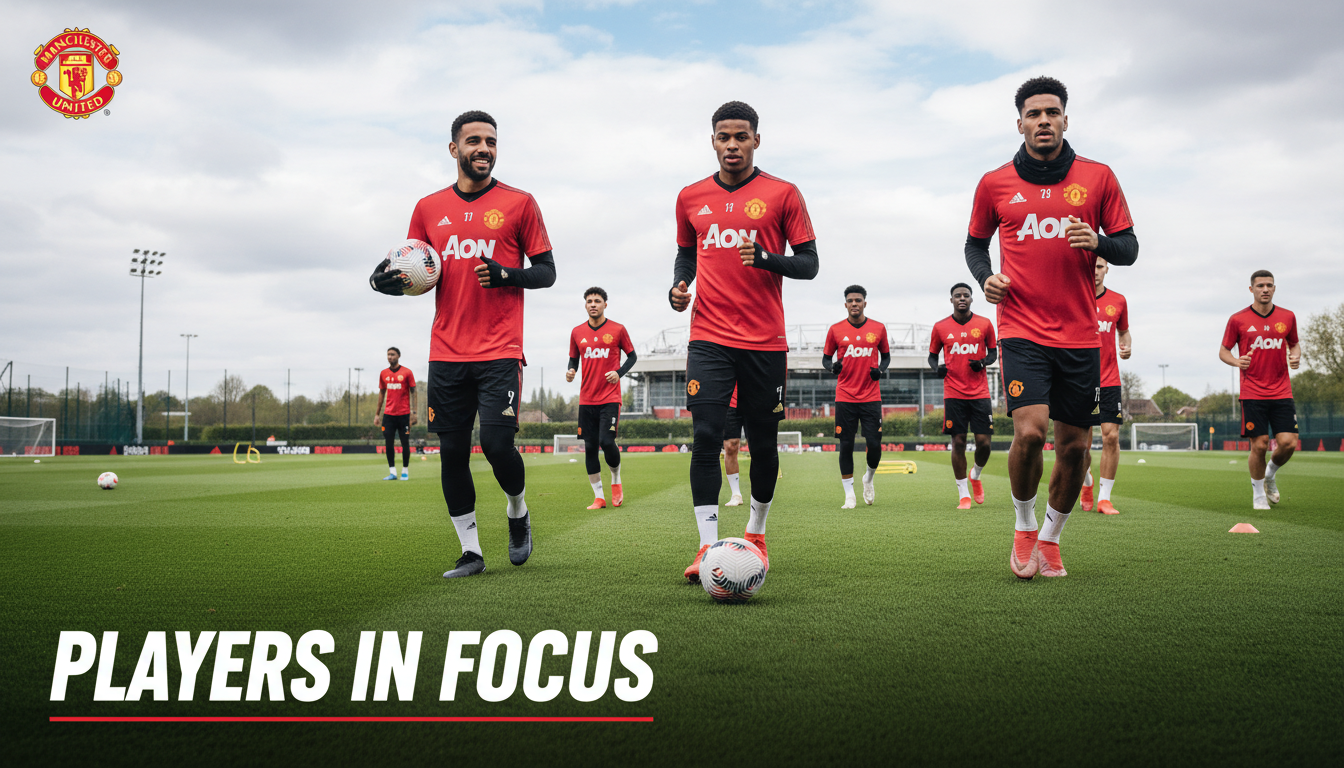
Manchester United players have etched their names in footballing folklore. From the Busby Babes to the Class of ’92, the Red Devils have consistently boasted some of the most talented individuals to grace the beautiful game. This blog post delves deep into the rich tapestry of Manchester United players, exploring their impact, celebrating iconic figures, and looking ahead to the next generation that will undoubtedly carry the torch forward. We’ll analyze the evolution of the squad, the crucial roles they play, and the unwavering passion that unites the Old Trafford faithful.
The allure of Manchester United extends far beyond silverware. It’s about the legacy of the players who have worn the iconic red shirt. Each era has its own set of heroes, their stories interwoven with the club’s monumental successes. Understanding the history of Manchester United players is key to appreciating the club’s enduring stature.
The Pillars of Old Trafford: Legendary Manchester United Players
When discussing Manchester United players, certain names immediately spring to mind, resonating with generations of fans. These are the individuals who not only performed at the highest level but also embodied the spirit and ambition of the club. Their contributions are immeasurable, shaping the club’s identity and inspiring countless others.
The Busby Babes: A Tragic Legacy and Enduring Inspiration
The story of the Busby Babes is one of immense talent tragically cut short. In the 1950s, under the guidance of Sir Matt Busby, Manchester United assembled a young, exhilarating squad that captivated England and Europe. Players like Duncan Edwards, Bobby Charlton (in his early years), and Tommy Taylor showcased an attacking flair and youthful exuberance that promised a dynasty. Their heartbreaking demise in the Munich air disaster in 1958 sent shockwaves through the footballing world. However, the memory of these talented Manchester United players continues to inspire, serving as a poignant reminder of the club’s resilience and ability to rebuild from adversity. The spirit of the Busby Babes lives on in the very fabric of Manchester United.
The surviving members and those who took up the mantle in the aftermath, like the legendary Bobby Charlton and George Best, spearheaded the rebuilding process. Their triumph in the 1968 European Cup final, a decade after the tragedy, was a testament to their unwavering spirit and a fitting tribute to those lost. This victory solidified the enduring legacy of these Manchester United players and their place in the club’s history.
The Charlton, Law, and Best Trinity: The Golden Era
Following the Munich disaster, Sir Matt Busby masterfully rebuilt his team. By the late 1960s, a formidable attacking force had emerged: the trinity of Bobby Charlton, Denis Law, and George Best. These three Manchester United players were a force of nature, each possessing a unique brilliance. Bobby Charlton, a survivor of Munich, was the epitome of elegance and power, a midfield maestro with a thunderous shot. Denis Law, the “King of the Stretford End,” was a prolific goalscorer, renowned for his agility and predatory instincts. And then there was George Best, the “fifth Beatle,” a winger of unparalleled dribbling skill, charisma, and flair. Together, they led Manchester United to multiple league titles and, most memorably, the European Cup in 1968. Their individual brilliance and symbiotic understanding on the pitch made them one of the most feared attacking units in football history. The impact of these Manchester United players transcended the sport, making them global icons.
The synergy between Charlton’s drive, Law’s finishing, and Best’s magic was something special. They created moments of individual genius that often unlocked stubborn defenses. Their legacy is not just in the trophies they won, but in the sheer joy and entertainment they brought to the Old Trafford faithful. The tales of their exploits are still told with reverence, solidifying their status as truly legendary Manchester United players.
The Class of ’92: A Revolution Under Ferguson
Fast forward a few decades, and another golden generation of Manchester United players emerged: the famed “Class of ’92.” This group, nurtured by Sir Alex Ferguson, included David Beckham, Ryan Giggs, Paul Scholes, Nicky Butt, Gary Neville, and Phil Neville. These homegrown talents rose through the academy ranks and formed the backbone of a Manchester United dynasty that dominated English football. Their blend of skill, work ethic, and fierce competitiveness saw them win an unprecedented treble in 1999, including the Premier League, FA Cup, and Champions League. The Class of ’92 are not just remembered for their individual talents but for their deep connection to the club and their unwavering commitment to its success. Their impact on Manchester United players and the club’s philosophy of youth development is undeniable.
The longevity of many of these Manchester United players was remarkable. Ryan Giggs, in particular, enjoyed an astonishing career spanning over two decades, setting numerous appearance records. Paul Scholes was the unsung hero, a midfield magician whose passing range and vision were unparalleled. David Beckham’s free-kicks and iconic status made him a global superstar. Gary Neville provided leadership and defensive solidity from right-back. This group embodied the Manchester United spirit, playing with passion, determination, and a never-say-die attitude.
The Modern Era: Manchester United Players in the Premier League
The Premier League era has seen Manchester United continue to be a powerhouse, consistently attracting world-class talent. Sir Alex Ferguson’s managerial tenure was defined by his ability to blend established stars with emerging talents, ensuring a sustained period of success. The Manchester United players of this era continued to push the boundaries of what was possible.
The Portuguese Phenomenon: Cristiano Ronaldo’s First Stint
One of the most significant signings of the modern era was Cristiano Ronaldo. Arriving as a raw, exciting winger in 2003, Ronaldo developed into arguably the greatest player of his generation under Ferguson’s tutelage. His blistering pace, dazzling footwork, and incredible goalscoring prowess made him a nightmare for opposition defenders. During his first spell at Old Trafford, he won numerous accolades, including three Premier League titles, an FA Cup, and his first Ballon d’Or in 2008. The impact of this Manchester United player on the club’s fortunes and his personal development is a story of remarkable transformation. His departure in 2009 for Real Madrid marked the end of an era, but his legacy as one of the greatest Manchester United players remains firmly intact.
Ronaldo’s work ethic and dedication to self-improvement were legendary. He constantly refined his game, evolving from a tricky winger to a complete goalscoring machine. His contributions in crucial matches, particularly in the Champions League, were often decisive. The memories of his free-kicks, powerful headers, and electrifying runs are etched in the minds of fans.
Wayne Rooney: The Scouser’s Legacy
Wayne Rooney, a homegrown talent from Merseyside, joined Manchester United in 2004 and quickly established himself as a talismanic figure. His raw talent, tenacious spirit, and remarkable goalscoring record made him a fan favorite and one of the most important Manchester United players of the 21st century. Rooney became the club’s all-time leading scorer, surpassing Sir Bobby Charlton, a testament to his longevity and consistent brilliance. He won five Premier League titles, a Champions League, and numerous other trophies during his illustrious career at Old Trafford. His versatility, ability to play in multiple attacking positions, and his leadership qualities made him indispensable.
Rooney’s ability to score spectacular goals, from long-range volleys to deft chips, became a hallmark of his play. He was often the driving force behind Manchester United’s attacks, displaying a passion and commitment that resonated with the supporters. His partnership with other key Manchester United players, such as Cristiano Ronaldo and Carlos Tevez, proved devastating.
The Midfield Maestros: Scholes, Keane, and the Evolution of Control
Beyond the sensational forwards, Manchester United has always been blessed with exceptional midfielders who control the tempo and dictate play. Paul Scholes, as mentioned earlier, was a midfield genius, but the legacy of midfield titans like Roy Keane is equally significant. Keane, the former captain, was an inspirational leader, a fiercely competitive warrior who led by example. His presence on the pitch instilled fear in opponents and galvanized his teammates. Other notable Manchester United players who have graced the midfield include Bryan Robson, another formidable captain, and more recently, players like Michael Carrick and Ander Herrera, who brought intelligence and composure to the engine room.
The role of the midfielder at Manchester United has evolved over the years, but the requirement for passion, technical ability, and tactical intelligence has remained constant. These players are the unsung heroes, the ones who win the battles in the middle of the park and provide the platform for the attackers to shine. The collective contribution of these Manchester United players in midfield has been pivotal to the club’s success.
The Current Generation: Manchester United Players Shaping the Future
While the club is undergoing a period of transition, the current crop of Manchester United players are striving to emulate the successes of their predecessors. The challenge is immense, but the ambition within the squad is evident. Identifying and nurturing new talents, as well as integrating experienced professionals, is key to building sustained success. The future of Manchester United lies in the hands of these current Manchester United players.
Key Figures in the Present Squad
The current Manchester United squad boasts a blend of established stars and exciting prospects. Players like Bruno Fernandes have quickly become vital to the team’s attacking output, providing creativity and crucial goals. Marcus Rashford, a product of the academy, continues to grow in importance, showcasing his electrifying pace and finishing ability. The defensive unit is anchored by experienced professionals and emerging talents who are all aiming to contribute to the team’s success. The ongoing development and integration of these Manchester United players are critical for the club’s aspirations.
The responsibility for leading the team on the pitch often falls to the senior players and those who have a strong understanding of the club’s values. The leadership qualities displayed by these Manchester United players are essential for guiding the younger members of the squad through the challenges of top-flight football. The development of a strong team spirit is paramount.
The Role of the Academy in Developing Manchester United Players
Manchester United has a storied history of producing homegrown talent through its renowned academy. The philosophy of developing young players and integrating them into the first team has been a cornerstone of the club’s identity. The success of the Class of ’92 serves as a powerful inspiration for aspiring young footballers at the club. The ongoing investment in the academy ensures a continuous pipeline of future Manchester United players, imbued with the club’s ethos and tradition. This commitment to youth development is what truly sets Manchester United apart.
The academy scouts and coaches play a crucial role in identifying and nurturing talent from an early age. The rigorous training programs and the emphasis on technical skill, tactical understanding, and mental fortitude prepare these young Manchester United players for the challenges of professional football. Many of the current first-team players have come through this esteemed system.
Tactical Approaches and Player Roles
The effectiveness of any team hinges on the tactical approach employed by the manager and the ability of the Manchester United players to execute those plans. Over the years, different managers have implemented various styles of play, each requiring specific attributes from the players. Understanding these roles is crucial to appreciating the contributions of individual Manchester United players.
The Importance of Versatility in Modern Football
In today’s fast-paced and tactically fluid game, versatility is a key attribute for any Manchester United player. The ability to perform effectively in multiple positions or adapt to different tactical systems can significantly enhance a player’s value to the squad. Managers often look for players who can seamlessly transition between attacking and defensive duties, contributing to both phases of play. This adaptability is what often separates good Manchester United players from great ones.
For instance, a winger might be expected to track back and help the full-back defensively, while a central midfielder could be tasked with pushing forward to support the attack. This interchangeability of roles requires a high level of footballing intelligence and physical conditioning from all Manchester United players.
Defensive Solidity and Attacking Prowess
A successful Manchester United team has always been built on a solid defensive foundation, coupled with potent attacking threats. The defenders are tasked with nullifying opposition attacks, while the midfielders and forwards are responsible for creating and converting chances. The balance between these two aspects is crucial, and the performance of individual Manchester United players in their respective roles directly impacts the team’s overall effectiveness. A strong defense provides the platform for attacking flair, and a potent attack can alleviate pressure on the defense.
The coordination between the defensive and attacking units is paramount. Communication and understanding between Manchester United players across the pitch are essential for maintaining a cohesive shape and executing tactical instructions effectively. The synergy between the defenders and midfielders, and the midfielders and forwards, creates a fluid and dynamic team.
The Unwavering Support: The 12th Man of Manchester United Players
No discussion of Manchester United players would be complete without acknowledging the passionate fanbase. The Old Trafford faithful are renowned for their unwavering support, both home and away. This incredible backing from the supporters acts as a significant motivator for the players, often referred to as the “12th man.” The roar of the crowd can lift a team during difficult moments and inspire moments of magic. The connection between Manchester United players and their fans is a special bond, forged through shared triumphs and tribulations.
The atmosphere at Old Trafford on matchdays is electric, a testament to the loyalty and devotion of the supporters. This fervent atmosphere can be a daunting prospect for visiting teams, but it also provides an immense psychological boost to the home players. The shared emotion and passion create an unforgettable experience for everyone involved.
The Future of Manchester United: Developing the Next Generation of Stars
As Manchester United looks to the future, the focus remains on nurturing new talent and re-establishing the club at the pinnacle of world football. The current hierarchy is committed to building a squad that can compete for major honors consistently. The development of the next generation of Manchester United players is a top priority, ensuring the club’s legacy continues to thrive.
Investing in Youth Development and Recruitment
The club’s commitment to its academy remains steadfast, with continuous investment in facilities and coaching staff. Alongside nurturing homegrown talent, strategic recruitment of promising players from around the globe is also essential. The aim is to create a balanced squad with a mix of youth and experience, all driven by a shared ambition to succeed. Identifying players who not only possess technical ability but also the mental fortitude and desire to represent Manchester United is key. The club’s scouting network plays a vital role in identifying these future Manchester United players.
The recruitment strategy will need to be intelligent and targeted, focusing on players who can address specific needs within the squad and fit the club’s playing philosophy. A careful balance between signing established stars and investing in high-potential youngsters will be crucial for long-term success. The integration of new Manchester United players into the existing team culture will also be a significant factor.
The Manager’s Vision and Player Empowerment
The manager plays a pivotal role in shaping the team’s identity and empowering the Manchester United players. A clear tactical vision, coupled with the ability to foster a positive team spirit and develop individual players, is essential. The manager must create an environment where players feel supported, challenged, and motivated to perform at their best. Player empowerment, allowing individuals to express their talents while adhering to team objectives, is a key component of modern management. The right manager can unlock the full potential of the Manchester United players.
Building strong relationships with the players, understanding their individual strengths and weaknesses, and providing them with the tools and confidence to succeed are all hallmarks of an effective manager. The manager’s ability to inspire and motivate the squad, especially during challenging periods, is often what separates success from mediocrity. This symbiotic relationship between the manager and the Manchester United players is fundamental.
Analyzing Individual Player Contributions
To truly appreciate the impact of Manchester United players, it’s important to analyze their individual contributions beyond mere statistics. While goals and assists are important metrics, factors like defensive work rate, leadership, tactical discipline, and the ability to influence the game in crucial moments also deserve recognition.
Statistics and Their Significance
Statistics provide a valuable quantitative measure of a player’s performance. Goal tallies, assist numbers, pass completion rates, tackles won, and clean sheets are all important indicators. However, it’s crucial to interpret these statistics within the context of the player’s role, the team’s tactical setup, and the opposition faced. For example, a defensive midfielder’s impact might not be fully captured by goal contributions, but their ball-winning and distribution statistics can be highly significant. The numbers for Manchester United players often tell a compelling story.
When analyzing the statistics of Manchester United players, it’s also important to consider the era in which they played. The game has evolved significantly, and comparing players from different generations solely on raw numbers can be misleading. The influence of these players on their teams and the sport itself is often immeasurable by statistics alone.
The Intangibles: Leadership, Mentality, and Influence
Beyond the quantifiable, there are intangible qualities that define truly great Manchester United players. Leadership, a strong winning mentality, resilience in the face of adversity, and the ability to perform under pressure are all crucial. Players like Roy Keane, Bryan Robson, and Steve Bruce were renowned for their commanding presence and their ability to galvanize their teammates. More recently, players who demonstrate composure and decision-making in high-stakes moments, like David de Gea in goal or Bruno Fernandes in midfield, prove their immense value. These are the Manchester United players who often decide big games.
The mentality of a player is just as important as their technical skill. The ability to bounce back from a mistake, to maintain focus throughout a 90-minute match, and to consistently perform at a high level requires immense mental strength. These intangible qualities are what often elevate Manchester United players to legendary status.
Historical Context and Comparisons
Understanding the historical context in which Manchester United players operated is vital for a fair assessment. The game in the 1950s was vastly different from the tactical and physical demands of the modern Premier League. Comparing players across different eras requires an appreciation of these evolving factors.
Evolution of Tactics and Playing Styles
Football tactics have undergone a significant transformation over the decades. From the more rigid formations of the past to the fluid and dynamic systems of today, the demands on Manchester United players have changed. The increased emphasis on pressing, counter-pressing, and intricate passing triangles requires a different skill set and a higher level of tactical intelligence. The evolution of the game means that players are now expected to be more well-rounded, capable of contributing in multiple areas of the pitch.
The advancements in sports science and training methodologies have also had a profound impact on the physical capabilities of modern players. This allows for a more intense and demanding style of play, which in turn influences the types of Manchester United players that are sought after. Understanding this evolution is key to appreciating the journey of Manchester United players.
Legendary Partnerships and Rivalries
Throughout Manchester United’s history, numerous iconic partnerships have graced the pitch. The aforementioned trinity of Charlton, Law, and Best is a prime example. In more recent times, the synergy between Cristiano Ronaldo and Wayne Rooney, or the midfield understanding between Paul Scholes and Roy Keane, has been instrumental in the club’s success. These partnerships often define eras and are fondly remembered by fans. The interplay between these Manchester United players created moments of footballing magic.
Furthermore, the fierce rivalries with other clubs, particularly Liverpool and Man City, have added an extra layer of intensity and drama to the careers of Manchester United players. These encounters often bring out the best in the players, showcasing their passion and determination to represent the club with pride.
The Future Landscape of Manchester United Players
The journey of Manchester United players is a continuous narrative, with new chapters being written every season. The club’s ambition to return to the summit of European football means a constant pursuit of excellence, both in terms of player development and recruitment. The future promises exciting times for Manchester United players and their passionate fanbase.
Adapting to a Changing Football World
The global landscape of football is constantly evolving, with new technologies, tactical innovations, and financial shifts influencing the game. Manchester United players must be adaptable and willing to embrace change to remain competitive. The rise of data analytics, for instance, is playing an increasingly significant role in player performance analysis and team strategy. Staying at the forefront of these developments will be crucial for the club and its players. The ability of Manchester United players to adapt to these changes will be key to their future success.
The increasing physicality and athleticism seen in the modern game also necessitate a focus on player conditioning and injury prevention. The commitment to sports science and athlete welfare will be paramount in ensuring the longevity and peak performance of Manchester United players.
The Enduring Legacy of Manchester United Players
The legacy of Manchester United players is not just measured in trophies but in the inspiration they provide to future generations. From the brave Busby Babes to the treble-winning Class of ’92 and the global superstars of recent times, each generation of Manchester United players has contributed to the club’s rich tapestry. The stories of their dedication, talent, and passion will continue to be told, inspiring young footballers and fans alike. The enduring impact of these Manchester United players is undeniable.
The values of hard work, commitment, and the pursuit of excellence are instilled in every player who pulls on the famous red shirt. This commitment to a core set of principles ensures that the spirit of Manchester United lives on, carried forward by each new wave of talented individuals. The history of Manchester United players is a testament to the club’s enduring greatness.
Call to Action: Predict the Next Manchester United Triumph!
The drama and excitement of the English Premier League are unparalleled, and predicting the outcomes of matches involving giants like Manchester United is a thrilling endeavor. Are you a keen observer of the beautiful game, with a knack for anticipating key moments and results? Do you want to stay ahead of the curve with insightful analysis and expert predictions?
If you’re passionate about football and eager to test your predictive prowess, then our exclusive subscription service is tailor-made for you. We provide in-depth analysis, statistical breakdowns, and expert opinions to help you make informed predictions. From predicting the next Manchester United triumph to forecasting upsets and identifying value bets, our service is designed to give you an edge.
Subscribe now to Daily Soccer Picks for the best predictions and insights into the English Premier League! Don’t miss out on the opportunity to elevate your football knowledge and enjoy the thrill of accurate predictions. Click the link below to join our community of passionate football enthusiasts:
https://dailysoccerpicks.com/subscribe-daily-english-premier-league-soccer/














Comments 1