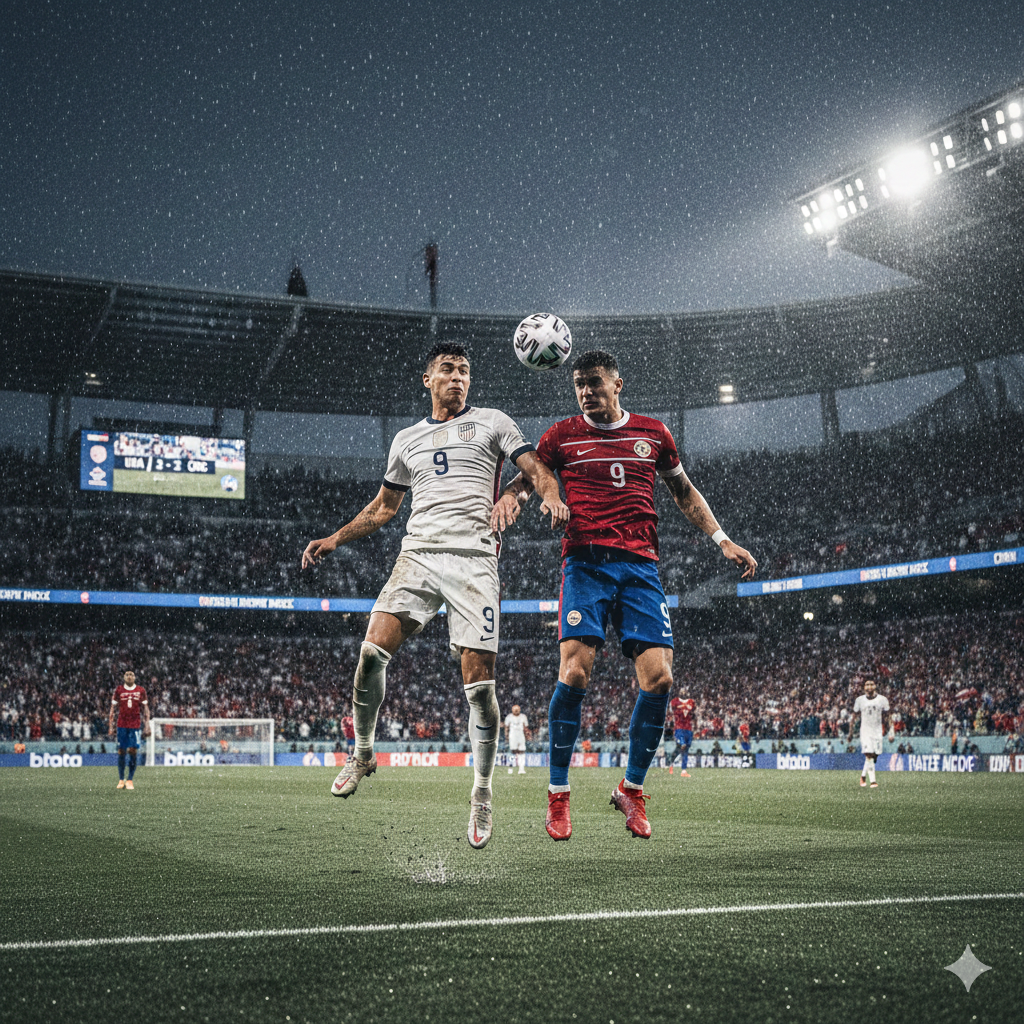

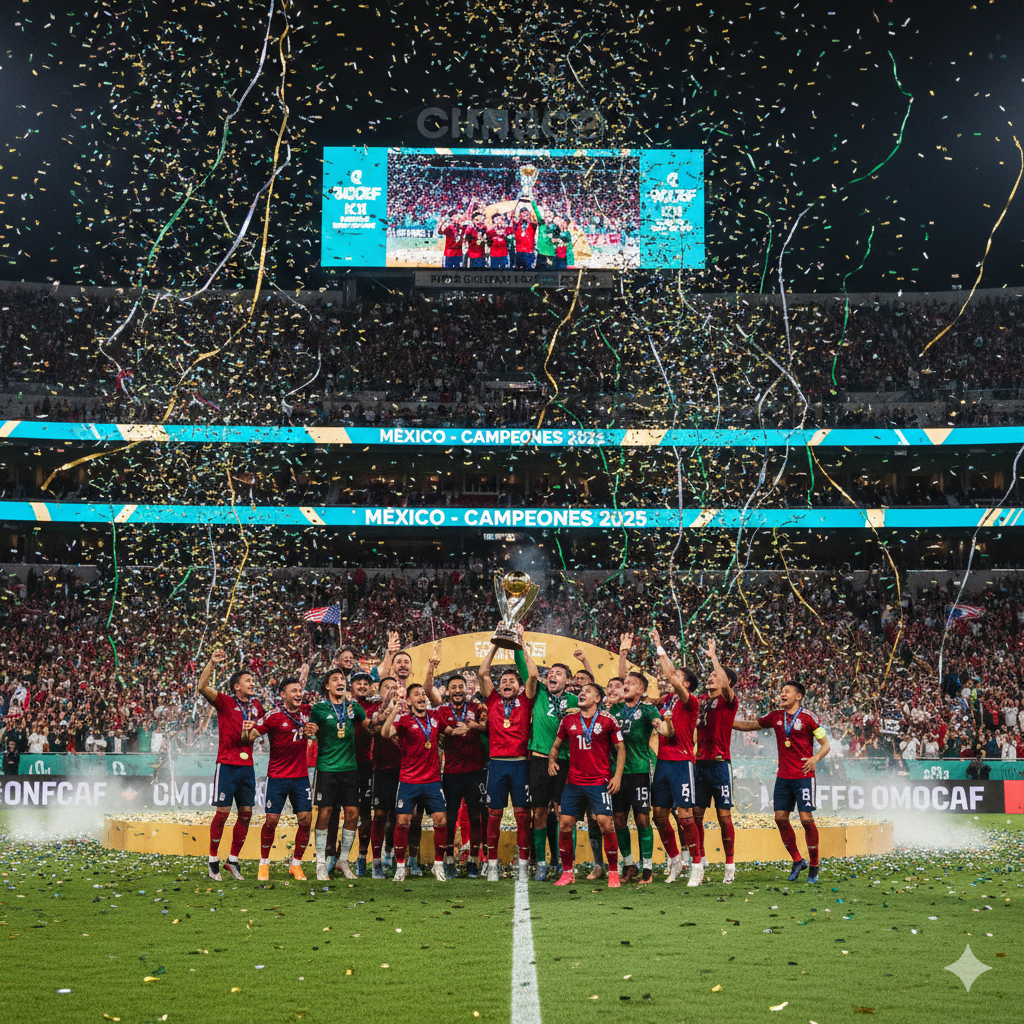
For soccer fans in North America, Central America, and the Caribbean, one phrase carries more weight than any other: gold cup soccer. As the premier international competition for the CONCACAF region, the Gold Cup is more than just a tournament; it is a biennial battle for regional supremacy, a showcase for emerging talent, and a vibrant celebration of diverse footballing cultures.
From the roaring crowds at the Estadio Azteca to the modern cathedrals of sport in the United States and Canada, gold cup soccer has evolved from a fledgling regional championship into a global spectacle. In this deep dive, we explore everything you need to know about this prestigious tournament from its historic roots to the thrilling results of the most recent 2025 edition.
Table of Contents
What is Gold Cup Soccer?
The CONCACAF Gold Cup (often referred to simply as the Gold Cup) is the main association football competition for men’s national teams governed by CONCACAF. While the FIFA World Cup represents the pinnacle of the sport globally, the Gold Cup is the definitive proving ground for nations like the United States, Mexico, Canada, and the island nations of the Caribbean.
The Evolution of the Format
The tournament has undergone significant changes since its inception. What began as a smaller gathering has blossomed into a 16-team powerhouse event.
| Feature | Details |
| Frequency | Biennial (Every 2 years) |
| Current Teams | 16 Nations |
| Qualification | CONCACAF Nations League & Prelims |
| Most Titles | Mexico (10 Titles) |
| Recent Champion | Mexico (2025) |
In the modern era, gold cup soccer utilizes a group stage followed by a high-stakes knockout bracket. Interestingly, the 2025 edition introduced a rule change where extra time was abandoned for all matches except the final, leading to more immediate and dramatic penalty shootouts during the quarter and semi-final rounds.
A Journey Through History: From 1991 to Today
While CONCACAF organized championships as far back as 1963, the “Gold Cup” brand officially launched in 1991. The inaugural tournament was hosted by the United States, who also claimed the first-ever trophy by defeating Honduras in a tense penalty shootout.
The Era of Dominance: USA vs. Mexico
For much of its history, gold cup soccer has been a two-horse race. Mexico and the United States have combined to win 17 of the 18 editions held since 1991.
- Mexico’s “El Trí”: With a record 10 titles, Mexico is the undisputed king of the region. Their technical proficiency and massive fan base make every match a “home” game, regardless of the venue.
- The USMNT: The United States has lifted the trophy 7 times, often using the tournament to blood new talent or assert dominance on home soil.
- The Canadian Exception: In 2000, Canada shocked the world by winning the title, defeating guest nation Colombia in the final. To this day, they remain the only country outside the “Big Two” to win the modern Gold Cup.
Official highlights of the gold cup soccer 2025 final between USA and Mexico.
Estados Unidos 1-2 México | Copa Oro 2025 | Final

As a follow-up to our deep dive into the history of gold cup soccer, here is the comprehensive breakdown of every tournament final since the competition’s modern rebranding in 1991.
This table highlights the dominance of the North American giants while also showcasing the rare occasions when teams like Canada or Honduras broke through the glass ceiling.
The Complete History of Gold Cup Soccer Finals (1991–2025)
| Year | Champion | Runner-up | Score | Host City | Venue |
| 1991 | United States | Honduras | 0–0 (4–3 p) | Los Angeles, CA | Memorial Coliseum |
| 1993 | Mexico | United States | 4–0 | Mexico City, MEX | Estadio Azteca |
| 1996 | Mexico | Brazil | 2–0 | Los Angeles, CA | Memorial Coliseum |
| 1998 | Mexico | United States | 1–0 | Los Angeles, CA | Memorial Coliseum |
| 2000 | Canada | Colombia | 2–0 | Los Angeles, CA | Memorial Coliseum |
| 2002 | United States | Costa Rica | 2–0 | Pasadena, CA | Rose Bowl |
| 2003 | Mexico | Brazil | 1–0 (a.e.t.) | Mexico City, MEX | Estadio Azteca |
| 2005 | United States | Panama | 0–0 (3–1 p) | E. Rutherford, NJ | Giants Stadium |
| 2007 | United States | Mexico | 2–1 | Chicago, IL | Soldier Field |
| 2009 | Mexico | United States | 5–0 | E. Rutherford, NJ | Giants Stadium |
| 2011 | Mexico | United States | 4–2 | Pasadena, CA | Rose Bowl |
| 2013 | United States | Panama | 1–0 | Chicago, IL | Soldier Field |
| 2015 | Mexico | Jamaica | 3–1 | Philadelphia, PA | Lincoln Financial Field |
| 2017 | United States | Jamaica | 2–1 | Santa Clara, CA | Levi’s Stadium |
| 2019 | Mexico | United States | 1–0 | Chicago, IL | Soldier Field |
| 2021 | United States | Mexico | 1–0 (a.e.t.) | Paradise, NV | Allegiant Stadium |
| 2023 | Mexico | Panama | 1–0 | Inglewood, CA | SoFi Stadium |
| 2025 | Mexico | United States | 2–1 | Houston, TX | NRG Stadium |
Tournament Trends & Takeaways
When analyzing the history of gold cup soccer, several fascinating patterns emerge:
- The Powerhouse Hubs: While the tournament has been hosted in several countries (including Mexico and Jamaica), the vast majority of finals have taken place in the United States. Southern California, specifically the Memorial Coliseum and the Rose Bowl, served as the spiritual home for the tournament’s first decade.
- The Penalty Factor: Despite the high stakes, only two finals in history have been decided by penalty shootouts: the very first one in 1991 and the 2005 battle between the USA and Panama.
- Mexico’s “Decima”: By winning the 2025 title, Mexico became the first nation to reach 10 modern gold cup soccer championships. This feat was particularly impressive as it marked back-to-back titles (2023 and 2025).
- Underdog Heartbreak: Panama holds the record for the most final appearances (3) without ever lifting the trophy. They have become the “perennial bridesmaids” of the region, consistently challenging the status quo but falling just short of the gold.

For those interested in the statistical leaders of these matches, you can find the all-time top scorers list at the official CONCACAF site, which features names like Landon Donovan and Luis Roberto Alves.
To understand the depth of gold cup soccer, we have to look at the two “Disruptors” of the CONCACAF region: Canada and Panama.
While Mexico and the U.S. grab the headlines, these two nations have provided the tournament’s most compelling storylines. Here is an analysis of their unique journeys and their statistical impact on the competition.
1. Canada: The Only “Other” Champion
Canada holds a unique place in gold cup soccer history as the only nation besides the “Big Two” to ever lift the trophy in the modern era (since 1991).
- The Miracle of 2000: Canada’s 2000 run is legendary. They actually tied with South Korea in the group stage and only advanced to the knockout round via a coin toss. From there, they went on a tear, upsetting Mexico in the quarter-finals and eventually beating guest nation Colombia 2–0 in the final.
- Modern Resurgence: After years of “Group Stage” exits, the current generation (led by stars like Alphonso Davies and Jonathan David) has turned Canada back into a powerhouse. In 2021, they reached the semi-finals, narrowly losing 2–1 to Mexico, and in 2025, they reached the quarter-finals with an unbeaten record in regular play.
- Key Statistical Leaders:
- Appearances: Paul Stalteri (20 matches)
- Leading Scorers: Jonathan David and Ali Gerba (6 goals each)
2. Panama: The Persistent Contender
If Canada represents the “Shock Winner,” Panama represents the “Rising Force.” No team in gold cup soccer history has worked harder to break into the elite circle.
- The “Kings of the Final”: Panama has reached the Gold Cup final three times (2005, 2013, and 2023). Remarkably, they have lost all three twice to the USA and once to Mexico by incredibly thin margins.
- The 2025 Golden Boot: In the most recent tournament, Ismael Díaz etched his name into history by scoring 6 goals, winning the Golden Boot and tying the legendary Blas Pérez for Panama’s all-time lead in the tournament.
- Giant Slayers: Panama is famous for its tactical discipline. In 2013, they famously beat Mexico twice in a single tournament (once in the group stage and again in the semi-finals), a feat rarely accomplished in the region.
Side-by-Side Performance Comparison
| Feature | Canada | Panama |
| Gold Cup Titles | 1 (2000) | 0 |
| Runner-up Finishes | 0 | 3 (2005, 2013, 2023) |
| Best 2025 Finish | Quarter-finals | Semi-finals |
| All-Time Leading Scorer | Jonathan David (6) | Ismael Díaz / Blas Pérez (11) |
| Playing Style | High-press, Athletic | Tactical, Physical, Counter-attack |
Head-to-Head History
When these two meet in gold cup soccer, it is almost always a stalemate.
- 2011: 1–1 Draw
- 2013: 0–0 Draw
- 2025 (Nations League/Prep): Canada won 2–1 in a late-year thriller.
The rivalry between these two nations is now the “battle for 3rd place” in the region, as both aim to consistently challenge the US-Mexico duopoly. You can track their current rankings and upcoming fixtures on the Official FIFA Rankings page.

Analyzing the tactics of the “Big Two” in gold cup soccer reveals how both nations used the 2025 tournament as a laboratory for the 2026 World Cup. Under new leadership and evolving philosophies, the USA and Mexico showcased two distinct approaches to regional dominance.
The United States: Pochettino’s “Grit and Set-Piece” Blueprint
Under the guidance of Mauricio Pochettino, the USMNT entered the 2025 tournament with a heavily rotated roster. While missing some European-based stars like Christian Pulisic, the squad adopted a “Poch-style” identity characterized by physical intensity and high-tech preparation.
- The TrackMan Advantage: The U.S. gained a tactical edge by utilizing TrackMan technology to perfect their set-piece delivery. This was evident in the final, where Chris Richards scored a thunderous header off a pinpoint Sebastian Berhalter free-kick just four minutes into the game.
- The “Dog Mentality”: Pochettino focused on a “high-press, high-intensity” 4-2-3-1 system. Players like Diego Luna and Malik Tillman were tasked with winning the ball high up the pitch, creating a chaotic environment for opposing defenders.
- The Midfield Anchor: With Tyler Adams returning to form, the U.S. relied on a “double pivot” that aimed to shield a younger defensive line, allowing the fullbacks to push higher into the attack.
Mexico: Aguirre’s “Surgical Possession” and Experience
While the U.S. focused on energy, Mexico—under the veteran Javier Aguirre relied on technical mastery and structural discipline. Despite facing heavy criticism from home fans earlier in the year, “El Trí” peaked at the perfect moment.
- Dominating the Tempo: In the 2025 final, Mexico dictated the pace through long spells of possession (dictating nearly 60% of the ball). They specifically exploited the left flank through Alexis Vega, forcing the U.S. into a defensive shell for much of the second half.
- The “Decisive No. 9”: Aguirre’s decision to stick with experience paid off. Raúl Jiménez used his physical presence to beat veteran Tim Ream for the equalizer, proving that Mexico’s traditional “A-team” spine remains one of the most clinical in CONCACAF.
- Set-Piece Resilience: Ironically, after the U.S. touted their set-piece tech, Mexico won the final on a set-piece of their own—an Edson Álvarez header in the 77th minute. This showed that Aguirre’s side had evolved to be just as dangerous in “dead ball” situations as they are in open play.
Tactical Comparison: 2025 Gold Cup Final
| Tactical Pillar | USMNT (Pochettino) | Mexico (Aguirre) |
| Primary Formation | 4-2-3-1 / 4-3-3 | 4-3-3 / 4-1-4-1 |
| Philosophy | Transition & Set-Piece Precision | Positional Play & Possession |
| Key Playmaker | Malik Tillman | Edson Álvarez |
| Defensive Style | Aggressive High Press | Compact Block & Zonal Marking |
| Game-Winner | N/A | Set-piece Header (Álvarez) |
The Road to 2026
The 2025 gold cup soccer final served as a massive data point for both managers. For Pochettino, it was a “rough cut” that proved he has the depth to compete even without his primary stars. For Aguirre, it was a “blockbuster” statement that silenced his critics and reaffirmed Mexico’s place as the “Kings of the Region.”

As these teams head into 2026, the tactical gap has closed. The U.S. is faster and more athletic, but Mexico remains more tactically sophisticated and composed under pressure. You can follow the latest tactical deep-dives and player ratings on the US Soccer official site or the Mexican Federation (FMF) portal.
Looking Back at the 2025 Gold Cup Soccer Tournament
The year 2025 marked a pivotal moment for the sport in North America. Serving as a “dress rehearsal” for the 2026 FIFA World Cup, the 2025 Gold Cup was a logistical and athletic triumph.
2025 Tournament Highlights
Hosted across 14 venues in the United States and Canada, the tournament featured a unique backdrop. Many matches were scheduled in the Western U.S. to avoid overlap with the FIFA Club World Cup, which occupied the East Coast.
Key Statistics from 2025:
- Champions: Mexico (defeated USA 2–1 in the final).
- Venue of the Final: NRG Stadium, Houston, Texas.
- Top Scorer: Ismael Díaz (Panama) with 6 goals.
- Best Player: Edson Álvarez (Mexico).
- Guest Participant: Saudi Arabia joined the fray, adding an international flair to the regional contest.
The final in Houston was a classic example of gold cup soccer intensity. Mexico secured their 10th title thanks to a 77th-minute strike by Edson Álvarez, silencing a pro-USA crowd and cementing their status as the region’s top-ranked team heading into the World Cup year.
Why Gold Cup Soccer Matters Locally and Globally
The impact of gold cup soccer extends far beyond the pitch. It is a massive economic engine and a cultural touchstone for millions of immigrants and first-generation citizens living in North America.
1. Economic Powerhouse
Host cities frequently see a revenue generation of over $100 million. From hotel bookings to local “fan fests,” the tournament transforms cities into vibrant international hubs. The 2025 edition saw an attendance of nearly 780,000 fans, proving that the appetite for the beautiful game is at an all-time high.
2. The Caribbean and Central American Underdogs
For nations like Jamaica, Panama, and Haiti, the Gold Cup is their World Cup. These teams have consistently punched above their weight. Panama has reached the final three times (2005, 2013, 2023), while Jamaica’s “Reggae Boyz” made back-to-back finals in 2015 and 2017. Their participation brings a unique style of play and a festive atmosphere that defines gold cup soccer.
3. Tactical Development
The tournament serves as a crucial scouting ground. Many players from smaller CONCACAF nations use a standout Gold Cup performance to secure contracts in Major League Soccer or European leagues. It is the primary platform where “small” teams prove they can tactically frustrate the giants.
Notable Moments in Gold Cup History
To understand the passion behind gold cup soccer, one must look at the legendary moments that have shaped the tournament:
- The 2009 “5-0” Final: Mexico’s stunning demolition of the USA at Giants Stadium remains one of the most lopsided and shocking results in the rivalry’s history.
- The Rise of Guest Teams: Between 1996 and 2005, CONCACAF invited nations like Brazil, Colombia, and South Korea. Brazil reached the final twice (1996 and 2003) but famously lost to Mexico both times at the Estadio Azteca.
- Landon Donovan’s Legacy: The American legend holds numerous records in the tournament, including being a four-time winner and one of the all-time leading scorers.
Preparing for the Future: The 2027 Gold Cup
As we look toward the 2027 edition, the landscape of gold cup soccer continues to shift. With the expansion of the World Cup and the increasing professionalization of leagues across Central America, the “gap” between the top teams and the rest of the field is narrowing.
There is ongoing discussion about moving the tournament to a four-year cycle to increase its prestige and align it with the UEFA European Championship. Regardless of the frequency, the Gold Cup remains the soul of North American soccer.
How to Follow the Action
For those looking to dive deeper into the world of CONCACAF, staying updated with official CONCACAF news is essential. Whether you are a die-hard supporter of the USMNT or a neutral fan of the beautiful game, gold cup soccer offers a level of unpredictability and passion that is hard to find anywhere else.
Final Thoughts
The story of gold cup soccer is a story of growth. From the humble beginnings of 1991 to the record-breaking attendance of 2025, the tournament has mirrored the rise of soccer’s popularity in North America. It is a stage where legends are born, rivalries are forged in fire, and every two years, a new chapter of history is written in gold.
Join the Elite: Get 2027 Gold Cup Soccer Predictions First
The road to regional glory is paved with data, but only the best insights turn a casual viewer into a winning expert. As the 2025 tournament proved, gold cup soccer is defined by razor-thin margins and tactical surprises that the mainstream media often misses.
Don’t wait for the opening whistle to start your research. Join our exclusive inner circle and receive:
- Expert Tactical Breakdowns: Deep dives into manager philosophies (like Pochettino’s high-press) before every matchday.
- Data-Driven Predictions: Advanced metrics and “expected goals” (xG) analysis for every knockout round clash.
- Injury & Lineup Alerts: Real-time updates on the stars of CONCACAF, delivered straight to your inbox.
- Sleeper Picks: We identify the “Panamas” and “Canadas” of the next cycle before they become household names.
Subscribe Now: Get Free Expert Predictions for the Next Gold Cup Cycle!
Join 15,000+ fans who never miss a beat in North American soccer.