

The roar of the crowd on a Thursday night is a sound distinct in European football. It is the sound of the European UEFA League, a competition steeped in history, defined by drama, and renowned for forging the legends of tomorrow. For decades, this tournament, formerly known as the UEFA Cup, has served as a crucible for ambitious clubs from every corner of the continent, offering a vital pathway to elite status and a coveted piece of silverware.
While the UEFA Champions League holds the crown as Europe’s premier club competition, the European UEFA League offers a different, often more unpredictable, kind of glory. It is a battlefield for domestic cup winners, league runners-up, and those giants of the game seeking redemption or a return to the top table. It’s where emerging talents prove their mettle against seasoned campaigners, and where long, challenging journeys culminate in one of the most emotional finals in world football.
This comprehensive guide will dismantle and reconstruct everything you need to know about the tournament. We will explore its transformative new format, chart its rich history from the Inter-Cities Fairs Cup to the modern era, analyze the financial stakes and club coefficients, and celebrate the teams and players who have defined its legacy. Understanding the European UEFA League is not just about following results; it’s about appreciating the depth, breadth, and competitive spirit of the entire European football landscape.
Table of Contents
1. The New Era: Understanding the European UEFA League Format (2024/25 Onwards)
The European UEFA League, along with its two sibling competitions, the Champions League and Conference League—has entered a revolutionary phase, shifting away from the traditional group stage structure to an exhilarating, all-encompassing league phase. This significant change, implemented for the 2024/25 season, reshapes the competitive landscape and increases the stakes from the very first matchday.
1.1 The New League Phase: The Swiss Model
The most dramatic change to the European UEFA League format is the replacement of the 32-team group stage (eight groups of four) with a single 36-team League Phase. This format draws inspiration from the “Swiss model” used in chess tournaments, ensuring a greater variety of opponents and making every single match relevant.
Explained: The NEW Champions League, Europa League & Europa Conference League format 😮🗂️
Sky Sports Football · 718K views

Key Elements of the 36-Team League
- Expanded Roster: The field now consists of 36 clubs, four more than the previous format.
- The Fixture List: Instead of playing six matches against three opponents (home and away), each team in the European UEFA League now plays eight matches against eight different opponents (four at home and four away).
- Seeding and Draw: The 36 teams are seeded into four pots based on their UEFA club coefficient ranking. In the League Phase draw, each team is assigned two opponents from each of the four pots, ensuring a balanced, high-variance schedule.
- The Single Table: All 36 teams are ranked in one unified league table. Points are awarded in the traditional manner: three for a win, one for a draw, and zero for a loss. The suspense lasts until the final matchday, as every point can be the difference between a direct qualification spot and early elimination.
1.2 The Qualification Maze: How Teams Earn a Spot
The journey to the European UEFA League proper is a multi-tiered system, ensuring representation from Europe’s top leagues down to the smaller associations. It is a competition designed to reward success in domestic cup competitions and strong league finishes just outside the top tier.
Direct Entrants
Automatic qualification for the League Phase is typically granted to:
- Domestic Cup Winners: Winners of the national cups in the top-ranked UEFA associations.
- High-Ranking League Teams: Clubs finishing in specific domestic league positions, such as 5th or 6th place in Europe’s strongest leagues, whose exact allocation depends on the UEFA association coefficient rankings.
- The Reigning UCL and UECL Holders: The winner of the UEFA Europa Conference League from the previous season automatically earns a spot in the European UEFA League (provided they don’t qualify for the Champions League through their domestic league).
- Transfer from UCL: Losers from the UEFA Champions League play-off round.
The Qualifying Rounds
The vast majority of clubs must navigate a treacherous path through a series of two-legged knockout ties, collectively known as the qualifying rounds. This involves the First, Second, and Third Qualifying Rounds, culminating in the Play-off round, where winners secure their place in the 36-team League Phase. The European UEFA League provides a stage for clubs from over 30 national associations to compete for a place in the main draw, demonstrating its status as a truly pan-European competition.
1.3 The New Knockout Structure: Play-offs and Bypasses
The single 36-team table leads directly into a nuanced two-tiered knockout system:
- The Elite Eight (1st to 8th Place): The top eight teams in the League Phase automatically qualify for the Round of 16, earning a crucial bye and several extra weeks of rest. This is a massive incentive, rewarding stellar performance in the initial stage.
- The Knockout Phase Play-offs (9th to 24th Place): Teams finishing from 9th to 24th enter a two-legged playoff. The teams ranked 9th to 16th are seeded and face an unseeded team ranked 17th to 24th. The winners of these eight ties complete the Round of 16 bracket.
- Elimination (25th to 36th Place): Teams finishing 25th or lower are completely eliminated from European competition for the season. Unlike the old system, there is no longer a drop-down to the UEFA Europa Conference League from this stage.
From the Round of 16 onwards, the competition reverts to a traditional straight knockout format, two-legged ties until the single-match Final, held at a pre-determined neutral venue. The structure of the modern European UEFA Leagueis designed to maximize the intensity of the competition and reward consistency throughout the demanding League Phase.
2. A Trophy Forged in History: The Evolution of the European UEFA League
The European UEFA League is not a young competition; it is the continuation of a lineage that stretches back over 70 years, representing the second-oldest major continental club tournament. Its history is one of constant evolution, adapting to the changing economics and politics of football.
2.1 The Inter-Cities Fairs Cup (1955–1971)
The true ancestor of the competition was the Inter-Cities Fairs Cup. Launched in 1955, the same year as the European Cup, it was initially conceived not just as a football tournament but as a way to promote international trade fairs.
- Unique Beginnings: Only clubs from cities hosting trade fairs were eligible. The first tournament famously ran over three years (1955–1958) to accommodate the trade fair schedules.
- Early Successors: The first final saw Barcelona defeat a London XI. Over time, the tournament became more professionalized, but it was never officially governed by UEFA, although its importance was undeniable.
- Legacy: By the time the Fairs Cup was replaced, its participant list had swelled to 64 teams, demonstrating the appetite for a secondary European tournament.
2.2 The UEFA Cup Era (1971–2009)
In 1971, UEFA officially took over the tournament, rebranding it as the UEFA Cup. This move formalized the competition, standardized its rules, and cemented its position as Europe’s second-tier competition.
- New Rules: The key distinction of the early UEFA Cup was that it exclusively featured clubs based on their domestic league performance (typically runners-up, third, and fourth-placed teams), excluding domestic cup winners (who participated in the now-defunct Cup Winners’ Cup).
- Inaugural Winner: Tottenham Hotspur of England defeated fellow English side Wolverhampton Wanderers in the inaugural 1972 final, which was contested over two legs, one at each club’s ground.
- Format Shifts:
- 1998: The final was switched from a two-legged affair to a single match at a neutral venue, with Inter Milan defeating Lazio in Paris, a change that added immense pressure and excitement to the final stage.
- 1999: The UEFA Cup Winners’ Cup was merged into the UEFA Cup, meaning domestic cup winners now qualified for the competition, further broadening the field and increasing its prestige.
- 2004: The introduction of a preliminary Group Stage, before the traditional knockout rounds, gave the competition an early-season identity and more guaranteed European nights for smaller clubs.
2.3 The Rebranding: Birth of the European UEFA League (2009–Present)
The 2009–10 season marked the most significant modern transformation: the competition was officially renamed the UEFA Europa League. This name change was designed to align it more closely with the highly successful Champions League brand and to incorporate the disbanding UEFA Intertoto Cup.
The rebranding also came with an expanded Group Stage (48 teams) and a new identity, including its now-iconic branding and theme music. This renewed focus aimed to increase the tournament’s commercial value and overall reputation. The commitment to maintaining the tournament’s competitive profile ensures that the European UEFA League is far more than a consolation prize, it is a major honor in its own right.
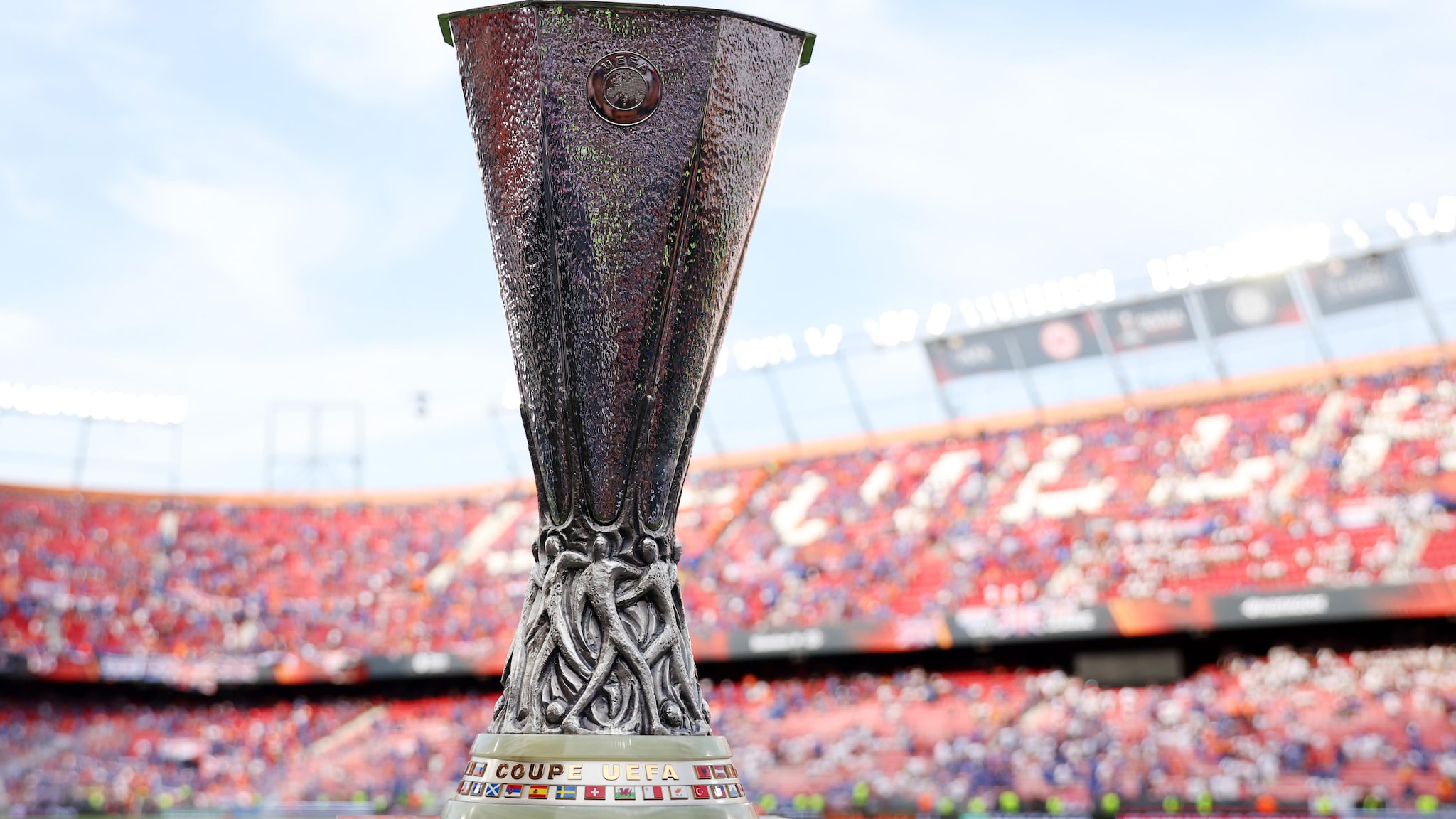
The most recent evolution, the 2024/25 single-league format, further underscores UEFA’s dedication to keeping the European UEFA League fresh, unpredictable, and commercially successful.
3. The Kings of the Competition: Teams and Nations that Define the European UEFA League
The history of the European UEFA League is etched in the success stories of numerous clubs, but a few have established a truly dominant record, showcasing a remarkable affinity for the unique challenges of the tournament.
3.1 Unrivalled Dominance: The Sevilla Phenomenon
No club embodies the spirit and challenge of the European UEFA League more than Sevilla FC. The Spanish club is the undisputed record holder, securing an astonishing seven titles. Their success is a case study in how to navigate the physical demands and tactical variety of the competition.
| Team | Titles (UEFA Cup/UEL) | Years Won |
| Sevilla | 7 | 2006, 2007, 2014, 2015, 2016, 2020, 2023 |
| Inter Milan | 3 | 1991, 1994, 1998 |
| Liverpool | 3 | 1973, 1976, 2001 |
| Juventus | 3 | 1977, 1990, 1993 |
| Atlético Madrid | 3 | 2010, 2012, 2018 |
Sevilla’s sustained success, particularly their unprecedented three consecutive titles between 2014 and 2016, has made them almost mythical in the competition. Their ability to switch focus from domestic league struggles to high-stakes European UEFA League knockout ties is legendary. Many attribute this to a combination of their fervent home support, tactical adaptability, and an ingrained understanding of what it takes to grind out victories in the two-legged format.
3.2 National Powerhouses: Spain’s Reign
The overall success of Sevilla is reflective of a broader trend: the dominance of Spanish clubs. Spain leads the national table by a significant margin, thanks to the collective power of teams like Sevilla, Atlético Madrid, Real Madrid, Valencia, and Villarreal.
| Nation | Total Titles | Key Winners |
| Spain | 14 | Sevilla (7), Atlético Madrid (3), Real Madrid (2) |
| England | 10 | Liverpool (3), Tottenham Hotspur (3), Chelsea (2) |
| Italy | 10 | Juventus (3), Inter Milan (3), Parma (2) |
| Germany | 7 | Borussia Mönchengladbach (2), Eintracht Frankfurt (2) |
The success of La Liga clubs in the European UEFA League points to their tactical and technical superiority, often fielding teams deep with talent that can thrive in a demanding, high-stakes tournament format. For a deeper analysis of the factors contributing to this Spanish dominance, you can explore external sources like UEFA’s official competition history.
3.3 The Redemption Arc and the Giants
Beyond the consistent winners, the European UEFA League is also the stage for fallen giants or major clubs seeking a path back to the Champions League. It often features high-profile teams that, due to a slump in domestic form, find themselves competing in the second tier.
- The Big Names: Clubs like Manchester United, Arsenal, Liverpool, Chelsea, Juventus, and Borussia Dortmund have all recently participated, treating the competition with the seriousness it demands as a major honor and a guaranteed route into the elite competition.
- The Unsung Heroes: The competition also celebrates the victories of clubs from leagues outside the “Big Five,” such as IFK Göteborg (Sweden), Anderlecht (Belgium), and Shakhtar Donetsk (Ukraine). These victories highlight the true all-inclusive nature of the tournament.
- The Current Champion: The most recent final saw Tottenham Hotspur defeat Manchester United to claim their third title, demonstrating that pedigree remains a powerful factor in the history of the European UEFA League.
The diversity of its champions, from the giants of Milan to the formidable underdogs like IFK Göteborg, is a testament to the unpredictable and thrilling nature of the European UEFA League.
4. The European Coefficient and the Path to the Top
To truly appreciate the structure of European football, one must understand the significance of the UEFA Club and Association Coefficients. These rankings are the underlying mechanism that determines how many teams an association can send to the European UEFA League and at what stage those clubs enter the tournament. This system fundamentally dictates the flow of power and opportunity across the continent.
4.1 What are UEFA Coefficients?
The UEFA coefficients are statistical data used to rank and seed clubs and national associations based on their performance in European club competitions over a specified period (typically the last five seasons).
- Club Coefficient: This ranking is calculated based on an individual club’s performance (wins, draws, progression) in the Champions League, European UEFA League, and Conference League. It is used to seed clubs in the draw pots for the League Phase and Knockout Play-offs.
- Association Coefficient: This ranking is a collective score based on the performance of all clubs from a particular nation. It is the crucial metric that determines the number of entries an association receives into all three European competitions. A high coefficient means more spots and later entry stages, making the journey to the European UEFA League much easier for top-ranked nations.
4.2 The Interplay of Competitions
The structure of the European UEFA League is directly tied to the UEFA Champions League and the UEFA Europa Conference League. It functions as the middle ground, often receiving “transferred” teams from the Champions League and feeding into the Conference League during its earlier stages.
- The Champions League Effect: A significant number of teams, particularly those eliminated from the Champions League qualifying rounds, drop down into the European UEFA League to continue their European journey. This influx of higher-ranked teams immediately raises the competition’s quality.
- The Reward: The ultimate prize of winning the European UEFA League is a guaranteed place in the following season’s UEFA Champions League League Phase, regardless of the club’s domestic league finish. This golden ticket provides massive financial and sporting incentive, often turning the latter stages of the competition into a desperate, high-stakes quest for glory and revenue. The full structure of European qualification is explained on the official UEFA website (DoFollow Link: UEFA Club Competitions Ranking System).
4.3 Fair Play and Development
The coefficient system, while often favoring established powerhouse leagues, is designed to ensure that performance is rewarded. A strong performance by a club from a lower-ranked association not only boosts that club’s coefficient but also raises the overall ranking for its nation, potentially leading to more European UEFA League spots in future seasons. This mechanism promotes competitive balance and growth across all UEFA members.
5. The Unique Identity: What Sets the European UEFA League Apart
If the Champions League is the stage for guaranteed global superstars, the European UEFA League is the platform for emergent talent, tactical innovation, and a brand of football defined by passion, long-distance travel, and underdog narratives.
5.1 The Thursday Night Ritual
The competition is intrinsically linked with its traditional matchday: Thursday night. This scheduling gives the European UEFA League a unique cultural rhythm, distinct from the Champions League’s Tuesday and Wednesday schedule. Playing on a Thursday can be a taxing affair, especially for clubs competing in domestic leagues on Sunday. The grueling travel schedule and reduced recovery time are often cited as factors that test the depth and resilience of a squad far more than the Champions League schedule.
5.2 Tactical Variety and Unpredictability
The sheer diversity of teams participating in the European UEFA League makes it a tactical melting pot. A club might face a defensively-minded, counter-attacking Scottish team one week, a highly technical Spanish side the next, and a physically dominant Eastern European team the week after.
- The Travel Factor: Matches in the european uefa league often involve substantial travel, requiring clubs to journey deep into Eastern Europe or across to Western Asia. This logistical challenge, including long flights and significant time zone changes, is a factor that elite clubs must manage expertly.
- Underdog Stories: The path to the final in the european uefa league is littered with genuine underdog narratives. It’s where clubs from leagues that rarely see top-tier European action can make a name for themselves, bringing their passionate home support and unexpected tactical approaches to bear against continental giants.
5.3 The Financial and Sporting Stakes
While the financial rewards are less than those of the Champions League, the prize money and the Champions League entry ticket make the European UEFA League extremely valuable. For clubs hovering just below the Champions League spots, winning this competition is a transformative moment that guarantees elite European football for the following year and brings in tens of millions in revenue.
This high-stakes environment contributes to the drama. The matches are rarely sterile affairs; they are often played with desperation, knowing that success secures the club’s immediate financial and sporting future. The intensity is often palpable, especially in the knockout phase play-offs.
6. Legendary Moments and Key Players in the European UEFA League
The rich history of the European UEFA League is defined by moments of pure spectacle, stunning comebacks, and the emergence of players who used the platform to announce themselves on the global stage.
6.1 The Finals of Legend
The single-match final format, adopted since 1998, has consistently produced unforgettable spectacles:
- 2001: Liverpool vs. Deportivo Alavés (5–4 Golden Goal): Widely regarded as one of the most thrilling European finals ever. After a chaotic 4-4 draw, Liverpool won with a golden goal in extra time, a dramatic climax that has since been retired from football.
- 2003: Porto vs. Celtic (3–2 Extra Time): Jose Mourinho’s Porto side, on the cusp of his later Champions League success, defeated Martin O’Neill’s celebrated Celtic team, marking the arrival of one of football’s most influential managers.
- 2019: Chelsea vs. Arsenal (4–1): An all-London final in Baku, Azerbaijan, which demonstrated the full commitment of two giants to claim the prize and the Champions League spot.
6.2 The Architects of Success
The European UEFA League has been a proving ground for several managerial and player careers:
- Unai Emery: Often referred to as the “King of the Europa League,” Emery has won the competition a record four times (three with Sevilla and one with Villarreal). His tactical mastery in the two-legged knockout format is unparalleled, demonstrating an ability to motivate and organize his teams for these specific challenges. For an insightful look into Emery’s tactical mind, external resources detailing his managerial philosophy are a must-read (DoFollow Link: Unai Emery’s Europa League Legacy).
- Radamel Falcao: The Colombian striker holds the record for the most goals in a single European campaign, scoring an incredible 17 goals for Porto in the 2010–11 season. His performances cemented his status as a world-class center-forward.
- Diego Forlán: Instrumental in Atlético Madrid’s 2010 win, Forlán’s brace in the final against Fulham secured the first title of the rebranded era for the Spanish club, launching their modern period of success.
The legacy of the European UEFA League is not just in the trophy itself, but in the careers it has launched, the dynasties it has created, and the memorable upsets that define the romance of the sport.
7. The Future: Implications of the New Format for the European UEFA League
The transition to the 36-team League Phase is more than a superficial change; it has deep implications for how the European UEFA League is viewed, scheduled, and played.
7.1 Increased Competitiveness and Exposure
The new format means fewer “dead rubber” matches. With 36 teams ranked in one table, teams in the middle of the pack will be fighting desperately until the final matchday for a top-eight bye or, at the very least, a seeded position in the knockout play-offs.
- Risk and Reward: The increased number of matches (from six to eight) provides more revenue and exposure but places a greater physical burden on the players, forcing clubs to utilize squad depth more effectively.
- The Draw Complexity: While the new seeding and automated draw process simplifies the logistics of the initial draw, the single-table ranking adds a layer of complexity for fans and journalists tracking qualification pathways.
7.2 The Financial and Branding Impact
UEFA’s goal with the comprehensive reform of all three competitions (Champions League, European UEFA League, and Conference League) is to maximize commercial revenue. By increasing the number of matches and teams in the main phase, they are creating more marketable content and higher media values. The heightened stakes of the single league table further contribute to the competition’s narrative appeal, ensuring that the european uefa league remains a vital commercial pillar for European football.
7.3 Maintaining the European Ladder
The european uefa league plays a crucial role as the bridge between the elite and the rest of the continent. It ensures that clubs that perform consistently well domestically, but just miss the Champions League cut, have a viable, prestigious, and financially rewarding competition to play in. Without this safety net, the financial disparity between the top tier and the rest would become even wider. The presence of a strong european uefa league is essential for the health and diversity of European club football.
8. Deep Dive: Tactical Nuances and Player Profiles
The distinct demands of the European UEFA League necessitate unique tactical approaches and celebrate specific types of players. It is a competition that rewards the rugged utility player as much as the flair of a world-class playmaker.
8.1 Tactical Considerations for the League Phase
The 8-game League Phase introduces a tactical challenge unlike the old group format.
- The Marathon vs. Sprint: In the old format, teams could often secure qualification early. The new system demands a sustained level of performance over eight matches against varied opposition. Consistency and squad rotation management become paramount.
- Goal Difference and Tiebreakers: With 36 teams in one table, goal difference and the detailed tiebreaker criteria become highly important. Teams can no longer afford to simply scrape wins; maximizing goal difference, especially in matches against lower-ranked opponents, can be the key to avoiding the high-risk knockout phase play-offs. Detailed rules on the official tiebreakers can be found in the UEFA regulatory documents.
8.2 The Ideal European UEFA League Player
The players who truly thrive in this competition share a common set of attributes that go beyond sheer talent:
- The Stamina King: Players with the endurance to handle the demanding Thursday-Sunday turnaround. Rotational players who can step up mid-week without a drop in quality are invaluable.
- The Clutch Scorer: Given the number of tight, low-scoring, two-legged ties, an experienced forward who can score a crucial away goal or win a penalty in a high-pressure situation is gold. This explains the success of players like Falcao, Olivier Giroud, and Antoine Griezmann in the tournament.
- The Experienced Leader: Unlike the Champions League, which often favors sheer pace and power, the european uefa league demands tactical maturity. Veteran midfielders and defenders who can manage the clock, absorb pressure, and command a disciplined away performance are often the true heroes of a successful campaign.
8.3 The Internal Link to a Wider Context
The European UEFA League is undeniably an integral part of the European football ecosystem. While we focus here on the UEL specifically, it’s worth noting that its structure is directly related to the premier club competition. To gain a complete understanding of how a national league’s performance dictates its access to both competitions, exploring the details of the european uefa league rules is essential. A great example of this is the intense battle for domestic league places that guarantee entry into the UEL, a race that often involves teams with a rich domestic history but who have recently fallen short of Champions League qualification.
9. Conclusion: The Heart and Soul of European Football
The European UEFA League, in its latest, bold incarnation, continues its proud tradition as the continent’s ultimate testing ground. It is a competition that demands everything from a club: tactical flexibility, squad depth, mental fortitude, and the ability to endure grueling travel schedules.
From the pioneering, cross-city ties of the Inter-Cities Fairs Cup to the single-league, digital-draw complexity of the modern era, the tournament has always provided a compelling narrative. It is the birthplace of the seven-time champion Sevilla dynasty, the launchpad for managerial legends like Unai Emery and José Mourinho, and the high-stakes final destination for European giants seeking continental redemption and a guaranteed place back among the elite.
The Thursday night lights, the unpredictable matchups from 36 different associations, and the guaranteed ticket to the Champions League all combine to make the European UEFA League a competition of unparalleled drama and importance. It’s not merely a second-tier tournament; it is the vital, vibrant heart of European club football, ensuring that the dream of continental glory remains within reach for teams across the entire continent.
The next season of the European UEFA League promises to be the most intense yet. Be sure to follow the new format closely, as the path to the final in Bilbao will be filled with more twists, turns, and breathtaking football than ever before.
🔟 Ready to Predict the Unpredictable? Join Our Inner Circle
The beauty of the European UEFA League lies in its chaos, the long-haul travel, the surprise upsets, and the high-stakes drama of the knockout rounds. While the new 36-team format ensures more elite matches, it also demands deeper analysis to predict which teams will rise to the top of the single league table and which giants will suffer an early, costly elimination.
Are you ready to stop guessing and start knowing?
🔮 Get the Edge: Your Weekly European UEFA League Analysis
Our team of data scientists and European football experts breaks down the tactical nuances, coefficient impacts, and squad rotation headaches that define Thursday night football. We go beyond the headlines to deliver:
- Data-Driven Match Previews: In-depth analysis focusing on team form, historical head-to-head performance, and the unique challenges of the opponent.
- Knockout Phase Projections: Tracking the 36-team table in real-time to predict the most favorable paths to the Round of 16.
- Injury & Travel Alerts: Critical information on the physical toll of the competition that can swing a match in favor of the underdog.
The margin for error in the modern European UEFA League is razor thin. Don’t rely on luck, rely on data and expert insight.
➡️ Click here to subscribe to our FREE weekly newsletter!
Stay ahead of the competition, understand the stakes, and make the most informed predictions for every single matchday, from the League Phase openers to the climactic Final. Your insider pass to the world’s most dramatic club competition is just one click away.
Don’t miss a single Thursday night prediction. Join the winning team today!










Comments 1