

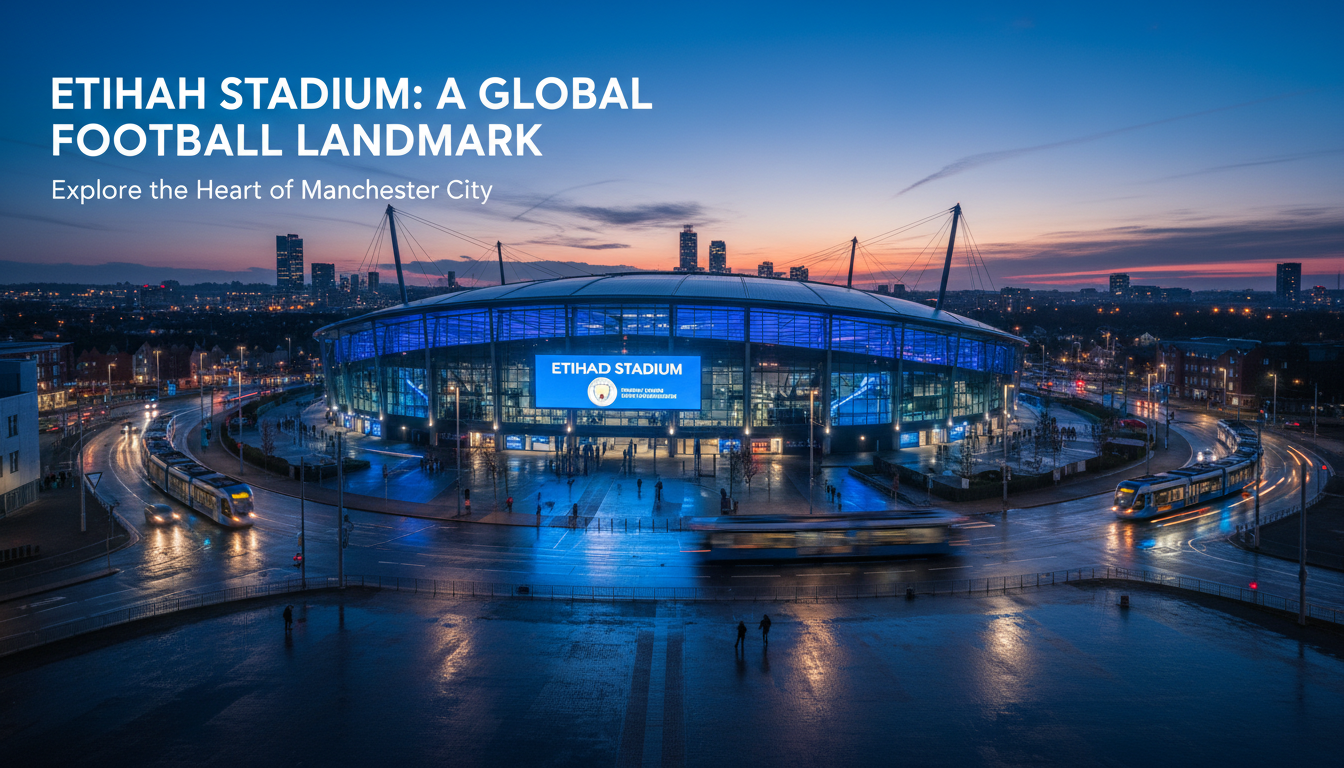
Etihad Stadium, a name synonymous with modern football and Manchester City’s rise to dominance, stands as a testament to architectural innovation and sporting ambition. But beyond the roaring crowds and dazzling displays of skill, lies a fascinating history and a future brimming with potential. This comprehensive guide dives deep into the heart of the Etihad, exploring its evolution, its impact on the city, and what the future holds for this iconic venue.
The Genesis of a Stadium: From Commonwealth Games to Premier League Glory
The story of the Etihad Stadium begins not with football, but with the 2002 Commonwealth Games. Originally conceived as a multi-purpose arena designed to host athletics events, its construction was a key part of Manchester’s bid to host the games. The stadium was initially known as the City of Manchester Stadium, a nod to its location and purpose. You can read more about the Commonwealth Games on the official Commonwealth Games website.
Following the Commonwealth Games, the stadium underwent a significant transformation to convert it into a football ground. This involved removing the running track, lowering the pitch, and adding seating closer to the field of play. This adaptation was crucial for Manchester City, who were looking for a modern and spacious home after years at Maine Road. This was the foundation for what we now know as the Etihad Stadium.
From City of Manchester Stadium to Etihad Stadium: A Naming Rights Deal
In 2011, a significant turning point arrived when Manchester City secured a lucrative naming rights deal with Etihad Airways, the national airline of the United Arab Emirates. This deal rebranded the stadium as the Etihad Stadium, reflecting the growing globalization of football and the influx of investment that transformed Manchester City into a global powerhouse. Such deals are commonplace in modern football, allowing clubs to generate significant revenue. To understand more about naming rights deals in sports, visit this insightful article on Sports Business Journal.
Architectural Marvel: Design and Capacity of the Etihad
The Etihad Stadium is more than just a football ground; it’s an architectural masterpiece. Its sleek, modern design incorporates a circular bowl shape that provides excellent sightlines from virtually every seat. The stadium was designed by Arup, a global engineering and design firm known for its innovative and sustainable approach. Their expertise is evident in every aspect of the stadium’s construction and functionality. Explore Arup’s projects for a deeper understanding of their architectural prowess.
Currently, the stadium boasts a capacity of approximately 53,400, making it the fifth-largest stadium in the Premier League. However, Manchester City have ambitious plans to further expand the stadium’s capacity in the coming years, reflecting the club’s growing fanbase and its desire to host major sporting events. Plans include adding seats on the North Stand.
The Impact of the Stadium’s Design on the Matchday Experience
The design of the Etihad Stadium is not just aesthetically pleasing; it also plays a crucial role in enhancing the matchday experience for fans. The stadium’s acoustics are carefully engineered to amplify the roar of the crowd, creating an electric atmosphere that can intimidate opponents and inspire the home team. Furthermore, the stadium’s layout ensures easy access to concessions, restrooms, and other amenities, making for a comfortable and enjoyable experience for all attendees.
Key Moments and Memorable Matches at the Etihad
The Etihad Stadium has witnessed countless memorable moments and epic matches since its inception. From dramatic Premier League title deciders to exhilarating Champions League nights, the stadium has been the backdrop for some of the most iconic moments in Manchester City’s history. Here are just a few examples:
- Sergio Aguero’s 93:20 Goal: Arguably the most famous moment in the stadium’s history, Sergio Aguero’s last-gasp winner against QPR in 2012 secured Manchester City’s first Premier League title in 44 years in dramatic fashion.
- Vincent Kompany’s Thunderbolt Against Leicester: In the 2018-19 season, with the title race on a knife-edge, Vincent Kompany unleashed an unstoppable long-range strike against Leicester City, propelling Manchester City closer to another league crown.
- Champions League Victories: The Etihad Stadium has hosted numerous Champions League matches, including memorable victories against some of Europe’s biggest clubs.
The Etihad as a Stage for International Football and Other Events
Beyond its role as Manchester City’s home ground, the Etihad Stadium has also hosted a variety of other events, including international football matches, concerts, and even boxing matches. This versatility underscores the stadium’s importance as a multi-purpose venue for the city of Manchester. It regularly hosts England international friendlies and has even been considered as a venue for major international tournaments. To learn more about the English national team, check out the England Football Association official website.
The Etihad and Manchester City’s Success: A Symbiotic Relationship
There’s no denying the close relationship between the Etihad Stadium and Manchester City’s success on the pitch. Since moving to the stadium, the club has enjoyed a period of unprecedented success, winning multiple Premier League titles, FA Cups, and League Cups. This success has been fueled by significant investment in the squad, but the stadium itself has also played a crucial role in creating a winning environment.
The Etihad Stadium provides Manchester City with a modern, state-of-the-art facility that attracts top players and provides a platform for success. The stadium’s atmosphere is also a major factor, with the passionate home support creating a formidable advantage for the team. It’s a perfect setting for achieving greater heights.
How the Stadium has Helped Attract World-Class Talent to Manchester City
The Etihad Stadium serves as a tangible symbol of Manchester City’s ambition and financial strength, which helps attract world-class players to the club. Players are drawn to the prospect of playing in a modern, well-equipped stadium in front of a passionate fanbase. The stadium’s facilities, including its training grounds and medical facilities, are also important factors in attracting top talent. Transfermarkt is a great resource to learn about player transfers and market values.
The Future of the Etihad: Expansion Plans and Technological Innovations
Manchester City have ambitious plans to further develop the Etihad Stadium in the coming years. These plans include expanding the stadium’s capacity to over 60,000, making it one of the largest stadiums in the Premier League. The club also plans to invest in new technology to enhance the matchday experience for fans, including improved Wi-Fi connectivity and digital ticketing systems.
Furthermore, Manchester City are committed to making the Etihad Stadium a more sustainable venue. The club is exploring ways to reduce its carbon footprint and improve its energy efficiency. This includes investing in renewable energy sources and implementing waste reduction programs. More information about sustainability in football can be found on FIFA’s official website.
Potential for the Etihad to Host Major International Tournaments
With its modern facilities and large capacity, the Etihad Stadium is well-positioned to host major international tournaments in the future. The stadium has already hosted several England international matches, and it is likely to be considered as a venue for future European Championships and even World Cup matches. Hosting such tournaments would bring significant economic benefits to the city of Manchester and further enhance the stadium’s reputation as a world-class venue.
Beyond Football: The Etihad’s Role in the Manchester Community
The Etihad Stadium is more than just a football ground; it’s an integral part of the Manchester community. Manchester City’s ownership group, City Football Group, has invested heavily in community initiatives around the stadium, including programs to promote youth development, health and well-being, and education. These initiatives demonstrate the club’s commitment to giving back to the community that supports it.
The stadium also serves as a hub for local businesses, providing employment opportunities and generating economic activity in the surrounding area. The Etihad Stadium is a symbol of Manchester’s regeneration and its ambition to be a leading global city.
Community Programs and Initiatives Supported by Manchester City
Manchester City’s City in the Community foundation runs a wide range of programs that benefit the local community. These programs include:
- City Thrive: A mental health program for young people.
- Kicks: A football participation program for young people in disadvantaged areas.
- Healthy Goals: A program that promotes healthy lifestyles for children and families.
Visiting the Etihad: A Fan’s Guide
If you’re planning a visit to the Etihad Stadium, here’s a fan’s guide to help you make the most of your experience:
- Getting There: The Etihad Stadium is easily accessible by public transport, with a dedicated Metrolink stop (Etihad Campus) located right next to the stadium. There are also numerous bus routes that serve the area.
- Tickets: Tickets for Manchester City matches can be purchased online through the club’s official website. It’s advisable to book in advance, especially for popular matches.
- Stadium Tours: The Etihad Stadium offers guided tours that provide a behind-the-scenes look at the stadium, including the dressing rooms, the tunnel, and the pitch.
- Food and Drink: There are numerous food and drink concessions located throughout the stadium, offering a variety of options to suit all tastes.
Tips for a Memorable Matchday Experience
To make your matchday experience at the Etihad Stadium even more memorable, here are a few tips:
- Arrive early to soak up the atmosphere and avoid the crowds.
- Wear your Manchester City colors to show your support for the team.
- Join in with the chants and songs to create a lively atmosphere.
- Take plenty of photos and videos to capture the memories.
Controversies and Criticisms Surrounding the Etihad
Like any major sporting venue, the Etihad Stadium has faced its share of controversies and criticisms over the years. These include concerns about the environmental impact of the stadium, criticisms of the club’s ownership and spending, and debates about the stadium’s atmosphere compared to the club’s former home, Maine Road. It’s important to acknowledge these criticisms and engage in constructive dialogue about how to address them.
Fair play is an important topic when discussion football. More can be learned on this topic on the FIFA website.
Addressing Concerns About Sustainability and Environmental Impact
Manchester City have taken steps to address concerns about the stadium’s environmental impact, including investing in renewable energy sources and implementing waste reduction programs. However, more needs to be done to minimize the stadium’s carbon footprint and promote sustainable practices.
The Etihad Stadium: A Symbol of Modern Football
The Etihad Stadium stands as a symbol of modern football, representing the growing globalization of the sport, the influx of investment, and the increasing importance of commercial partnerships. It’s a stadium that has witnessed some of the most iconic moments in Premier League history and has played a crucial role in Manchester City’s rise to dominance.
However, the stadium also represents the challenges facing modern football, including concerns about environmental sustainability, financial fair play, and the impact of corporate ownership. As the sport continues to evolve, it’s important to address these challenges and ensure that football remains a force for good in the world.
The Enduring Legacy of the Etihad Stadium
The Etihad Stadium‘s legacy extends beyond the football pitch. It has become an iconic landmark in Manchester, a symbol of the city’s regeneration, and a source of pride for its residents. The stadium has also played a key role in attracting investment and creating employment opportunities in the area. As Manchester City continue to strive for success on and off the pitch, the Etihad Stadium will undoubtedly remain at the heart of their story.
Conclusion: The Etihad Stadium’s Place in Football History
The Etihad Stadium is more than just a stadium; it’s a living, breathing entity that has witnessed moments of incredible joy, crushing disappointment, and everything in between. It’s a place where memories are made, legends are born, and dreams are realized. As Manchester City continue to write their own chapter in football history, the Etihad Stadium will undoubtedly remain a central part of their story.
⚽ Unlock Winning Soccer Picks! ⚽
Tired of guessing? Get expert English Premier League predictions delivered straight to your inbox! Subscribe now and gain access to insights that will give you the edge. Don’t miss out on the winning action!
















Comments 1