

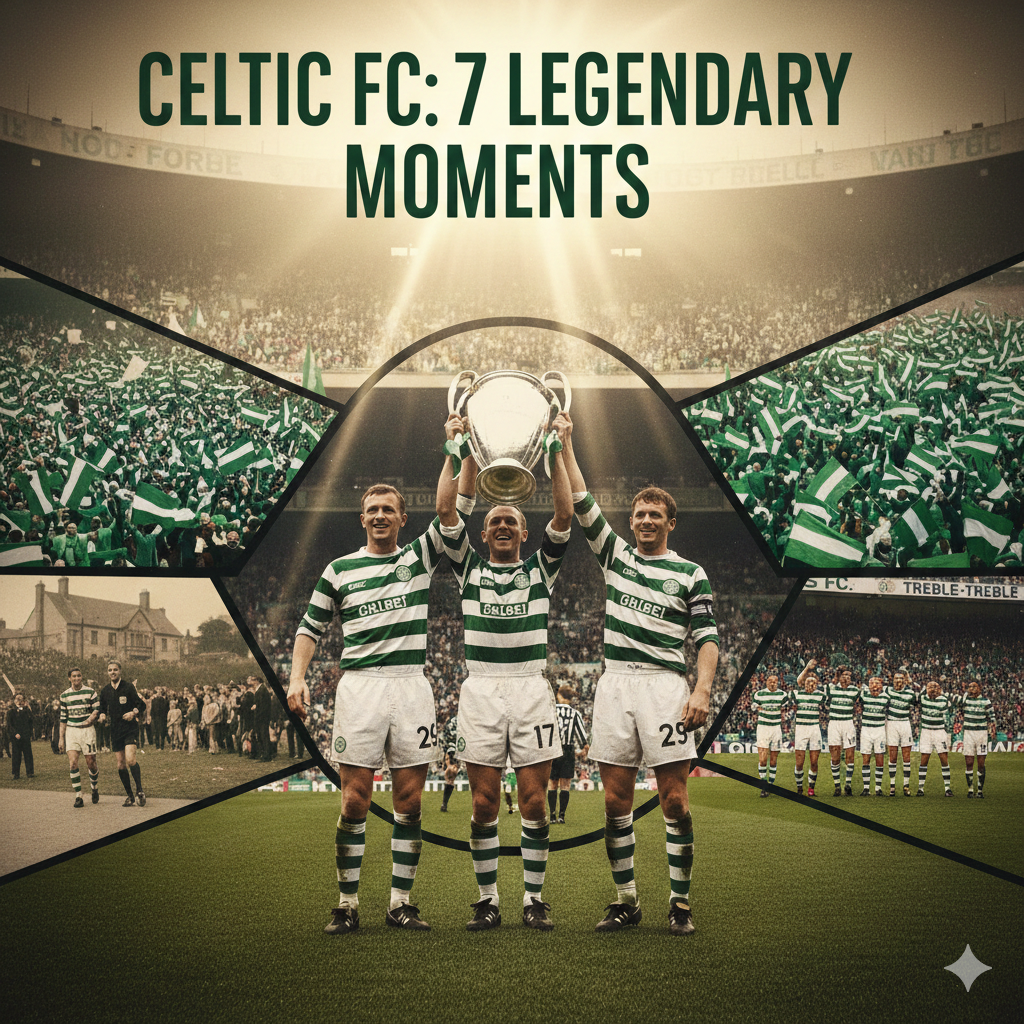
1. Introduction: More Than a Club
To understand the story of Celtic FC is to grasp something far deeper than a series of league victories or cup triumphs. It is to trace the lineage of an institution born from charity, forged in rivalry, and defined by a passionate, global community. For over 130 years, the green and white hoops have represented more than just a football team; they symbolise a cultural identity, a defiant spirit, and a commitment to attacking, exhilarating football. From the moment Brother Walfrid convened the first meeting in a church hall to the rapturous crowds in Seville, the history of celtic fc is a tapestry woven with moments of sheer brilliance, heartbreak, and unyielding pride.
This legacy is what elevates Celtic FC to a status rarely afforded to a sports club. It is a club with a soul, whose foundational charitable mission remains a guiding light to this day. Throughout its long and illustrious existence, certain events stand out—watershed moments that didn’t just win trophies, but irrevocably shaped the ethos and future trajectory of the club. These aren’t merely highlights; they are the pillars upon which the entire structure of the modern Celtic FC rests. In examining these seven legendary moments, we peel back the layers of history to reveal the true heart of the Bhoys, a team that continues to inspire millions across the world.
Table of Contents
2. The Birth of a Legend: Brother Walfrid and the Founding (1887-1888)
Every great story has a beginning, and for Celtic FC, that beginning was rooted not in the pursuit of sporting glory, but in a humanitarian effort to alleviate poverty. On November 6, 1887, in St. Mary’s Church Hall in the Calton district of Glasgow, Marist Brother Walfrid, born Michael Cannon, gathered supporters with a clear, noble purpose: “To alleviate poverty in the East End of Glasgow.”
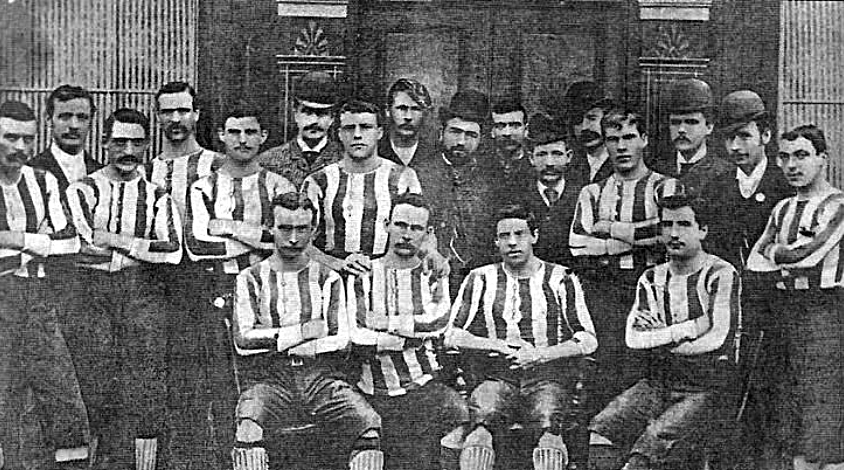
The football club, he decreed, would raise funds to feed the local community’s poor children and unemployed through the creation of dinner tables. This act of founding a club for philanthropic reasons is a unique characteristic that permanently differentiates Celtic FC from many of its peers, cementing its enduring motto, “A Club Like No Other.”
The practical manifestation of this noble intent arrived on May 28, 1888, with the first official match played by the newly formed team. Their opponents were the established Glasgow rivals, Rangers, in a fixture that would famously evolve into one of the world’s most intense rivalries. Played on the first Celtic Park pitch, the fledgling celtic fc team triumphed with a rousing 5-2 victory.
The result was less important than the establishment of the club itself and the initial promise it showed. It was a successful debut, a testament to the community-driven power of the new club, and a sign of the electrifying footballing drama that lay ahead. The charitable heart established by Brother Walfrid remains fiercely protected through the work of the Celtic FC Foundation, which continues the mission globally.
You can also watch a great video about the formation of the club and its charitable mission: Celtic FC – One Club since 1888. This video is relevant as it provides a visual and audio history of the club’s beginnings, directly addressing the foundational moment discussed in section 2.
Celtic FC – One Club since 1888 – YouTube

3. Hampden in the Sun: The 7-1 Thrashing (1957)
While the club’s foundation was based on charity, the appetite for dominance soon developed. For many fans of Celtic FC, the 1957 Scottish League Cup Final stands as the most outrageous and emphatic domestic performance in the club’s history, a day so spectacular it was simply dubbed “Hampden in the Sun.” The sheer audacity of the victory over their fierce city rivals remains legendary, not just for the trophy it secured, but for the stunning margin of victory that embarrassed their opponents on the grandest stage.
The build-up to the match was electric, as all clashes between the Glasgow giants are, but no one could have predicted the footballing earthquake that was about to hit Hampden Park. The match itself was played on October 19, 1957, in front of a vast crowd of nearly 83,000 spectators, who came expecting a tight, nervous affair. What they witnessed was a masterclass of attacking football that redefined what domestic dominance looked like for Celtic FC.
From the start, the Hoops, managed by the astute Jimmy McGrory, were relentless. Goals came from all angles and sources, showcasing a team playing with cohesion and confidence. The star of the show was centre-forward Billy McPhail, who delivered a sensational hat-trick, cementing his place in the annals of celtic fc folklore. Supporting him was the elegant Willie Fernie, who notched two goals, along with further strikes from Bobby Wilson and Sammy Auld.
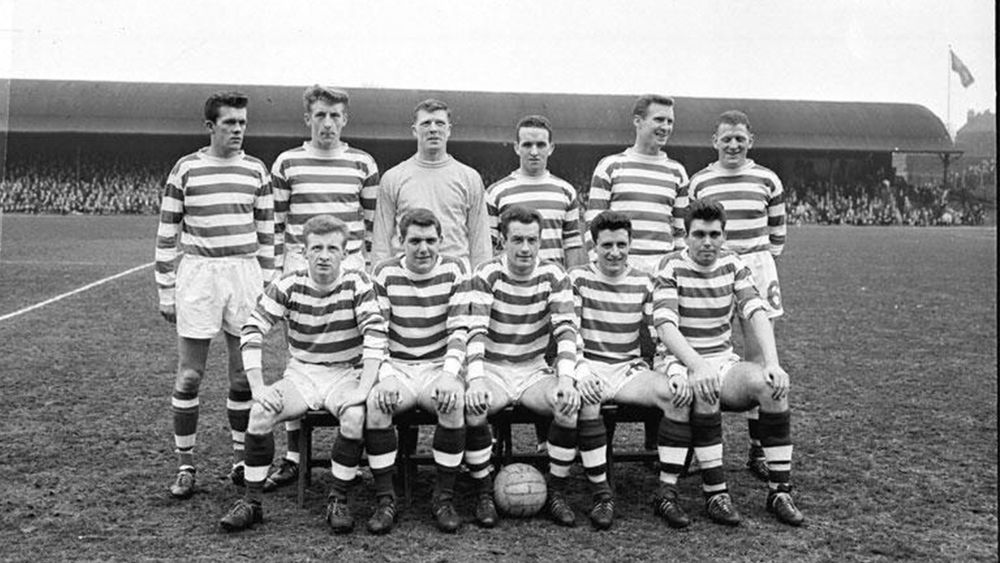
The final score stood at an unbelievable 7-1.
This monumental result was not just a win; it was a statement. It remains the largest margin of victory in any major British domestic cup final and served as a powerful declaration that the attacking spirit of Celtic FC could dismantle any opponent, even the fiercest rival. The performance was a perfect blend of flair, ruthlessness, and sheer desire.
It demonstrated the thrilling potential of the team, laying a crucial piece of the psychological groundwork that would feed into the club’s European ambitions a decade later. For the supporters, “Hampden in the Sun” is more than a scoreline; it is a treasured memory of overwhelming, glorious domestic superiority, a moment where celtic fc truly shone brightest. The legacy of that day continues to be a benchmark for attacking excellence at the club.
4. The Pinnacle of Glory: The Lisbon Lions (1967)
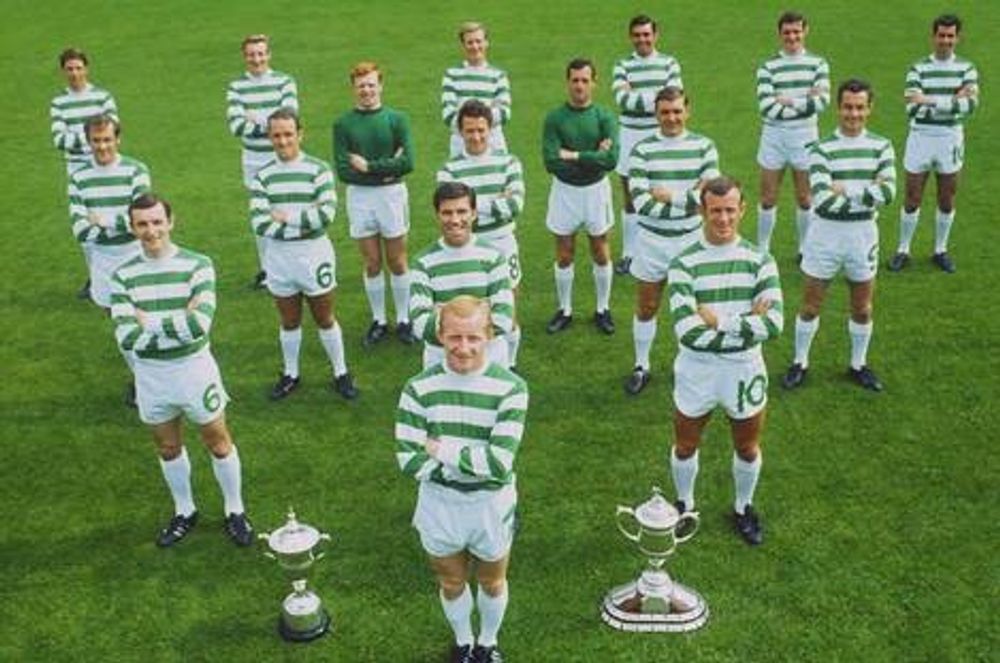
If any single moment defines the worldwide prestige and unique spirit of Celtic FC, it is the triumph of the Lisbon Lions on May 25, 1967. This was the moment the club reached the absolute pinnacle of European football, becoming the first British team ever to win the prestigious European Cup. More than the trophy itself, the manner of the victory and the identity of the team remains one of the most romantic and celebrated stories in sporting history.
Managed by the iconic Jock Stein, a man whose tactical genius was matched only by his deep understanding of the club’s ethos, celtic fc faced the mighty Inter Milan in the final at the Estádio Nacional in Lisbon. Inter Milan, coached by Helenio Herrera, were the reigning kings of Europe, famous for their impenetrable catenaccio (door-bolt) defensive system. The Italian side was expected to stifle the attacking flair of the Scots.
The match unfolded exactly as a classic confrontation between idealism and pragmatism should. Inter Milan took an early lead through a penalty, forcing Celtic FC to chase the game. What followed was a 90-minute exhibition of relentless, flowing, and attacking football. Stein’s philosophy was simple: “We must attack.” The Hoops completely dominated the game, unleashing an astonishing barrage of 42 shots on the Inter goal compared to their opponents’ five. This was the beautiful game triumphing over cynicism.
The equaliser came from Tommy Gemmell’s thunderous shot in the 63rd minute. The winning, and history-making, goal arrived in the 84th minute, as the legendary Billy McNeill knocked down a shot for Steve Chalmers to divert into the net. The 2-1 final score sent shockwaves across Europe. This was not just a victory for Scotland or Britain; it was a victory for offensive football.
But the legend of the Lisbon Lions goes far deeper. Every single player who stepped onto the pitch that day was born within a 30-mile radius of Celtic Park. They were local boys who conquered Europe, a feat utterly unparalleled in modern football. This core fact cemented the team’s place in global folklore and affirmed the powerful community bond at the heart of celtic fc.
They were, and forever will be, champions of Europe, the first and only team to achieve this incredible triumph with an entirely homegrown squad. The legacy of their success serves as a perpetual source of pride for every celtic fc supporter, demonstrating that heart, skill, and local spirit can indeed overcome massive financial and tactical disparities. You can read more about this historic achievement and the players on the official UEFA website.
5. The Nine-in-a-Row Era (1966-1974)
The European Cup triumph of 1967 did not mark the peak of Celtic FC‘s ambition; rather, it provided the fuel for an era of unmatched domestic dominance that has yet to be truly equalled. Under the visionary command of Jock Stein, the period between the 1965-66 and 1973-74 seasons became immortalized as the ‘Nine-in-a-Row’ era, a run of consecutive league titles that set an astonishing benchmark for sustained excellence in Scottish football.
European Cup I Final 1967 | Celtic – Inter Milan | FULL HD 60 fps
VintageHDtv · 376K views

This remarkable period of domestic supremacy was built on the foundation established by the Lisbon Lions squad, evolving and adapting over the years while maintaining the core philosophy of relentless attack and fierce determination. The sheer duration of this success speaks volumes about the consistency and quality Stein instilled into the squad. Year after year, despite challenges from domestic rivals and the physical toll of competing deep into European competitions, Celtic FC found a way to win. This required not just talent, but mental fortitude and a deep pool of players ready to step up.
The Nine-in-a-Row achievement was unprecedented in Scottish history at the time, establishing the club as the undisputed giant of the game. It cemented the 1960s and early 1970s as the Golden Age for Celtic FC, demonstrating that the club’s success was not a flash in the pan but the result of a revolutionary approach to training, tactics, and player management. The sustained dominance became woven into the fabric of the club’s identity, defining the very standard expected at Parkhead.
This era’s defining characteristic was consistency. While the composition of the team changed, the commitment to the attacking ethos of Jock Stein remained constant. The final title in the sequence, sealed in 1974, allowed celtic fc to celebrate an accomplishment that looked untouchable. For a generation of supporters, this run was what it meant to follow the club, unbreakable, unrelenting victory. The legacy of ‘Nine-in-a-Row’ became a powerful psychological marker, a glorious historical standard that future teams and managers of celtic fc would inevitably be measured against.
6. Stopping the Ten: The End of an Era (1998)
Following the incredible high of the ‘Nine-in-a-Row’ era, the most legendary moment of the late 20th century for Celtic FC was arguably not about achieving a record, but about preventing one. The 1997-98 season was arguably the most pressurized campaign in modern Scottish football history, loaded with tension, expectation, and a palpable sense of destiny or dread for the supporters of Celtic FC.
Rangers had equalled the nine-in-a-row record set by Jock Stein’s side, and the narrative heading into the season was focused entirely on whether they could secure an unprecedented tenth consecutive league title. The prospect of their fierce rivals achieving this milestone was almost unbearable for the celtic fc faithful. The club responded by appointing Dutch manager Wim Jansen, who faced the monumental task of rebuilding a team and restoring morale under immense scrutiny.

Jansen’s recruitment was vital, securing players who would become legendary figures, most notably the arrival of the gifted Swedish forward, Henrik Larsson. However, the season was a nerve-shredding fight until the very last day. The pressure on the players was immense, amplified by the sheer historical significance of the potential outcome.
The season culminated on May 23, 1998, against St. Johnstone at Celtic Park. The atmosphere was electric and thick with anticipation. A win for celtic fc would secure the title and, more importantly, stop the ten. A draw or loss, coupled with a win for Rangers, would see history made, but not the history the Hoops wanted. Early tension was relieved by a goal from Henrik Larsson. Then, in the second half, the title was sealed when Harald Brattbakk scored the goal that confirmed a 2-0 victory.
The outpouring of relief and joy that swept through the stadium was a visceral celebration not just of winning the league, but of preserving the legacy of the Lisbon Lions and the Nine-in-a-Row team. It was a victory of profound historical significance, marking the end of the rival’s dominance and ushering in a new, albeit hard-fought, era of success for celtic fc . This moment solidified the club’s place as the great guardian of Scottish football history.
7. The Road to Seville and the UEFA Cup Final (2003)
Following the relief of stopping the ten, the dawn of the new millennium brought a renewed European ambition to Celtic FC, driven by the arrival of manager Martin O’Neill. The pinnacle of this resurgence came during the 2002-03 season, culminating in a legendary run to the UEFA Cup Final in Seville, Spain. While the final itself ended in defeat, the journey and the extraordinary demonstration of support remain one of the most cherished and defining moments in the club’s recent history.
The Hoops navigated a gruelling path through the competition, overcoming formidable opponents like Liverpool, Celta Vigo, and the Portuguese giants Boavista in the semi-finals. The team, spearheaded by the genius of Henrik Larsson and the defensive solidity of players like Bobo Baldé, played with an exhilarating blend of technical skill and fierce spirit, capturing the imagination of football fans across the continent. This European adventure reminded the world that Celtic FC remained a major player on the international stage.
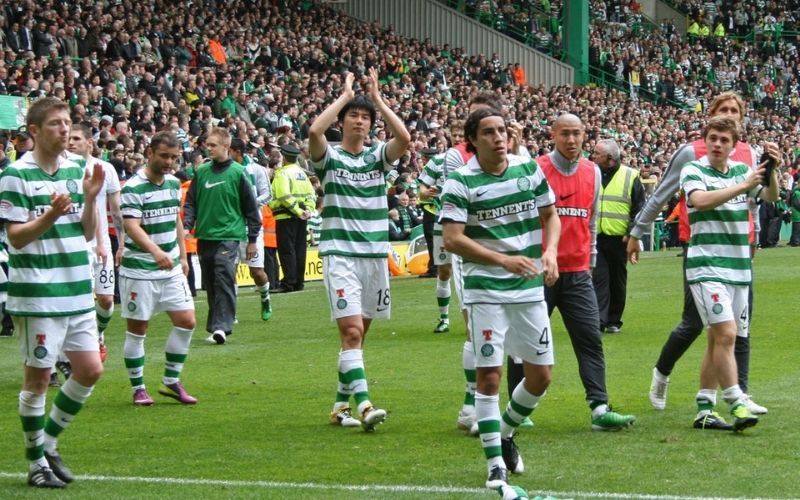
The true legend of Seville, however, lies in the phenomenal support that followed the team. An estimated 80,000 to 100,000 celtic fc fans travelled to the Andalusian city, transforming Seville into a sea of green and white. This immense, vibrant, and peaceful show of devotion earned the supporters official recognition from both FIFA and UEFA, who lauded the fans for their exemplary conduct and passion. The sight of so many people unified under the club’s banner was a powerful global statement about the magnitude and character of the Hoops’ support.
The final, played in sweltering heat against José Mourinho’s FC Porto, was a thrilling and closely fought encounter that ultimately ended in heartbreak. Despite two heroic equalisers from Henrik Larsson, the team lost 3-2 after extra time. Though defeated, the players and O’Neill were hailed as heroes upon their return. The 2003 UEFA Cup Final journey was not just a campaign; it was a pilgrimage that affirmed the club’s place in the global consciousness, proving that the spirit of celtic fc remains as powerful and widespread as it was in 1967. This massive show of solidarity highlighted the unique connection between the team and its faithful.
8. The Treble-Treble: A New Domestic Dynasty (2017-2019)
Following the European highs and lows of the early 2000s, Celtic FC entered an era of unprecedented domestic success that redefined dominance in Scottish football for the modern age. This period culminated in the historic ‘Treble-Treble,’ an accomplishment so extraordinary that it likely will never be repeated.
The foundations were laid in the 2016-17 season under manager Brendan Rodgers. That year, the team achieved the ‘Invincible’ Treble, winning the Scottish Premiership, the Scottish Cup, and the League Cup without suffering a single defeat in any domestic competition, a phenomenal feat of consistent excellence. This unbeaten season showcased a team playing with confidence, tactical discipline, and a lethal attacking edge, driven by players like Scott Sinclair, Kieran Tierney, and Moussa Dembélé.

The remarkable achievement was then replicated in the 2017-18 season, securing the club’s second consecutive domestic Treble. The relentless desire for victory, regardless of the pressure from rivals, demonstrated a deep well of resilience within the squad. This set the stage for the historic third act.
The final piece of the Treble-Treble puzzle was completed across the 2018-19 season, with Neil Lennon taking over as manager mid-season. The culmination came in the Scottish Cup Final victory over Hearts on May 25, 2019. By winning all three major domestic trophies for the third year running, Celtic FC secured an astonishing nine consecutive trophies available in Scotland.
This run of success, the Treble-Treble, is a crowning domestic achievement. It serves as a powerful testament to the club’s enduring ambition and cemented the squad’s place alongside the legends of the Jock Stein era. It represents a modern dynasty built on tactical brilliance and unwavering focus, reinforcing the long-standing tradition of excellence at celtic fc and providing a current historical highlight for fans to celebrate.
9. Conclusion: The Unfolding History
The history of Celtic FC is an ongoing story, but the seven moments detailed here serve as the anchors that define its magnificent character. From the fundamental charitable mission established by Brother Walfrid to the unbelievable European triumph of the Lisbon Lions, and the establishment of two separate domestic dynasties (the Nine-in-a-Row and the Treble-Treble), the club’s journey has been marked by ambition, passion, and unique resilience. Every title won, every global journey undertaken by the fans, and every act of community service reaffirms the core belief: that celtic fc is indeed “More Than a Club.” These legendary moments ensure that the proud green and white legacy will continue to inspire generations to come.
🎯 Don’t Miss the Next Great Moment: Subscribe for Exclusive Predictions!
The history of Celtic FC is built on incredible moments, from historic European glory to modern domestic dominance. But history is always unfolding, and the next legendary moment in Scottish football is just around the corner.
Do you want to be the first to know who will capture the next title, who the next key signing will be, and which emerging star will write their name into the club’s folklore?
Join our community of passionate supporters and receive the best analysis directly in your inbox:
- In-Depth Match Previews: Get tactical breakdowns for all upcoming celtic fc matches, covering domestic leagues and European ties.
- Transfer Window Analysis: Exclusive insights and predictions on potential signings and departures.
- Expert Commentary: Analysis of post-match reaction and long-term club strategy.
Subscribe now to get the inside track and the best predictions ahead of every kick-off!
















Comments 1