
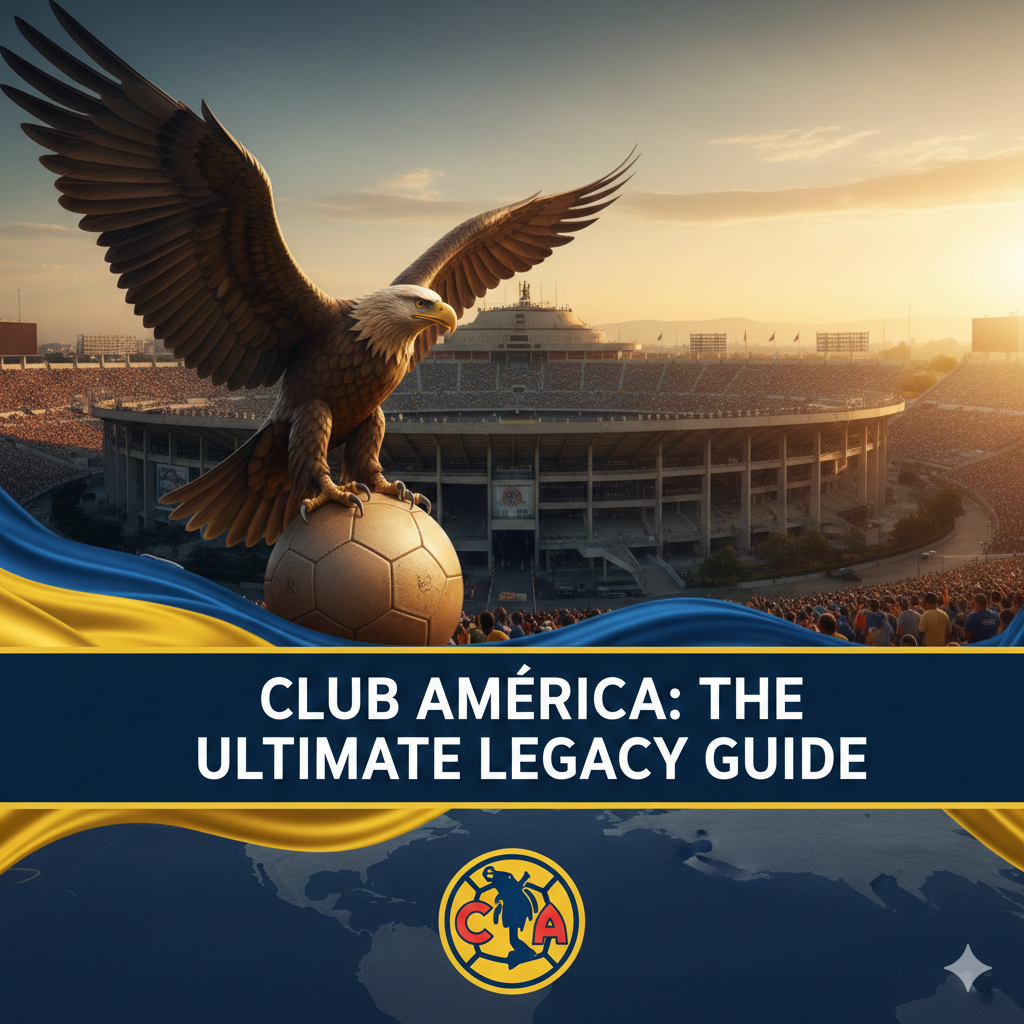
The landscape of North American soccer is painted with the vibrant colors of legendary clubs, but none command the same immediate recognition, passion, and, often, fervent opposition, as americas futbol club. This isn’t just a soccer team; it’s a cultural phenomenon, a sporting titan whose influence stretches far beyond the pitch of the Estadio Azteca. With a history spanning more than a century, americas futbol club stands as the most decorated and one of the wealthiest franchises in the entire continent, a genuine colossus whose narrative is intertwined with the social, economic, and sporting evolution of Mexico.
To truly appreciate americas futbol club, the Aguilas (Eagles), is to understand the deep duality of their existence. They are simultaneously the most successful team in Mexican professional football (Liga MX) and, often, the most reviled. This polarization is not a flaw; it is a fundamental pillar of their identity, a badge of honor forged through consistent excellence, bold management, and a reputation for signing the biggest stars. The chant of ’Ódiame Más’ (Hate Me More) is not merely a slogan; it’s an acknowledgement of their status as the team to beat, the gold standard against which all other Mexican americas futbol club rivals measure their success.
Table of Contents
A Foundation Forged in Youth and National Pride (1916-1943)
The journey of americas futbol club begins not in wealth and notoriety, but in a humble merger of two student-led teams: Récord and Colón. Founded on October 12, 1916, the club was born from the vision of Rafael Garza Gutiérrez, a young, passionate student whose early dedication became the soul of the club. The name América was chosen simply because the day of the club’s formation coincided with the Day of the Discovery of America (Columbus Day), a fittingly grand and continental name for a team destined for greatness.
Early in its formation, americas futbol club solidified a unique identity: a commitment to Mexican talent. Unlike many early teams that relied on European or British players, americas futbol club prided itself on featuring young, homegrown Mexican players. This focus on national identity was a crucial part of its early popularity. Garza Gutiérrez, known affectionately as Récord, was instrumental in shaping this ethos, ensuring that the team was a representation of the mexicanidad(Mexican identity) on the field.
The club was a founding member of the Mexican Football Federation and played a pivotal role in the early amateur era, securing multiple league championships in the 1920s. However, the move to professionalism in 1943 marked the beginning of a new, complex chapter for the americas futbol club institution. The amateur success laid the groundwork, but the professional era demanded a different level of organization, investment, and strategic vision.
The Televisa Era: Ascendancy and the Birth of ’El Americanismo’ (1959-1980s)
The true transformation of americas futbol club into the dominant powerhouse we know today began in 1959 with its acquisition by Emilio Azcárraga Milmo, the owner of Telesistema Mexicano (the precursor to the massive multimedia conglomerate, Televisa). Azcárraga’s vision was grand, audacious, and utterly transformative. He didn’t just want a good soccer team; he wanted a spectacle, a team that represented the new, modern, and increasingly wealthy strata of Mexican society.
This era cemented the identity of americas futbol club as the country’s ’Millionaires’ club, a team that could—and would—buy the best players, regardless of cost. Azcárraga famously declared, “I do not know about football, but I know that americas futbol club needs to be the best, and I will spare no expense.” This philosophy, coupled with the club’s broadcast partnership with Televisa, ensured unmatched media exposure, further polarizing the fan base.
The Rivalry That Defined an Era
The Televisa era also intensified one of the fiercest rivalries in global sports: El Clásico Nacional against Chivas de Guadalajara. Chivas maintained a strict policy of using only Mexican-born players, an ethos that stood in stark contrast to americas futbol club‘s preference for spending heavily on top international talent. This ideological clash became a symbol of two opposing ideas of Mexican football:
- Chivas: The team of tradition, nationalism, and the common people.
- americas futbol club: The team of corporate power, cosmopolitanism, and opulence.
This tension created a legendary narrative engine that fueled the growth of Liga MX and cemented americas futbol club as the league’s superclub. The success followed quickly, with league titles in the 1960s and 70s, establishing a winning culture that persists to this day.
The Golden Years: A Dynasty Built on Steel and Stardust (1980s and 1990s)
The 1980s are often cited as the undisputed Golden Age of americas futbol club. Under the guidance of tactical geniuses and featuring legendary players, the club established a dynasty of dominance. They secured three consecutive league championships, a feat of consistency and quality that remains a benchmark in Mexican football.
Key to this era was the club’s home ground: the majestic Estadio Azteca. Inaugurated in 1966, the Azteca is not just a stadium; it is a sacred ground of world football, having hosted two FIFA World Cup finals. Playing their home games in this monumental arena provided americas futbol club with an unparalleled psychological advantage. The sheer size and atmosphere of the Azteca made it a fortress where the Aguilas rarely faltered.
The club’s success was built on a mix of domestic stars and world-class imports. Players like the Chilean striker Carlos Reinoso in the 70s and the Brazilian star Zague (and later his son, Luis Roberto Alves ‘Zague,’ who became the club’s all-time leading scorer) were instrumental in these campaigns. Their flair and skill perfectly matched the high-profile image Azcárraga cultivated for the americas futbol club brand.
The 1990s continued this run of success, particularly in continental competition. americas futbol club became a dominant force in the CONCACAF Champions’ Cup, securing multiple titles and solidifying their status as the kings of North America. This success was crucial in establishing the club’s international reputation, proving their domestic dominance was transferable onto the continental stage. If you’re looking for a deep dive into the history of CONCACAF and the teams that shaped it, you can explore the official history archives of the confederation.
The Modern Era: Navigating Change and Sustaining Excellence
The turn of the millennium brought a new set of challenges and opportunities for americas futbol club. While the 80s were about dominance, the 21st century demanded resilience and adaptability. The nature of modern football—with increased player movement, global scouting, and intense financial competition—required americas futbol club to continuously evolve its strategy.
Despite these changes, the club’s commitment to trophies has never wavered. They have remained consistent contenders for the Liga MX title, adding several more championships (Liguillas) to their tally in the 2000s and 2010s. A recurring theme of this era has been the thrilling, high-stakes nature of their final appearances. One of the most famous examples is the 2013 Clausura final against Cruz Azul, a dramatic comeback that is considered one of the greatest finals in the league’s history.
The modern americas futbol club is characterized by:
- Financial Power: Their economic muscle, backed by Televisa, allows them to attract top talent from South America and Europe, maintaining their reputation as a team of galácticos.
- Youth Development: Despite the star signings, the club’s famed Cantera (youth academy) remains a vital pipeline. Training grounds at Coapa (hence the nickname ‘Colossus of Coapa’) have produced generational talents who have gone on to play in top European leagues and for the Mexican National Team.
- Continental Ambition: The goal of americas futbol club in the modern era is not just domestic success, but to once again conquer the CONCACAF Champions League and represent the region competitively at the FIFA Club World Cup.
The Cultural and Social Footprint of ’El Americanismo’
The concept of ’El Americanismo’ extends beyond mere fandom; it’s a shared identity, a belief in the club’s superiority, and a defiance of critics. Fans of americas futbol club are found across all social strata in Mexico, but historically, the club’s association with Televisa and Mexico City gave it a perception of being the establishment’s team—a critical factor in the polarizing ‘Love vs. Hate’ narrative.
The club’s colors, cream/yellow and blue, are iconic. The original colors were chosen to represent the colors of the Mexican flag, further cementing their nationalistic roots, even as they became the team of the ‘rich.’ The crest, featuring an eagle sitting atop the letter ‘A’ with a soccer ball, is instantly recognizable globally.
The polarization is a business model in itself. Every time americas futbol club plays, the attention is massive. When they win, their fans celebrate with an intensity unmatched. When they lose, their rivals celebrate with an equal and opposite fervor. This constant cycle of high-stakes emotion ensures that americas futbol club remains the most-watched and most-discussed team in Mexico.
Defending the Fortress: Key Figures and Iconic Moments
No history of americas futbol club is complete without acknowledging the individuals who have shaped its identity.
Key Managers:
- Roberto Scarone: Architect of early professional success.
- Raúl Cárdenas: Led the team during the dynasty years.
- Miguel Herrera (‘Piojo’): A flamboyant and intensely passionate figure who led the club to multiple modern championships and epitomizes the ’Ódiame Más’ spirit.
Legendary Players:
- Enrique Borja: A revered striker from the 1970s.
- Cuauhtémoc Blanco: Arguably the most iconic americas futbol club player of the modern era. Known for his showmanship, incredible skill, and unique goals (like the ‘Cuauhtemiña’ hop), Blanco transcended football to become a cultural and political icon. His connection with the fans is legendary.
- Alfredo Tena ‘El Capitán Furia’: A defender and club legend who later managed the team.
An unforgettable moment that encapsulates the club’s drama is the “Decimo Trecera”—the thirteenth league title, which cemented their status as the sole leader in Liga MX championships. Each trophy, whether domestic or international, is a point of immense pride for El Americanismo. For fans looking to delve into the detailed statistics of the club’s most prolific players and their records, resources maintained by specialized football statistics platforms provide comprehensive data.
The Global Impact and Future Trajectory
Club América’s influence isn’t confined to Mexico. The vast Mexican diaspora in the United States and Canada has made them one of the best-supported teams in North America, consistently drawing massive crowds for friendly matches in the US. This presence is a key part of the team’s commercial strategy and global brand growth. The internal competition within the fan base is a testament to the club’s reach. Whether you call them americas futbol club, Club América, or Las Águilas, the brand recognition is global.
The club continues to invest heavily in its infrastructure and training, recognizing that future success relies on a blend of elite foreign talent and a world-class youth system. The goal remains simple: to win titles, to maintain their status as the Rey de Copas (King of Cups), and to always be the standard-bearer for Mexican football.
The story of americas futbol club is a continuous epic of ambition, drama, and unparalleled success. They embody the spectacle of modern football, a team that demands attention, respect, and a passionate reaction—positive or negative. Their legacy is secured not just by the trophies in their cabinet, but by the enduring, polarizing, and deeply passionate Americanismo that burns in the hearts of millions.
The Tactics and Philosophy: Defining the América Style
The philosophy of americas futbol club has always been rooted in a single, audacious demand: win, and do it with flair. For the Águilas, victory alone is often insufficient; the manner of the victory must entertain, reflecting the club’s status as the ‘Millionaires’ and the face of the national media conglomerate, Televisa. This pursuit of spectacle has created a distinct, highly aggressive tactical identity that prioritizes attacking ambition over defensive pragmatism.
The Enduring Focus on Attacking Flair
The tactical DNA of americas futbol club is defined by three key tenets: verticality, attacking width, and individual brilliance.
- Verticality and Directness: While modern managers (like Santiago Solari or the current coach, André Jardine) have at times introduced possession-based elements, the fundamental América style seeks to move the ball forward quickly. The club prefers incisive, often riskier passes that cut through defensive lines rather than slow, methodical build-up play. This style is designed to leverage the high-quality South American and domestic attacking talent the club historically signs.
- Attacking Width: The traditional 4-3-3 or a variation of the 4-2-3-1 has long been the preferred formation. This structure is crucial for maximizing width, using the full-backs to aggressively overlap the wingers (or attacking wide midfielders) to create overloads in the final third. The full-backs are essential playmakers, notably seen under coaches like the dynamic Miguel Herrera (the “Piojo”), who demanded high-energy, end-to-end play.
- Individual Brilliance: The “América style” relies heavily on desequilibrio—the capacity for a single player to break the defense with a moment of individual genius. This philosophy stems from the club’s history of signing star playmakers like Carlos Reinoso and, most famously, Cuauhtémoc Blanco. Tactics are often designed to give these creative players the freedom to express themselves, understanding that a world-class talent is often the best tactical solution.
Key Tactical Managers and Their Unique Contributions
The club’s tactical history is best understood through the managers who dared to imprint their philosophy on the squad while upholding the ‘Win with Flair’ mandate:
- Leo Beenhakker (1994): The Dutch Influence The Dutch manager brought a revolutionary, highly offensive 4-3-3 system to Coapa. This era is remembered as one of the most free-flowing and attractive in the club’s history, centered on a trio of attackers who constantly rotated. Beenhakker’s high-pressing, fluid style showcased americas futbol club‘s attacking potential and became a stylistic benchmark, even if his tenure was short.
- Manuel Lapuente (Late 1990s/Early 2000s): Defensive Solidity Meets Stars Lapuente blended the required attacking punch with a greater emphasis on defensive organization, a necessity in the modern short-tournament format (Liguilla). While still boasting star quality, his teams were tactically disciplined and renowned for being extremely hard to break down, proving that the high-stakes Liguilla often demands resilience as much as creativity.
- Miguel Herrera (‘Piojo’) (Multiple Stints): The Emotional Amplifier Herrera, an emotional and passionate figure, perfectly embodied the polarizing spirit of ’Ódiame Más’. His teams played an ultra-aggressive, high-risk 5-3-2 or 5-2-3 formation (which looked like a 3-5-2 in attack), using three center-backs to provide cover while giving the wing-backs complete freedom to attack. His tactical setup was less about calculated possession and more about overwhelming the opponent with speed, high pressing, and vertical attacks, creating the dramatic comebacks and thrilling finals that defined the modern era of americas futbol club.
The Formation: From 4-4-2 to Modern Rotations
While the specific formations evolve with each manager, the core structural goal remains to maximize scoring opportunities:
- The Classic 4-4-2: In many of the club’s dominant periods, a flexible 4-4-2 was used, with one striker often dropping deeper to act as a support/link player (a role mastered by Blanco). This provided central solidity while allowing the wide midfielders to push up.
- The Modern 4-2-3-1/4-3-3: Today’s americas futbol club typically operates in this framework, ensuring two holding or box-to-box midfielders (like Álvaro Fidalgo) control the central buildup while the front four—a central striker, two wingers, and an attacking midfielder (or enganche), are given significant freedom to interchange positions and create rotational overloads. This system requires high technical skill and excellent tactical awareness to maintain balance during rapid transitions.
The tactical history of americas futbol club is therefore a reflection of its commercial identity: it is a high-cost, high-reward approach that demands spectacle. The enduring philosophy is simple: buy the best players, put them in a structure that encourages them to attack, and let their individual flair deliver the trophies.
Estadio Azteca: The Colossus’s Throne
No discussion of americas futbol club is complete without reverence for their majestic home ground, the Estadio Azteca. Often referred to as El Coloso de Santa Úrsula (The Colossus of Saint Ursula) due to its location, the Azteca is not merely a stadium; it is a monumental piece of architectural history and a consecrated temple of world football. Its narrative is inextricably linked with the ambition, size, and global prominence of americas futbol club.
The Cradle of Legends and History
Inaugurated in 1966, the Estadio Azteca was born out of the vision of Emilio Azcárraga Milmo, the owner of americas futbol club and Televisa, who insisted on a venue grand enough to host the world. Designed by renowned architects Pedro Ramírez Vázquez and Rafael Mijares Alcérreca, its bowl-shaped structure was engineered to provide capacity for over 100,000 spectators (original capacity), creating an intimidating acoustic environment where every cheer and chant reverberates with seismic intensity.
The Azteca holds the unique distinction as the only stadium in history to have hosted two FIFA World Cup Finals—the pinnacle of the global game:
- 1970 Final: It was the stage where Pelé and the legendary Brazilian squad cemented their legacy, defeating Italy and claiming the Jules Rimet Trophy for good in what is considered the zenith of jogo bonito.
- 1986 Final: The stadium provided the iconic backdrop for Diego Maradona’s defining tournament, witnessing both the infamous ‘Hand of God’ goal and the sublime ‘Goal of the Century’ against England, before Argentina triumphed over West Germany in the final.
These moments—the crowning of both Pelé and Maradona—tie the Azteca forever to the greatest individuals and teams the sport has ever seen. The stadium is, quite literally, where football legends have been made.
The Home Field Advantage: Altitude and Atmosphere
For americas futbol club, the Azteca provides a strategic, psychological, and even physical advantage that is nearly unmatched in the Americas.
- The Altitude Factor: Situated in Mexico City, the stadium sits at a staggering altitude of approximately 2,200 meters (7,200 feet) above sea level. Visiting teams, particularly those from coastal regions, often struggle severely with the thin air and reduced oxygen saturation. americas futbol club, having trained and played in these conditions for decades, is acclimatized, turning their home matches into an endurance test for their rivals.
- The Cauldron Effect: Despite recent capacity reductions (currently around 87,000 seats following modern renovations), the size of the Coloso and the steep rake of its stands create an overwhelming atmosphere. When filled for a Clásico Nacional against Chivas or a Liguilla final, the noise level reaches deafening peaks, earning it the reputation of being a genuine cauldron of emotion. The sheer spectacle reinforces the imperial image of americas futbol club as the club of the capital.
The 2026 Legacy: A Three-Time Host
The global stature of the Estadio Azteca is set to be elevated yet again. As part of the multi-national 2026 FIFA World Cup co-hosted by Mexico, the United States, and Canada, the Azteca is scheduled to host matches, including the opening match of the tournament. This will make it the first and only stadium in football history to host matches in three separate men’s FIFA World Cups (1970, 1986, and 2026), a testament to its enduring importance and structural integrity.
To prepare for this historic moment, the stadium has undergone significant modern renovations, ensuring it meets contemporary FIFA standards while preserving its monumental structure. The refurbishment aims to enhance the fan experience, adding executive suites, modern amenities, and updating the playing surface.
In essence, the Estadio Azteca is the physical embodiment of americas futbol club’s legacy. It is the largest soccer-specific venue in Latin America, a museum of world-class football, and the unshakable foundation upon which the identity and dominance of americas futbol club, the biggest club in Mexican football, continue to be built.
The Rivalry Landscape: Beyond El Clásico Nacional
While the ferocious Clásico Nacional against Chivas de Guadalajara defines americas futbol club‘s place in the country, the Águilas have cemented their status as Mexico’s great polarizing force through two other intense, high-stakes rivalries, each charged with its own unique blend of social tension and sporting drama. These clashes ensure that whether they are playing at home or away, americas futbol club is always the team everyone loves to beat, fueling the continuous narrative of ’Ódiame Más’.
The Clásico Capitalino vs. Pumas UNAM (Universidad Nacional Autónoma de México)
The Clásico Capitalino pits the corporate giant, americas futbol club, against the quintessential university club, Pumas UNAM. This rivalry is not just about points; it’s a deep-seated clash of contrasting ideologies that mirrors a broader societal divide in Mexico City:
- The América Persona: Represents the commercial establishment, opulence, and the perceived corporate dominance of Televisa. Historically, the club was associated with the wealthy and powerful elite of the capital.
- The Pumas Persona: Represents the academic, intellectual, and often, more populist side of the capital. Pumas draws its identity and core support from the massive National Autonomous University of Mexico and is traditionally seen as the team of the students, the bohemian, and the grassroots football culture.
Key Characteristics:
- Ideological Clash: The games are tense, often resulting in highly physical, scrappy affairs rather than flowing exhibitions of skill. The Pumas’ ethos of relying heavily on their prolific youth academy (Cantera) stands in sharp contrast to americas futbol club‘s willingness to spend heavily on established international stars.
- Atmosphere: When played at the Azteca or Pumas’ Estadio Olímpico Universitario, the atmosphere is electric, often marked by massive, coordinated mosaicos (tifo displays) and deafening chants that reflect the intensity of the metropolitan rivalry.
The Clásico Joven vs. Cruz Azul
The Clásico Joven (The Young Clásico) is a more recent but equally vitriolic rivalry against Cruz Azul, which has intensified dramatically due to a string of traumatic and defining final matches.
While both clubs are based in Mexico City, the tension is fueled by their historical narrative and recent sporting encounters:
- Historic Identities: Cruz Azul, originally associated with a cement cooperative, traditionally represented the working class and industrial sector. americas futbol club, as noted, represented the corporate elite. This social contrast provided the initial spark.
- The Final Traumas: The rivalry reached a fever pitch in the 2010s, defined by two agonizing Liguilla finals where Club América snatched victory from Cruz Azul in unforgettable fashion, cementing a psychological advantage:
- Clausura 2013 Final: This is perhaps the most famous comeback in Liga MX history. Down 2-0 on aggregate late in the second leg and playing with 10 men, americas futbol club scored twice in the final minutes (including a legendary header by goalkeeper Moisés Muñoz) to force penalties, which they ultimately won.
- Apertura 2018 Final: While less dramatic than 2013, América defeated Cruz Azul again to secure a definitive league title, further cementing the Águilas’ status as the psychological giant in the fixture.
Key Characteristics:
- High Drama and High Stakes: Matches between the two are rarely uneventful, often involving controversial referee decisions, multiple red cards, and breathtaking goals.
- The Victim vs. The Victor: The rivalry is frequently framed as Cruz Azul’s decade-long struggle with near-success (the Cruzazulear phenomenon, or ‘to Cruz Azul it’) versus Club América’s iron-willed, never-say-dieattitude.
These major rivalries, Pumas representing the ideological contest and Cruz Azul embodying the sporting-psychological trauma, ensure that americas futbol club is permanently positioned at the center of Mexican football’s greatest conflicts, maintaining their identity as the ultimate target of both animosity and respect.
Americas Futbol Club in International Competitions
The ambition of americas futbol club has never been limited to Mexican soil. Their identity as the largest and most decorated club in the region naturally extends to continental and global tournaments, where their goal is not just to participate, but to reaffirm their dominance over North America and compete fiercely against the world’s elite.
The North American Kings: CONCACAF Champions Cup
The undisputed domain of americas futbol club lies in the CONCACAF Champions Cup (formerly Champions League, or CCC). They hold the record for the most titles in the competition, a testament to their sustained excellence and financial power within the confederation.
- Record Holders: americas futbol club has won the CONCACAF Champions Cup a record seven times (sharing the record with their rivals Cruz Azul), securing titles across multiple decades, including back-to-back triumphs in the 2014-2015 and 2015-2016 editions.
- Continental Authority: Winning this tournament is paramount for the Águilas as it validates their claim as the most successful club in North American football and serves as their ticket to the FIFA Club World Cup. Their consistent ability to navigate the demanding knockout format against rivals from Liga MX, MLS, and Central America highlights their tactical depth and squad strength.
- The 2021 Heartbreak: Despite their dominance, the club suffered a notable loss in the 2021 final against fellow Mexican side Monterrey, emphasizing the intense competition that still exists, even within their own league.
The Coveted Prize: Copa Libertadores
The Copa Libertadores, South America’s premier club competition, was long viewed as the ultimate continental test for americas futbol club and Mexican teams in general. Though Mexican clubs no longer participate (as of 2016), América’s history in the tournament remains a proud chapter in their international saga.
- The Continental Gauntlet: Participation in the Libertadores from 1998 to 2016 pitted Mexican teams against the titans of South American football, including clubs from Brazil and Argentina. This provided a crucial benchmark for the quality of Mexican football.
- Memorable Semi-Final Runs:Club América consistently performed well, making them the Mexican club with the most victories in the competition’s history. They reached the semi-finals on three separate occasions, showcasing their ability to compete at the highest level:
- 2000: The club put on a legendary performance, only to be eliminated by the eventual champions, Boca Juniors, in a thrilling semi-final clash that saw América mount a dramatic comeback attempt in the second leg at the Estadio Azteca.
- 2002: Another deep run was mounted, underscoring their quality against South American heavyweights.
- 2008: Reached the semi-finals again, falling to LDU Quito.
The success of americas futbol club in the Libertadores affirmed their reputation for having star quality capable of taking on anyone in the hemisphere, proving that the americas futbol club was a force to be reckoned with well beyond CONCACAF.
The Global Stage: FIFA Club World Cup
As CONCACAF champions, americas futbol club has earned the right to represent the region multiple times at the FIFA Club World Cup (CWC), where they measure themselves against the champions of Europe, South America, and other confederations.
- Consistent Participation: The club has participated in the CWC several times, including the 2006, 2015, and 2016 editions, with the aim of breaking the perennial barrier that separates CONCACAF clubs from the European and CONMEBOL finalists.
- Best Performance: Their best finish came in the 2006 tournament in Japan, where they achieved a respectable fourth place. They finished fifth in the 2016 tournament.
- The Future Format: With the expansion of the FIFA Club World Cup to a new 32-team format in 2025, the club remains fully focused on qualifying and using their increased resources and global profile to finally make a decisive impact on the world stage.
Internationally, americas futbol club is a club that consistently carries the weight of expectation. They are the benchmark for North America, the standard by which all continental success is measured, and their pursuit of a global title continues to define their aggressive, winning philosophy.
For fans interested in reliving the drama of their historic South American campaigns, this video highlights a crucial semi-final run. [LA HISTORICA COPA LIBERTADORES del CLUB AMERICA en el 2000] This YouTube video details Club América’s memorable run in the Copa Libertadores in 2000, which is highly relevant to their international competition history.
The Legacy Makers: Iconic Kits, Crests, and Sponsorships
The visual identity of americas futbol club is arguably as powerful as its trophy cabinet. The club’s colors, crest, and sponsors have evolved over a century, each iteration reinforcing the brand’s themes of majesty, national pride, and commercial power. This aesthetic journey has made the Águilas one of the most recognizable and, at times, most fashion-forward clubs in global football.
The Iconic Colors: Azulcremas and National Roots
The club’s foundational colors, cream/yellow and navy blue, were not selected through a corporate branding exercise, but rather through a humble decision by the founders:
- The Origin: Club founder Rafael Garza Gutiérrez famously secured his father’s navy blue trousers and a worn, cream-colored shirt for the team’s first uniforms in 1916.
- The Nickname: This combination quickly earned the club the moniker Azulcremas (Blue-Creams).
- The Modern Shift: While the original color was a pale cream, the club’s colors evolved in the modern, televised era to a more vibrant, striking yellow. This change, particularly noticeable from the 1980s onward, gave the team a more commanding visual presence on the pitch. The combination of yellow (often associated with gold and victory) and the deep blue of the sky and sea perfectly suits the club’s aristocratic nickname, the Águilas (Eagles). Furthermore, the early choice of red (used for trim) alongside the yellow and blue was intended to subtly reference the colors of the Mexican flag, tying their commercial identity back to national pride.
The Emblem: A Map, an Eagle, and an American Ambition
The americas futbol club crest is a potent symbol of the club’s grand, continental vision, reflecting the very name chosen on Columbus Day in 1916.
- Early Design: The first crest, designed by player Pedro Quintanilla, was ingeniously simple: it featured a map of the American continent (North and South) encased in a circle, with the initials ‘C’ (Club) and ‘A’ (América) superimposed. This bold, continental imagery immediately set the club apart.
- The Eagle’s Arrival: In the 1980s, coinciding with the aggressive expansion under Televisa and the adoption of the nickname Las Águilas, the crest was visually enhanced. An eagle was often depicted swooping or perched atop the core circular emblem, giving the visual identity a fierce, majestic quality that matched the team’s high-spending, dominating style.
- Modern Refinements: Though the lines and colors have been modernized (with outlines thickened and colors made more vibrant), the core elements—the map of the Americas, and the C and A initials—have remained central for decades, providing a continuous link to their founding ambition.
Sponsorship and Manufacturer History: The Commercial Titans
The club’s choice of kit manufacturer and shirt sponsor has always been dictated by their status as a global, commercial powerhouse, often leading to lucrative and iconic partnerships.
Kit Manufacturers:
- The Adidas Era (1980s-1990s): Adidas defined the club’s ‘Golden Era’ kits, most famously introducing the iconic V-shaped chevron (or diamond pattern) in the 1980s, which became indelibly linked with the club’s dynasty years. These designs, often incorporating Aztec patterns or a representation of the eagle’s wings, are highly sought after by collectors and consistently rank among the most recognizable in football history.
- The Nike Era (2000-2025): Nike took over at the turn of the millennium and successfully continued the trend of innovative and bold designs, often drawing deep inspiration from pre-Hispanic Aztec culture, such as the Caballero Águila (Eagle Warrior) on goalkeeper jerseys. This long-standing partnership cemented the club’s place within the modern landscape of elite global sports merchandising.
- The Adidas Return: Starting in the 2025-2026 season, americas futbol club will reunite with Adidas in a multi-year deal, underscoring the club’s massive commercial value, reportedly setting a new financial benchmark for kit sponsorships in Liga MX.
Iconic Sponsors:
The front of the americas futbol club shirt is one of the most valuable advertising properties in Mexican sports, leading to partnerships with major brands that became synonymous with the team:
- Coca-Cola (1990s-2005): This long-running partnership defined the 1990s era, featuring prominently on some of the club’s most legendary Adidas and early Nike kits.
- Bimbo (2005-2015): The Mexican baking giant’s logo, known throughout Mexico and the US, adorned the chest during a period of significant trophy success, making the Bimbo logo an inescapable part of the modern Aguilasidentity.
- Modern Partners: Subsequent deals with multinational corporations like Huawei, AT&T, and most recently the betting house Caliente (2023-Present), reflect the club’s ability to attract diverse, high-value global capital.
Collectively, the legacy of americas futbol club’s visual identity—from the cream-and-blue origins to the evolution of the Eagle crest and the high-profile commercial sponsorships—serves as a constant, visible reminder of their status as the most dominant and commercially powerful americas futbol club in the region.
Future Outlook and Generational Talent
The future of americas futbol club is defined by a clear, aggressive strategy: to translate their domestic financial and sporting dominance into sustained global recognition. Backed by their unique market position, the club is meticulously building a model that fuses strategic, high-value transfers with the continuous production of exceptional homegrown talent from their famed academy, La Cantera.
The Financial Strategy: Commercial Power and Global Valuation
The financial underpinnings of americas futbol club’s future are stronger than ever, giving them a distinct competitive edge in the Americas:
- Stock Market Presence: A watershed moment occurred when americas futbol club became the first Mexican football club to be listed on the Mexican Stock Exchange (BMV), separated from the Televisa media conglomerate. This strategic move, which included the Estadio Azteca assets, unlocked significant capital, substantially increasing the club’s valuation (reported to be one of the highest in the continent). This public market presence provides a dedicated war chest for investment in infrastructure and player acquisition, reinforcing the ‘Millionaires’ moniker.
- Strategic Transfers: Under the guidance of sporting leadership, the club’s transfer strategy is not built on massive, blockbuster spending like some European giants, but on calculated, high-impact acquisitions. The goal is to bring in proven leaders and technically gifted players—often from Europe, or key rivals—who can immediately deliver trophies and instill the winning mentality. Rumors linking the club to high-profile midfielders or strikers demonstrate this continuous search for marginal gains to maintain supremacy.
- Focus on Retention: Equally important is the ability to retain key personnel. Securing long-term contract extensions for crucial players is a high priority, ensuring stability for the team and the club’s vision under head coach André Jardine.
La Cantera: The Engine of Generational Talent
Despite the club’s financial ability to purchase stars, the americas futbol club youth academy, affectionately known as La Cantera (The Quarry), remains a non-negotiable part of their long-term vision. The academy serves two critical functions:
- Feeding the First Team: The academy ensures a continuous supply of players imbued with the specific culture and expectation of the Águilas. Players who graduate from Coapa understand the gravity of playing for americas futbol club and the immense pressure to win.
- Recent Graduates: The club continues to integrate talented youth players into the first-team squad, often giving them crucial minutes in league and cup matches. These players, who provide energy and a deep commitment to the shirt, are essential for squad rotation and maintaining the team’s relentless intensity.
- Generating Export Revenue: americas futbol club has become a premier exporter of talent to the biggest leagues in Europe. Selling homegrown stars for significant transfer fees is a vital component of the club’s business model, funding the strategic acquisitions of international talent. Players who have gone on to forge major careers in Europe, becoming staples for the Mexican National Team, serve as proof of concept for the academy’s quality.
The Long-Term Vision: CONCACAF and Beyond
The short-term goal for the americas futbol club will always be to win the next Liga MX title and the next CONCACAF Champions Cup. However, the long-term vision is global:
- Club World Cup Impact: With the newly expanded FIFA Club World Cup on the horizon, the club is prioritizing the formation of a squad that can realistically compete with European and South American champions. The aim is to avoid being a mere participant and instead, to make a statement about the quality of North American football.
- Brand Expansion: The club’s commercial efforts are focused on expanding their immense support base in the United States, capitalizing on the massive Mexican diaspora. Regularly playing matches in the US market and leveraging their substantial broadcast reach (through their corporate ties) is key to increasing their brand value and global appeal ahead of the 2026 World Cup.
In conclusion, the future of americas futbol club is being built on a foundation of sound corporate finance, a continuous infusion of homegrown talent from La Cantera, and a global ambition to not only dominate CONCACAF but also to challenge the world’s best on the biggest stages. The club’s trajectory suggests that the Águilas will remain at the very apex of the sport in the Americas for decades to come.
Key Takeaways on the americas futbol club Phenomenon
The story of americas futbol club is one of perpetual motion—always aiming for the top, always creating drama, and always being the center of attention. They are a club defined by their sheer scale of ambition and their ability to consistently deliver on it. They are the benchmark of success in Mexican football, and their narrative continues to evolve with every season. They are, quite simply, the most talked-about, most successful, and most polarizing force in the beautiful game across North America.
The depth of the history, the passion of the fans, and the intensity of the rivalries ensure that the legend of americas futbol club will continue to grow for centuries to come. The history of this great institution is worth exploring in full detail, and further academic and statistical resources exist for those wishing to dive into the data. Official Liga MX Website for Stats
The Prediction Corner: Don’t Just Watch, Anticipate!
You’ve explored the legacy, the tactics, and the relentless ambition of Club América. Now, it’s time to look forward. Every match for the Águilas is a high-stakes event, and predicting the outcome—from the starting XI to the final score—is part of the passion of Americanismo.
Get Ahead of the Game with Exclusive Predictions
Want to know who’s likely to score in the next Clásico Joven? Curious about the tactical lineup for the upcoming CONCACAF Champions Cup match?
Subscribe to our exclusive predictions newsletter today and receive:
- Tactical Forecasts: Detailed breakdowns of Club América’s predicted starting XI and manager’s game plan.
- Scoreline Estimates: Our expert analysis on the most likely final score and key match events.
- Rival Analysis: Deep dives into the opponent’s weaknesses and how the Águilas can exploit them.
- Injury & Transfer Updates: The latest news that could swing the momentum of an upcoming fixture.
Your Next Step: Subscribe Now!
Don’t be the last to know—be the first to predict. Join the thousands of fans who rely on our insights to fuel their match day anticipation.
Enter your email below to subscribe and start receiving expert predictions straight to your inbox!
Would you like me to find the current schedule or the latest transfer rumors for Club América to fuel your predictions?
I need to confirm if there is a real-time subscription service or similar content available for “Club América predictions” to provide a more actionable next step.
The Prediction Corner: Don’t Just Watch, Anticipate!
You’ve explored the legacy, the tactics, and the relentless ambition that makes americas futbol club the undisputed colossus of Mexican football. Now, it’s time to look forward. Every match for the Águilas is a high-stakes event, and predicting the outcome—from the starting XI to the final score—is part of the passion of Americanismo.
Get Ahead of the Game with Exclusive Predictions
The modern game is driven by data, and the high-stakes matches of Club América—especially in the Liguilla playoffs and continental tournaments—demand informed analysis. Several platforms and experts use sophisticated AI models and deep statistical insights to forecast match outcomes, a service that has become indispensable for informed fans and betting enthusiasts.
- Tactical Forecasts: Receive detailed breakdowns of americas futbol club‘s predicted starting XI and the likely tactical manager’s game plan, often emphasizing key statistical trends like corner kicks or possession percentage.
- Scoreline Estimates: Get expert analysis on the most likely final score, often provided by AI-driven algorithmsthat process thousands of data points on historical results, player statistics, and current team form.
- Betting Value Insights: Identify situations where the implied probability set by bookmakers differs from the actual statistical probability, giving you an analytical edge for your match day choices.
Your Next Step: Subscribe Now!
Don’t be the last to know—be the first to anticipate. Join the thousands of fans who rely on expert insights to fuel their match day anticipation.
While we do not host a subscription service here, many dedicated sports analysis and betting sites offer newsletters and premium content focused entirely on americas futbol club predictions and value bets.
To start receiving expert analysis and predictions:
- Search for Dedicated Analysis: Visit reputable sports betting news sites and football analysis platforms (like those provided by experts using AI algorithms) to find their dedicated americas futbol club sections.
- Check Betting Forums: Join communities where seasoned analysts and data scientists share predictions, odds, and detailed tactical reasons for their forecasts.