

The African Champions League stands as the pinnacle of club football on the continent. Known officially as the TotalEnergies CAF Champions League, this prestigious tournament brings together the domestic kings of Africa to battle for the ultimate crown. From the dusty pitches of the 1960s to the billion-dollar broadcasting deals of 2025, the journey of this competition is a testament to the growth, passion, and skill inherent in African sports.
Table of Contents
The Evolution of the African Champions League
The competition didn’t start with the glitz and glamour we see today. It began in 1964 as the African Cup of Champions Clubs. In those early years, the format was a simple knockout tournament, often plagued by logistical challenges and political instability. The inaugural winner, Oryx Douala of Cameroon, set the standard for what would become a continental obsession.
In 1997, the Confederation of African Football (CAF) took a revolutionary step. Mirroring the success of the UEFA Champions League, they rebranded the tournament as the African Champions League. This shift introduced a lucrative group stage, significantly increasing the number of high-stakes matches and, crucially, the prize money available to clubs.
Key Milestones in the Tournament’s History
- 1964: The birth of the African Cup of Champions Clubs.
- 1997: Rebranding to the African Champions League and introduction of the group stage.
- 2004: Expansion to allow the top 12 ranked associations to enter two teams.
- 2017: Expansion of the group stage from 8 teams to 16 teams.
- 2025: The rise of new giants, with Pyramids FC claiming their first title.
How the Competition Works
The road to becoming the African Champions League winner is grueling. It requires tactical discipline, physical endurance, and the ability to perform in some of the most intimidating atmospheres in world football.
Qualification and Ranking
The competition is open to the champions of all 54 CAF member associations. However, because footballing infrastructure and success vary across the continent, CAF uses a 5-year ranking system. The 12 highest-ranked countries are permitted to enter two teams—the league winner and the runner-up.
The Tournament Structure
The tournament follows a specific progression:
- Preliminary Rounds: A series of two-legged knockout ties to narrow the field.
- Group Stage: 16 teams are divided into four groups of four. They play each other home and away.
- Knockout Phase: The top two teams from each group advance to the quarter-finals.
- The Final: Traditionally a two-legged affair, though CAF has experimented with single-match finals in recent years.
For a deeper dive into the specific rules governing player registration and match day protocols, you can consult the official CAF Champions League Regulations.
Dynasties and Dominance: The Hall of Fame
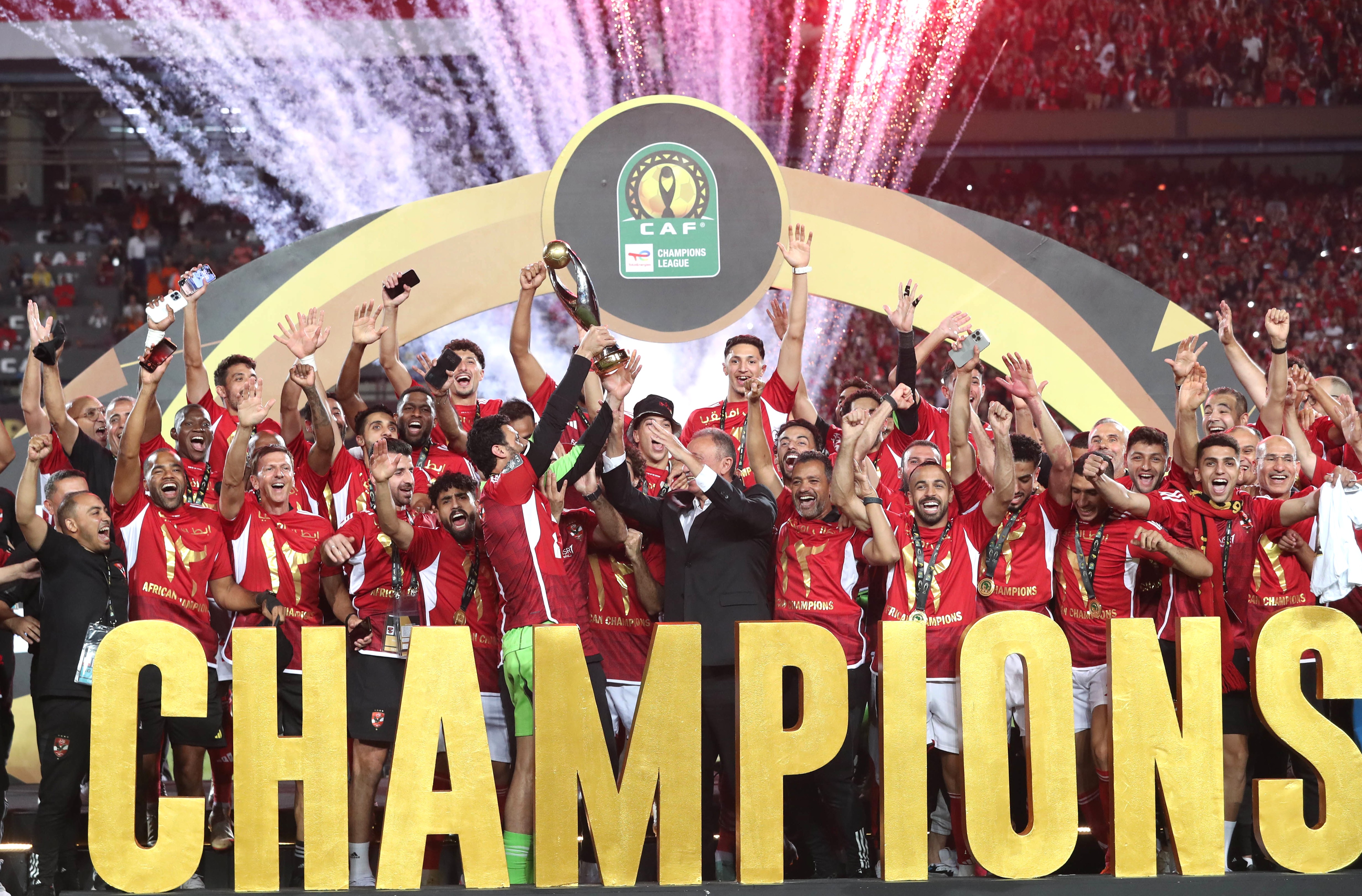
When discussing the African Champions League, one name towers above the rest: Al Ahly SC. The Egyptian giants are the undisputed kings of the continent, holding a record 12 titles as of 2025. Their dominance is not just about silverware; it is about a culture of excellence that has spanned decades.
| Club | Country | Titles | Most Recent |
| Al Ahly SC | Egypt | 12 | 2024 |
| Zamalek SC | Egypt | 5 | 2002 |
| TP Mazembe | DR Congo | 5 | 2015 |
| ES Tunis | Tunisia | 4 | 2019 |
| Wydad AC | Morocco | 3 | 2022 |
While North African teams have historically dominated the African Champions League, the landscape is shifting. Sub-Saharan powerhouses like Mamelodi Sundowns (South Africa) and TP Mazembe (DR Congo) consistently challenge the status quo with modern tactical approaches and significant financial backing.

The 2024–25 Season: A New Era
The most recent edition of the African Champions League was a landmark season. It culminated in a thrilling final where Egypt’s Pyramids FC defeated Mamelodi Sundowns 3–2 on aggregate. This victory signaled the arrival of a “new money” giant, proving that strategic investment and world-class scouting can break the historical duopoly of Al Ahly and Zamalek in Egypt.
Recent match results show an increasing parity. Teams like Petro Luanda from Angola and Young Africans from Tanzania are no longer just “making up the numbers.” They are reaching the knockout stages and defeating established giants. You can track the latest standings and market values of these rising stars on Transfermarkt.
The Economic and Cultural Impact
The African Champions League is more than just a sport; it is a massive economic driver. The winner of the 2025 edition took home a staggering $4 million in prize money. This revenue is vital for clubs to improve training facilities, retain top talent, and invest in youth academies.
Culturally, the tournament fosters a sense of continental identity. Whether it’s the “Voodoo” atmosphere of West African stadiums or the choreographed “Ultras” displays in North Africa, the African Champions League showcases the diverse beauty of the continent. It also serves as a primary scouting ground for European clubs. Legends like Samuel Eto’o and Yaya Touré first made their marks in continental competition before conquering the world.
“To win the African Champions League is to prove you can survive the toughest conditions in football. It is the ultimate test of character.” — Pitso Mosimane, Three-time winning coach.
The Tactical Evolution of the African Champions League
To understand the modern African Champions League, one must look beyond the individual talent and analyze the tactical shift that has occurred over the last decade. Historically, the competition was defined by a stark contrast: North African teams (Egypt, Morocco, Tunisia) favored a disciplined, “chess-match” style involving deep defensive blocks and clinical counter-attacks, while West and Central African teams relied on raw physicality and explosive pace.
However, the African Champions League of the 2020s is a different beast. The influence of global coaching philosophies—particularly from Portugal, Spain, and Germany—has permeated the continent. Clubs like Mamelodi Sundowns have pioneered a “Positional Play” (Juego de Posición) style in Africa, emphasizing high possession and horizontal stretching of the opponent’s defense. This tactical modernization has forced North African giants like Wydad AC and Al Ahly to abandon their conservative roots and adopt high-pressing systems.
For fans interested in the statistical breakdown of these tactical shifts, Opta Analyst provides incredible insights into how ball progression and expected goals (xG) are changing the way we view the African Champions League.
Home Field Advantage: The 12th Man
In the African Champions League, “home-field advantage” isn’t just a cliché—it is a statistical reality. Traveling across the African continent presents unique challenges:
- Altitude: Playing in Addis Ababa or Johannesburg requires respiratory adaptation that many West African teams struggle with.
- Climate: A team from the dry heat of Cairo might find themselves playing in 90% humidity in Douala just four days later.
- Atmosphere: The “Green Hell” of Raja Casablanca’s Stade Mohammed V or the deafening roar of the Cairo International Stadium can rattle even the most experienced international players.
The psychological warfare involved in the African Champions League is legendary. It is common to see visiting teams bring their own chefs, water, and security detail to mitigate the “hospitality” provided by their hosts. This grit and resilience are what make the tournament uniquely African.

Youth Development: The Lifeblood of the Tournament
While the African Champions League is a club competition, its impact on national teams cannot be overstated. Unlike the European model, where top clubs buy finished products from around the world, African clubs are often the primary developers of talent.
Academies like ASEC Mimosas in Ivory Coast and Generation Foot in Senegal have used the African Champions League as a window to showcase their graduates. When a young player performs well in a high-pressure quarter-final in Tunis, their market value skyrockets. This cycle of “develop, showcase, and export” provides the liquidity that keeps African football sustainable.
If you are a scout or a fan looking for the “Next Big Thing,” keeping an eye on the Scouted Football reports on African talent is essential. They often highlight youngsters who make their professional debuts in this very competition.
Prize Money and Financial Sustainability
For many years, the African Champions League was criticized for its low prize pool relative to the travel costs incurred by clubs. CAF addressed this in 2023 by significantly bumping the rewards.
As of the current cycle:
- Winner: $4,000,000
- Runner-up: $2,000,000
- Semi-finalists: $1,200,000
- Quarter-finalists: $900,000
While these figures are still dwarfed by UEFA’s numbers, in the context of African domestic economies, $4 million is transformative. It allows a club to pay competitive salaries, reducing the “brain drain” of players leaving for second-tier European leagues or the Middle East. The financial health of the African Champions League is directly tied to the quality of the product on the pitch.
Iconic Rivalries: The Games That Stop a Continent
No guide to the African Champions League is complete without mentioning the “Derbies.” These matches transcend football; they are cultural and political events.
- The Cairo Derby (Al Ahly vs. Zamalek): When these two meet in the African Champions League, Egypt essentially shuts down. The 2020 final, dubbed the “Final of the Century,” remains the most-watched club match in African history.
- The Casablanca Derby (Raja vs. Wydad): Known for having the most spectacular fan choreography (Tifos) in the world, this rivalry brings a European-style intensity to the African stage.
- The Tunis Derby (Espérance vs. Club Africain): A clash of heritage and class that often determines the pecking order in North African football.
To understand the passion behind these rivalries, check out the documentaries produced by Copa90, which frequently feature the “ultras” culture of the African Champions League.
How to Watch and Follow
Gone are the days when you needed a shortwave radio to follow the African Champions League. Today, the tournament is accessible globally.
- In Africa: SuperSport and beIN Sports hold the primary rights.
- In the US/Canada: Fanatiz and beIN Sports often stream the knockout stages.
- Digital: CAF has increased its presence on YouTube, offering highlights and “Behind the Scenes” content that was previously unavailable.
For real-time data and live commentary, we recommend bookmarking our African Football Analytics Page and following the official CAF Twitter/X account.
The Legendary Stadiums of the African Champions League
A massive part of the African Champions League allure is the colossals of concrete and grass that host these matches. For a player, walking out into a packed African stadium is a rite of passage. In the 2024/25 season, several venues stood out for their atmosphere and historical significance:
- Cairo International Stadium (Egypt): The fortress of Al Ahly and Zamalek. With a capacity of over 75,000, it remains the spiritual home of the African Champions League.
- Stade Mohammed V (Morocco): Home to both Raja and Wydad Casablanca. The “Curva Sud” and “Curva Nord” are world-famous for their synchronized displays.
- Godswill Akpabio International Stadium (Nigeria): Often used for high-profile knockout matches, this modern “Nest of Champions” represents the rising infrastructure in West Africa.
- Loftus Versfeld Stadium (South Africa): Where Mamelodi Sundowns host their most critical African Champions League fixtures, utilizing the pitch’s high-quality surface to play their signature possession football.
The quality of these venues has improved drastically, with many now meeting the highest FIFA standards. For a list of the largest and most iconic stadiums currently used in the competition, you can visit StadiumDB, which tracks stadium developments across the continent.
The “Export Machine”: Scouting the Next Stars
The African Champions League is effectively the world’s most competitive open-air showroom. Scouts from Ligue 1, the Belgian Pro League, and increasingly the MLS and Saudi Pro League, are staples at group stage matches.
In 2025, we saw a significant trend of players moving directly from the African Champions League to high-level European competition. Notable examples include:
- Fiston Mayele (Pyramids FC): After finishing as the top scorer in the 2024/25 edition with 9 goals, the DR Congo striker became a target for several mid-table French and Turkish clubs.
- Ronwen Williams (Mamelodi Sundowns): The South African captain’s heroic performances in the African Champions League and for Bafana Bafana solidified his status as one of the world’s best shot-stoppers outside of Europe.
- Mohamed Chibi (Pyramids FC): The Moroccan right-back’s performances in the 2025 final proved that the domestic African leagues can produce elite-level tactical defenders.
Clubs like Ajax Cape Town (now Cape Town Spurs) and ASEC Mimosas have built their entire business models on this pipeline.
Officiating and Technology: The Role of VAR
One of the biggest controversies historically associated with the African Champions League was the standard of officiating. To combat this, CAF has aggressively implemented Video Assistant Referee (VAR) technology, starting from the quarter-final stages and moving toward full group-stage coverage by 2026.
This shift has brought a new level of “fair play” to the tournament. No longer can a blatant handball or an offside goal decide a final in front of 100,000 fans without a second look. The professionalization of referees, many of whom now train at the FIFA Refereeing seminars, has significantly boosted the global credibility of the African Champions League.
Prize Money: A Catalyst for Growth
We previously touched on the 2025 prize money, but the impact of those millions is where the real story lies. When a club like Petro de Luanda or Young Africans reaches the quarter-finals and secures nearly $1 million, that money often represents 30–40% of their annual operating budget.
This “Champions League Dividend” allows clubs to:
- Retain Talent: Offering higher salaries to stop players from leaving for lower-tier European leagues.
- Infrastructure: Investing in GPS tracking technology and better medical departments.
- Travel: Hiring private charters for away legs, which is a massive competitive advantage in the African Champions League given the continent’s complex flight paths.
The Fan Experience: How to Travel for the ACL
For the adventurous football tourist, following the African Champions League is the ultimate “bucket list” experience. From the vibrant markets of Bamako to the Mediterranean charm of Tunis, the tournament offers a travel experience unlike any other.
If you are planning to attend a match, it is essential to:
- Book Early: Flights between African regions can be expensive and infrequent.
- Verify Stadium Locations: Some clubs play their African Champions League matches in different cities than their domestic ones to meet CAF stadium requirements.
- Engage with Local Fan Groups: Digital platforms like Facebook and WhatsApp are the best way to get real-time info on ticket sales, which are rarely sold on international sites.
For travel tips and safety guidelines across different African nations, Lonely Planet’s Africa section provides excellent regional advice.
Looking Ahead: The Future of the Tournament
As we look toward the 2026 season and beyond, several trends are shaping the African Champions League:
- Professionalization: More clubs are adopting data-driven scouting and sports science.
- Broadcasting: Enhanced TV deals are bringing the “African Champions League” to global audiences, with increased interest from the Middle East and Asia.
- The African Super League: The introduction of the African Football League (AFL) as a companion tournament is expected to further increase the quality and commercial value of club football.
The African Champions League remains the heartbeat of the continent’s football. It is where dreams are forged in the heat of competition and where legends are immortalized.
Internal Links & Resources:
- Check out our History of African Football for a look at the early pioneers.
- Read our analysis of the Top 10 Players in Africa for the current season.
- Stay updated with our Live Score Center for all African Champions League fixtures.
External Resources (DoFollow):
- Official CAF Online Website – The governing body for African football.
- BBC Sport Africa – Excellent source for match reports and news.
- Goal.com Africa – In-depth analysis of continental competitions.
Get Exclusive African Champions League Predictions
Want to stay ahead of the game? Our elite scouting network and data analysts provide the most accurate African Champions League insights and match forecasts. Whether you’re tracking the North African giants or looking for the next sub-Saharan underdog, we have you covered.
Why subscribe?
- Daily Expert Analysis: In-depth previews for every group stage and knockout match.
- High-Value Insights: Data-driven “1X2” and “Correct Score” patterns tailored for African leagues.
- Early-Bird Alerts: Be the first to know about squad news and travel disruptions that affect the odds.
Join 12,000+ football fans today! > Don’t miss out on the 2026 season’s opening salvos.