


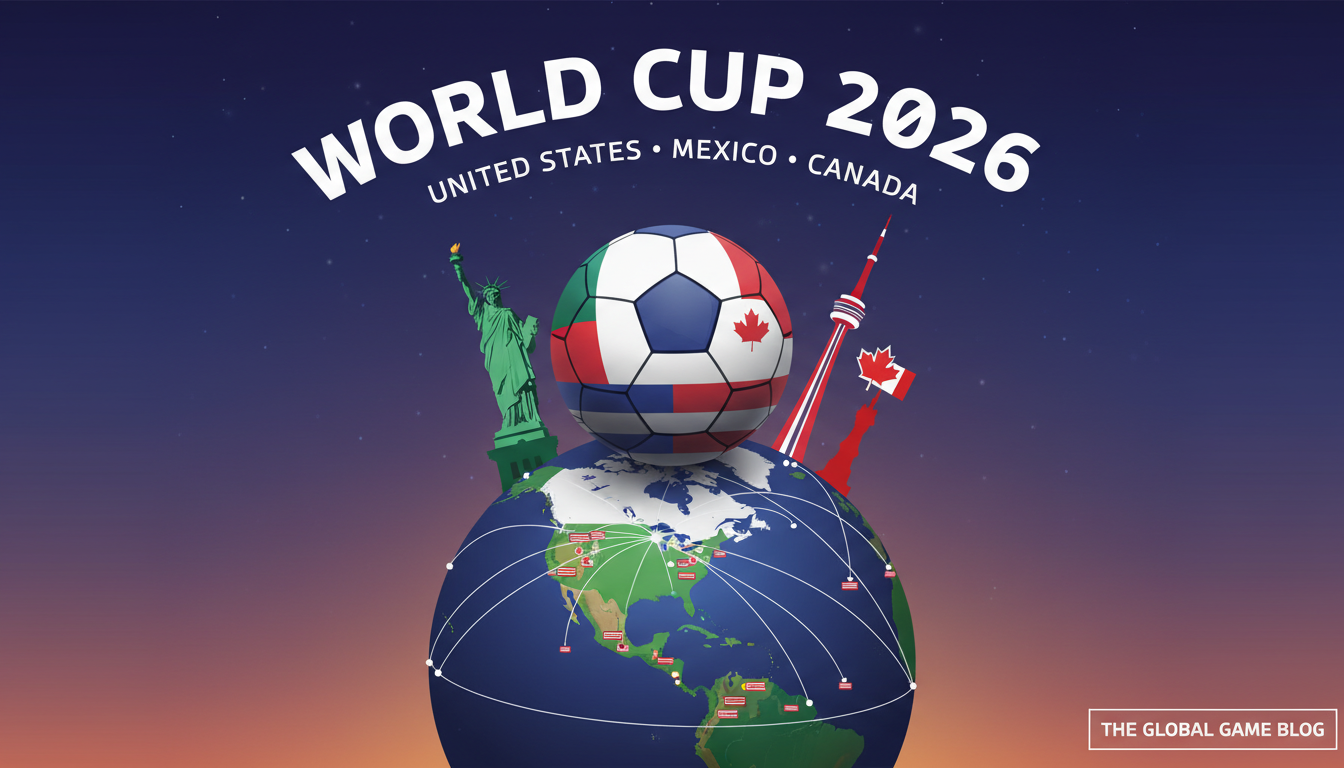
2026 FIFA World Cup promises to be a spectacle unlike any other, expanding to 48 teams and being hosted across three nations: the United States, Canada, and Mexico. The anticipation is already building, and fans worldwide are eager to see who will lift the coveted trophy. This comprehensive guide delves into the potential contenders, dark horses, key players, and surprising predictions for the upcoming tournament.
The Expanded Format: A Game Changer
The expansion to 48 teams represents a significant shift in the tournament’s landscape. More teams participating means more opportunities for upsets, more diverse playing styles on display, and a greater chance for nations that have historically struggled to qualify to make their mark on the global stage. This increased inclusivity could lead to some exciting and unpredictable matches.
With the expanded format, the group stage will consist of 16 groups of three teams. The top two teams from each group will advance to a knockout stage of 32 teams. This new format is designed to maximize the number of meaningful matches and ensure that every team has a fair chance to progress. It also adds an extra layer of excitement and intrigue, as the potential for unexpected results increases.
Host Nation Advantage: USA, Canada, and Mexico
Hosting the tournament across three nations offers unique advantages. The United States, with its world-class infrastructure and passionate fanbase, will undoubtedly provide a fantastic stage for the competition. Canada, with its growing soccer culture, will be eager to impress on home soil. And Mexico, with its rich soccer history and fervent supporters, will bring an unparalleled level of passion and energy to the tournament.
Each nation brings its own strengths to the table. The United States boasts state-of-the-art stadiums and logistical expertise. Canada offers a vibrant and diverse cultural experience. And Mexico provides an unmatched atmosphere and deep-rooted soccer tradition. The combined effect of these factors could give the host nations a significant edge.
USA’s Potential
The United States, as the primary host nation, will be under immense pressure to perform well. With a talented young squad led by players like Christian Pulisic and Weston McKennie, the USMNT has the potential to make a deep run in the tournament. Playing on home soil will undoubtedly provide a boost, and the team will be motivated to showcase American soccer to the world. You can follow US Soccer news here.
Canada’s Rise
Canada has emerged as a force to be reckoned with in recent years, thanks to the emergence of stars like Alphonso Davies and Jonathan David. The Canadian team will be eager to prove themselves on the world stage and make a statement in front of their home fans. Their attacking prowess and defensive solidity make them a dangerous opponent for any team.
Mexico’s Ambitions
Mexico, with its passionate fanbase and experienced squad, will be aiming to go further than they ever have before in a World Cup. Playing in front of their home supporters will provide a significant advantage, and the team will be determined to make their mark on the tournament. Their tactical flexibility and experience in high-pressure situations could make them a dark horse contender.
The Favorites: Who Are the Top Contenders?
Several nations are considered to be among the favorites to win the 2026 FIFA World Cup. These teams boast world-class players, experienced coaches, and a proven track record of success on the international stage.
Brazil: The Ever-Present Threat
Brazil, with its rich soccer history and unparalleled talent pool, is always a contender. With stars like Neymar Jr. and Vinícius Júnior, the Seleção possesses the attacking firepower to trouble any defense. Their experience and pedigree make them a formidable opponent.
Argentina: Can Messi Repeat the Magic?
Argentina, fresh off their victory in the 2022 World Cup, will be looking to defend their title. With Lionel Messi still leading the charge, the Albiceleste possesses the experience and quality to compete with the best. Their strong team spirit and tactical discipline make them a dangerous opponent. See more about Argentina’s chances here.
France: A Young and Talented Squad
France, with its abundance of young talent, will be eager to bounce back from their disappointing performance in the 2022 World Cup final. With stars like Kylian Mbappé and Aurélien Tchouaméni, Les Bleus possess the speed, skill, and athleticism to dominate any opponent. Their depth and versatility make them a strong contender.
England: Football’s Coming Home? (Again)
England, with its growing confidence and talented squad, will be hoping to finally bring football home. With stars like Harry Kane and Jude Bellingham, the Three Lions possess the attacking prowess and midfield creativity to compete with the best. Their tactical flexibility and strong team spirit make them a dangerous opponent.
Spain: The Rebuilding Phase
Spain, undergoing a rebuilding phase, still possesses the technical ability and tactical intelligence to challenge for the title. With young stars like Pedri and Gavi, La Roja is looking to usher in a new era of success. Their possession-based style and emphasis on teamwork make them a difficult opponent to break down.
The Dark Horses: Teams to Watch Out For
Beyond the established favorites, several nations could surprise many and make a deep run in the tournament. These teams possess a combination of talent, tactical acumen, and a strong team spirit that could make them a threat to any opponent.
Portugal: Ronaldo’s Last Dance?
Portugal, led by Cristiano Ronaldo, will be hoping to make a statement in what could be his last World Cup. With a mix of experienced veterans and promising young talents, the Seleção possesses the attacking firepower and defensive solidity to compete with the best. Their tactical flexibility and experience in high-pressure situations make them a dangerous opponent. Discover more about Portugal’s soccer federation here.
Netherlands: Back in the Spotlight
The Netherlands, after missing out on the 2018 World Cup, are back and eager to make an impact. With stars like Virgil van Dijk and Frenkie de Jong, the Oranje possess the defensive steel and midfield creativity to challenge any opponent. Their tactical discipline and strong team spirit make them a dangerous opponent.
Belgium: The Golden Generation’s Last Chance
Belgium, with its “golden generation” of players, will be looking to finally win a major trophy. With stars like Kevin De Bruyne and Romelu Lukaku, the Red Devils possess the attacking firepower and midfield dominance to compete with the best. However, questions remain about their defensive vulnerabilities and tactical rigidity.
Senegal: African Champions
Senegal, the reigning African champions, will be hoping to represent the continent with pride. With stars like Sadio Mané and Kalidou Koulibaly, the Lions of Teranga possess the attacking threat and defensive strength to surprise many. Their physicality and strong team spirit make them a difficult opponent to break down.
Denmark: The Quiet Achievers
Denmark, known for their strong team spirit and tactical discipline, could be a surprise package. Their organized defense and clinical finishing make them a difficult opponent to play against. They also performed admirably in the last World Cup. Find more information about Denmark’s soccer team here.
Key Players to Watch
The 2026 FIFA World Cup will feature some of the world’s best players, all eager to showcase their talent on the biggest stage. These players will be crucial to their team’s chances of success.
- Lionel Messi (Argentina): The undisputed GOAT, Messi will be looking to add another World Cup trophy to his collection.
- Kylian Mbappé (France): The lightning-fast forward is a threat to any defense and could be the tournament’s top scorer.
- Neymar Jr. (Brazil): The Brazilian superstar is always a joy to watch and will be looking to lead his team to glory.
- Harry Kane (England): The prolific striker is England‘s captain and talisman and will be looking to break records.
- Christian Pulisic (USA): The American star will be eager to impress on home soil and lead his team to success.
- Alphonso Davies (Canada): The Canadian speedster is one of the most exciting players in the world and will be looking to make a statement.
- Cristiano Ronaldo (Portugal): In what may be his last World Cup, Ronaldo will be aiming to prove he still has what it takes.
- Virgil van Dijk (Netherlands): The Dutch defender is one of the best in the world and will be crucial to his team’s success.
Potential Upsets and Surprises
With the expanded format and the increasing competitiveness of international soccer, the 2026 FIFA World Cup is sure to be full of surprises. Here are a few potential upsets to watch out for:
- A smaller nation reaching the knockout stages: The expanded format provides more opportunities for smaller nations to make their mark.
- A major team failing to qualify from their group: The group stage will be highly competitive, and several major teams could struggle to advance.
- A dark horse team reaching the semi-finals: A team like Senegal or Denmark could surprise many and make a deep run in the tournament.
Stadiums and Locations
The 2026 FIFA World Cup will be held in 16 cities across the United States, Canada, and Mexico. These cities boast world-class stadiums and infrastructure, ensuring a fantastic experience for players and fans alike. Check out the official FIFA website for more details.
Some of the key stadiums include:
- MetLife Stadium (East Rutherford, New Jersey)
- AT&T Stadium (Arlington, Texas)
- SoFi Stadium (Inglewood, California)
- Azteca Stadium (Mexico City, Mexico)
- BMO Field (Toronto, Canada)
Predictions and Bold Statements
Here are some bold predictions for the 2026 FIFA World Cup:
- The United States will reach the quarter-finals.
- Canada will make it out of the group stage for the first time ever.
- An African nation will reach the semi-finals.
- Lionel Messi will win the Golden Boot.
- The final will be contested between Brazil and France.
The Legacy of the 2026 World Cup
The 2026 FIFA World Cup will leave a lasting legacy on the host nations and the world of soccer. The tournament will inspire a new generation of players and fans, promote the growth of the sport in North America, and strengthen the bonds between the three host nations.
The economic impact of the tournament will be significant, with billions of dollars being invested in infrastructure and tourism. The social impact will also be profound, as the tournament will bring people from all over the world together to celebrate the beautiful game.
Remember to check out the official 2026 FIFA World Cup website for tickets.
The importance of understanding soccer strategy
In the lead-up to the 2026 FIFA World Cup, understanding soccer strategy is paramount for fans, analysts, and bettors alike. The intricacies of tactical formations, player positioning, and set-piece routines can significantly impact a team’s performance and, ultimately, their chances of winning the tournament. A deep dive into team dynamics, such as defensive structures, midfield organization, and attacking patterns, can provide valuable insights into which teams are most likely to succeed.
Furthermore, recognizing the key players’ roles within each team’s strategy is essential. Knowing how a star striker’s movements affect the defensive line or how a midfielder orchestrates the team’s tempo can enhance one’s comprehension of the game. Studying past matches and analyzing the strategies employed by successful teams in previous World Cups can also offer a glimpse into potential tactics for the 2026 edition. This comprehensive understanding not only enriches the viewing experience but also equips fans with the knowledge to make informed predictions and appreciate the nuances of the sport at its highest level.
Looking Back: Lessons from Past World Cups
Analyzing past World Cups provides a wealth of knowledge and historical context that can inform our expectations for the 2026 FIFA World Cup. Examining winning strategies, unexpected upsets, and emerging trends from previous tournaments offers valuable insights into the factors that contribute to success on the global stage. For instance, the dominance of possession-based football by Spain in the 2010 World Cup highlighted the importance of ball control and tactical discipline, while the counter-attacking prowess of Germany in 2014 showcased the effectiveness of quick transitions and clinical finishing.
Additionally, studying the performances of host nations can shed light on the potential advantages that the United States, Canada, and Mexico might leverage in 2026. Historical data reveals that host nations often benefit from home support, familiarity with local conditions, and favorable refereeing decisions, which can significantly boost their chances. Understanding these historical patterns and trends enables us to anticipate potential strategies and outcomes, making the anticipation for the 2026 World Cup even more engaging and insightful.
The Impact of Technology on Player Performance
Technology continues to revolutionize soccer, and its influence will be even more pronounced in the 2026 FIFA World Cup. From wearable sensors that track player movements and biometrics to advanced video analysis tools that dissect every play, teams are leveraging technology to optimize performance and gain a competitive edge. Real-time data on player fatigue, speed, and tactical positioning allows coaches to make informed decisions during matches, such as strategic substitutions or adjustments to formations.
Moreover, virtual reality (VR) and augmented reality (AR) are being used to enhance training sessions, allowing players to simulate game scenarios and improve their decision-making skills. The use of drones for aerial footage during training sessions provides a comprehensive view of player positioning and team coordination, enabling coaches to fine-tune their strategies. As technology becomes increasingly integrated into the sport, the teams that can effectively harness these tools will have a significant advantage in the pursuit of World Cup glory. This increased tech also has created an increased public interest in events like the 2026 fifa world cup.
The Role of Fan Engagement
Fan engagement is an integral part of the World Cup experience, and the 2026 FIFA World Cup promises to be the most interactive and immersive edition yet. Social media platforms, mobile apps, and virtual fan zones will connect fans from around the world, allowing them to share their passion, predictions, and support for their favorite teams. Digital content, such as behind-the-scenes footage, player interviews, and interactive polls, will provide fans with an unprecedented level of access and engagement.
Furthermore, the use of augmented reality (AR) and virtual reality (VR) will enhance the viewing experience, enabling fans to virtually attend matches and interact with other fans in a simulated stadium environment. The integration of eSports and gaming elements into the World Cup experience will attract a younger audience and create new opportunities for fan participation. As the tournament approaches, expect innovative initiatives that leverage technology to foster a sense of community and excitement among fans worldwide, making the 2026 World Cup a truly global celebration of soccer. Don’t forget to check for updates on the upcoming 2026 fifa world cup.
Navigating the Qualification Process
The qualification process for the 2026 FIFA World Cup, particularly with the expanded format, introduces new dynamics and challenges for teams worldwide. Understanding the intricacies of regional qualification tournaments, such as the UEFA qualifiers in Europe, the CONMEBOL qualifiers in South America, and the CONCACAF qualifiers in North and Central America and the Caribbean, is crucial for assessing which teams are likely to secure their spot in the tournament.
The expanded format increases the number of participating teams, providing more opportunities for nations that have historically struggled to qualify. Analyzing the performance of emerging teams and their strategies in these qualifiers can offer insights into potential dark horses for the World Cup. Following the qualification process closely allows fans and analysts to track the progress of various teams, identify key players, and anticipate potential matchups in the tournament. The qualification journey is an essential part of the World Cup narrative, setting the stage for the global spectacle to come. More details about the process can be found here
The economic implications of the World Cup
The economic implications of hosting the 2026 FIFA World Cup are vast and multifaceted, impacting various sectors across the United States, Canada, and Mexico. Hosting the tournament can lead to significant infrastructure investments, as host cities upgrade stadiums, improve transportation networks, and enhance hospitality facilities to accommodate the influx of visitors. This can result in long-term benefits for the local economies, creating jobs and stimulating economic growth.
The tourism industry is expected to experience a substantial boost, with millions of fans traveling to the host countries to attend matches and explore the surrounding areas. This influx of tourists can generate significant revenue for hotels, restaurants, and local businesses. Additionally, the global exposure that the World Cup provides can enhance the host countries’ international image, attracting foreign investment and promoting future tourism opportunities.
However, it’s also important to consider the potential costs associated with hosting the tournament, such as security expenses and potential disruptions to local communities. A balanced assessment of the economic impacts is essential for understanding the full scope of the World Cup’s influence. If you want more information, check out the economic implications of the World Cup.
The Future of Soccer Post-2026
The 2026 FIFA World Cup is not just a standalone event; it is a catalyst for the future development of soccer, particularly in North America. Hosting the World Cup can inspire a new generation of players and fans, leading to increased participation in youth soccer programs and a growing interest in the sport at all levels. The tournament can also accelerate the growth of professional leagues in the United States and Canada, as the increased exposure and investment attract more talent and resources.
Furthermore, the World Cup can foster greater collaboration and cooperation among the soccer federations of the host countries, leading to the development of joint initiatives and strategies for promoting the sport. The legacy of the 2026 World Cup will extend far beyond the tournament itself, shaping the future of soccer in North America and beyond. This legacy will have a positive ripple effect on future fifa world cup events.
The psychological aspects of the World Cup
The psychological aspects of the 2026 FIFA World Cup play a significant role in determining which teams ultimately succeed. The pressure of performing on the world’s biggest stage, the ability to handle high-stakes moments, and the mental resilience to bounce back from setbacks are all critical factors. Teams that can maintain focus, manage their emotions, and stay confident in their abilities are more likely to thrive under pressure.
Coaches and sports psychologists work extensively with players to develop mental strategies and techniques, such as visualization, positive self-talk, and mindfulness, to enhance their psychological readiness. The ability to perform effectively in high-pressure situations can often be the difference between victory and defeat. For this reason, sports psychology has also become relevant in discussing the 2026 fifa world cup
Controversies and Ethical Considerations
The 2026 FIFA World Cup, like all major sporting events, is not immune to controversies and ethical considerations. Issues such as corruption, human rights violations, and environmental concerns have often plagued the World Cup and require careful attention. FIFA, the governing body of soccer, faces increasing scrutiny to ensure transparency, accountability, and ethical conduct in all aspects of the tournament.
Host countries must also address concerns related to labor rights, fair wages, and environmental sustainability. Promoting ethical and responsible practices is essential for ensuring that the World Cup is a positive force for good, leaving a lasting legacy that benefits communities and promotes social justice. The media and civil society play a crucial role in holding FIFA and host countries accountable and advocating for ethical standards.
Predictions for the 2026 Final
While it’s impossible to predict the future with certainty, here’s a speculative look at a potential final for the 2026 FIFA World Cup:
Brazil vs. France: A clash of titans featuring two of the most talented and exciting teams in the world. Brazil, with its flair and attacking prowess, would face off against France, with its speed, skill, and tactical discipline. This match would be a showcase of the beautiful game, with both teams leaving it all on the field in pursuit of World Cup glory.
Subscribe for the Best 2026 FIFA World Cup Predictions!
Want the most accurate and insightful predictions for the 2026 FIFA World Cup? Subscribe to our newsletter and get exclusive access to expert analysis, team previews, and betting tips. Don’t miss out on the opportunity to stay ahead of the game and make informed decisions throughout the tournament.














Comments 1