

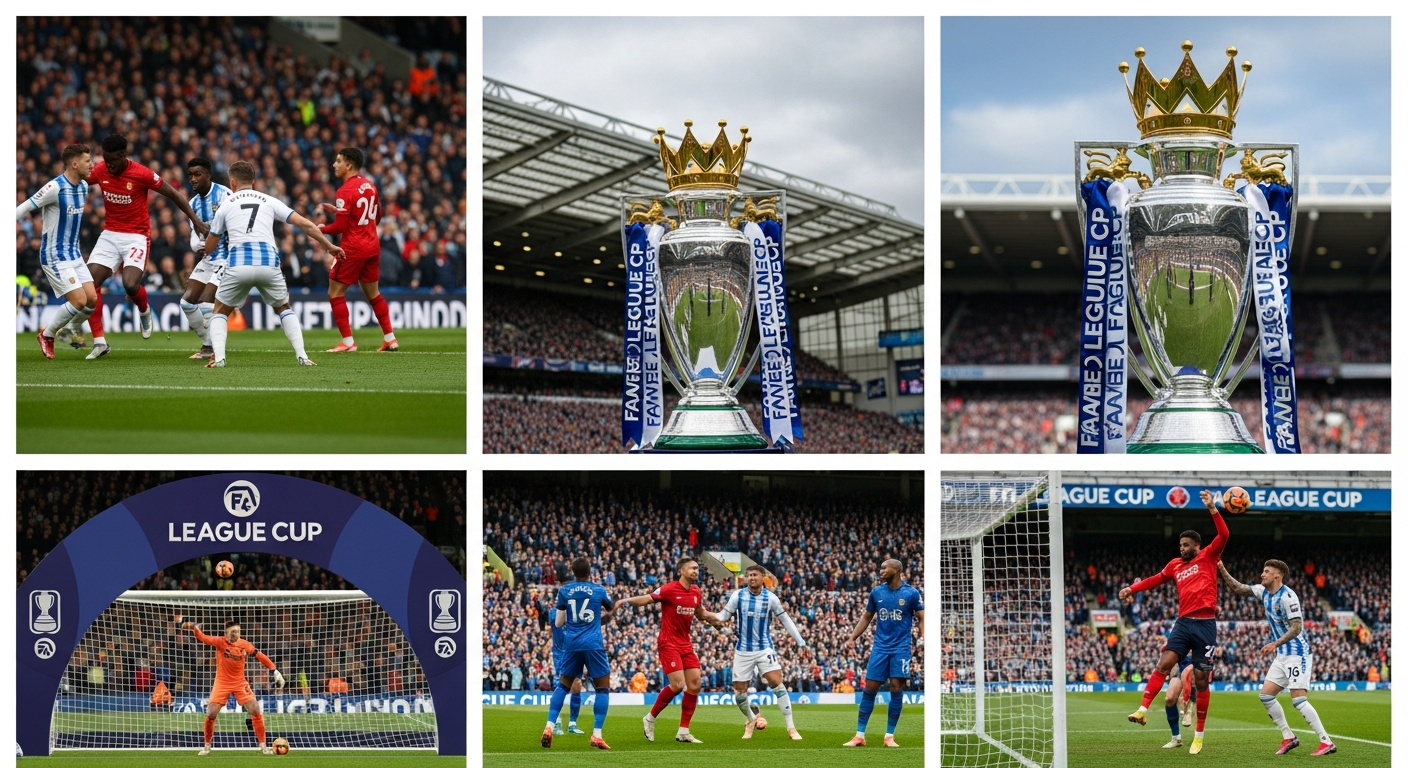
The fa league cup, officially known as the Carabao Cup for sponsorship reasons, is a prestigious English football competition that often throws up surprises and showcases the depth of talent within the English leagues. From Premier League giants clashing with lower-league underdogs to dramatic penalty shootouts, the League Cup provides captivating moments for fans across the country. This article delves into some of the most memorable upsets, explores the tournament’s format, and offers expert insights into predicting future winners.
What is the FA League Cup?
The League Cup is an annual knockout football competition open to all 92 clubs in the English Football League (EFL) – the Premier League and the three divisions of the English Football League (Championship, League One, and League Two). It’s structured as a single-elimination tournament, meaning teams are knocked out after a single defeat. The competition runs concurrently with the Premier League and FA Cup, adding to the congested fixture schedule for many clubs.
The winner of the League Cup typically qualifies for the UEFA Europa Conference League, providing a valuable opportunity for teams outside the usual Champions League contenders to compete on the European stage. The final is traditionally held at Wembley Stadium, offering a memorable occasion for players and fans alike. Learn more about the history of the competition on the official EFL website.
The Format of the Competition
The League Cup begins with the first round, where teams from League One and League Two enter. Clubs from the Championship join in the second round, and Premier League clubs not involved in European competitions enter in the third round. Those Premier League clubs participating in European competitions enter in the fourth round. This staggered entry system often leads to intriguing matchups between top-flight teams and those from lower divisions.
From the semi-finals onwards, the competition features two-legged ties, with each team playing one match at home and one away. If the aggregate score is level after both matches, extra time is played, followed by a penalty shootout if necessary. The final is a single match held at Wembley Stadium.
Memorable Upsets in FA League Cup History
The beauty of the League Cup lies in its capacity to produce unexpected results. Here are ten of the most shocking upsets in the competition’s history:
- Bradford City’s Run to the Final (2012-13): League Two Bradford City defied all odds to reach the 2013 League Cup Final. They defeated Premier League sides Wigan Athletic, Arsenal, and Aston Villa along the way, becoming the first fourth-tier team to reach a major English cup final since 1962. This improbable journey showcased the magic of cup competitions and the resilience of lower-league teams.
- Swansea City Triumph (2012-13): While Bradford’s run was incredible, Swansea City emphatically won the final 5-0, proving that even mid-table Premier League teams could secure silverware.
- MK Dons 4 – Manchester United 0 (2014-15): This was a truly shocking result. Manchester United, managed by Louis van Gaal, suffered a humiliating defeat to League One side MK Dons. It was a disastrous night for United and a historic one for the Dons, highlighting the potential for lower-league teams to cause major upsets.
- Northampton Town 1 – Liverpool 1 (Liverpool won 4-2 on penalties) (2010-11): Liverpool, despite ultimately winning on penalties, were held to a 1-1 draw at Anfield by League Two Northampton Town. The Cobblers then won the penalty shootout, sending shockwaves through the football world.
- Shrewsbury Town 2 – Chelsea 1 (1996-97): In this fourth-round tie, then-third-tier Shrewsbury Town defeated a strong Chelsea side that included players like Ruud Gullit and Gianluca Vialli. Nigel Jemson’s late goal secured a famous victory for the Shrews.
- Rotherham United 2 – Arsenal 1 (1971-72): Third Division Rotherham United stunned the then-FA Cup holders, Arsenal, in a 1971 League Cup match.
- Chester City 2 – Leeds United 0 (1974-75): Fourth Division Chester City eliminated the reigning First Division champions, Leeds United, in a major shock.
- Burnley 1 – Manchester United 0 (2019-20): Although Burnley are now a more established Premier League team, back then, this win against a strong Manchester United side was considered an upset.
- Colchester United 0 – Tottenham Hotspur 0 (Colchester won 4-3 on penalties) (2019-20): Colchester, then in League Two, held Tottenham Hotspur to a goalless draw before winning on penalties, causing a significant upset.
- Bristol City’s Semi-Final Run (2017-18): Championship side Bristol City reached the semi-finals, defeating four Premier League teams along the way, including Manchester United in a memorable quarter-final.
These upsets demonstrate that anything can happen in the League Cup, making it a thrilling competition to follow. They also illustrate the importance of squad depth and the potential for lower-league teams to rise to the occasion against more fancied opponents.
Strategies for Predicting League Cup Results
Predicting the outcome of League Cup matches can be challenging due to the unpredictable nature of the competition. However, by considering several factors, you can improve your chances of success. Here are some key strategies:
- Team Selection and Squad Rotation: Premier League managers often use the League Cup as an opportunity to rotate their squads, giving younger players and fringe players a chance to prove themselves. This can lead to weaker starting lineups and a decrease in team cohesion. Researching predicted lineups is crucial.
- Motivation and Priorities: Different teams have different priorities. Premier League clubs competing in European competitions may prioritize those tournaments and field weakened teams in the League Cup. Lower-league teams, on the other hand, may see the League Cup as a chance to gain exposure and potentially secure a lucrative tie against a top club.
- Home Advantage: Playing at home can provide a significant advantage, especially for lower-league teams facing Premier League opposition. The atmosphere generated by passionate home fans can inspire players and create a hostile environment for the visitors.
- Form and Momentum: A team’s current form and momentum can play a crucial role in their League Cup performance. Teams on a winning streak are more likely to carry that momentum into the competition, while those struggling for form may find it difficult to raise their game.
- Head-to-Head Record: Analyzing the head-to-head record between the two teams can provide valuable insights into their historical performance against each other. However, it’s important to consider the context of those previous matches and whether the teams have undergone significant changes since then.
- Injuries and Suspensions: Key injuries and suspensions can significantly impact a team’s chances of success. Be sure to check the latest team news before placing your bets. You can find reliable injury updates on sites like PhysioRoom.
- Managerial Tactics: Understanding the tactical approach of each manager can help you predict how the match will unfold. Some managers may prioritize defensive stability, while others may adopt a more attacking approach.
- Weather Conditions: The weather can play a significant role, especially in matches played during the winter months. Heavy rain or strong winds can disrupt the flow of the game and favor the underdog.
- The Underdog Factor: Don’t underestimate the power of the underdog. Lower-league teams often have a nothing-to-lose mentality and can be highly motivated to cause an upset.
By considering these factors, you can make more informed predictions about League Cup matches and increase your chances of success. Remember that even the best analysts can be surprised by the unpredictable nature of the competition, so it’s important to approach it with a healthy dose of caution.
The Impact of the League Cup on English Football
The League Cup plays a significant role in the English football landscape. It provides opportunities for:
- Lower-League Teams: The competition offers lower-league teams a chance to test themselves against Premier League opposition and potentially earn significant revenue through prize money and gate receipts.
- Young Players: Managers often use the League Cup to give young players valuable first-team experience, helping them develop and progress in their careers.
- Squad Rotation: The competition allows managers to rotate their squads and keep players fresh, particularly during the congested fixture schedule.
- European Qualification: Winning the League Cup provides a pathway to European competition, offering teams outside the usual Champions League contenders a chance to compete on the European stage.
- Memorable Moments: The League Cup consistently delivers memorable moments and upsets, adding to the rich tapestry of English football.
The fa league cup also fosters a sense of excitement and anticipation among fans, who eagerly await the draws and relish the prospect of seeing their team compete for silverware. It’s a competition that embodies the spirit of English football, where anything can happen and dreams can be realized.
The Future of the League Cup
The future of the League Cup is a topic of ongoing debate. Some argue that the competition should be scrapped or restructured to reduce the burden on Premier League clubs already juggling multiple competitions. Others believe that the League Cup remains a valuable part of the English football calendar, providing opportunities for lower-league teams and creating memorable moments for fans.
Potential changes could include:
- Reducing the number of rounds: This could alleviate fixture congestion for Premier League clubs.
- Regionalizing the early rounds: This could reduce travel costs for lower-league teams.
- Inviting teams from other leagues: This could add an international dimension to the competition.
Whatever the future holds, the League Cup is sure to continue to be a source of drama, excitement, and unexpected results.
Expert Predictions for the Next FA League Cup Winner
Predicting the winner of the fa league cup is always a challenging task, but by analyzing team form, squad depth, and managerial tactics, we can identify some potential contenders. While Manchester City have dominated the competition in recent years, other teams are emerging as serious challengers.
Potential Contenders:
- Manchester City: Despite squad rotation, City’s depth and quality make them perennial contenders.
- Liverpool: Jurgen Klopp often takes the competition seriously, and Liverpool’s attacking prowess makes them a threat to any team.
- Manchester United: With a renewed focus on silverware, United could prioritize the League Cup as a realistic opportunity to win a trophy.
- Arsenal: Under Mikel Arteta, Arsenal have shown progress and could see the League Cup as a chance to build momentum.
- Tottenham Hotspur: A trophy would be huge for Spurs and their fans, and a League Cup win could be just the ticket.
- Chelsea: Always a strong team, Chelsea have the capability to challenge for any trophy.
- Dark Horses: Keep an eye on teams like Newcastle United and West Ham United, who could surprise a few of the bigger clubs.
Ultimately, the winner of the League Cup will depend on a combination of factors, including luck, form, and the willingness of teams to prioritize the competition.
Accessing Further Analysis
For deeper dives into team analysis and performance metrics consider resources such as FBref.com or WhoScored.com. These sites provide a wealth of statistical information that can aid in your understanding of the game.
Stay Ahead of the Game: Subscribe for Expert Predictions!
Want to get the edge when it comes to predicting soccer outcomes? Subscribe to our premium service for daily English Premier League soccer picks and increase your chances of winning! Our expert analysis and data-driven predictions will help you make informed decisions and stay one step ahead of the competition. Don’t miss out on this opportunity to elevate your soccer prediction game.
The fa league cup remains an exciting and unpredictable competition, offering opportunities for both Premier League giants and lower-league underdogs to shine. By understanding the format, considering key factors, and staying informed, you can increase your chances of predicting the outcome and enjoying the thrilling moments that the League Cup consistently delivers. Good luck!
















Comments 1