

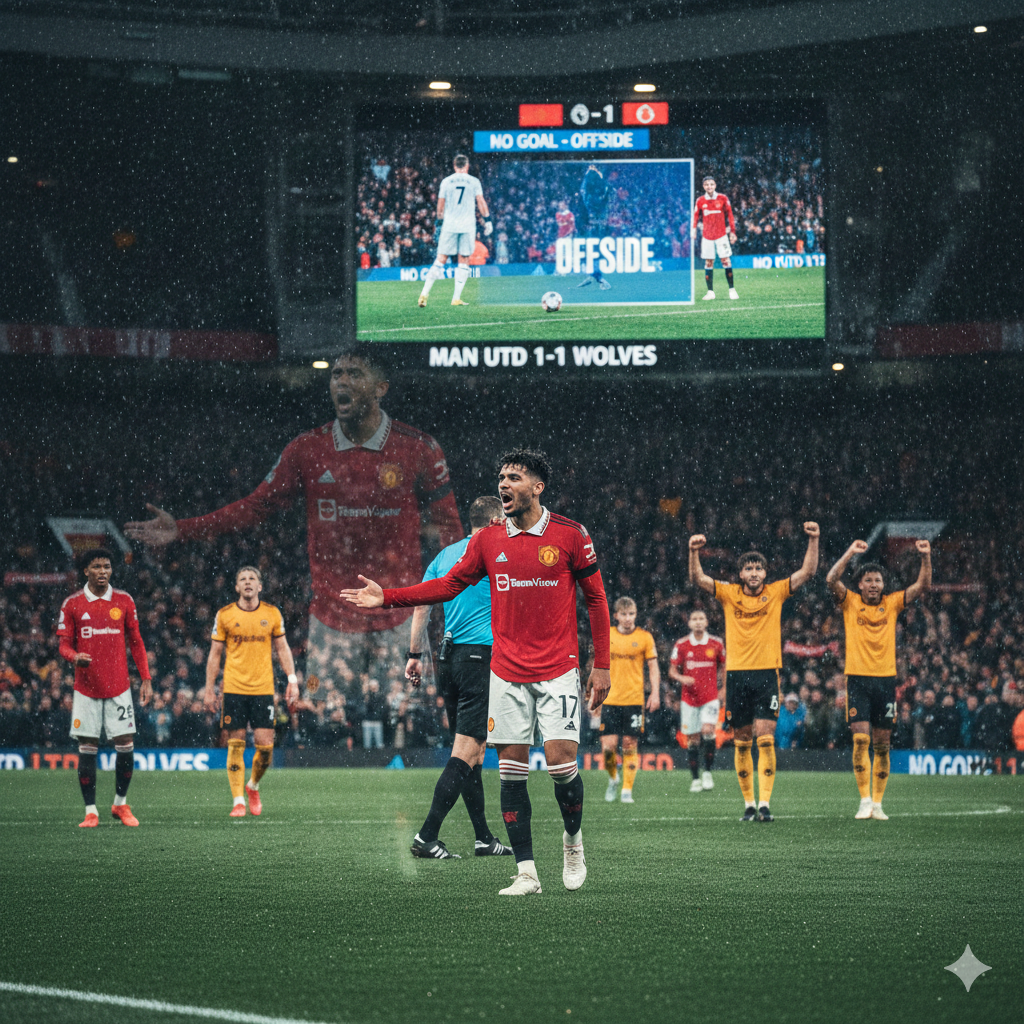
The final whistle at Old Trafford on December 30, 2025, brought with it a chorus of boos and a sense of “what if.” For Manchester United, the Man Utd vs Wolves fixture was supposed to be the perfect springboard into the New Year, a chance to secure fourth place against a side rooted to the bottom of the Premier League. Instead, the match served as a stark reminder of the tactical growing pains under Ruben Amorim.
In this in-depth analysis, we’ll dive into the tactical shifts, individual performances, and the controversial VAR drama that defined this 1-1 draw.
Table of Contents
The Pre-Match Context: Expectations vs. Reality
Heading into the Man Utd vs Wolves clash, the narrative was clear. Manchester United were coming off a disciplined 1-0 win against Newcastle, a game where Amorim had successfully experimented with a back-four. Conversely, Wolves arrived with a staggering 11-match losing streak, having picked up only two points all season.
However, United’s squad was decimated. With Bruno Fernandes, Kobbie Mainoo, and Mason Mount injured, and Bryan Mbeumo away at AFCON, the creative burden fell squarely on summer signing Matheus Cunha.
Starting Lineups
- Manchester United (3-4-2-1): Lammens; Dalot, Heaven, Martinez; Shaw, Casemiro, Ugarte, Dorgu; Zirkzee, Cunha; Sesko.
- Wolves (3-4-3): Sa; Mosquera, Doherty, Krejci; Tchatchoua, Arias, Gomes, Bueno; Mane, Hwang, Arokodare.

First Half: Fortune and Frustration
The early stages of Man Utd vs Wolves saw the visitors playing with a surprising level of composure. Rob Edwards’ side, despite their league position, looked to dominate possession early, frustrating a United side that struggled with offensive fluidity.
The Breakthrough
In the 27th minute, a moment of individual initiative broke the deadlock. Young centre-back Ayden Heaven dispossessed Hwang Hee-chan and drove deep into the Wolves half. He found Joshua Zirkzee, whose shot took a massive deflection off Ladislav Krejci to wrong-foot Jose Sa.
While Old Trafford erupted, the goal felt more like a stroke of luck than a result of sustained pressure. Shortly after, Benjamin Sesko hit the post with a header, missing a golden opportunity to double the lead.
Krejci’s Redemption
The momentum shifted just before the break. Wolves began “laying siege” to the United goal, forced a smart save from Senne Lammens via Hugo Bueno. In the 45th minute, the pressure told. A corner from Bueno found an unmarked Ladislav Krejci at the far post. The Czech international, who had inadvertently helped Zirkzee’s opener, planted a powerful header back across goal to level the score.
Second Half: The Tactical Tug-of-War
The second half of Man Utd vs Wolves was a chaotic affair. Ruben Amorim made a bold move at halftime, replacing Zirkzee with 18-year-old Jack Fletcher.
The Cunha Conundrum
Much of the post-match discourse has centered on Matheus Cunha. Playing against his former club, Cunha was expected to be the “magic spark.” Statistically, however, it was a night to forget. Despite having 90% passing accuracy, he recorded zero key passes and lost possession 15 times. For a £63m player tasked with replacing Bruno Fernandes’ output, the performance was labeled “diabolical” by sections of the fanbase.
Defensive Heroics and Near Misses
Wolves nearly took the lead when Yerson Mosquera’s misplaced header forced Jose Sa into a desperate goal-line clearance. At the other end, Senne Lammens proved why he is highly rated, producing a stunning double-save to deny Krejci and Mosquera in quick succession.
“We struggled with a lack of creation. When you play Casemiro and Ugarte in the middle, the fluidity is different than with Bruno or Kobbie.” — Ruben Amorim
The VAR Drama: Patrick Dorgu’s Disallowed Winner
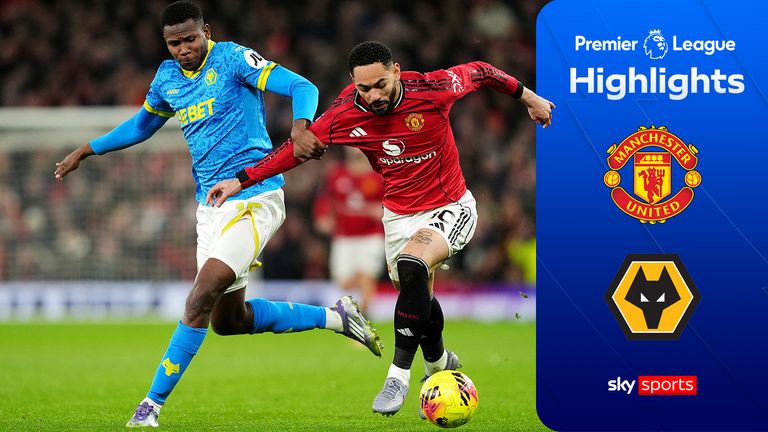
The climax of the Man Utd vs Wolves match arrived in the 90th minute. A shot from Sesko was parried by Sa into the path of Patrick Dorgu, who smashed it home. Old Trafford believed the three points were secured.
However, an “agonizing” VAR check revealed that Dorgu had strayed into an offside position when the initial shot was taken. The goal was struck off, leaving United to settle for a point that felt like a defeat.
Head-to-Head: Man Utd vs Wolves Stats
The recent history between these two shows a competitive trend, despite the disparity in the table this season.
| Metric | Man Utd | Wolves |
| Possession | 52% | 48% |
| Shots (On Target) | 14 (4) | 11 (5) |
| Corners | 7 | 6 |
| Yellow Cards | 2 | 3 |
According to Sports Mole, United still lead the overall head-to-head with 57 wins to Wolves’ 39, but the “Old Gold” have proven to be a thorn in United’s side at Old Trafford in recent years.
Following the lackluster draw in the Man Utd vs Wolves fixture, the spotlight has shifted firmly toward the January 2026 transfer window. Ruben Amorim’s tactical flexibility was on display against Wolves, but the lack of depth in the “engine room” has become a glaring vulnerability as United look to salvage their season.
Here is an analysis of the primary targets and the injury crisis fueling these rumors.
The Midfield Crisis: Why United Must Act
The Man Utd vs Wolves match underscored a critical issue: without Bruno Fernandes and Kobbie Mainoo, the Red Devils lack a creative fulcrum.
- Bruno Fernandes: Currently sidelined with a soft-tissue injury sustained against Aston Villa. Reports from The Times suggest a potential return for the Manchester Derby on January 17, but his absence until then leaves a massive void.
- Kobbie Mainoo: The youngster is also out with a calf injury. Adding to the tension, rumors persist that Mainoo may seek a loan move in January to secure regular minutes, though Amorim is unlikely to sanction this without a replacement.
- The Casemiro Factor: With his contract expiring in June 2026, the Brazilian’s “resurgent” but aging legs cannot carry the midfield alone through a congested winter schedule.
Top January 2026 Transfer Targets
United’s shortlist is reportedly dominated by “Number 6” profiles and versatile box-to-box midfielders who can thrive in Amorim’s intensive system.
1. Elliot Anderson (Nottingham Forest)
The Nottingham Forest standout has emerged as United’s “priority target” for 2026. Anderson’s ability to drive forward and his burgeoning partnership with Declan Rice in the England squad make him an ideal fit. However, a January move is complicated; Forest is reluctant to sell mid-season, and Goal.com reports that Manchester City is also prepared to enter a bidding war.
2. Conor Gallagher (Atletico Madrid)
With Atletico Madrid reportedly open to an exit, Gallagher is viewed as the most “realistic” immediate solution. His high-pressing intensity mirrors the work rate Amorim demands. While United would prefer a loan, Atletico is said to be holding out for a permanent deal in the region of £35m–£45m.
3. Ruben Neves (Al-Hilal)
In a move that would pique the interest of fans following the Man Utd vs Wolves rivalry, former Wolves captain Ruben Neves is reportedly keen on a Premier League return. Available for approximately £20m, Neves offers the elite passing range and “quarterback” style that United desperately lacked in their recent draw.
4. Carlos Baleba & Adam Wharton
- Carlos Baleba (Brighton): A long-term target who fits the “lynchpin” profile.
- Adam Wharton (Crystal Palace): Regarded as one of the best young passers in the league, though his defensive stats remain a point of internal debate among United’s scouts.
Potential Outgoings: The Zirkzee Departure?
The January window won’t just be about arrivals. Following a disappointing display in the Man Utd vs Wolves game, Joshua Zirkzee is heavily linked with a return to Italy. Fabrizio Romano has indicated that AS Roma is preparing a €40m package for the Dutchman. Any exit, however, is strictly contingent on United securing a replacement striker first.
| Target | Club | Est. Fee | Primary Role |
| Elliot Anderson | Nottm Forest | £80m+ | Box-to-Box / AM |
| Conor Gallagher | Atletico Madrid | £40m | High Presser |
| Ruben Neves | Al-Hilal | £20m | Deep-lying Playmaker |
| Joao Gomes | Wolves | £50m | Ball Winner |
The Final Verdict
The January window will define Ruben Amorim’s debut season. If United fail to secure a high-caliber midfielder, performances like the one seen in Man Utd vs Wolves—dominated by grit but lacking in guile—may become the norm rather than the exception.
To build on our analysis of the Man Utd vs Wolves match, it is clear that Ruben Amorim’s tactical “frustration” stems from a specific lack of profile in the middle of the pitch. While the draw against Wolves saw United revert to a 3-4-3, the lack of a high-energy “eight” or a progressive “six” made the system feel static.
Here is how the top January targets—Elliot Anderson and Ruben Neves—would tactically integrate into Amorim’s 2026 setup.
Tactical Analysis: Elliot Anderson
According to reports from GiveMeSport, Elliot Anderson is United’s “Number One” target. His performance for Nottingham Forest this season has made him a staple in Thomas Tuchel’s England squad.
The “Marauding” Role
In Amorim’s 3-4-3, Anderson would likely occupy one of the two central midfield spots, specifically as the “marauding” partner to a more disciplined anchor like Manuel Ugarte.
- Ball Carrying: Anderson excels in the “vertical progression” Amorim demands. Unlike the Casemiro-Ugarte pivot seen in Man Utd vs Wolves, Anderson has the pace and dribbling (averaging 2.67 key passes per 90) to bridge the gap between defense and attack.
- The High Press: One of the reasons United struggled against Wolves was a lack of intensity in the second-phase press. Anderson’s defensive recovery stats are elite for a creative player, fitting the “aggressive pressing” philosophy discussed in recent tactical breakdowns.
Tactical Analysis: Ruben Neves
The link to Ruben Neves adds a poetic layer to the Man Utd vs Wolves rivalry. Having left Wolves for Al-Hilal in 2023, Neves is reportedly eyeing a Premier League return.
The “Quarterback” Anchor
Neves offers a completely different tactical solution than Anderson. If Amorim continues to shift toward the 4-3-3 variation he teased against Newcastle, Neves would be the ideal “Single Pivot.”
- Passing Range: Neves maintains a 90% passing accuracy in the Saudi Pro League this season. In the recent Wolves game, United’s long-ball accuracy was a point of failure; Neves specializes in those “lobed balls” to the wing-backs (Dorgu and Dalot) that Amorim uses to stretch low blocks.
- Experience: With Casemiro’s contract expiring in 2026, Neves provides immediate Premier League experience at a cut-price fee (estimated at £15m–£20m due to his contract situation).
Comparing the Options for 2026
| Feature | Elliot Anderson | Ruben Neves |
| Primary Strength | Ball Carrying & Energy | Long-range Passing & Vision |
| Tactical Fit | Box-to-Box (3-4-3) | Deep-lying Playmaker (4-3-3) |
| Current Value | £50m – £80m | £15m – £20m |
| Availability | Likely Summer 2026 | Potential January 2026 |
The Verdict: Who Solves the “Wolves Problem”?
The stalemate in the Man Utd vs Wolves fixture proved that United are currently “IMPOSSIBLE” to play in Amorim’s perfect system without better midfield mobility.
While Elliot Anderson is the long-term preference for Sir Jim Ratcliffe and INEOS, Ruben Neves represents a “market opportunity” that could provide the technical security United lacked in their final game of 2025. For more on United’s financial constraints this window, you can check the latest updates on The Guardian’s sports section.
Ruben Amorims’s 4-3-3 Manchester United Tactics | EA FC 26 – YouTube
Brom Squad Gaming · 3.3K views

Building on the tactical stalemate of the Man Utd vs Wolves match, it’s clear that Ruben Amorim is caught between two worlds. The Boxing Day victory over Newcastle saw him successfully deploy a back four, yet for the most recent Man Utd vs Wolves clash, he reverted to his signature 3-4-3. This “formation flickering” suggests a manager who knows his current squad lacks the specific profiles to make either system truly dominant.
As we head into the January 2026 window, two names dominate the conversation: Brighton’s powerhouse Carlos Baleba and the burgeoning star of United’s right flank, Patrick Dorgu.
Carlos Baleba: The High-Price “Obsession”
If the Man Utd vs Wolves game proved one thing, it’s that United’s midfield is too easily bypassed. While Manuel Ugarte provides steel, he lacks the verticality required to transition play at pace. Enter Carlos Baleba.
Tactical Fit: The “Elite Hybrid”
Reports from Goal.com suggest United have “not stopped discussing” Baleba despite Brighton’s eye-watering £115 million valuation. Baleba represents the evolution of the “Number 6” role:
- Press Resistance: Unlike the pivot used in the Man Utd vs Wolves draw, Baleba is statistically one of the league’s best ball-carriers from deep.
- The “Kante” Effect: Scouting reports often describe him as a “taller Kante,” capable of winning a duel on the edge of his own box and carrying it 40 yards to the opposition final third.
- The Price Tag Hurdle: United “balked” at the £100m+ fee in the summer of 2025. However, with Bayern Munich reportedly cooling their interest, United may have a clearer path—though a summer 2026 move is more likely than a January swoop given Brighton’s historical reluctance to sell mid-season.
Patrick Dorgu: From “Anxious” to Essential
One of the most fascinating subplots of the Man Utd vs Wolves game was the positioning of Patrick Dorgu. Signed originally as a left wing-back, Dorgu has seen his role radically transformed by Amorim.
The Right-Wing Experiment
After Amorim publicly criticized Dorgu’s “anxiety” in possession earlier in the season, the Danish international has undergone a tactical rebirth.
- Advanced Freedom: In the Newcastle win, Dorgu was played higher up as part of a front three. Against Wolves, he returned to a wing-back role but showed much higher “aggression levels” in the final third.
- The Disallowed Heroics: Dorgu actually scored what appeared to be the winner in the Man Utd vs Wolvesmatch, only for it to be ruled out by a marginal VAR offside.
- Transfer Strategy Impact: Dorgu’s success on the right has completely shifted United’s transfer priorities. With Dorgu and Diogo Dalot providing “energy on both sides,” United have pivoted away from signing a specialist right-back. Instead, the focus has shifted entirely to the midfield “engine room.”
“Dorgu benefits from having protection inside him rather than being left exposed. It’s a setup that plays to his strengths.” — GiveMeSport Analysis
Comparison: Midfield Rebuild Targets
As United look to avoid more draws like the Man Utd vs Wolves result, here is how the top targets rank for a January move:
| Target | Club | Fit for Amorim | Likelihood (Jan ’26) |
| Elliot Anderson | Nottm Forest | 10/10 | Low (Forest battling relegation) |
| Carlos Baleba | Brighton | 9/10 | Very Low (Price prohibitive) |
| Conor Gallagher | Atletico | 8/10 | High (Realistic loan/buy) |
| Ruben Neves | Al-Hilal | 7/10 | Medium (Cheap veteran option) |
A Window of Necessity
The Man Utd vs Wolves fixture was a microcosm of United’s current state: flashes of brilliance (Dorgu), moments of luck (Zirkzee’s goal), and a frustrating lack of control in the middle of the park.
For Ruben Amorim to truly implement his philosophy, the “Baleba-level” athleticism is required. Whether INEOS can strike a deal for a player like Conor Gallagher as a stop-gap or break the bank for Elliot Anderson, the message is clear: the current midfield cannot sustain a top-four charge. For the latest injury updates on the squad heading into the New Year, check the BBC Sport football page.
To wrap up our extensive analysis of the Man Utd vs Wolves stalemate, we must look at how Ruben Amorim intends to evolve. The 1-1 draw at Old Trafford on December 30 exposed a team caught between its current limitations and the manager’s high-octane vision.
With the January 2026 window opening tomorrow, here is the projected “Ideal XI” for the second half of the season, incorporating the most likely tactical shifts and transfer arrivals.
Projected Post-January Starting XI (3-4-2-1)
This lineup assumes the successful pursuit of a midfield “engine” and the return of key leaders from injury.
- GK: Senne Lammens – Despite being “suspect” for Krejci’s equalizer in the Man Utd vs Wolves game, the Belgian has secured his spot with world-class shot-stopping.
- RCB: Leny Yoro – His return from injury (featured as a sub vs Wolves) provides the recovery pace United currently lack.
- CB: Matthijs de Ligt – The “organizer.” His back injury is expected to clear by early January.
- LCB: Lisandro Martinez – Essential for the “aggressive” build-up play Amorim demands.
- RWB: Patrick Dorgu – After his disallowed winner in the Man Utd vs Wolves match, Dorgu has proven he is the future of United’s right flank.
- LWB: Luke Shaw – Provided his fitness holds, his crossing remains United’s most consistent creative outlet.
- CM: Manuel Ugarte – The “destroyer” who will provide the platform for a more creative partner.
- CM: Elliot Anderson (Target) – The “missing link.” His ball-carrying ability would solve the stagnation seen in the Man Utd vs Wolves fixture.
- RAM: Bruno Fernandes – His hamstring recovery is the single most important factor for United’s top-four hopes.
- LAM: Matheus Cunha – Despite a “diabolical” night against his former club, Cunha’s underlying stats suggest he remains key to Amorim’s front three.
- ST: Benjamin Sesko – United’s “number nine” needs to find his clinical edge after hitting the post against Wolves.
Tactical Evolution: From Static to Fluid
The most recent Man Utd vs Wolves match was a wake-up call. United were forced to play “around the back” because the central pivot of Casemiro and Ugarte lacked the mobility to pierce the Wolves low block.
The “Anderson” Effect
By introducing a player like Elliot Anderson, United move from a “U-shaped” passing pattern to a vertical one. As noted by Goal.com, Anderson is viewed as the ideal partner for the next generation of United midfielders. He allows the wing-backs, specifically Patrick Dorgu, to stay high and wide, stretching the opposition and creating space for Fernandes to operate in the “half-spaces.”
The Defensive Shift
While Ayden Heaven was the hero of the first half in Man Utd vs Wolves (setting up Zirkzee’s goal), the return of De Ligt and Yoro will allow Amorim to play a higher defensive line. This “proactive” defending is the hallmark of Amorim’s success at Sporting CP and is the final stage of his Manchester United transformation.
Final Thoughts on the 2026 Outlook
The 1-1 result in the Man Utd vs Wolves game will be remembered as a missed opportunity, but also as a catalyst. It highlighted the “brittleness” that Ruben Amorim must address. If INEOS can navigate the complex January market—potentially offloading Joshua Zirkzee to fund a move for Baleba or Anderson—the “New Year Revolution” could still be televised.
For a deeper dive into the financial implications of these potential deals, you can explore the latest reports on The Guardian’s football finance section.
Conclusion: Lessons for Amorim
This iteration of Man Utd vs Wolves highlighted the tactical rigidity that can sometimes plague Amorim’s 3-4-3 system against a low block. Without the creative “X-factor” of players like Fernandes, the team looked static.
For Wolves, this point is a lifeline. Though they remain bottom, ending an 11-game losing streak at the “Theatre of Dreams” provides a much-needed psychological boost for Rob Edwards. For more detailed statistics on the season, you can visit the Official Premier League website.
What’s next for the Red Devils? United must find a way to integrate their youth talent—like Bendito Mantato, who made his debut in this match—more effectively if the injury crisis continues.
Never Miss a Masterclass Prediction
The Man Utd vs Wolves draw proved that the Premier League in 2026 is more unpredictable than ever. While others rely on guesswork, we use deep tactical data and AI-driven insights to stay ahead of the curve.
Ready to beat the bookies? Join our community of 10,000+ football fanatics who receive exclusive match previews, injury alerts, and high-value betting strategies delivered straight to their inbox.
Join the Inner Circle: Get My Free Predictions Now!
No spam. Just elite analysis. Unsubscribe anytime.















Comments 1