

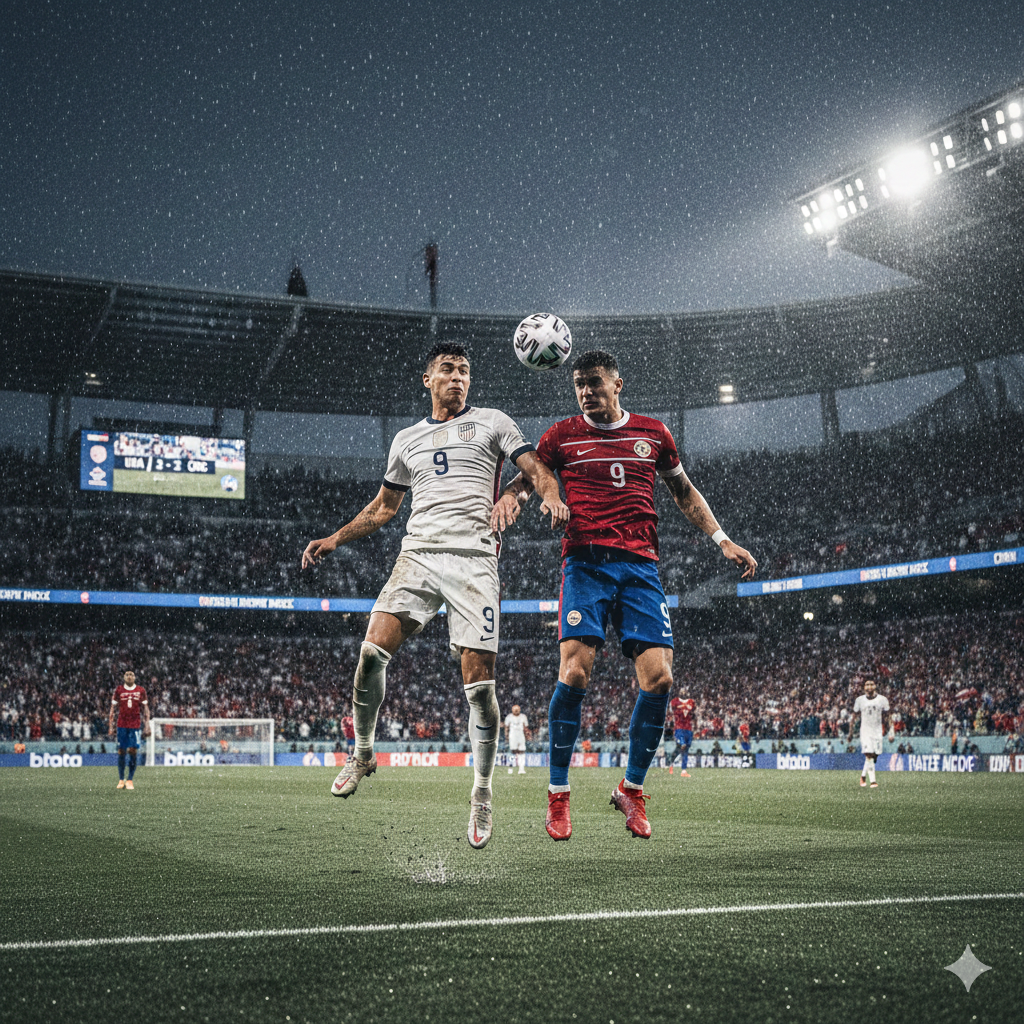
For soccer fans across North America and Central America, few fixtures carry as much historical weight, atmospheric tension, and sheer unpredictability as usa v costa rica. Often referred to as one of the most intense rivalries in the CONCACAF region, this matchup has evolved from a series of routine qualifiers into a high-stakes “Clásico” that defines the trajectory of both national teams.
In this deep dive, we will explore the origins of the rivalry, the legendary matches that changed the course of soccer history, and why the usa v costa rica fixture remains a must-watch event on the international calendar.
Table of Contents
A Rivalry Born in the Heat (and Snow) of Competition
The history of usa v costa rica is a tale of two different soccer cultures clashing for regional dominance. On one side, you have the United States Men’s National Team (USMNT), which has spent decades building a professional infrastructure and seeking respect on the global stage. On the other, you have Los Ticos, the proud national team of Costa Rica, a country where soccer is woven into the very fabric of daily life.
The Head-to-Head Record
To understand the gravity of usa v costa rica, one only needs to look at the all-time statistics. As of late 2025, the series is remarkably close. The United States holds a slight edge with 20 wins, while Costa Rica has secured 17 victories, with 6 matches ending in a draw. This parity is rare in international soccer and ensures that every time these two teams meet, the outcome is never certain.
For a detailed breakdown of every official meeting between these two giants, you can consult the Transfermarkt H2H database, which tracks every friendly and competitive fixture dating back to 1975.
Iconic Moments: Matches That Defined the Rivalry
Every great rivalry needs a catalyst—a moment so controversial or spectacular that it becomes part of the sport’s folklore. For usa v costa rica, several such moments exist.
1. The “Snow Clasico” (March 22, 2013)
Perhaps the most famous or infamous installment of usa v costa rica took place in Commerce City, Colorado. Played in the middle of a literal blizzard, the match was a grueling test of endurance. With the pitch covered in several inches of snow, Clint Dempsey scored the lone goal in a -1-0 victory for the Americans.
The match remains a point of contention. Costa Rican officials protested the result to FIFA, arguing that the conditions were unplayable. The protest was ultimately rejected, but the “Snow Clasico” birthed a new level of animosity that fuels the rivalry to this day. You can read the full FIFA report on the match conditions for more technical details on how such decisions are made.
2. The 2025 Gold Cup Thriller
In a more recent chapter of the usa v costa rica saga, the two teams met in the quarterfinals of the 2025 CONCACAF Gold Cup in Minneapolis. The match was a rollercoaster of emotions, ending in a 2-2 draw after extra time. The U.S. eventually advanced via a 4-3 penalty shootout victory, thanks to the heroics of goalkeeper Matt Freese.
This match highlighted the new generation of talent, featuring players like Malik Tillman and Diego Luna for the U.S., and Manfred Ugalde for Costa Rica. For a recap of the tactical setups used in this match, check out the US Soccer match archives.
Home Field Advantage: The Fortress of San José
One of the most fascinating aspects of usa v costa rica is the extreme importance of home-field advantage. Historically, the U.S. has been nearly invincible at home against Los Ticos, while the Americans have found it almost impossible to win on Costa Rican soil.
The “Saprissa” Hex
For years, the USMNT dreaded traveling to the Estadio Ricardo Saprissa Aymá. Known for its “Monster” atmosphere and artificial turf, the stadium was a graveyard for American ambitions. Between 1989 and 2009, the U.S. lost all seven of its qualifying matches there. Even with the move to the more modern Estadio Nacional, the usa v costa rica away fixture remains the ultimate litmus test for any U.S. squad.
“Playing in Costa Rica isn’t just about the 11 players on the pitch; it’s about the 35,000 voices in the stands and the humidity that drains your soul.” — Former USMNT Captain
Tactical Evolution: How Both Sides Have Changed
The tactical approach to usa v costa rica has shifted significantly over the last decade. Gone are the days of simple “route one” soccer.
The American Modernization
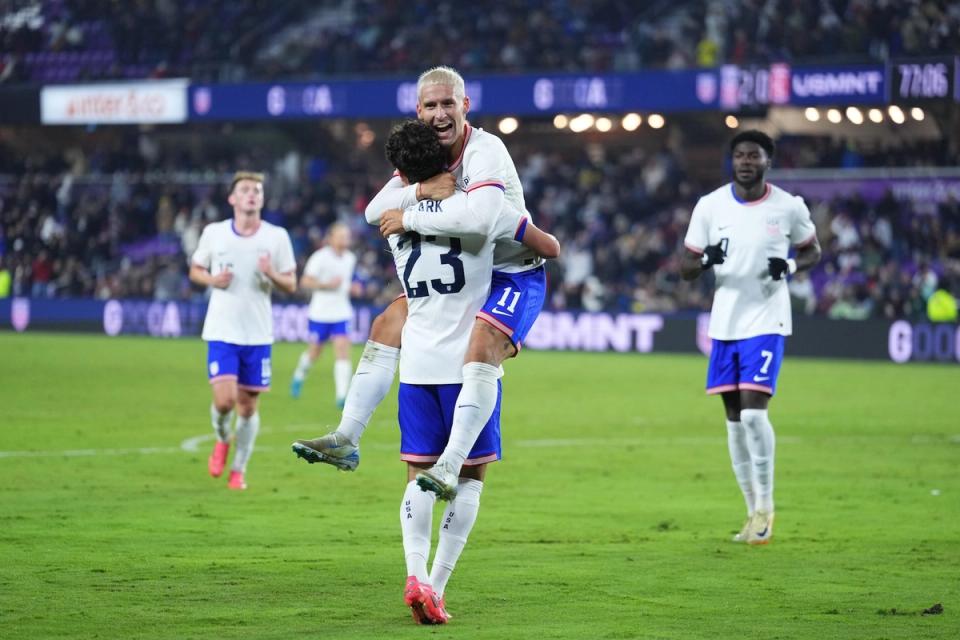
Under coaches like Mauricio Pochettino, the U.S. has transitioned into a more proactive, possession-based style. In matches like usa v costa rica, the focus is often on high pressing and utilizing the speed of wingers to stretch the Costa Rican back five.
The Costa Rican Resilience
Costa Rica has traditionally relied on a disciplined defensive block and lethal counter-attacks. Their success in the 2014 World Cup, where they reached the quarterfinals, was built on this foundation. In recent usa v costa rica matchups, they have integrated younger, more technical midfielders to better cope with the high-intensity play of the Americans.
Players to Watch in Future Matchups
As we look toward the 2026 FIFA World Cup cycle, the usa v costa rica rivalry will be headlined by stars playing at the highest levels of European and North American soccer.
- Christian Pulisic (USA): The “Captain America” of the squad remains the primary threat.
- Brandon Aguilera (Costa Rica): The creative hub of the Ticos’ midfield.
- Matt Turner (USA): His shot-stopping ability has been crucial in keeping clean sheets against Costa Rican attackers.
- Manfred Ugalde (Costa Rica): A clinical finisher who has proven he can find gaps in the U.S. defense.
For updated player stats and injury reports before the next usa v costa rica clash, the ESPN Soccer section is an excellent resource for real-time data.
Why This Match Matters for CONCACAF
The usa v costa rica fixture is more than just a game; it is a barometer for the health of soccer in the region. When both teams are performing at their peak, CONCACAF is viewed with more respect globally. The rivalry pushes both federations to invest more in youth academies and coaching education.
If you are interested in how the regional rankings are calculated, you can visit the Official CONCACAF Rankings page.
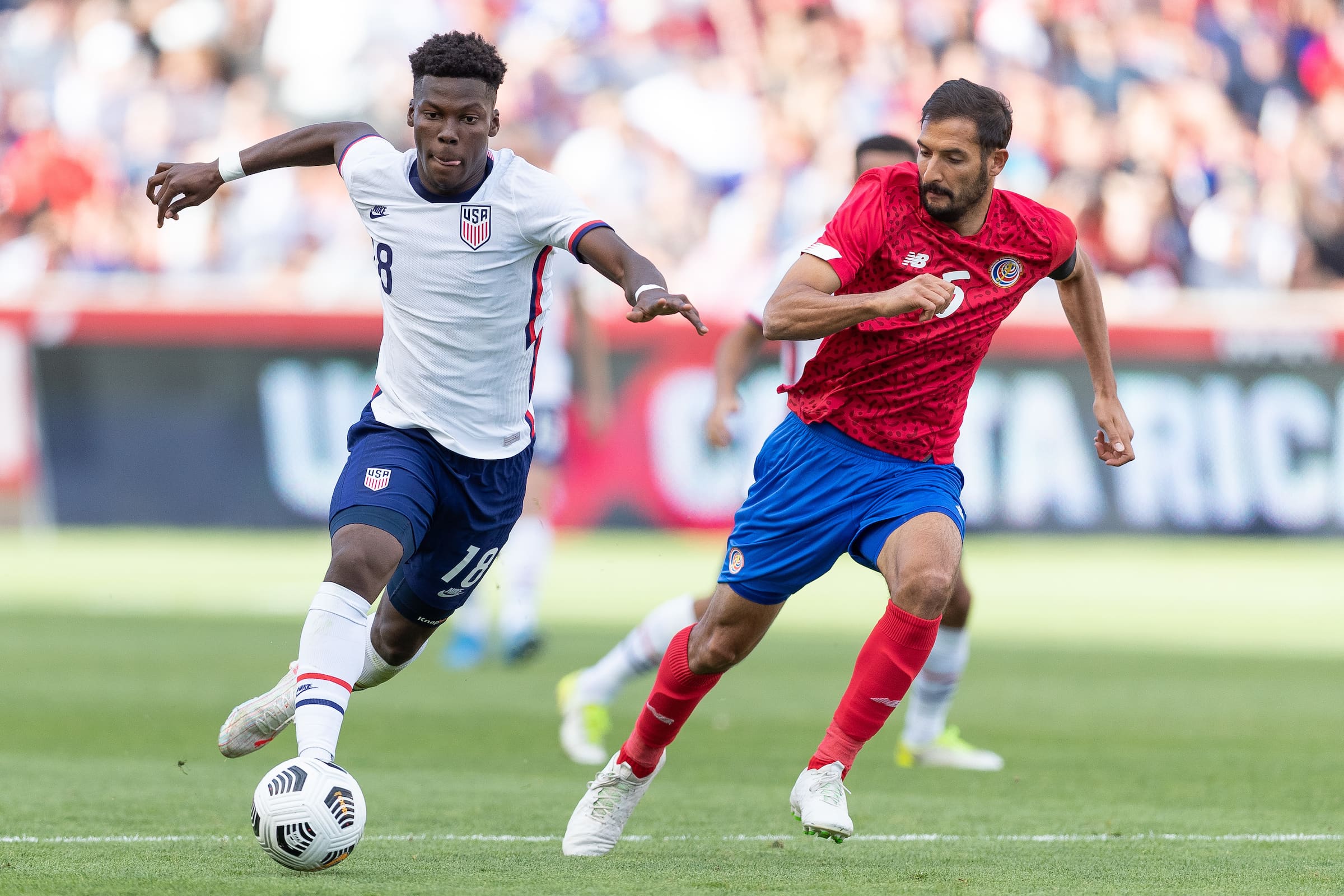
Building on our look at the usa v costa rica rivalry, the most recent clash in the 2025 CONCACAF Gold Cup Quarterfinals was a masterclass in tactical drama. Played in June 2025 at U.S. Bank Stadium in Minneapolis, the 2-2 draw (decided 4-3 on penalties) provided a perfect snapshot of where both squads stand under their current leadership.
Below is a detailed analysis of the player ratings from that high-stakes encounter.
USMNT Player Ratings (Gold Cup Quarterfinals)
The United States, led by Mauricio Pochettino, utilized a fluid 4-2-3-1 system. While the offense was clicking, defensive lapses nearly cost them the match before the penalty shootout heroics.
| Player | Position | Rating | Key Notes |
| Matt Freese | GK | 8.5 | Despite a spill on the second goal, his three saves in the shootout were “borderline legendary.” |
| Diego Luna | RM | 8.0 | Scored his first international goal; a constant creative spark throughout the 90 minutes. |
| Malik Tillman | CM | 7.5 | Missed a penalty in regulation but provided the crucial assist for Arfsten’s goal. |
| Chris Richards | CB | 7.5 | Dominant in the air (won 6/7 duels) and was the team’s primary threat on set pieces. |
| Tyler Adams | CDM | 7.0 | The “engine room.” Flawless positioning and set the tone by scoring the first penalty. |
| Max Arfsten | LB | 6.5 | A polarizing performance. Scored a goal and an assist but gave away a reckless penalty. |
| Patrick Agyemang | ST | 6.5 | Put in the “dirty work” with excellent hold-up play but lacked the finishing touch. |
Analyst’s Note: Matt Freese has rapidly ascended the depth chart. His ability to recover from a shaky start in the group stages to become a shootout hero suggests he is a serious contender for the starting spot in the 2026 World Cup. You can track his rising market value and performance stats on FotMob’s player database.
Costa Rica Player Ratings (The Resistance)
Costa Rica showed incredible resilience, recovering from a 2-1 deficit to force the game into extra time. Their veteran leadership mixed with emerging talent kept them within striking distance.
- Alonso Martínez (ST) – 8.0: The standout for Los Ticos. His clinical 71st-minute equalizer proved why he is currently one of the most dangerous strikers in MLS with NYCFC.
- Francisco Calvo (LB) – 7.5: Coolly converted the opening penalty and was a rock in the defensive transition.
- Keylor Navas (GK) – 7.0: Even at 38, the legendary keeper made two “world-class” saves against Arfsten and Richards to keep Costa Rica in the game.
- Carlos Mora (RB) – 7.5: His tireless overlapping runs created the chaotic rebound that led to the second Costa Rican goal.
Tactical Breakdown: The Pochettino Influence
In this specific usa v costa rica matchup, we saw the early fruits of the “Pochettino Era.” The U.S. maintained 58% possession and generated 14 shots, focusing on high-volume crossing from the fullbacks. However, the high defensive line was frequently exploited by Costa Rica’s direct long balls to Martínez.

The match served as a reminder that while the U.S. has superior technical depth, Costa Rica’s tactical discipline and psychological grit make them the ultimate “banana skin” opponent in CONCACAF.
Key Stats from the Match:
- Total Shots: USA 14 | CRC 11
- Saves: Matt Freese (4 in play, 3 in shootout) | Keylor Navas (5)
- Duels Won: USA 52% | CRC 48%
For a deeper dive into the expected goals (xG) and heat maps from this specific match, the Opta Analyst portal provides the most comprehensive data visualization available.
The usa v costa rica saga continues to produce some of the most dramatic moments in the region. With both teams now integrating younger talent, the tactical ceiling of this rivalry is higher than ever before. Comparing the 2013 “Snow Clasico” to the 2025 Gold Cup quarterfinal reveals a fascinating evolution in the usa v costa rica rivalry. While both matches ended in American celebrations, the data shows a shift from a “survival-first” mentality to a modern, high-output tactical approach.
Statistical Comparison: 2013 vs. 2025
The 2013 match was defined by external constraints (the blizzard), while the 2025 match was defined by internal tactical aggression under Mauricio Pochettino.
| Metric | 2013 “Snow Clasico” | 2025 Gold Cup QF | Shift Analysis |
| Final Score | 1-0 (USA) | 2-2 (4-3 Pens – USA) | Higher volatility in 2025 |
| Total Shots | 6 | 18 | +200% attacking volume |
| Shots on Goal | 1 | 4 | Higher clinical demand in 2025 |
| Possession | 46% | 58% | Shift to proactive dominance |
| Passing Accuracy | 68% | 84% | Technical jump in 12 years |
| Saves Made | 5 (Brad Guzan) | 1 (Matt Freese) | Defensive structure vs Shot-stopping |
Evolution of Strategy and Personnel
1. The Death of “Route One”
In 2013, Jurgen Klinsmann’s side was forced into a physical, direct game due to the snow. The average pass length was significantly higher, and the team relied on “scrappiness” from veterans like Jermaine Jones and Clint Dempsey.
By 2025, the usa v costa rica dynamic changed. Pochettino’s side used a complex 4-2-3-1 that prioritized “half-space” entries. Players like Diego Luna and Malik Tillman focused on short, intricate combinations rather than just launching the ball into the box. This is reflected in the FBref tactical scouting reports, which show the U.S. now ranks significantly higher in “progressive carries” than in the early 2010s.
2. The Goalkeeper Paradigm
In 2013, Brad Guzan was a wall, making 5 saves during regulation to preserve a clean sheet. In 2025, Matt Freese only had to make 1 save in regulation but was the hero in the penalty shootout with 3 saves. This highlights a shift in the rivalry: usa v costa rica matches are no longer just about defending for 90 minutes; they are about psychological endurance in high-pressure “clutch” moments.
3. Efficiency vs. Volume
A striking detail in the usa v costa rica history is that in 2013, the U.S. won with exactly one shot on goal. In 2025, they needed 18 total shots and a penalty shootout to advance. While the modern U.S. team is more creative, they have arguably become less “efficient” in the final third compared to the clinical finishing of the Dempsey-Altidore era.
Why the Rivalry is “Faster” Now
The 2025 squad had an average age of 25 years and 235 days, nearly two years younger than the 2013 starting XI. This youth has injected a higher physical tempo into the fixture. Costa Rica, similarly, has transitioned from the aging core of Bryan Ruiz and Celso Borges to faster, transition-oriented players like Alonso Martínez.
“The 2013 game was about heart. The 2025 game was about data and professional execution under pressure.” — CONCACAF Technical Study Group
For a visual look at how these two eras differ, you can view the US Soccer YouTube Archive which hosts full-match replays of both the Snow Clasico and the 2025 Minneapolis thriller.
Based on the data from the recent usa v costa rica Gold Cup thriller and the subsequent friendlies against Uruguay and Paraguay, Mauricio Pochettino’s tactical blueprint for the 2026 World Cup is coming into focus.
The “Pochettino Revolution” centers on a hybrid 3-4-2-1 system that prioritizes attacking width and creative freedom for the nation’s elite playmakers.
The Projected 2026 USMNT “Dream XI”
This lineup assumes a fully healthy squad, incorporating the breakout stars who solidified their status during the 2025 usa v costa rica quarterfinal.
| Position | Player | Club (Current) | Role Analysis |
| GK | Matt Freese | NYCFC | Has officially usurped the #1 spot after his 2025 Gold Cup heroics. |
| RCB | Miles Robinson | FC Cincinnati | The “recovery” specialist in Pochettino’s back three. |
| CB | Chris Richards | Crystal Palace | The defensive anchor and primary aerial threat on set pieces. |
| LCB | Tim Ream | Charlotte FC | At 38, his veteran composure remains vital for playing out from the back. |
| RWB | Sergiño Dest | PSV Eindhoven | Provides the high-risk, high-reward attacking flair on the flank. |
| LWB | Antonee Robinson | Fulham | Arguably the most “undroppable” player in the squad for his engine. |
| CM | Tyler Adams | Bournemouth | The “Captain” role; responsible for breaking up transitions. |
| CM | Weston McKennie | Juventus | The box-to-box presence needed to support the front three. |
| RAM | Malik Tillman | Leverkusen | The “X-Factor” who emerged as a superstar during the 2025 Gold Cup. |
| LAM | Christian Pulisic | AC Milan | The talisman; occupies a “free role” similar to a traditional No. 10. |
| ST | Folarin Balogun | AS Monaco | The clinical finisher who thrives on the service from Tillman and Pulisic. |
Key Tactical Shifts Under Pochettino
The Rise of the “MLS Core”
One of the most surprising takeaways from recent usa v costa rica matches is how comfortably domestic players have integrated into Pochettino’s system. Matt Freese (NYCFC) and Diego Luna (Real Salt Lake) have proven that the gap between MLS and mid-tier European leagues is closing. Luna, specifically, has become a “cult hero” and is the first attacking option off the bench in this 2026 projection.
The Hybrid Back Three
As noted in Sporting News’ tactical breakdown, Pochettino’s side defends in a 4-2-3-1 but shifts into a 3-4-2-1 in possession. In this setup, the right-sided center-back (likely Miles Robinson or even Alex Freeman) pushes wide when the ball is lost to cover for the advancing wing-backs.
The “Tillman-Pulisic” Connection
The 2025 usa v costa rica match was the first time we saw Malik Tillman and Christian Pulisic operate in tandem as dual No. 10s. This creates a “nightmare” for opposing defensive midfielders, as they are forced to track two elite creators drifting between the lines.
“We are no longer a team that just reacts. We are a team that dictates.” — Mauricio Pochettino, Post-Match Interview
Notable Bench Options (The “Game Changers”)
- Diego Luna: The creative spark who can unlock tired defenses.
- Tanner Tessmann: The physical presence needed if the USMNT needs to protect a lead.
- Ricardo Pepi: The “Super Sub” with a knack for poaching goals in the final 15 minutes.
- Sebastian Berhalter: A set-piece specialist who earned his spot through consistent delivery in 2025.
For a full list of the 26-man roster projections, you can visit the Official US Soccer Roster Page to see which players are currently in camp.
Conclusion: The Future of USA v Costa Rica
As the landscape of international soccer continues to shift, the usa v costa rica rivalry shows no signs of cooling down. Whether it’s played in the freezing temperatures of a northern winter or the tropical heat of San José, this matchup represents the heart and soul of North and Central American soccer.
The next time you see usa v costa rica on the schedule, clear your calendar. You aren’t just watching a soccer game; you are watching the latest chapter in a historic struggle for regional pride.
Classic USA vs Costa Rica 1997 Highlights
This video showcases a historic victory for the U.S. that helped solidify the intense competitive nature of the rivalry in the late 90s.
MNT vs. Costa Rica: Highlights – Sept. 7, 1997 – YouTube

Never Miss a “Clásico” Breakthrough
The rivalry between usa v costa rica is notoriously unpredictable, often decided by a single tactical tweak or a moment of individual brilliance. Whether it’s a snowy qualifier in Colorado or a humid night in San José, staying ahead of the game requires expert analysis.
Ready to dominate your matchday pools? Join thousands of dedicated fans who receive our Elite Matchday Intelligence newsletter. Get exclusive access to:
- Deep-Dive Predictions: Data-driven score forecasts for every usa v costa rica fixture.
- Tactical Scouting: Real-time analysis of Pochettino’s evolving lineups and Costa Rica’s defensive shifts.
- Injury Alerts & Odds: Instant updates on player availability and market movements.
JOIN THE INSIDER LIST NOW
Get our “2026 World Cup Outlook” report FREE when you subscribe today!










Comments 1