

World Cup is when the planet stops. It’s when nations unite under the banner of football, when rivalries ignite, and when dreams are forged on hallowed turf. For millions, the question isn’t just about when the next tournament kicks off, but about the entire journey – the qualifiers, the anticipation, the drama, and the sheer spectacle of the greatest sporting event on Earth. This comprehensive guide delves deep into the history, the timing, the impact, and the sheer magic of the FIFA World Cup, answering the perennial question: world cup is when it truly captures the world’s attention.
The Genesis of Global Football: Early Days and the Birth of the World Cup
The dream of a unified global football competition had been brewing for decades before its inception. Following the success of the Olympic football tournaments, visionary figures like Jules Rimet, the third president of FIFA, pushed for an independent professional tournament that would showcase the best talent from across the globe. The formal decision to establish the FIFA World Cup was made in 1928, with Uruguay, the reigning Olympic champions, earning the prestigious honor of hosting the inaugural event in 1930. This marked the beginning of an era, setting the stage for a tournament that would evolve into a cultural phenomenon.
The Inaugural Spectacle: Uruguay 1930
The very first FIFA World Cup, held in Uruguay from July 13th to July 30th, 1930, was a modest affair compared to today’s mega-event. Only 13 nations participated, a reflection of the economic challenges and geographical distances involved. European nations were hesitant to make the long and costly journey. However, the tournament was a resounding success, culminating in a dramatic final where host nation Uruguay defeated Argentina 4-2 in front of a passionate home crowd at the Estadio Centenario. This triumph not only cemented Uruguay’s place in football history but also laid the foundation for a tradition that continues to captivate billions.
Interwar Years and Wartime Hiatus
The early World Cups saw Italy emerge as a dominant force, winning the tournament in 1934 and 1938 under the charismatic leadership of Vittorio Pozzo. These tournaments, however, were played against a backdrop of rising political tensions in Europe. The outbreak of World War II brought a halt to the global competition. The 1942 and 1946 World Cups were cancelled, leaving a significant void in the hearts of football fans. The world had to wait for peace to return before the beautiful game could once again bring nations together on the pitch.
The Modern Era: Growth, Expansion, and Iconic Moments
After the wartime interruption, the FIFA World Cup returned with a renewed vigor. The post-war era saw the tournament grow in stature, expanding its reach and captivating new audiences. The introduction of television played a pivotal role in this expansion, broadcasting the drama and skill of the World Cup to homes across the planet.
The 1950 Maracanazo and the Rise of Brazil
The 1950 World Cup, hosted by Brazil, is etched in football folklore for the infamous “Maracanazo.” In the decisive final match, Uruguay stunned the heavily favored Brazilians with a 2-1 victory in front of an estimated 200,000 stunned spectators at the Maracanã Stadium. This monumental upset remains one of the biggest shocks in World Cup history. However, Brazil would soon rise to become the most successful nation in World Cup history, their flair and attacking prowess defining eras of the game.
Pelé’s Reign and the Brazilian Golden Age
The name Pelé is synonymous with Brazilian football and the World Cup. The young prodigy burst onto the scene in 1958, leading Brazil to their first World Cup title at the tender age of 17. He would go on to win two more titles in 1962 and 1970, cementing his legacy as arguably the greatest footballer of all time. The 1970 Brazil team, in particular, is often lauded as one of the finest in World Cup history, showcasing a brand of football that was both mesmerizing and devastatingly effective. Their victory in Mexico 1970 marked the third time Brazil had lifted the coveted trophy, allowing them to keep the Jules Rimet Trophy permanently, as per the rules at the time.
The European Dominance and the Rise of New Powers
While Brazil dominated the mid-20th century, Europe also saw its fair share of triumphs. West Germany claimed their first title in 1954, a victory known as the “Miracle of Bern.” Italy followed with wins in 1934 and 1938, and later in 1982 and 2006. England achieved their sole World Cup triumph on home soil in 1966. The late 20th century witnessed the emergence of new European powerhouses, with France winning in 1998 and 2018, Spain in 2010, and Germany again in 2014. Each tournament brought new heroes and new narratives, demonstrating the ever-evolving landscape of global football.
Understanding the World Cup Schedule: When Does it All Happen?
The most common question for any football enthusiast is: world cup is when. The FIFA World Cup is typically held every four years. This quadrennial cycle is a deliberate choice, allowing national teams sufficient time to qualify, develop, and prepare for the immense challenge of the tournament. The timing of the tournament within the year has varied throughout its history, but there are distinct patterns and recent shifts that are important to understand.
The Traditional Summer Slot
For most of its history, the FIFA World Cup has been held during the Northern Hemisphere’s summer months, generally from June to July. This timing was convenient for many of the major footballing nations in Europe and South America, as it coincided with the end of their domestic league seasons. This allowed players to transition directly from club commitments to international duty with minimal disruption. This summer slot provided a perfect backdrop for the global spectacle, with fans able to enjoy matches in pleasant weather and often coinciding with holiday periods, further boosting attendance and viewership.
The Shift to Late Year: Qatar 2022
The most significant recent deviation from the traditional schedule was the 2022 FIFA World Cup, hosted by Qatar. For the first time in its history, the tournament was held in November and December. This unprecedented move was necessitated by Qatar’s extreme summer heat, which would have made playing in June and July virtually impossible. The shift, while controversial for disrupting club leagues worldwide, provided a unique World Cup experience, culminating in a thrilling final on December 18th, Qatar’s National Day. This demonstrates FIFA’s commitment to finding suitable host nations and adapting to unique environmental challenges.
Anticipating the Next World Cup: When is the Next World Cup is When?
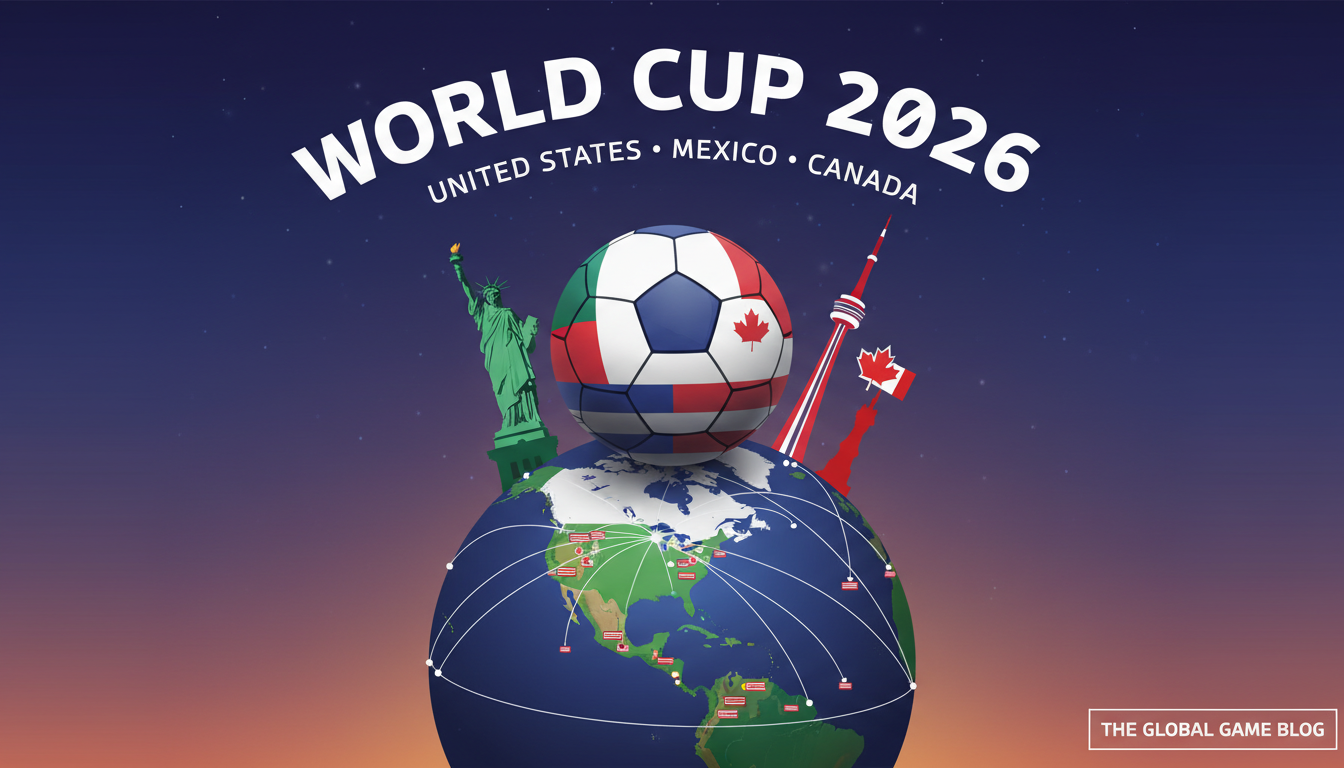
Following the 2022 tournament, the next FIFA World Cup is scheduled for 2026. This edition will be particularly historic as it will be jointly hosted by three North American nations: Canada, Mexico, and the United States. This expansion marks a significant milestone, with the tournament set to feature an increased number of participating teams, further broadening the global reach and competitive landscape. The exact dates for the 2026 World Cup are yet to be finalized, but it is expected to return to the traditional summer months of June and July, aligning with the usual calendar for major international sporting events.
The Qualification Process: The Road to the World Cup
The journey to the World Cup is as compelling as the tournament itself. The qualification process is a grueling, multi-year endeavor that involves national teams from every continent vying for a limited number of spots. This ensures that only the best teams earn the right to compete on the world stage.
Confederation-Specific Qualifiers
FIFA is divided into six continental confederations, each with its own unique qualification system. These include: AFC (Asia), CAF (Africa), CONCACAF (North, Central America and Caribbean), CONMEBOL (South America), OFC (Oceania), and UEFA (Europe). Each confederation organizes its own tournaments and leagues to determine which teams will represent them at the World Cup finals. The number of spots allocated to each confederation is based on historical performance, competition strength, and geographical representation.
UEFA (Europe): A Highly Competitive Arena
The Union of European Football Associations (UEFA) boasts the most participating nations and is renowned for its intense competition. Teams are typically divided into groups, playing a round-robin format. The top teams from each group usually qualify directly, with some runners-up potentially entering play-off matches for a chance to secure a spot. Given the depth of talent in Europe, it’s not uncommon for strong nations to miss out.
CONMEBOL (South America): A Battleground of Legends
South America’s qualification process is notoriously tough. With fewer member nations compared to Europe, CONMEBOL often uses a single league format where all participating teams play each other home and away. The top teams at the end of this grueling schedule earn their World Cup berths. This format ensures a high level of consistent performance is required, often leading to dramatic finales.
CAF (Africa): Growing Strength and Passion
The Confederation of African Football (CAF) has seen a significant rise in the quality of its teams over the years. The qualification process often involves multiple rounds, with teams progressing through different stages to reach the final play-off or group stages that determine World Cup qualification. The passion of African football fans is immense, and their teams are increasingly making their mark on the global stage.
AFC (Asia) and OFC (Oceania): Expanding Horizons
The Asian Football Confederation (AFC) and the Oceania Football Confederation (OFC) also have their own distinct qualification pathways. AFC’s process is extensive, involving numerous teams and multiple rounds. OFC, with fewer member nations, often has a more streamlined qualification process, with the winner typically facing a play-off match against a team from another confederation for a World Cup spot.
CONCACAF (North, Central America and Caribbean): A Blend of Strength
The CONCACAF region features a diverse range of footballing nations. The qualification process has evolved over the years, often involving a hexagonal or octagonal final round where the top teams battle it out for the available World Cup slots. The host nations for the 2026 World Cup – Canada, Mexico, and the USA – automatically qualify, adding an interesting dynamic to the CONCACAF qualifiers in the lead-up to that tournament.
The FIFA World Cup Finals: Where Dreams Are Made and Broken
Once the qualification battles are over, the focus shifts to the main event – the FIFA World Cup finals. This is where the world’s best teams converge to compete for ultimate glory.
Format of the Tournament
The FIFA World Cup finals typically begin with a group stage. The qualified teams are drawn into groups of four. They then play a round-robin within their group, with the top two teams from each group advancing to the knockout stages. The knockout stage is a single-elimination format, where any loss means elimination from the tournament. This creates immense pressure and thrilling drama as teams battle for survival. The tournament culminates in a final match between the last two remaining teams, determining the world champion.
The Unforgettable Moments and Iconic Matches
The World Cup is a tapestry woven with unforgettable moments. From Zinedine Zidane’s headbutt in the 2006 final to Diego Maradona’s “Hand of God” goal in 1986, these events become ingrained in footballing history. The skill of players like Lionel Messi, Cristiano Ronaldo, and Kylian Mbappé has illuminated recent tournaments, while legends of the past like Johan Cruyff and Franz Beckenbauer have left an indelible mark. Each tournament writes new chapters, filled with last-minute winners, stunning upsets, and displays of individual brilliance that are talked about for generations.
The Impact of the World Cup: Beyond the Pitch
The FIFA World Cup is more than just a football tournament; it’s a global cultural phenomenon. It transcends borders, languages, and political divides, bringing people together in a shared passion. The tournament has a profound impact on host nations, boosting economies through tourism and infrastructure development. It also inspires a generation of young footballers and fosters national pride.
Economic Boost and Infrastructure Development
Hosting the World Cup is a massive undertaking, requiring significant investment in stadiums, transportation, and accommodation. This infrastructure development often leaves a lasting legacy for the host country, improving facilities and public services. The influx of tourists generates substantial revenue for the hospitality and retail sectors. Furthermore, the global media attention provides invaluable exposure for the host nation on the world stage. For more insights into the economic impact, you can explore reports from organizations like the World Bank.
Social Cohesion and National Identity
During the World Cup, national identity often takes center stage. Supporters don colourful jerseys, wave flags, and rally behind their teams with unwavering passion. This shared experience can foster a sense of unity and pride, even in countries with diverse populations. The collective joy of a victory or the shared disappointment of a loss can bring people together in a way that few other events can. It’s a testament to the power of sport to unite.
Inspiration for Future Generations
The heroes of the World Cup inspire millions of young aspiring footballers around the globe. Watching their idols perform on the biggest stage fuels dreams and encourages participation in the sport at grassroots levels. The accessibility of football, with its simple equipment requirements, makes it a sport that can be enjoyed by children from all walks of life, with the World Cup serving as the ultimate aspiration.
The Future of the FIFA World Cup
The FIFA World Cup is constantly evolving. With the expansion to 48 teams in 2026 and the growing global interest in football, the tournament is poised for even greater reach and impact. Discussions continue about potential host nations for future tournaments, the use of technology like VAR (Video Assistant Referee), and ways to ensure the sustainability and inclusivity of the event.
Expansion to 48 Teams: A New Era
The decision to expand the World Cup finals to 48 teams starting in 2026 represents a significant shift. This expansion will allow more nations to participate, increasing global representation and offering more opportunities for smaller footballing nations to compete at the highest level. While it presents logistical challenges, it also promises a more diverse and exciting tournament for fans worldwide. This move aims to democratize the World Cup, making it a truly global celebration of the sport. For a deeper dive into the implications of this expansion, you can refer to analyses from the official FIFA website.
Technological Advancements: VAR and Beyond
Technology has increasingly played a role in football, and the World Cup is no exception. The introduction of VAR has aimed to reduce controversial refereeing decisions, although its implementation continues to be a subject of debate. Future tournaments may see further technological integration to enhance the game’s fairness and spectacle. The ongoing evolution of officiating technology is a key aspect of the modern game.
Sustainability and Inclusivity
As the World Cup grows, so does the focus on sustainability and inclusivity. FIFA and host nations are increasingly committed to organizing environmentally friendly tournaments and ensuring that the event is accessible and welcoming to people of all backgrounds. This includes efforts to reduce carbon footprints, promote gender equality in football, and support social initiatives within host communities. The legacy of a World Cup is increasingly measured not just by its sporting success, but also by its positive social and environmental impact.
When is the next world cup is when and What to Expect
As we’ve established, the next FIFA World Cup will be held in 2026, jointly hosted by Canada, Mexico, and the United States. This will be the first time the tournament is hosted by three nations simultaneously, and the first time it will feature 48 teams. This expanded format means more matches, more storylines, and more opportunities for nations to showcase their footballing talent. The specific dates are still to be confirmed, but it is expected to take place during the traditional summer months of June and July, offering a familiar yet expanded viewing experience for fans.
Predictions and Betting on World Cup Success
The anticipation for any World Cup is fueled by predictions and speculation. Pundits, statisticians, and armchair enthusiasts alike will pore over team form, player injuries, and historical data to forecast potential winners. For those who enjoy a more active involvement, betting on the World Cup offers an added layer of excitement. Whether it’s predicting the outright winner, the top scorer, or individual match outcomes, the World Cup betting market is vast and dynamic. Understanding team strengths, tactical approaches, and the psychological impact of the tournament environment are key to making informed bets.
The Thrill of the Knockout Stages
The knockout stages of the World Cup are where the true drama unfolds. Every match is a final, and the pressure is immense. The unpredictable nature of single-elimination ties means that upsets are common, and unlikely heroes can emerge. The tactical battles between managers, the individual brilliance of star players, and the sheer will to win create an electrifying atmosphere that captivates audiences worldwide. The mental fortitude required to succeed in these high-stakes encounters is as crucial as technical skill.
Who Will Lift the Trophy in 2026?
Predicting the winner of the 2026 World Cup is a formidable task, given the evolving landscape of international football. Traditional powerhouses like Brazil, Argentina, Germany, and France will undoubtedly be strong contenders. However, the rise of nations like England, Spain, and emerging forces from Africa and Asia cannot be overlooked. The expanded format might also open doors for surprise packages. The beauty of the World Cup is its unpredictability, and that’s what makes it such an enthralling spectacle. The journey to find the next world champion will be filled with twists and turns, showcasing the global appeal and competitive spirit of the beautiful game.
Call to Action: Subscribe for the Best Predictions
The FIFA World Cup is an event filled with anticipation, drama, and incredible sporting prowess. Understanding world cup is when it happens is just the beginning. To truly immerse yourself in the excitement and stay ahead of the curve, having access to insightful predictions and analyses is invaluable. Whether you’re a seasoned football fan or new to the beautiful game, informed predictions can enhance your enjoyment, deepen your understanding of the teams and players, and even assist in any sporting wagers you might consider. We are dedicated to providing you with the most accurate and insightful predictions, covering not only the World Cup but also the thrilling action of the English Premier League. Don’t miss out on the opportunity to elevate your football experience. Subscribe today to receive exclusive content, expert analysis, and the best predictions delivered straight to your inbox. For unparalleled predictions specifically for the English Premier League, be sure to subscribe here: Subscribe for Daily English Premier League Soccer Predictions. Join our community of football enthusiasts and get ready to experience the game like never before!













Comments 2