

The air is electric. With the 2026 FIFA World Cup looming large on the horizon, co-hosted by the United States, Mexico, and Canada, the attention on men’s soccer usa is reaching a fever pitch unseen since 1994. This isn’t just another tournament; it’s a generational opportunity for the U.S. Men’s National Team (USMNT) to cement its place among the sport’s global elite. From the burgeoning talent pool thriving in Europe’s top leagues to the recent World Cup draw that has set their path, everything points to a transformative period for American soccer.
The journey since the 2022 World Cup exit has been one of growth and recalibration. Under the continued guidance of coach Mauricio Pochettino, the squad has navigated competitive friendlies, continental championships, and the immense pressure that comes with being the home team in the world’s biggest sporting event. The core of this team, nicknamed the “Golden Generation”, is now entering its prime, and the expectations have never been higher.
This blog post will analyze the USMNT’s current standing, break down their World Cup group stage opponents, scrutinize the key players and tactical formations, and look at the broader ecosystem of men’s soccer usa, from the thriving Major League Soccer (MLS) to the grassroots development that fuels the national team pipeline.
Table of Contents
The 2026 World Cup: The Group Stage Challenge
The recent World Cup draw has provided the USMNT with a clear, yet challenging, pathway for their home tournament. Automatically qualified as a co-host, the team was placed into Group D, set to play all three of their group matches on home soil, a massive advantage for momentum and fan support. Their journey will begin on the West Coast, starting in Los Angeles, California, before a stop in Seattle, Washington, and a return to Los Angeles for the final group match.
The draw yielded the following opponents: Paraguay, Australia, and a winner from the UEFA Playoff C (Türkiye, Romania, Slovakia, or Kosovo).

Group D Opponent Breakdown
- Paraguay: The first opponent for the USMNT on Saturday, June 12th in Los Angeles. The South American side, known as La Albirroja, finished in the last automatic qualifying spot from the competitive CONMEBOL region. Historically, they are a gritty, defensively sound team who will rely on the experience of players like captain Gustavo Gómez and the attacking threat of players such as Miguel Almirón. The USMNT defeated Paraguay 2-1 in a friendly recently, offering a small psychological edge, but their historical record against South American sides in competitive settings remains a tough test. This opening match will set the tone for the entire tournament, and a dominant win is crucial for building the home-field momentum the program desperately seeks.
- Australia: The second opponent, whom the US will face on Saturday, June 19th in Seattle. The Socceroos qualified as runners-up in their AFC group and are famous for their robust, physical style of play and deep-seated national pride. Like Paraguay, the US recently secured a 2-1 friendly win against Australia. Their World Cup pedigree, while not as deep as some European giants, is built on surprising opponents with relentless effort and tactical discipline, making them a difficult hurdle to clear. This match, played in one of the most vocally supportive soccer-specific venues in the United States, will demand a performance that matches the fervor of the crowd.
- UEFA Playoff C Winner: The final group match in Los Angeles on Friday, June 25th will be against one of four European sides: Türkiye, Romania, Slovakia, or Kosovo. Türkiye is the highest-ranked and likely favorite to emerge from this playoff in March. If Türkiye advances, the US will have the unusual distinction of facing three group opponents they had already played in friendlies in the calendar year prior to the World Cup, Türkiye also defeated the US 2-1 in a friendly. The uncertainty of this final opponent adds an element of complexity to the preparation, requiring the coaching staff to prepare for multiple potential tactical profiles. This match is likely to be the decider for who wins the group.
The USMNT’s Golden Generation: Key Players and Tactics
The current USMNT roster boasts an unprecedented amount of talent competing in major European leagues. This generation of players, many of whom came of age together in the youth national teams, is the program’s biggest asset. Coach Pochettino has favored a flexible tactical approach, often employing a system that shifts between a 3-4-3 and a 5-4-1, emphasizing high fullbacks and ball progression out of the back. As the search results indicate, this positional flexibility, often shifting a 4-3-3 on the lineup sheet into a 3-2-2-3 in possession, is a trademark of this era of American soccer.
The Spine of the Team
- Christian Pulisic (Forward/Winger): The undisputed star and talisman. His form at AC Milan has been instrumental in his continued evolution as a clinical attacker. Pulisic, nicknamed “Captain America,” carries the weight of expectation and is relied upon for both chance creation and goalscoring. His presence is central to any successful US attack, and the new system is designed to give him more central space to operate in the half-spaces.
- Weston McKennie (Midfielder): The tireless engine room of the team. Playing for Juventus in Italy, McKennie’s box-to-box energy, aerial ability, and technical skill make him irreplaceable in midfield. His partnership with the defensive midfield pivot (likely Tyler Adams when healthy) will be crucial for controlling the tempo of the Group D matches. He is the de facto emotional leader and the one expected to drive the intensity against physical teams like Australia and Paraguay.
- Antonee Robinson (Defender): Named the USMNT Player of the Year, the Fulham left-back is arguably the most consistent player in the squad. His blend of defensive reliability and powerful attacking runs down the flank makes him one of the best fullbacks the men’s soccer usa program has ever produced. In Pochettino’s system, Robinson and the right-sided wing-back (Sergiño Dest or a different specialist) are vital to providing the width in the attack, effectively acting as high wingers in possession.
- Folarin Balogun (Striker): The AS Monaco forward has emerged as the clear number nine. His pace, clever runs, and finishing ability offer the US a cutting edge that was sometimes missing in past cycles. Balogun’s role is to operate vertically, stretching the opponent’s defensive line, which opens up space for Pulisic and the attacking midfielders (such as Gio Reyna or Tim Weah) to combine in the final third.
Tactical Deep Dive: The 3-4-2-1 / 4-4-2 Switch
Pochettino’s tactical evolution since the 2022 World Cup has centered on flexibility. While he often starts with a 4-3-3 shape, the actual formation in possession is a fluid 3-4-2-1, sometimes referred to as a 3-2-2-3, designed for aggressive verticality and overload creation.
- Build-up Phase (3-2 Structure): In possession, one of the central midfielders (often Yunus Musah or Tanner Tessmann) drops deeper, alongside defensive midfielder Tyler Adams, forming a double pivot in front of the three center-backs (Chris Richards, Cameron Carter-Vickers, and Miles Robinson/Tim Ream). This three-man backline, where the outside center-backs push wide, allows the fullbacks (Robinson and Dest) to push extremely high, creating the five-man attacking line. This structure provides numerical superiority for ball circulation against most single-striker presses, as detailed by tactical analysts in publications like The Athletic or independent journals.
- Attacking Phase (3-4-3/3-2-5): The two wide wing-backs push up to create the width, while Pulisic and Reyna/Weah operate as “inside forwards” in the half-spaces between the opponent’s center-backs and full-backs. This overloads the central defense, providing Folarin Balogun with more space. The key is the quick transition, using the pace of the wingers and the vision of the deeper-lying midfielders to switch play quickly or execute vertical passes to break lines.
- Defensive Phase (4-4-2/4-2-3-1): Out of possession, the formation reverts to a more traditional and compact shape. The wing-backs drop back quickly, with one of the attacking midfielders tucking in to create a four-man midfield line, and the striker joining a winger to form the first line of defense. This is used for a high press, aiming to force turnovers deep in the opponent’s half. When defending deeper, the team adopts a compact 4-4-2 mid-block, designed to funnel the opposition wide and prevent central penetration, as seen in their recent defensive solidity against several high-ranking European teams. This tactical versatility is a significant leap forward for men’s soccer usa, giving them the ability to adapt to diverse opponents like the defensive block of Paraguay or the high-pressing attack of a team like Türkiye.
Historical Context and The Legacy of 1994 and 2002
To fully appreciate the significance of the 2026 World Cup, one must understand the tumultuous history of men’s soccer usa on the global stage. The journey is marked by periods of great promise, followed by agonizing setbacks.
Early Promise and the Dark Ages
The USMNT’s best-ever finish remains a source of historic pride: the semifinals in the inaugural 1930 World Cup. While the team ultimately finished third (the best non-finalist finish), the momentum was short-lived. A stunning upset victory over the heavily favored England side in the 1950 World Cup is arguably the program’s most famous moment, but it was followed by the “Dark Ages,” a period where the team failed to qualify for nine consecutive tournaments from 1954 to 1986.
The revival began with qualification for the 1990 World Cup in Italy, ending a 40-year drought. This return, though ending in three group stage losses, was the spark.
The Home Stage and The Quarterfinal Run
The 1994 FIFA World Cup, hosted by the United States, was the true inflection point. The tournament, played across massive NFL stadiums, introduced soccer to a new generation of Americans. The USMNT, featuring players like Alexi Lalas and Tab Ramos, made it out of the group stage before falling 1-0 to the eventual champion Brazil. The hosting duties and the tournament’s success led directly to the formation of Major League Soccer (MLS) in 1996, creating the domestic infrastructure that underpins the entire ecosystem of men’s soccer usa today.
The high-water mark of the modern era was the 2002 World Cup in South Korea and Japan. Under coach Bruce Arena, the team defeated Portugal and Mexico to reach the quarterfinals, where they lost a controversial 1-0 match to Germany. That team, featuring Landon Donovan, Brian McBride, and Brad Friedel, set the standard for what a talented American squad could achieve.
The Road to 2026: Learning from Failure
After consecutive Round of 16 exits in 2010 and 2014, the stunning failure to qualify for the 2018 World Cup served as a necessary, if painful, wake-up call. That disaster spurred a total overhaul of the player development system and prompted the hiring of a new generation of coaches and sporting directors.
The young squad that reached the Round of 16 in 2022 proved the development was working, but 2026 represents the chance to finally surpass the 2002 quarterfinal mark and cement a new, permanent place among the top 10-15 national teams in the world. The pressure on the USMNT is to not just compete, but to truly impress on their home turf. For an in-depth history of the USMNT’s World Cup appearances, consult the excellent archives at Sports History Today.
The Domestic Foundation: MLS and the Development Pipeline
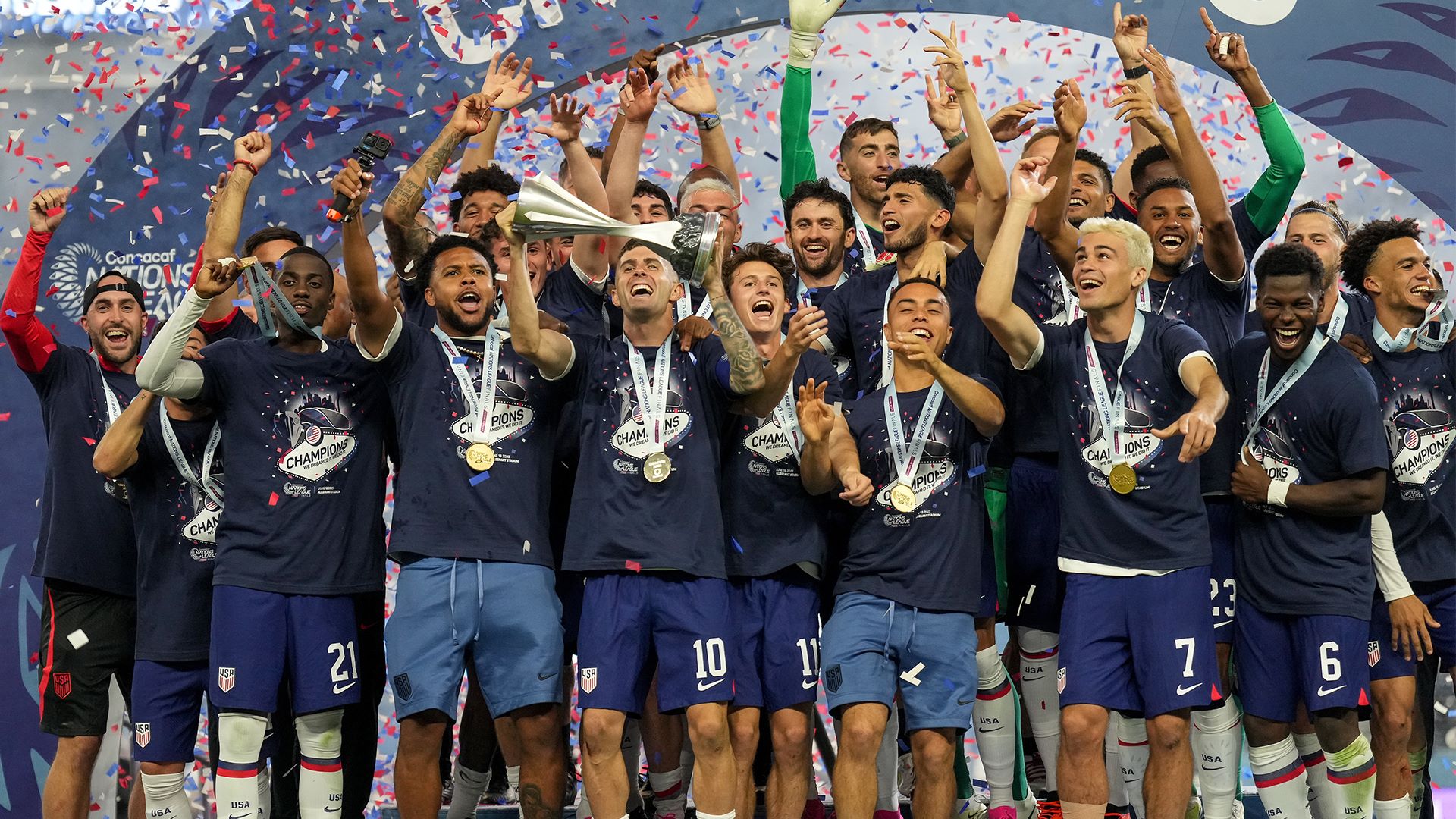
The rise of the USMNT is inextricably linked to the continued growth and professionalization of Major League Soccer (MLS). The league now serves not only as a proving ground but also as a destination for both burgeoning American talent and international stars like Lionel Messi, whose presence at Inter Miami has globalized the league further. Over 75% of players called up to the USMNT in 2024 have direct ties to MLS or its youth development system.
The Homegrown Revolution
The massive, sustained investment by MLS and its clubs into their youth academies has completely transformed the pipeline for men’s soccer usa. MLS academies now operate under the MLS NEXT umbrella, a rigorous and structured youth competition that ensures top American prospects are consistently playing at a high level.
- Elite Pathway: The pathway is now clear: from the MLS NEXT academy, players can move to MLS NEXT Pro(the league’s official reserve/third-division league), where they get professional experience against older players without having to jump immediately into the first team. This intentional and tiered development structure minimizes risk and maximizes exposure.
- The Export Market: This system has produced a significant number of players who have successfully transferred to top European clubs, generating revenue for MLS teams and strengthening the national team pool. Players like Weston McKennie (FC Dallas Academy), Tyler Adams (New York Red Bulls Academy), and Brenden Aaronson (Philadelphia Union Academy) are prime examples. Their success validates the development model, which prioritizes technical skill and tactical intelligence needed to succeed in the modern, high-intensity European game.
- A Crucial Internal Link: The success of the academy system demonstrates the importance of a strong, healthy men’s soccer usa ecosystem. The pipeline now flows freely from grassroots to the global stage, ensuring a consistent supply of talent for future World Cup cycles.
The Role of Domestic Competitions
The Lamar Hunt U.S. Open Cup, the longest-running national soccer competition in the country, also plays a key role, providing a platform for amateur and lower-division professional teams to compete against MLS giants. U.S. Soccer recently announced the format and schedule for the 2026 tournament, ensuring its historic tradition continues alongside the World Cup preparations.
Furthermore, the burgeoning profile of the MLS league itself, particularly following the arrival of a global icon, has raised the bar for domestic talent. The intensity of rivalries, such as the Hell Is Real derby in Ohio, ensures that MLS players reporting to the national team are match-fit and accustomed to playing under pressure. For more on the MLS NEXT development system and its impact, explore the official MLS NEXT website.
The Unseen Pressure: The Psychological Weight of the Home World Cup
While the Group D draw is relatively favorable, the primary adversary for the USMNT in 2026 will be the immense psychological pressure of playing on home soil. This is not the typical World Cup pressure; it is a blend of expectation and legacy.
The USMNT players, many of whom have become millionaires playing in the best leagues in the world, are acutely aware that their tournament performance will dictate the trajectory of American soccer for the next decade. Success means a permanent boost in fan engagement, media attention, and corporate investment. Failure, conversely, could cool the enthusiasm generated by the 2022 campaign and Lionel Messi’s arrival in MLS.
Coach Pochettino has emphasized the need for “mental resilience” and has scheduled high-profile friendlies against European powerhouses like Belgium and Germany in the lead-up to June. These matches are not just about tactical refinement; they are mental tests designed to replicate the intensity of World Cup knockout competition. The players must learn to embrace the pressure, transforming the energy of the home crowds, expected to be record-breaking, from a burden into a powerful advantage.
The players are focusing on a concept termed “2002 Plus,” which is the goal of not just reaching the quarterfinals but pushing for a semifinals appearance.
Road to the Knockouts: Pre-Tournament Schedule and Expectations
With the World Cup draw completed, the focus now shifts to the pre-tournament schedule, which is designed to fine-tune the tactics and build chemistry. The USMNT has scheduled high-profile friendlies against European powerhouses like Belgium and Germany in the lead-up to June, alongside several CONCACAF Nations League and Gold Cup obligations that provide crucial competitive minutes.
The goal, as stated by the players themselves, is not just to survive the group stage but to make a deep run. The expanded 48-team format means finishing second or even as one of the best third-place teams offers a path to the Round of 32. However, the expectation is clear: winning Group D is the minimum target to ensure the most favorable path through the knockout rounds. The team has the talent, the home advantage, and the momentum to achieve this.
If the USMNT wins Group D, they remain on the West Coast for the Round of 32 in Santa Clara, California. A second-place finish, however, sends them cross-country to Arlington, Texas, forcing a significant logistical hurdle early in the knockout phase. The tactical and mental preparation, therefore, must be entirely focused on securing first place. The ability of the USMNT coaching staff to manage fitness, handle the travel schedule, and motivate the players for three must-win matches in three different climate zones will be one of the most significant, yet unsung, factors in their success.
Looking Ahead: The Legacy of 2026
The 2026 World Cup is more than a tournament; it’s an inflection point for men’s soccer usa. It is the moment when a generation of supremely talented players must translate potential into performance. The country is ready to embrace the spectacle, and the foundation laid over the past decade, from the academies that developed Pulisic and McKennie to the consistent funding of the national team program, will be judged on the results in Los Angeles and Seattle.
The next few months will be a period of intense scrutiny and preparation. The fate of men’s soccer usa hangs on the shoulders of this talented squad, and the entire nation will be watching as they aim to make history on home soil. The opportunity for growth, for inspiration, and for permanently elevating the sport’s status in the United States is immense.
📢 Join the Inner Circle: Get the Best USMNT Predictions Now!
You’ve read the breakdown of the tactics, analyzed the Group D opponents, and now you know the immense pressure and opportunity facing men’s soccer usa in 2026. The journey from analysis to prediction is the most exciting part, and we want you on our team!
USMNT: Only Forward – YouTube
U.S. Soccer · 23K views

Don’t just follow the headlines, get the insights that matter. Our exclusive subscriber-only content delivers:
- Weekly Deep Dives: Detailed video analysis breaking down individual player performances in Europe and MLS.
- The XI Prediction: Get our predicted starting XI for every USMNT match 48 hours before the official lineup drops.
- Exclusive Transfer Rumors: Insider information on potential player moves that could impact the 2026 roster.
- Knockout Stage Forecasts: We’ll predict the USMNT’s path to the quarterfinals and beyond, match-by-match.
Ready to get our winning predictions and analysis delivered straight to your inbox?
👉 Subscribe Now for Exclusive USMNT 2026 World Cup Predictions!
Follow us on social media and join the discussion using the hashtag #USMNT2026!