
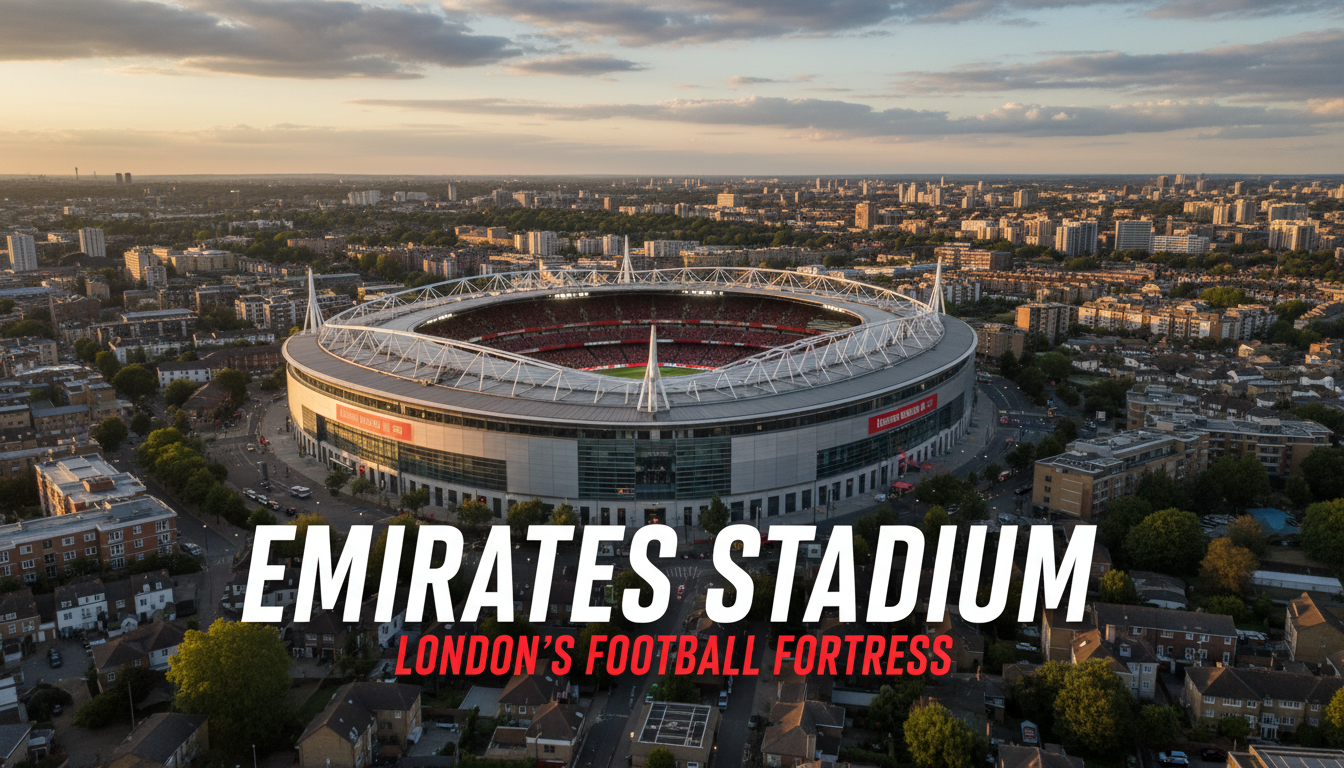
Emirates Stadium, home to Arsenal Football Club, is more than just a football ground; it’s a symbol of ambition, innovation, and unwavering passion. This magnificent arena, located in Holloway, London, has witnessed countless thrilling moments, heart-wrenching defeats, and the rise and fall of footballing legends. This blog post delves deep into the history, design, controversies, and future of the Emirates Stadium, exploring the aspects that make it a landmark in the world of sports.
The Genesis of a Modern Marvel
Before the Emirates Stadium, Arsenal played their home games at Highbury, a historic ground with a unique charm but limited capacity. As Arsenal’s popularity grew, it became evident that Highbury could no longer accommodate the increasing demand for tickets. The club faced a crucial decision: renovate Highbury, which presented significant logistical challenges, or build a new, state-of-the-art stadium.
In 1997, Arsenal began exploring options for a new stadium. After careful consideration, the club decided to relocate and build a new stadium near Highbury. The project was initially known as Ashburton Grove, named after the area where the stadium would be built. Securing funding for such a large-scale project proved to be a major hurdle. Arsenal eventually secured a groundbreaking sponsorship deal with Emirates airline, granting them naming rights to the stadium for a period of 15 years (later extended).
A Groundbreaking Design
The design of the Emirates Stadium was entrusted to Populous, a renowned architectural firm specializing in sports venues. Their vision was to create a modern, spacious, and fan-friendly stadium that would capture the spirit of Arsenal. The stadium’s exterior is characterized by its sleek, curved design, which gives it a distinctive and elegant appearance. The seating bowl is designed to provide excellent sightlines from every seat, ensuring that all fans have an unobstructed view of the pitch. More details of the construction and design process can be found on Populous’ website.
The Emirates Stadium boasts a capacity of over 60,000, making it one of the largest football stadiums in England. It features a wide range of amenities, including premium seating areas, executive boxes, restaurants, and bars. The stadium also incorporates environmentally friendly features, such as rainwater harvesting and energy-efficient lighting.
Unforgettable Moments at the Emirates Stadium
Since its opening in 2006, the Emirates Stadium has hosted countless memorable matches and events. From thrilling Premier League encounters to prestigious Champions League clashes, the stadium has witnessed some of the greatest moments in Arsenal’s history.
One of the most iconic moments was Thierry Henry’s emotional return to Arsenal in 2012. In a FA Cup match against Leeds United, Henry, who had previously left Arsenal to join Barcelona, scored a dramatic winning goal in front of a jubilant home crowd. The roar of the crowd that day is still remembered by Arsenal fans as one of the loudest in the stadium’s history. This moment epitomized the legacy Henry created for Arsenal, further highlighting the importance of remembering and celebrating club legends.
Another memorable match was Arsenal’s 2-1 victory over Barcelona in the 2011 Champions League. The Gunners, under the guidance of Arsène Wenger, produced a stunning performance to defeat the reigning European champions. Goals from Robin van Persie and Andrei Arshavin sparked wild celebrations among the Arsenal faithful. Check out the UEFA website for highlights from the match.
Beyond football, the Emirates Stadium has also hosted numerous concerts and other events, attracting some of the world’s biggest entertainers. Artists such as Coldplay, Bruce Springsteen, and Green Day have performed at the stadium, further solidifying its status as a leading entertainment venue.
Controversies and Challenges
Despite its undeniable success, the Emirates Stadium has also faced its share of controversies and challenges. One of the main criticisms leveled against the stadium is its atmosphere, which some fans believe is not as vibrant as it was at Highbury. The higher ticket prices at the Emirates Stadium have also been a source of discontent among some supporters, who feel that it has priced out some of the club’s traditional fanbase.
The transition from Highbury to the Emirates Stadium also coincided with a period of financial constraints for Arsenal. The club had to prioritize paying off the stadium debt, which limited their ability to invest in new players. This led to a period of relative underachievement on the pitch, which frustrated many fans. However, with improved finances and strategic player acquisitions, Arsenal hope to return to the top of English and European football.
During the construction phase there were also issues related to local residents and the environmental impact. These issues were eventually resolved, but they highlight the challenges involved in building a large-scale stadium in a densely populated urban area. The local council website has documents relating to planning permissions and environmental impact assessments.
The Architectural Brilliance of the Emirates
The architecture of the Emirates Stadium is a study in modern stadium design. The four-tiered bowl ensures that almost every seat offers an unobstructed view of the pitch. This design maximizes the spectator experience. The external glass and steel structure is not only aesthetically pleasing but also functional. It provides natural light and ventilation throughout the stadium.
The stadium also integrates numerous corporate hospitality areas, including executive boxes and premium lounges. These areas offer a luxurious experience for corporate clients and contribute significantly to the club’s revenue. The design also allows for easy access to concessions and restrooms, ensuring a comfortable experience for all fans.
The pitch itself is a state-of-the-art Desso GrassMaster hybrid surface, which combines natural grass with artificial fibers. This ensures a consistent playing surface regardless of weather conditions. The stadium also features an advanced drainage system, which prevents waterlogging during heavy rainfall.
The Emirates Effect: Impact on the Local Community
The construction of the Emirates Stadium had a significant impact on the local community in Holloway. The project created numerous jobs during both the construction and operational phases. The stadium also brought increased investment to the area, stimulating economic growth.
However, the stadium also created challenges for local residents, including increased traffic congestion and noise levels on match days. Arsenal have worked closely with the local community to mitigate these negative impacts, implementing measures such as improved traffic management plans and noise reduction strategies.
The club has also invested in numerous community projects, including youth sports programs and educational initiatives. These projects aim to improve the quality of life for local residents and foster a positive relationship between the club and the community.
Future Developments at the Emirates Stadium
Arsenal are constantly looking for ways to improve the Emirates Stadium and enhance the fan experience. Future developments may include upgrades to the stadium’s infrastructure, such as improved Wi-Fi connectivity and enhanced digital signage. The club may also consider expanding the stadium’s capacity to meet the growing demand for tickets. As technology develops it is essential that the Emirates Stadium adapts to the change.
Another potential development is the creation of a museum dedicated to Arsenal’s history. This would provide fans with an opportunity to learn more about the club’s rich heritage and celebrate its legendary players. The museum could also serve as a valuable educational resource for the local community.
The club is also committed to making the Emirates Stadium more environmentally friendly. Future initiatives may include the installation of solar panels and the implementation of more sustainable waste management practices.
Comparing Emirates Stadium to Other Premier League Grounds
The Emirates Stadium stands as a testament to modern stadium design, but how does it compare to other iconic Premier League grounds? Consider Anfield, Liverpool’s home, steeped in history and known for its fervent atmosphere. While Anfield may lack the modern amenities of the Emirates Stadium, its ‘Kop’ end creates an intimidating atmosphere for visiting teams. You can find more information on Anfield’s history and design on Liverpool FC’s official website.
Old Trafford, home to Manchester United, is another benchmark. With a larger capacity than the Emirates Stadium, Old Trafford offers a grand spectacle. However, some argue that its vastness can dilute the atmosphere. Stamford Bridge, Chelsea’s home, is a smaller, more intimate stadium, known for its passionate support. Each stadium offers a unique experience, reflecting the character of its club and its fans.
The Tottenham Hotspur Stadium, being another recently built London ground, is perhaps the closest comparison. It includes many similarities but the atmosphere is different. This highlights how each stadium has its own personality and that it is more than just the architecture.
The Financial Implications of the Emirates Stadium
Building the Emirates Stadium was a massive financial undertaking for Arsenal. The club took on significant debt to finance the project, which had a significant impact on their transfer policy for several years. Arsenal had to prioritize paying off the stadium debt, which limited their ability to compete with richer clubs in the transfer market.
However, the Emirates Stadium has also generated significant revenue for the club. The stadium’s increased capacity has allowed Arsenal to sell more tickets and generate more matchday revenue. The premium seating areas and executive boxes also contribute significantly to the club’s income. You can find data on club finances on websites like Companies House.
The naming rights deal with Emirates airline has also provided Arsenal with a valuable source of income. The deal, which was recently extended, is one of the most lucrative stadium naming rights deals in the world.
The Arsenal Museum: A Tribute to History
While the club is looking into creating a museum at the Emirates Stadium, the current Arsenal Museum is located near the stadium. It showcases the club’s rich history and heritage. The museum features exhibits on Arsenal’s legendary players, managers, and trophies. It also includes interactive displays that allow fans to relive some of the club’s greatest moments.
The museum is a popular attraction for both Arsenal fans and tourists. It provides a fascinating insight into the club’s past and celebrates its unique identity. A trip to the Arsenal Museum is a must for any fan visiting the Emirates Stadium.
The Fan Experience at the Emirates Stadium
Arsenal have invested heavily in improving the fan experience at the Emirates Stadium. The stadium offers a wide range of amenities, including restaurants, bars, and shops. There are also numerous pre-match entertainment options, such as live music and fan zones.
The club has also introduced new technologies to enhance the fan experience, such as mobile ticketing and in-stadium Wi-Fi. These technologies make it easier for fans to access the stadium and stay connected during matches. Arsenal’s official website provides information on matchday experiences.
Arsenal are committed to creating a welcoming and inclusive environment for all fans. The club has implemented measures to combat discrimination and promote diversity. They want to make everyone feel welcome at the Emirates Stadium.
The Emirates Stadium and the Future of Football
The Emirates Stadium represents the future of football stadium design. Its modern architecture, state-of-the-art facilities, and focus on the fan experience make it a benchmark for other clubs around the world. The Emirates Stadium embodies the evolution of football stadiums, showcasing innovation and enhancing the overall experience for players and spectators alike.
The stadium’s success has inspired other clubs to invest in new and improved stadiums. This has led to a rise in the quality of football stadiums around the world, which has benefited both players and fans.
The Emirates Stadium is a symbol of Arsenal’s ambition and commitment to success. It represents the club’s desire to be at the forefront of the game and to provide its fans with the best possible experience.
Visiting the Emirates Stadium: A Guide for Fans
Planning a visit to the Emirates Stadium? Here’s a quick guide to help you make the most of your experience:
- Getting There: The Emirates Stadium is well-connected by public transport. The nearest tube station is Arsenal on the Piccadilly Line.
- Tickets: Tickets can be purchased online through Arsenal’s official website. It’s advisable to book in advance, especially for popular matches.
- Stadium Tours: Take a stadium tour to learn more about the Emirates Stadium‘s history and design.
- Matchday Experience: Arrive early to soak up the atmosphere and enjoy the pre-match entertainment.
- Security: Be aware of security regulations, such as restrictions on bag sizes.
The Emirates Stadium: More Than Just a Stadium
In conclusion, the Emirates Stadium is more than just a football stadium; it’s a symbol of Arsenal’s ambition, a testament to modern stadium design, and a hub for the local community. From its controversial beginnings to its unforgettable moments, the Emirates Stadium has become an integral part of Arsenal’s identity. It will be interesting to observe how the Emirates Stadium evolves in the future.
Get Expert Football Predictions!
Want to stay ahead of the game? Subscribe to our newsletter for the best English Premier League predictions and betting tips. Get exclusive insights and increase your chances of winning!