

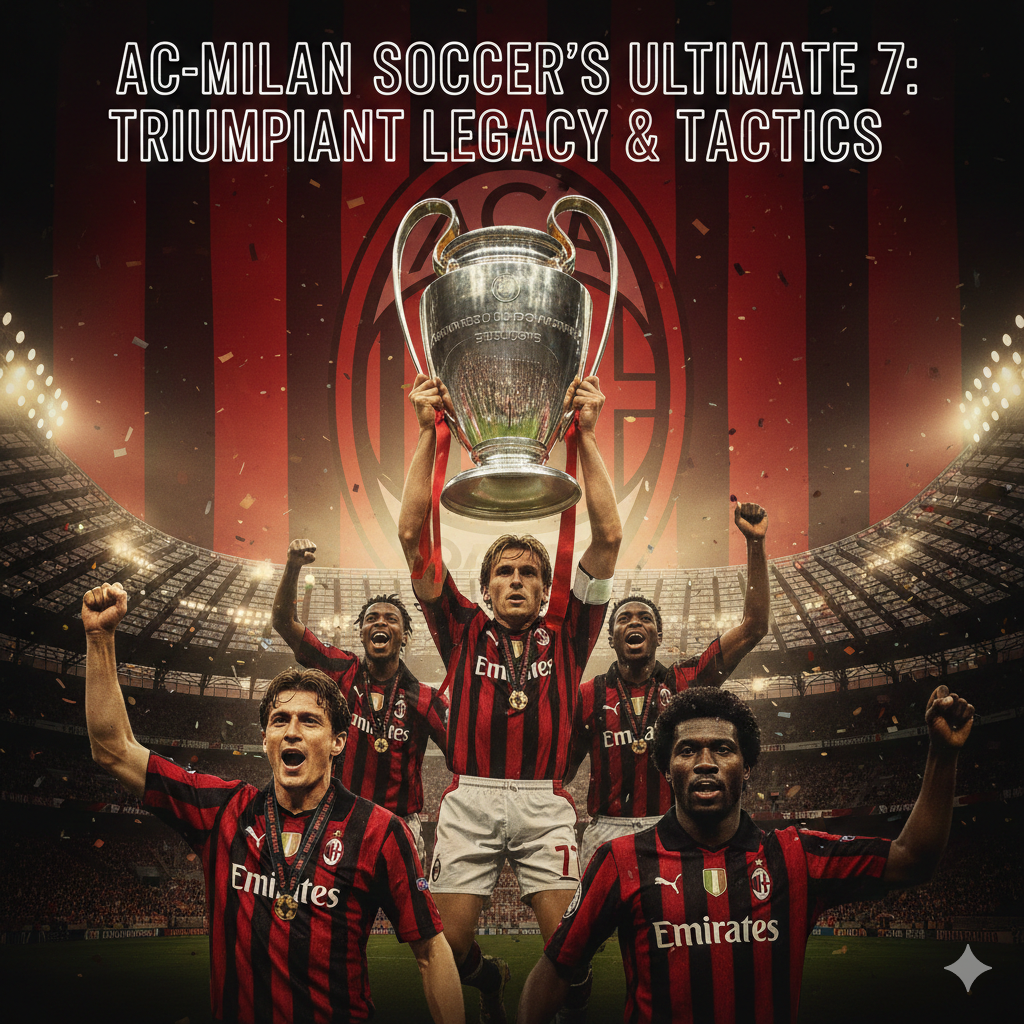
The sight of the vertical red and black stripes, the famous Rossoneri, is a universally recognized symbol of footballing excellence, historic triumph, and a certain swaggering style that has captivated fans for over a century. To speak of Associazione Calcio Milan, or simply AC Milan Soccer, is to conjure images of the legendary San Siro stadium, the defensive mastery of Paolo Maldini, the revolutionary tactics of Arrigo Sacchi, and the gleaming silhouette of the European Cup, seven times over.
This isn’t merely a club; it’s an institution, a defining force in Italian and global sport. From its Victorian-era foundation by English expatriates to the modern era of data analytics and global brand power, the trajectory of AC Milan Soccer has been nothing short of spectacular. It is a story woven with drama, triumph, and the pursuit of footballing perfection.
This comprehensive guide will peel back the layers of this magnificent club, exploring the foundations of its enduring legacy, dissecting the tactical systems that brought it unparalleled success, celebrating the icons who wore the shirt, and charting the course for the future of the red and black. For any fan, new or old, understanding the DNA of this sporting giant is essential to appreciating the true theatre of calcio.
Table of Contents
The Storied Legacy: A Global Powerhouse
The history of AC Milan is a chronicle of audacious ambition. Founded on December 16, 1899, as the Milan Cricket and Football Club by Alfred Edwards and Herbert Kilpin, the intent was clear: to challenge the existing status quo and bring the emerging global sport to Italy. Kilpin famously declared that the club’s colors would be “red because we will be devils, and black to instill fear in our opponents.” This blend of fiery passion and imposing presence has defined AC Milan Soccer ever since.
The Golden Eras and European Dominance
While early success was achieved, including winning the Scudetto (Italian Championship) in 1901, 1906, and 1907, the club’s transition into a genuine global powerhouse began in the 1960s under the guidance of coach Nereo Rocco and the genius of playmaker Gianni Rivera. This era established the club’s first European glory, winning the European Cup(now the UEFA Champions League) in 1963 and 1969.
However, the period that cemented the global reputation of AC Milan Soccer as one of the world’s elite sporting organizations was the late 1980s and early 1990s. Fueled by the revolutionary tactics of coach Arrigo Sacchi and the financial investment of owner Silvio Berlusconi, the team known as “The Immortals” swept through Europe.
This squad, featuring the defensive spine of Baresi and Maldini, and the attacking genius of the Dutch trio of Ruud Gullit, Marco van Basten, and Frank Rijkaard, won back-to-back European Cups in 1989 and 1990. Their dominance was not merely about winning; it was about how they won, dictating play with a high defensive line, an intense pressing system, and impeccable zonal marking, a style that redefined modern AC Milan Soccer.
This tactical and competitive superiority continued under Fabio Capello, who led the team to the 1994 Champions League title, famously dismantling Barcelona’s “Dream Team” 4-0 in the final. The club’s European dominance was revived in the 2000s under Carlo Ancelotti, capturing the title in 2003 and 2007. With 7 European Cup/Champions League titles, the historical success of AC Milan Soccer in the continent’s premier competition is second only to Real Madrid, a staggering achievement that underscores its historical magnitude.
This incredible feat of winning Europe’s top prize seven times is a record that very few clubs can aspire to match, making the history of AC Milan Soccer a subject of global reverence. To fully appreciate the magnitude of this achievement, one can explore the history of European football’s greatest prize, the European Cup/Champions League. History of the UEFA Champions League
The enduring rivalry with Internazionale, known as the Derby della Madonnina, is one of the most passionate in the world, splitting the city of Milan between the blue side (Inter) and the red side (AC Milan Soccer). The fierce competition for trophies, players, and city supremacy drives both clubs to consistently perform at the highest level, adding to the allure and drama of Italian football. ac milan soccer.
The Storied Legacy: A Global Powerhouse
The legacy of AC Milan Soccer is intertwined with its ability to consistently find competitive balance, even during periods of transition. The 1990s and 2000s, following the initial Sacchi and Capello successes, proved that the club could reinvent itself without sacrificing its core values of tactical sophistication and European ambition. The sheer number of legendary players who have graced the San Siro turf speaks to the club’s enduring appeal as a destination for the world’s best, cementing AC Milan Soccer‘s status as a top-tier European institution that commands respect and fear in equal measure.
Tactical Evolution: The Milan Lab and Total Football
The history of AC Milan Soccer is not just a ledger of trophies; it’s a history of tactical innovation that permanently altered the landscape of modern football. Unlike many of its Italian rivals who were steeped in the defensive philosophy of Catenaccio (door-bolt), Milan’s greatest eras were built on proactive, attacking discipline.
Arrigo Sacchi’s Revolution: The High Press
The single most defining tactical chapter belongs to Arrigo Sacchi, who took charge in 1987. Sacchi’s philosophy was simple yet radical for its time: the team had to operate as one unified, compressed block, with no more than 25 meters separating the defensive line from the forward line. He replaced the traditional man-marking system with zonal marking and pioneered the high defensive line and coordinated offside trap.
His famed 4-4-2 formation was a vehicle for “spatial engineering,” where players were more concerned with occupying and denying space than marking individuals. The high-intensity pressing was not frantic but synchronized, designed to force errors high up the pitch, turning defense instantly into offense. This approach was a masterclass in collective effort and rigorous training. The tactical principles applied by Sacchi to AC Milan Soccer became the blueprint for modern pressing football globally.
Carlo Ancelotti’s Pragmatism: The Christmas Tree
A decade later, another tactical master emerged in former player Carlo Ancelotti. Managing AC Milan Soccer from 2001 to 2009, Ancelotti adapted the philosophy to the availability of world-class playmakers like Kaká and Clarence Seedorf, and the deep-lying vision of Andrea Pirlo. His trademark formation became the 4-3-2-1 or the “Christmas Tree,” which stacked the midfield with three central players (the base), followed by two advanced playmakers (the attacking midfielders, or the trequartistas), supporting a single striker.
This system was designed to control the center of the pitch, allowing Pirlo to dictate play from deep positions while the two trequartistas operated in the crucial spaces between the opponent’s midfield and defense. This was a more fluid, possession-focused, and pragmatic evolution of AC Milan Soccer tactics, yielding two Champions League trophies in four years.
The Science of Success: MilanLab
A foundational, yet often overlooked, part of Milan’s 21st-century success was the establishment of MilanLab in 2002. Born from Silvio Berlusconi’s desire to prevent crippling injuries like the one suffered by Fernando Redondo, MilanLab became a pioneering scientific research center dedicated to holistic athlete well-being and performance optimization.
The Lab’s mission was to use technology, data analysis, and an interdisciplinary approach (integrating sports science, psychology, nutrition, and biochemistry) to create a numerical identity card for every player. It was based on the “equilateral triangle” concept, asserting that a player’s optimum performance depends on the balance between their Structural, Biochemical, and Psychological conditions. This data-driven, preemptive approach to injury prediction and player longevity was revolutionary for AC Milan Soccer and the sport as a whole, famously extending the careers of legends like Paolo Maldini and Clarence Seedorf well into their late 30s.
Modern Tactics and Managerial Philosophy
The current era of AC Milan Soccer has seen a focus on returning to domestic competitiveness and re-establishing a presence in Europe. The managerial approach has often favored a dynamic system built around pace and verticality, typically utilizing variations of the 4-2-3-1 or a modern 4-3-3. The emphasis is on aggressive wing-play, supported by overlapping full-backs, and a midfield pivot capable of both ball progression and defensive solidity. The current tactical focus highlights a reliance on individual brilliance in wide areas, while maintaining the structural rigidity inherited from the club’s great tactical past.
Icons of the Rossoneri: Stars Who Defined Eras
The pantheon of AC Milan Soccer is filled with players whose names are synonymous with their positions, often redefining them entirely. These are the icons whose sheer presence elevated the club to unprecedented heights and whose stories form the emotional core of the Rossoneri narrative.
The Dutch Trio: Gullit, Van Basten, and Rijkaard
No discussion of Milan’s legendary players is complete without the formidable Dutch Trio of Ruud Gullit, Marco van Basten, and Frank Rijkaard. Signed under Berlusconi, they were the operational engines of Sacchi’s “Immortals” team. Gullit brought explosive power and versatility, Van Basten was a striker of balletic grace and lethal efficiency (winning three Ballon d’Or awards), and Rijkaard was the complete midfielder, the vital link between defense and attack, providing both steel and sublime passing. They were the perfect blend of tactical intelligence and raw individual talent that made AC Milan Soccer invincible.
The Defensive Legends: Baresi and Maldini
If the Dutch trio provided the thrust, the defensive spine provided the soul and steel. Franco Baresi and Paolo Maldinirepresent perhaps the greatest defensive partnership in football history. Baresi, the iconic captain and defensive maestro, mastered the role of the sweeper/libero and the offside trap, leading the defense with supreme intelligence and passion for over two decades. Maldini, a versatile full-back who transitioned into a world-class center-back, epitomized loyalty, elegance, and longevity, playing over 900 matches for the club across a quarter of a century. Their commitment to AC Milan Soccer is a testament to the emotional bond the club fosters.
The South American Flair: Kaká and Other Playmakers
The flair and creativity of AC Milan Soccer have often been channeled through South American playmakers. Kaká, the Brazilian attacking midfielder, was the face of the Ancelotti era, combining pace, power, and elegant technique to devastating effect, culminating in a Ballon d’Or in 2007. The club has also featured other instrumental playmakers, from the quiet genius of Gianni Rivera (the club’s first Ballon d’Or winner) to the deep-lying passing of Andrea Pirlo, a player whose tactical repositioning by Ancelotti was crucial to the 2000s successes.
Modern Heroes: Leão, Maignan, and the New Guard
The latest era, defined by the unexpected 2021-2022 Scudetto win, is spearheaded by a new generation of players embodying the modern, dynamic style of AC Milan Soccer.
- Rafael Leão: The Portuguese winger is the team’s current superstar, known for his explosive pace, dribbling ability, and ability to decide matches with moments of individual brilliance.
- Mike Maignan: A world-class goalkeeper, Maignan has become a crucial pillar of the defense, often praised for his shot-stopping and revolutionary distribution, which initiates the team’s attacks.
- Fikayo Tomori & Christian Pulisic: Representing the international draw of the club, Tomori is a fast, modern center-back, and Pulisic brings world-renowned attacking pedigree and commercial appeal to AC Milan Soccer.
The successful recruitment of players like these, alongside the guidance of veteran figures like the recently retired Zlatan Ibrahimović, has been pivotal in restoring the competitive edge of AC Milan Soccer in the Italian top flight, Serie A. To see the statistical output of the modern club heroes, you can review the latest Serie A records. Official Serie A Stats Website.
Paolo Maldini: The Ultimate Rossoneri Legend
Paolo Maldini is the ultimate embodiment of AC Milan, representing loyalty, class, and unparalleled longevity. Nicknamed “Il Capitano” (The Captain), his career spanned a remarkable 25 seasons, all with the Rossoneri. He debuted at the age of 16 in 1985 and retired in 2009 at 41, having played alongside three generations of Milanese legends.
Career Milestones and Statistics
Maldini’s career statistics reflect his status as an era-defining defender who adapted from a world-class Left-Back to an equally brilliant Centre-Back in the latter half of his career.
| Statistic | Total | Detail |
| Total Official Matches | 902 | The most appearances in AC Milan history. |
| Serie A Appearances | 647 | Held the Serie A record until 2020. |
| Total Trophies Won | 26 | Making him one of the most decorated players in history. |
| Years at AC Milan | 25 | The entirety of his professional career. |
| Ballon d’Or Ranking | 3rd Place | Achieved in both 1994 and 2003. |
| FIFA World Player of the Year | 2nd Place | Achieved in 1995. |
Major Trophy Haul
His trophy cabinet is exceptional, highlighting his crucial role across the club’s greatest dynasties: the Sacchi/Capello “Immortals” and the Ancelotti era.
- UEFA European Cup / Champions League: 5 wins (1989, 1990, 1994, 2003, 2007).
- Serie A (Italian Championship): 7 titles (1988, 1992, 1993, 1994, 1996, 1999, 2004).
- Intercontinental Cup / FIFA Club World Cup: 3 wins combined.
Maldini famously lifted the Champions League trophy in 2003, exactly 40 years after his father, Cesare Maldini, had done the same for AC Milan. Following his retirement, the club honored him by retiring his number 3 shirt, reserving the possibility for one of his sons (Christian or Daniel) to wear it if they play for the senior squad.
The Future Fortress: AC Milan’s New Stadium
The plan for a new, privately-owned stadium is considered crucial for the long-term financial sustainability and competitiveness of AC Milan. The current shared venue, the San Siro (Stadio Giuseppe Meazza), is publicly owned and limits the clubs’ commercial revenues.
Project Details
The current, decisive plan sees AC Milan and Inter Milan collaborating to build a new, modern venue, moving away from previous individual proposals.
- Architectural Firms: The project is a collaboration between global architectural powerhouses Foster + Partners (known for Wembley Stadium precinct) and MANICA (known for Allegiant Stadium).
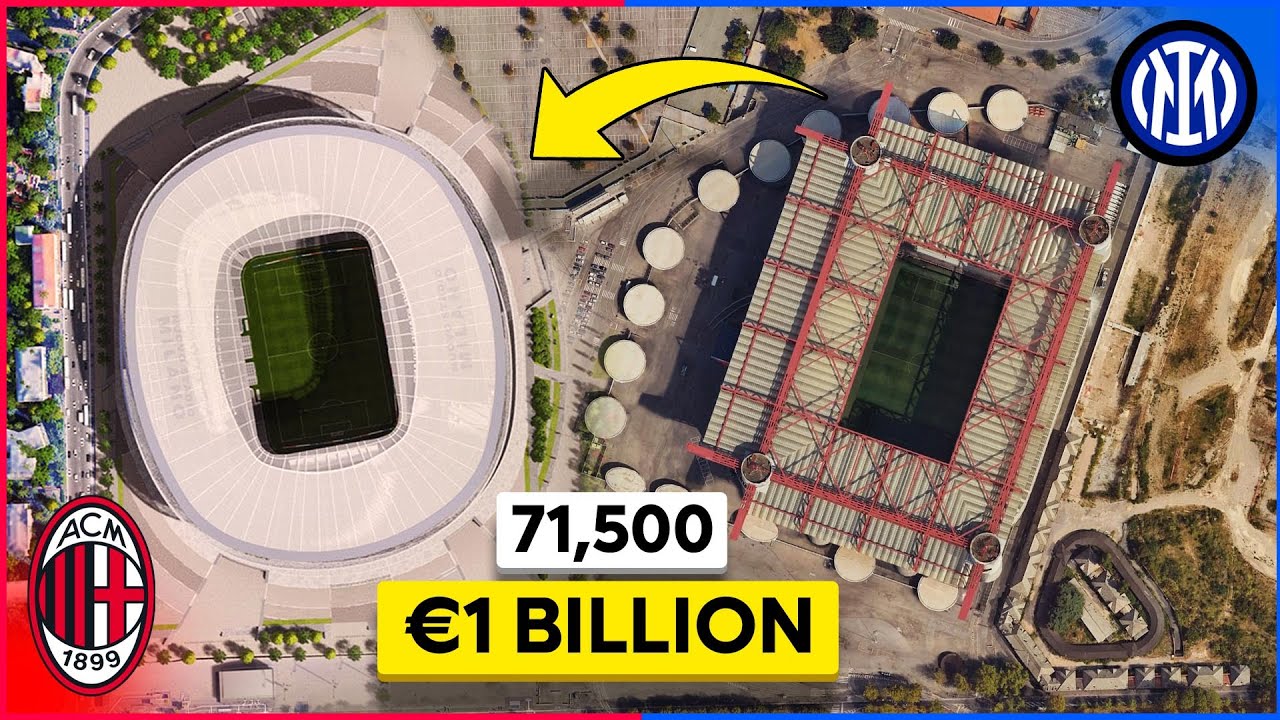
- Capacity: The new venue is planned to seat 71,500 fans.
- Design Philosophy: The design emphasizes optimal visibility with steeply tiered seating, cutting-edge sustainability, and a focus on enhanced accessibility and premium hospitality (with an estimated 13,000 premium spaces). The design promises to create a world-class architectural icon.
- Location and Context: The new stadium is part of a larger urban regeneration project covering approximately 281,000 square meters in the San Siro area, transforming the location into a year-round community and cultural hub.
- Timeline: The clubs have finalized the purchase of the San Siro Great Urban Function site, with the new stadium project targeting completion around the 2030-31 season, potentially coinciding with the 2032 European Championship, which Italy will co-host. The new, modernized stadium is viewed as an essential investment to boost the commercial revenue of AC Milan Soccer to compete with the top clubs in Europe.
The Significance
This shift is a strategic economic move under the current ownership (RedBird Capital), ensuring that AC Milan Soccercan maximize matchday income, sponsorship, and non-matchday revenue from a modern, efficient venue, thus securing the financial foundation for future sporting success.
If you’d like to see more about the design and vision for the proposed stadium, check out this video: The Future San Siro Replacement Is Simply Stunning. This YouTube video provides a visual overview of the ambitious architectural plans for the new 71,500-seat stadium project for AC Milan and Inter.
The Future San Siro Replacement Is Simply Stunning – YouTube

The Future of AC Milan Soccer
The future of AC Milan Soccer is being built on a foundation of unprecedented financial stability and ambitious infrastructure projects, signaling a determined effort to return the club to the European elite for the long term.
Ownership and Financial Stability
Since the acquisition by RedBird Capital Partners in 2022, the club has embarked on a strategy focused on commercial growth and financial prudence. This approach has paid significant dividends. For the first time in modern history, AC Milan Soccer has reported three consecutive years of profit (ending the 2024/25 financial year with a €3 million positive result) and achieved a new record revenue of €494.5 million.
This financial health is not only a major achievement in the notoriously unstable landscape of Italian football but also provides a sustainable platform for continued investment in the squad and the club’s infrastructure. The stability of AC Milan Soccer‘s finances is fueling an increased investment into the playing squad, with over €250 million spent on new players in the two seasons leading up to 2025.
The Stadium Project: A New Era
The most transformative element of the future plan for AC Milan Soccer is the proposed new stadium. Recognizing the need for a modern, commercially viable, and state-of-the-art venue to compete with Europe’s financial superpowers, AC Milan and Inter Milan have taken decisive steps toward a joint project. The clubs have finalized the acquisition of the San Siro Great Urban Function site, moving forward with plans to build a new 71,500-seat stadium, potentially designed by Foster + Partners.
This new stadium project, which targets completion around the 2030-31 season, is crucial. It will move away from the current shared, publicly-owned San Siro structure to a privately-run venue that can maximize matchday revenue, commercial partnerships, and event hosting. This shift is seen as essential for the long-term competitiveness of AC Milan Soccer on the world stage, drastically increasing the club’s operational income and brand value.
Youth Development and Milan Futuro
A renewed focus on the Primavera (youth team) and the Milan Futuro project emphasizes developing young talent as both a sporting and financial asset. By strengthening the youth sector, AC Milan Soccer aims to create a continuous pipeline of first-team-ready players while also generating significant value through potential sales. This model, combining elite international transfers with a robust, data-informed youth system, is designed to ensure the club’s sustained excellence. The success of players like Francesco Camarda, coming through the ranks, demonstrates the potential of this revitalized academy strategy for AC Milan Soccer.
Conclusion
AC Milan Soccer is a legend in motion, a club defined by the spectacular highs of the Immortals and Ancelotti eras, and guided by a continuous drive for tactical and scientific superiority. From the foundational genius of Arrigo Sacchi to the pioneering data science of MilanLab and the current financial strength under RedBird, the Rossoneri have consistently proven they belong at the pinnacle of the sport.
With a strong, young squad, record-breaking commercial growth, and a definitive plan for a new stadium, the future of AC Milan Soccer is positioned for a resurgence that promises to be as glorious as its past. The spirit of the red and black devil remains unbowed, ensuring that this global powerhouse will continue to inspire fear and passion for generations to come.
Don’t Miss the Next Chapter of AC Milan Soccer History
You’ve explored the glorious past and ambitious future of the Rossoneri, but the story of AC Milan Soccer is still being written on the pitch every week. Transfers, injuries, form swings, and tactical adjustments mean the landscape of Italian and European football can shift in an instant.
Do you want to stay ahead of the curve and know exactly where the next dramatic twist will land?
- GET THE EDGE: Receive exclusive pre-match analysis, injury reports, and deep tactical breakdowns for every major AC Milan match.
- BEST PREDICTIONS: Unlock our expertly researched score predictions and betting tips, focusing on value and insight you won’t find anywhere else.
- INSIDER KNOWLEDGE: Get the latest news on stadium development, financial results, and youth talent before the mainstream media catches up.
Join the Inner Circle of Rossoneri Insight!
Don’t just watch the game, understand it. Click below to get the best AC Milan predictions delivered straight to your inbox every week.













Comments 5