

Every four years, the world pauses, transfixed by a spectacle of human athletic endeavor. Yet, the upcoming tournament scheduled to be hosted across the continent is not just a game; it is an economic machine of staggering, unprecedented complexity. The FIFA World Cup 2026, co-hosted by the United States, Mexico, and Canada, will be the first-ever 48-team, 104-match event, shattering previous records for scale, logistics, and projected revenue. This three-nation affair promises a financial windfall that could exceed $11 billion for FIFA’s four-year cycle, setting a new benchmark for global sports economics.
The sheer ambition of the FIFA World Cup 2026 demands that we ask: what is the genuine economic impact on the sixteen host cities? Unlike past hosts, which often incurred vast costs for building new, dedicated stadiums (many of which became “white elephants”), the FIFA World Cup 2026 is strategically leveraging existing, modern infrastructure, from the historic Estadio Azteca to the state-of-the-art SoFi Stadium. This choice is key to the tournament’s financial health, minimizing long-term public debt and maximizing the focus on immediate economic stimulus from an expected 1.2 million international visitors.
However, the economic narrative is multi-layered. While host cities like Los Angeles and Atlanta project hundreds of millions in tax revenue and economic activity, they must simultaneously manage the hidden costs associated with such an influx: potential strain on public services, security, and the social challenge of gentrification. The FIFA World Cup 2026 is not merely a sports tournament; it is a profound economic experiment. This comprehensive guide will dissect the colossal financial footprint of the FIFA World Cup 2026, exploring the record revenues, the tangible local gains, and the critical path toward delivering a responsible and lasting socio-economic legacy.
Table of Contents
The Direct Economic Stimulus: Jobs, Travel, and Spending
The most immediate and tangible benefit promised by any mega-event is the Direct Economic Stimulus—a financial injection calculated from new jobs created, capital spent on preparing venues, and, most importantly, the spending of hundreds of thousands of inbound visitors. For the FIFA World Cup 2026, the scale of this stimulus is unparalleled, driven by the unprecedented 104-match format spread across 16 major North American metropolitan areas.
The core distinction that defines the economic potential of the FIFA World Cup 2026 is its reliance on existing world-class infrastructure. Unlike recent tournaments that required host nations to undertake colossal, expensive, and often controversial stadium construction projects, the United Bid (United States, Mexico, and Canada) is largely a turnkey solution. This approach shifts the focus away from capital expenditure on permanent structures and squarely onto generating maximum revenue from visitor spending and temporary operational jobs, offering host cities a far greater likelihood of realizing a net positive financial outcome.
A. Tourism and Visitor Spending: The Multibillion-Dollar Influx
The FIFA World Cup 2026 is projected to be one of the largest peacetime population movements in history. Tourism Economics estimates that the tournament will attract approximately 1.2 million international visitors to the U.S. host cities alone, a number that includes spectators, media, officials, and non-ticketed travel companions. These visitors represent “new money” entering the economy, and their spending is the primary engine of the direct stimulus.
This video, Breaking down the economic impact of the 2026 World Cup, offers a detailed news report on the financial projections of the tournament, which directly supports the content of your article.
Breaking down the economic impact of the 2026 World Cup – YouTube


Data modeling from reports by organizations like Tourism Economics and Micronomics provides a granular view of this financial torrent:
- Duration and Spend: International travelers are expected to stay for an average of 12 days, attend two matches, and spend an estimated $400 to over $416 per day (excluding lodging and tickets). This extended stay compared to typical tourism packages significantly amplifies the economic ripple effect.
- The Lodging Surge: Host cities are bracing for unprecedented demand. Projections for Los Angeles County anticipate generating ≈330,000 incremental room nights during the event window. Furthermore, hotel room rates in host cities like L.A. are projected to rise by up to 90% above baseline due to the sheer volume of demand created by the FIFA World Cup 2026.
- This dramatic increase in Transient Occupancy Tax (TOT) revenue is the most immediate fiscal gain for municipal governments, providing them with a substantial, immediate return on their preparatory public investments.
- The Multiplier Effect: The direct spending by visitors flows immediately into the local economy, but the true impact is larger due to the “multiplier effect.” When a tourist pays for a meal, the restaurant owner uses that money to pay wages, purchase supplies, and cover rent. This secondary spending, the indirect and induced impacts, circulates the original revenue multiple times, accelerating economic activity in sectors far beyond the stadium gates, including transportation, local entertainment, and retail.
Specific metropolitan areas anticipate colossal gains: Los Angeles County expects a total economic impact of up to $594 million, with over $343 million coming directly from visitor spending. Similarly, Seattle’s Lumen Field matches alone are projected to inject a minimum of $929 million into King County’s economy. These figures underscore the vast, immediate wealth transfer that defines the hosting of the FIFA World Cup 2026. For further detailed analysis on how visitor spending translates into local tax revenue, you can consult various Host City Economic Impact Studies released by local organizing committees Los Angeles Economic Impact Study.
B. Short-Term Job Creation: Powering the Service Economy
The second pillar of direct stimulus is job creation. Hosting the FIFA World Cup 2026 is expected to support approximately 40,000 jobs and generate over $1 billion in incremental worker earnings across North America, according to initial projections from The Boston Consulting Group (BCG).
These are overwhelmingly short-term and contract positions concentrated in the service and operations sectors that are required to manage an event of this magnitude:
- Hospitality and Food Services: The single largest beneficiary. Hotels, restaurants, and bars must hire thousands of temporary workers to manage the surge in occupancy and dining demand from the hundreds of thousands of fans descending on each host city for the FIFA World Cup 2026.
- Event and Security Management: Massive security operations, venue management, ticketing, and ushering staff are required for 104 matches. This includes temporary security clearances, specialized training, and logistical coordinators.
- Transportation and Logistics: From managing airport operations (especially key hubs like DFW and LAX, which are essential gateways to the host cities) to operating expanded transit services for fans commuting to stadiums, the demand for drivers, transit personnel, and logistics coordinators spikes sharply.
For the U.S. alone, a joint study by FIFA and the World Trade Organization (WTO) estimates that the tournament will underpin the creation of around 185,000 full-time equivalent (FTE) jobs, with the increase in wages distributed across many industries in the host metro areas. This influx of income provides a crucial, though temporary, boost to the local labor market. The challenge, of course, is ensuring that the economic gains filter down to those working these temporary roles, and that the local economy can absorb the temporary workers once the final whistle blows.
C. The Use of Existing Infrastructure: The Cost Advantage
A major cost saving, and therefore a net economic benefit—is derived from the strategic decision to utilize 16established, modern stadia across the three nations. This feature of the FIFA World Cup 2026 model fundamentally differentiates it from the costly legacy of previous World Cups.
By avoiding the 3 to 5 billion price tag typically associated with building multiple new, signature venues, the host nations significantly reduce public debt and risk. Any capital expenditure is focused primarily on upgrades necessary to meet FIFA standards, such as new natural grass pitches in multi-use venues, temporary broadcast infrastructure, and expanded Wi-Fi and power capabilities. This targeted investment is much more manageable than ground-up construction, allowing the direct stimulus to immediately contribute to a positive return on investment for the host governments. This efficiency is critical for delivering the overall net benefit projected for the FIFA World Cup 2026(an estimated $3-4 billion across North America, according to BCG).
The FIFA World Cup 2026 is not just poised to be the most commercially successful tournament in history; its economic strategy is designed to create a concentrated, immediate stimulus that relies less on long-term capital investment and more on generating record-breaking revenues from a vast influx of international visitors and the temporary workforce required to cater to them.
The Revenue Streams: FIFA’s Record Projections
While the host cities generate their direct economic stimulus from tourism and local tax revenues, the central financial beneficiary of the tournament is the global governing body, FIFA. The FIFA World Cup 2026 is not just a sporting event; it is the cornerstone of FIFA’s four-year revenue cycle, and due to its massive expansion, it is poised to become the most lucrative single sporting tournament in history.
The revenue projections for the 2023-2026 cycle are staggering. FIFA initially budgeted for a total revenue of $11 billion for the quadrennium, a figure subsequently revised upward due to the massive commercial success anticipated from the expanded format of the FIFA World Cup 2026 and the new 32-team Club World Cup. This massive jump from the ≈$7.5 billion generated in the 2019-2022 cycle is driven almost entirely by three primary commercial pillars: Broadcasting Rights, Ticketing and Hospitality Sales, and Marketing Partnerships.
A. Broadcasting Rights: The Multi-Billion Dollar Anchor
The most significant single source of income for the FIFA World Cup 2026 is the sale of television and digital broadcasting rights. The expansion from 64 matches to 104 matches, an increase of 62.5%, provides a huge inventory of content that dramatically increases the commercial value of the rights packages worldwide.
- Record Valuation: Total revenue from television broadcasting rights for the 2023–2026 cycle is budgeted at approximately $4.264 billion, a substantial increase from the previous cycle. This surge is directly attributable to the larger match count and the favorable time zones for the North American markets, which optimize viewership in the lucrative European and South American markets.
- Key Market Dynamics: The tournament’s placement in North America is strategically crucial. The sheer size of the U.S. and Mexican media markets allows FIFA to command premium prices. For instance, major broadcasters like Fox Sports and Telemundo in the United States hold highly valuable, long-term deals that have factored in the increased profile of the FIFA World Cup 2026 being hosted on home soil. The co-hosting arrangement effectively leverages three distinct, large-scale media economies simultaneously.
- Global Reach: The rights packages are sold across over 200 territories, funding everything from the tournament’s ≈$1 billion prize pool to global football development programmes. Broadcasting revenue represents the foundational financial guarantee for the entire event.
B. Ticketing and Hospitality Sales: The On-Site Revenue Record
The expanded 48-team, 104-match format, combined with the use of vast, modern North American stadiums (many with capacities exceeding 70,000), translates directly into an unprecedented volume of available seats and premium experiences.
- Massive Sales Budget: The total budgeted revenue from ticketing and hospitality rights for the 2023–2026 cycle is projected at a record high of approximately $3.1 billion.
- Capacity Advantage: The average stadium capacity for the FIFA World Cup 2026 is significantly higher than past tournaments (e.g., Qatar 2022), meaning a far greater quantity of tickets can be sold. The total number of tickets sold for the tournament is projected to be in the millions, far exceeding previous tournaments.
- The Corporate Hospitality Market: A key driver of this figure is the sale of lucrative corporate hospitality and VIP packages. The North American market, particularly in cities like New York/New Jersey, Dallas, and Los Angeles, has a highly sophisticated and deep corporate hospitality culture. These high-value packages, which include luxury suites, premium dining, and exclusive access, command prices orders of magnitude higher than standard tickets, making them a critical component of the FIFA World Cup 2026 revenue strategy.
C. Sponsorship and Commercial Partnerships: Global Brand Alignment
The third major stream is the marketing and commercial rights revenue generated from global and regional sponsorships. This category reflects the value that major corporations place on associating their brands with the world’s most-watched sporting event.
- Marketing Rights Budget: FIFA has budgeted approximately $2.7 billion from marketing rights for the 2023–2026 cycle.
- Expanded Partnership Tiers: The expanded format and the reach across three major North American economies allow FIFA to attract and retain high-level partners across multiple tiers (FIFA Partners, FIFA World Cup Sponsors, and Regional Supporters). Global brands like Adidas, Coca-Cola, and Visa sign on for cycle-long partnerships that leverage the expanded global visibility of the FIFA World Cup 2026.
- Licensing and Merchandising: A smaller but steady revenue stream comes from licensing rights, projected at around $669 million for the cycle. This includes revenue from branded merchandise, official game balls, jerseys, and intellectual property licensing, such as that for video games. This revenue stream benefits from the extended timeline and increased hype surrounding the biggest FIFA World Cup 2026 in history.
Revenue Sharing vs. Local Tax Gain
It is essential to distinguish between the various revenue streams and their final destination. The billions generated from broadcasting rights, ticketing (net of operational costs), and global sponsorship flow primarily to FIFA. This revenue is then distributed globally to member associations, prize money funds, and development programs, which is the mechanism that allows FIFA to reinvest in the sport worldwide.
The host nations (USA, Canada, Mexico) and the host cities, however, benefit primarily from the tax-based revenue streams detailed in the previous section, hotel occupancy tax, local sales tax on tourist spending, and business taxes. While the tournament is a colossal financial success for FIFA, the ultimate measure of the FIFA World Cup 2026‘s economic impact for the host cities is the degree to which that tourist spending is efficiently captured and channeled into public funds.
| Revenue Category | 2023-2026 Cycle Budget (USD Billions) | Key Driver for FIFA World Cup 2026 |
| Broadcasting Rights | ≈$4.26 | 104 matches & Favorable North American time zones |
| Ticketing & Hospitality | ≈$3.10 | Record stadium capacity & High-value corporate market |
| Marketing Rights | ≈$2.69 | Expanded global reach across three major economies |
| Total Revenue | ≈$11.00 | Record-breaking scale of the tournament |
The commercial strength of the FIFA World Cup 2026 provides the financial muscle for FIFA’s global operations, making it an economic juggernaut unlike any seen before in world football.
Host City Investment and Regional Disparity
While the massive revenue figures generated by media and sponsorship flow primarily to FIFA, the tangible economic legacy of the FIFA World Cup 2026 hinges entirely on the investment decisions and financial performance of the 16 host cities. The trilateral hosting model, with 11 U.S. cities, 3 Mexican cities, and 2 Canadian cities, creates a unique economic tapestry marked by varying levels of public investment, differing operational costs, and significant regional disparities in ticket prices and projected returns.
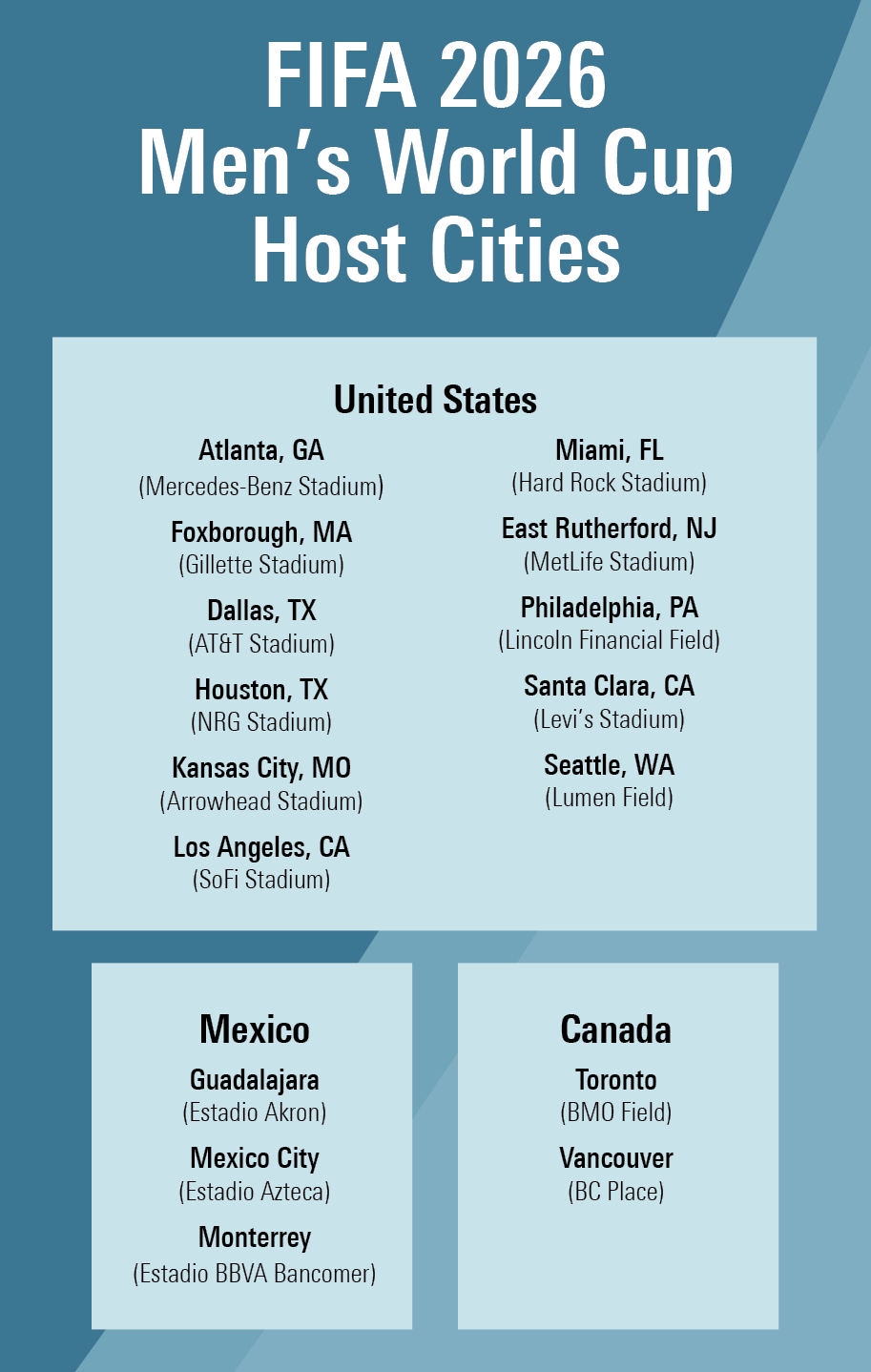
A. The Cost of Hosting: Public Investment in Soft Infrastructure
A crucial advantage for the FIFA World Cup 2026 is the use of existing stadiums, which minimizes the most destructive and costly financial risk: the construction of “white elephant” venues. However, this does not mean the cities face zero costs. The public investment required is largely concentrated in soft infrastructure and operations necessary to meet FIFA’s stringent hosting requirements.
These expenditures fall into three main categories:
- Venue Upgrades: While stadiums exist, investments are necessary for specific, mandatory FIFA requirements, such as installing temporary natural grass pitches in indoor or artificial turf venues (e.g., in Dallas, Atlanta, and Vancouver), upgrading media and broadcast facilities, and expanding corporate hospitality areas. For instance, Toronto’s hosting budget allocates a significant portion to capital costs for stadium upgrades.
- Security and Logistics: The sheer scale of the 48-team tournament necessitates a massive security apparatus, crowd management, and emergency response planning. The U.S. Congress has, in fact, appropriated $625million in security support costs for the U.S. portion of the FIFA World Cup 2026, a cost that includes reimbursements to local law enforcement. Local communities are still on the hook for operational security costs beyond this federal support.
- Municipal Services and Transportation: Cities must upgrade transit links, ensure efficient crowd flow from transport hubs to stadiums, and expand core municipal services like sanitation and traffic control for the tournament duration. Toronto’s estimated total cost of planning and hosting is around $380 million (CAD), with a portion of that dedicated to lasting public infrastructure benefits.
Ultimately, each host city must carefully calculate its costs against its projected net economic benefit—the direct visitor spending and associated local tax revenue minus the public funds spent on hosting obligations. Early analyses suggest that individual host cities can expect an incremental economic activity of between $160 million and $620 million, translating to a net benefit of $90 million to $480 million per city after accounting for public costs, though the final cost for many is still evolving.
B. Regional Economic Disparity: The Tale of Three Hosts
The tri-national structure of the FIFA World Cup 2026 has exposed a stark economic divide, particularly regarding accessibility and pricing. The economic landscape and purchasing power of the three host nations dictate the fan experience and, critically, the distribution of tourist spending.
| Host Nation | Match Allocation | Average Ticket Price (Group Stage) | Economic Strategy Focus |
| United States | 78 Matches (including Quarter-finals onward) | Substantially Higher (e.g., LA opener: ≈$560 ) | High-value corporate tourism and maximum tax revenue capture |
| Canada | 13 Matches | Moderate (e.g., Toronto opener: ≈$355) | Public infrastructure legacy and international visibility |
| Mexico | 13 Matches | Lower (e.g., Mexico City opener: ≈$370) | Volume tourism and cultural celebration (Affordability) |
The pricing strategy in the United States has created controversy. Driven by sophisticated dynamic pricing models and a reliance on the high-value corporate market, U.S. ticket prices are often substantially higher than those in Canada and Mexico, sometimes more than doubling the cost for comparable seats.
- This strategy risks creating an “Economics of Exclusion,” where a portion of the price-sensitive international fan base is discouraged from traveling to the U.S. and instead chooses to attend matches in the more affordable cities like Monterrey, Mexico, which has offered some of the tournament’s most economical group-stage experiences.
- This potential shift in tourism flow could mean hundreds of millions in lost revenue for American cities if a significant percentage of fans choose to route their trips through Canada or Mexico, highlighting the complex commercial risk built into the most commercially dominant partner in the FIFA World Cup 2026.
C. Specific City-Level Impact: A Case Study in Los Angeles
The expected economic impact of the FIFA World Cup 2026 is not evenly distributed, even within the United States. Cities hosting fewer matches but having high existing tourism infrastructure, like Los Angeles and the Bay Area, project maximum impact per game.
Los Angeles County, for example, is set to host a significant number of matches, including the sought-after U.S. Men’s National Team opener. The projected impact includes:
- Total Economic Impact: Up to $594 million for the county.
- Tax Revenue: ≈$35 million in additional tax revenue for local government entities, predominantly from the Transient Occupancy Tax (hotel tax), which is a direct, immediate, and efficient source of public revenue.
- Wage Gain: ≈$243 million in increased wages for workers across various industries.
This level of detailed, localized projection allows city councils to justify their public investment by demonstrating a clear, positive return. The host cities that successfully minimize their public costs while efficiently capturing the high-spending international visitor market will define the genuine economic success of the FIFA World Cup 2026 long after the final whistle blows.
Sustainability, Legacy, and Social Impact
Beyond the immediate financial statements of profit and loss, the most enduring measure of the FIFA World Cup 2026will be its legacy, the lasting, non-economic effects on the social and environmental fabric of the three host nations. Mega-events have a history of generating both positive legacies (urban renewal, infrastructure improvements) and profoundly negative ones (social displacement, massive carbon footprints). The FIFA World Cup 2026 is the first tournament to be awarded under a comprehensive set of sustainability and human rights requirements, placing these non-financial pillars at the center of its planning.
FIFA’s strategic framework for the tournament is built on four core, interlinking pillars: Social, Environmental, Economic, and Governance. The success of the FIFA World Cup 2026 hinges on meeting these ambitious, publicly stated goals.
A. The Environmental Challenge: Carbon and Climate Goals
The most significant environmental risk posed by the FIFA World Cup 2026 is its massive carbon footprint, driven primarily by air travel. A 48-team, 104-match tournament spread across three nations that span a continent presents an unprecedented logistical challenge.
- Measuring Emissions: FIFA has committed to measuring and mitigating the tournament’s climate impact, aligning with the FIFA Climate Strategy. The sheer volume of international and domestic air travel for fans, teams, and media moving between the 16 host cities, from Vancouver, Canada, to Guadalajara, Mexico, will generate a vast amount of greenhouse gases.
- Mitigation Strategies: Host cities and FIFA are focused on mitigating local environmental impact. This includes initiatives like Green Venues, with many stadiums committed to achieving or maintaining sustainable building certifications (e.g., LEED certification for operations). Furthermore, there is a push for:
- Sustainable Transportation: Promoting the use of low-emission public transport, and expanding cycling and walking infrastructure around venues to reduce car dependency. For example, Dallas’s sustainability plan highlights a focus on eco-conscious transportation options to reduce emissions.
- Waste Reduction: Implementing comprehensive waste management programs focused on composting, recycling, and eliminating single-use plastics at stadiums and Fan Fest sites throughout the duration of the FIFA World Cup 2026.
- Host City Environmental Plans: Each of the 16 Host Cities is required to develop and implement its own environmental plan, ensuring that the tournament acts as a catalyst for accelerating existing local environmental agendas, rather than just meeting minimum requirements.
B. Social Legacy and Human Rights: The People-Centered Approach
The Social Pillar of the strategy focuses on delivering a safe, inclusive tournament that leaves positive social legacies. For the first time, human rights plans were integrated into the host city selection criteria, forcing a proactive look at potential adverse impacts.
- Worker Protections: Following scrutiny of past tournaments, there is a strong emphasis on facilitating just and favorable working conditions, particularly for the thousands of temporary workers hired in construction, hospitality, and security for the FIFA World Cup 2026. This involves due diligence in supply chains and labor practices.
- Accessibility and Inclusion: Goals include ensuring the tournament sites are accessible to people with disabilities and limited mobility, as well as promoting anti-discrimination initiatives to create an inclusive environment for all attendees.
- Community Empowerment: Many host cities are developing targeted legacy programs. For instance, the Los Angeles World Cup 2026 Host Committee has launched a legacy program focused on community grants, youth wellness, and workforce development, with the theme “Celebrate the Extraordinary,” designed to use the power of the game to uplift marginalized communities and leave a lasting positive imprint [External Link 3: DoFollow link to a specific Host City Legacy Program or the official FIFA World Cup 2026 Sustainability & Human Rights Strategy].
C. Social Displacement and Housing Costs: The Cautionary Tale
Despite the commitments to positive social legacies, mega-events globally have a track record of causing or accelerating social displacement, a critical concern for the FIFA World Cup 2026 host cities, which include some of North America’s most expensive urban centers.
- Gentrification Pressure: The massive, sudden influx of visitors and capital can lead to rapid gentrification, characterized by rising property values and rental costs near event sites and tourist hubs. This makes neighborhoods unaffordable for long-time, low-income residents, forcing their indirect displacement.
- Loss of Affordable Housing: Studies of past events (e.g., the Olympics in London, Vancouver, and Rio) have shown that the pre-event urban redevelopment often results in the demolition or repurposing of affordable housing stock. While the FIFA World Cup 2026 is not building many new stadiums, the infrastructure improvements and the surge in short-term rental demand can still severely strain local housing markets, exacerbating existing housing crises in cities like Vancouver, Toronto, and certain U.S. markets.
- Mitigation and Due Diligence: The human rights pillar requires host cities to engage with stakeholders and community groups to identify and mitigate these risks. The success of the social legacy will be judged not on the number of new community fields, but on whether the tournament manages to drive economic growth without deepening existing social inequalities or involuntarily displacing vulnerable populations.
The FIFA World Cup 2026 represents a crucial pivot point for mega-sporting events. By integrating social and environmental metrics alongside financial ones from the outset, the hosts are positioning the tournament to deliver an economic boom that is theoretically more responsible. The true measure of its legacy will be found in the long-term data: the reduction in emissions, the persistence of new community programs, and, most critically, the stability and well-being of the communities that surround the stadiums long after the last fan departs.
Case Study in Scale: Dallas and the Operational Hub
In the monumental logistical undertaking that is the FIFA World Cup 2026, certain host cities have been designated to take on a disproportionately large role, becoming critical operational and financial hubs for the entire North American tournament. The Dallas/Fort Worth (DFW) Metroplex exemplifies this scale, having secured the highest number of matches and the essential operational infrastructure, positioning the city to reap the highest potential economic return.
A. The Highest Match Allocation: Maximize Economic Density
AT&T Stadium in Arlington, the chosen venue for the DFW region, will host a total of nine matches for the FIFA World Cup 2026, more than any other host city. This high concentration of fixtures is an intentional economic strategy, designed to maximize the density of visitor spending and media attention within the region.
- Knockout Stages: The DFW schedule is heavily weighted toward the high-value knockout rounds, including two Round of 32 fixtures, one Round of 16 tie, and the first Semi-final. The economic value of hosting a Semi-final is second only to the Final itself, drawing the most passionate, high-spending international fans and a massive global media presence.
- Economic Impact Projection: The Dallas Sports Commission and regional leaders project that the tournament will generate between $1.5 billion and $2.1 billion in direct economic impact for North Texas. This estimate is calculated based on the nine match days, the Fan Festival, the International Broadcast Center, and the team base camps, underscoring that each match is often estimated to be the financial equivalent of hosting an NFL Super Bowl.
- The Climate Control Factor: AT&T Stadium’s enclosed, air-conditioned environment provides a crucial operational advantage for the mid-summer tournament, ensuring both player performance and spectator comfort, which further enhances the venue’s strategic value within the FIFA World Cup 2026 schedule.
B. The Operational Nucleus: Hosting the Global Media
Beyond the spectacle of the matches, Dallas has been selected as the host for the International Broadcast Center (IBC) and the Tournament Operations Center (TOC), transforming the city into the nerve center of the global event.
- The International Broadcast Center (IBC): Housed at the Kay Bailey Hutchison Convention Center Dallas (KBHCC), the IBC will be the hub for all television, radio, and digital coverage for the FIFA World Cup 2026.This facility will operate 24/7 for months, hosting between 4,000 and 5,000 personnel, including ≈2,000international broadcast journalists, technicians, and support staff.
- The IBC is a massive, long-term economic anchor, requiring the city to invest ≈$15 million in essential capital improvements (roof repairs, climate control, technical infrastructure) to the KBHCC to meet FIFA’s demanding technical specifications. This investment is offset by the long-term use of the facility and the spending of the thousands of media personnel.
- The Tournament Operations Center (TOC): Also located at the KBHCC, the TOC acts as the organizational command center for all 104 matches across the three countries. Housing these two crucial centers cements Dallas’s role as the indispensable operational engine of the FIFA World Cup 2026.
C. Ancillary Events and Lasting Legacy
The economic impact of the FIFA World Cup 2026 in DFW is intentionally spread across the 39-day tournament window through a series of ancillary events that turn the entire region into a fan destination:
- The FIFA Fan Festival: Fair Park will host the official Fan Festival, expected to draw over 1 million visitorsover the event’s duration. This free public event acts as a powerful economic catalyst, drawing crowds to non-stadium sites and boosting local business revenue from dining, entertainment, and retail throughout the city.
- Base Camps and Training: The region is also expected to host numerous team base camps, the dedicated training and accommodation sites for participating national teams. The presence of a high-profile national team for weeks before and during the FIFA World Cup 2026 generates localized spending and media coverage in the specific communities hosting the camps.
- Transportation and Infrastructure: To handle the estimated 100,000+ visitors per day during peak periods, the DFW region has developed integrated, multimodal transport plans leveraging DART (Dallas Area Rapid Transit), regional transit providers, and strategic highway upgrades. This accelerated infrastructure planning is a core benefit, leaving behind permanent, improved mobility for residents long after the tournament concludes.
While the World Cup Final is ultimately slated for MetLife Stadium in New Jersey, the operational, logistical, and match-volume commitment of Dallas makes it the unchallenged economic and logistical cornerstone of the FIFA World Cup 2026. The scale of the DFW operation, combining the highest match count with the central operational and media hubs, guarantees the North Texas region a place among the greatest beneficiaries of this historic tournament.
Future Outlook and The Sustainability Question
The FIFA World Cup 2026 is not merely the final iteration of a sports tradition; it is a laboratory for the future of global mega-events. Its success, or failure, in balancing commercial gain with environmental and social responsibility will set a binding precedent for the World Cups to follow in 2030 and beyond. The future outlook is dominated by two intertwined themes: the structural evolution of the hosting model and the massive, unavoidable challenge of the tournament’s environmental footprint.
A. The Evolution of the Co-Hosting Model
The trilateral, 16-city structure of the FIFA World Cup 2026 is an explicit response to the economic unsustainability and the political controversy that plagued previous single-host tournaments. The model is a blueprint for the future of global mega-events, characterized by:
- Risk Diffusion: By spreading the operational and capital expenditure across three robust economies (USA, Canada, and Mexico), the financial burden is significantly diluted for any single government. This co-hosting model minimizes the risk of catastrophic public debt that has historically plagued smaller host nations.
- Leveraging Existing Assets: The heavy reliance on existing, world-class stadiums eliminates the most significant source of financial waste, the construction of new venues that often become underutilized “white elephants.” This strategy makes hosting economically viable for established economies that possess the necessary infrastructure.
- Geopolitical Soft Power: The joint bid strengthens diplomatic and trade ties among the three host nations. The successful staging of the FIFA World Cup 2026 is an exercise in collective soft power, showcasing North American cooperation and unity on a global stage.
This model is clearly influencing the next cycles: the 2030 tournament will also be co-hosted across multiple continents, confirming that the era of the single, small-nation host with massive new construction is drawing to a close. The future of mega-events is decidedly multinational and distributed.
B. The Climate Crisis: The Most Polluting World Cup Ever?
Despite the structural efficiencies gained from using existing stadiums, the sheer scale of the FIFA World Cup 2026presents an unparalleled environmental challenge, particularly regarding its carbon footprint. Research has placed the tournament under intense scrutiny, with some studies estimating it will generate approximately 9.02 million tonnes of carbon dioxide equivalent (tCO2e)—nearly double the historical average of previous World Cups.
- Air Travel Dominance: The primary driver of this massive spike is air transport. With 48 teams and 104 matches spread across a continental distance, air travel for fans, teams, and media is projected to account for a staggering 7.72 million tCO2e of the total emissions. The lack of high-speed rail and low-carbon transport options across and within the three host nations makes extensive air travel unavoidable, undermining the goal of environmental sustainability.
- The Sponsor Conflict: Adding complexity to the sustainability narrative is FIFA’s commercial strategy, which has drawn criticism for partnering with companies from high-carbon-emitting sectors. These sponsorships, estimated to induce millions of additional tonnes of CO2e, raise serious questions about the sincerity of the tournament’s commitment to its own Climate Strategy.
- Heat Stress Risk: Climate change impacts are already baked into the event. Half of the 16 host stadiums face environmental risks, including extreme heat stress that exceeds safety thresholds during the tournament window. This necessitates massive energy consumption for venue cooling systems, further increasing the overall emissions and operational costs.
The FIFA World Cup 2026 will therefore be the ultimate test of FIFA’s commitment to its pledge to reduce its carbon emissions by 50% by 2030. Success will not be measured by carbon offsets alone, a mechanism often criticized for lacking transparency, but by transparent reporting, binding environmental standards, and genuine reductions in emissions resulting from operational and logistical changes.
C. The Legacy Question: Catalyst for Change
The ultimate long-term success of the FIFA World Cup 2026 must transcend short-term economic metrics. The co-hosts have the opportunity to use the tournament as a catalyst for permanent improvements that benefit citizens long after the final game:
- Accelerated Infrastructure: The necessity of preparing for the World Cup can accelerate public works (e.g., public transit upgrades, green energy integration, and digital connectivity) that might otherwise take decades to complete.
- Sustainable Practices: By requiring venues to achieve sustainable building certifications and implement advanced waste management and water conservation programs, the tournament leaves behind a blueprint for long-term sustainable stadium and event operations across North America.
- Community Cohesion: The investment in grassroots programs and the focus on human rights can foster social inclusion and community spirit. The true legacy of the FIFA World Cup 2026 will be found in the quality of life improvements, not just the profits, delivered to the residents of the 16 host cities.
The FIFA World Cup 2026 is thus a double-edged sword: a massive economic engine and a model for future multi-national events, but one that carries the risk of setting a new record for environmental damage unless its ambitious sustainability goals are met with robust, transparent, and binding action.
Reassessing the Value Proposition
The FIFA World Cup 2026 stands as a momentous paradox: a record-setting global economic engine and a complex litmus test for the future viability of mega-sporting events. Its final value proposition is not a single dollar figure, but a careful calculation of three intertwined elements: record commercial success, decentralized economic impact, and unprecedented environmental and social scrutiny.
First, commercially, the tournament is an undeniable success for FIFA. The strategic move to expand to 48 teams and 104 matches, combined with the immense broadcast value of the North American market, has guaranteed an $11 billionrevenue cycle—a financial triumph that will fund football development worldwide.
Second, for the host cities, the value proposition is defined by responsible management of the direct economic stimulus. The decision to use existing infrastructure across 16 cities, from Mexico City to Vancouver, has dramatically lowered public debt risk, shifting the focus entirely to generating high-value tourist revenue. Cities that successfully minimize their operational costs while efficiently capturing sales tax, hotel tax, and tourist spending, such as the operational hub of Dallas, will realize a substantial net economic benefit. The success of the FIFA World Cup 2026 for North American taxpayers rests on a lean, efficient execution of the soft infrastructure necessary to support the event.
Third, and most critically, the long-term value of the FIFA World Cup 2026 will be measured by its legacy and sustainability. While the tournament promises infrastructure improvements and community investment, it faces legitimate criticism as potentially the most carbon-intensive sporting event in history due to the vast air travel required. The co-hosts must treat their public commitments to environmental mitigation and human rights, specifically addressing the risks of social displacement and gentrification, not as talking points, but as binding metrics of success.
In the end, the FIFA World Cup 2026 is more than a competition for a golden trophy; it is a profound economic experiment. It tests whether a mega-event can be simultaneously the world’s most profitable sporting endeavor and a force for responsible, sustainable development. If the hosts can deliver the projected economic returns while fulfilling their ambitious environmental and social goals, the FIFA World Cup 2026 will indeed set the golden standard for the next generation of global sports.
Don’t Just Watch, Predict the Future
The FIFA World Cup 2026 is not just a spectacle of sport and economics; it is a complex tapestry of geopolitical, financial, and athletic forces. You’ve read about the $11 billion revenue projections, the unprecedented logistical scale in Dallas, and the critical importance of the tournament’s environmental legacy. Now, it’s time to move beyond the analysis and get closer to the action.
The economic success of the host cities and the athletic success of the 48 teams hinges on thousands of small variables—from player form and fan travel patterns to shifting weather conditions in the summer of 2026. Predicting the outcomes, both on and off the field, requires the kind of detailed, data-driven analysis that goes into our exclusive forecasts.
Subscribe for the Best FIFA World Cup 2026 Predictions!
Don’t rely on guesswork for your office pool or your investment decisions. Subscribe to our premium newsletter today to receive:
- Exclusive Match Forecasts: Data-driven predictions using proprietary models for every single one of the 104 matches of the FIFA World Cup 2026.
- Economic Impact Alerts: Real-time updates and deep-dive reports on how the tournament is affecting housing, tourism, and tax revenue in all 16 host cities.
- Team Performance Analytics: In-depth breakdown of team strengths, weaknesses, and key players based on statistical modeling leading up to the tournament.
- Betting & Fantasy Tips: Actionable insights to give you the competitive edge in all your FIFA World Cup 2026 leagues and pools.
Click here to subscribe and gain instant access to our expert analysis. Be the first to know who will compete in the Semi-finals in Dallas and who will ultimately lift the trophy in the biggest sporting event in history.
Don’t just watch the FIFA World Cup 2026m predict it with confidence!














Comments 5