
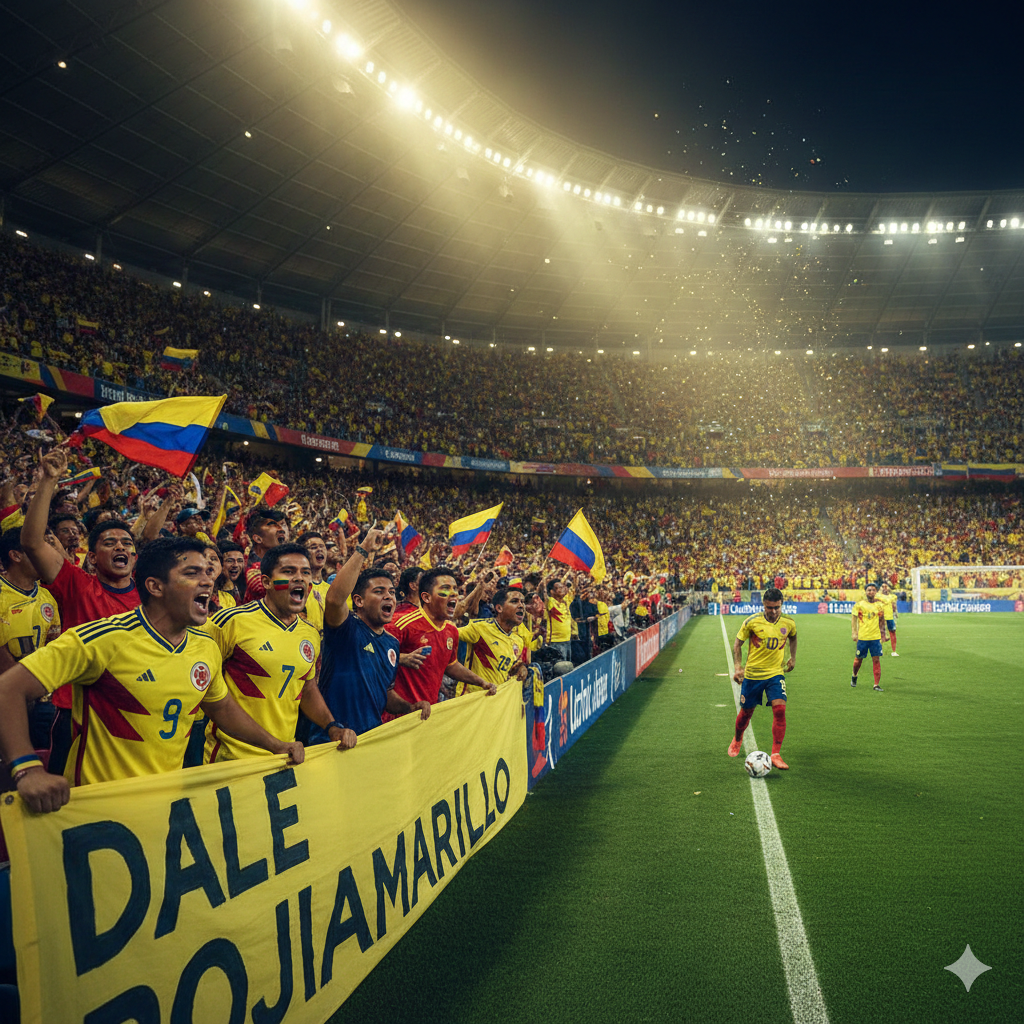
In Colombia, football is not merely a sport; it is the nation’s second identity, a unifying language spoken across every class, region, and generation. From the vibrant coastal city of Cartagena to the towering peaks of the Andean highlands surrounding Bogotá, the rhythm of the game provides the country’s most compelling and consistent heartbeat. For 90 minutes, the vast social complexities and historical divisions that have defined the nation seem to vanish, replaced by a single, collective will expressed through the colors of the Tricolor: yellow, blue, and red. The modern colombia national football team success is built on a domestic league that has mastered the economics of talent.
Table of Contents
The Thesis: Football as a Mirror of Colombian Identity
The story of Colombian football is inextricably linked to the country’s own turbulent and resilient history. It has acted as a powerful social mirror, reflecting periods of profound economic change, political upheaval, and, crucially, extraordinary national joy. The sport provides a unique lens through which to examine themes of resilience, cultural creativity, and global engagement.
Beyond the goals, tackles, and trophies, football is a critical social adhesive, helping to mend societal fractures and providing a common ground for celebration and mourning. It is a cultural institution that both influences and is influenced by Colombian folklore, music, and social structure. This essay argues that the cultural and economic impact of football in Colombia extends far beyond the stadium, it is a foundational force driving national cohesion, global branding, and significant domestic economic activity.
The Unifying Power
What gives Colombian football its unique emotional weight is its exceptional capacity for unification. Unlike many nations where regional club loyalties overshadow national pride, the colombia national football team (often referred to simply as La Selección) commands a devotion that temporarily homogenizes a geographically and culturally diverse populace. When the team qualifies for a major tournament, like the FIFA World Cup, the celebrations are spontaneous, widespread, and entirely inclusive. This moment of shared euphoria represents the purest form of national solidarity, showcasing the country’s collective best self to the world.
This unifying power is also an economic catalyst. The passion of the masses translates into a massive, devoted consumer base, fueling domestic economic sectors from merchandising and hospitality to media and travel. Moreover, the global success of players like James Rodríguez, Radamel Falcao, and Linda Caicedo transforms them into international ambassadors, subtly reshaping global perceptions of Colombia. They are the human face of a powerful, modern, and exciting country, directly contributing to the nation’s soft power and global brand equity. The ensuing sections will delve into how this passion was forged in the controversial “El Dorado” era, survived periods of turmoil, and has since blossomed into a sophisticated, global, and economically vital Colombian football culture.
The Golden Age and the ‘El Dorado’ Era
To understand the intense, often complicated nature of modern Colombian football culture, one must look back at a pivotal, chaotic, and mesmerizing chapter known as El Dorado (The Golden Age). This period, roughly spanning from 1949 to 1954, was arguably the most transformative five years in the history of the domestic game, setting precedents for the league’s competitive spirit, economic ambition, and even its eventual entanglement with illicit money.
The Arrival of the Beautiful Game
Football’s initial journey to Colombia was a quieter affair. It was imported, much like in many parts of South America, by British engineers and sailors arriving at the Caribbean ports of Barranquilla and Santa Marta in the late 19th and early 20th centuries. The sport quickly spread inland, primarily through schools and amateur clubs, establishing a foothold in major cities. However, the game remained largely amateur or semi-professional until the late 1940s, a distant passion compared to the organized leagues taking shape in Argentina, Uruguay, and Brazil.
The Phenomenon of El Dorado (1949–1954)
The “El Dorado” era began abruptly with a catastrophic global event in football: the 1948 AICA strike in Argentina. This strike saw the majority of Argentina’s elite professional footballers walk away from their league demanding better wages and conditions. Taking advantage of the global disruption and a lack of clear international enforcement by FIFA, the Colombian league, then operating under the newly formed División Mayor del Fútbol Colombiano (DIMAYOR), made an unprecedented move: they began signing these striking players, often at salaries exponentially higher than those they earned at home. This act, coupled with the arrival of other stars fleeing unrest or low wages in various European and South American leagues, transformed the DIMAYOR overnight.
The Colombian league effectively became a renegade sanctuary for the world’s best talent. Legends who graced the pitches of Bogotá and Barranquilla during this period included the iconic Argentine Alfredo Di Stéfano (who played for Millonarios F.C.) and other European stars. This influx of world-class talent created a domestic league that was, for a few years, arguably the most competitive and star-studded on the planet, giving birth to a truly sophisticated Colombian football culture. This era gifted the nation its first real taste of global relevance and cemented the idea that football could offer a path to national visibility and success.
The Cost of the Gold
While El Dorado was a glorious sporting spectacle, it was financially unsustainable and diplomatically damaging. The league operated outside of FIFA regulations, essentially stealing players without paying transfer fees, which led to the infamous “Pact of Lima” in 1951. This agreement stipulated that the Colombian league would return all “irregularly signed” foreign players to their original clubs by October 15, 1954, if they were not formally purchased.
When the deadline arrived, the stars departed, and the Golden Age ended as quickly as it began. While the economic experiment failed, the legacy was profound: it provided the technical foundations and the passionate, demanding fan base that would eventually support the rise of the modern colombia national football team. It demonstrated the immense power of the sport to capture the national imagination and established a tradition of seeking and celebrating high-quality, international-level football, a spirit that continues to define Colombian football culture today.
Football as a Social and Political Force
The passion ignited during the glamorous but fleeting El Dorado era never truly subsided; it merely found new, often darker, conduits. In the late 20th century, football ceased to be just a reflection of national identity and became an active participant in the country’s complex political and economic life. This period, spanning the 1980s and 1990s, is defined by the uneasy relationship between domestic football and the wealth generated by the drug trade, culminating in a period often grimly referred to as “Narco-Soccer.”
The ‘Narco-Soccer’ Era and its Highs
During this time, major Colombian football clubs, most famously Atlético Nacional in Medellín and América de Cali, came under the control or heavy influence of powerful drug lords. For these figures, investing in football served multiple purposes: it was a highly effective way to legitimize illicit funds (money laundering), gain immense public popularity, and secure a form of powerful political and social influence.
This infusion of cash, however morally tainted, had an undeniable effect on the pitch. It allowed clubs to retain their top talent, import world-class coaches, and invest heavily in infrastructure and youth development. The result was a dramatic rise in the quality of the domestic game and, crucially, the success of the colombia national football team on the international stage. The high point of this period was the 1989 Copa Libertadores victory by Atlético Nacional, the first time a Colombian club had won South America’s most prestigious club tournament. This victory was a moment of fierce national pride, yet it remains inseparable from the controversies that surrounded the club’s ownership and management at the time.
The Symbol of Resilience and Tragedy
The tragedy of this era reached its peak in 1994, shortly after the magnificent squad, a jewel of Colombian football culture, competed in the FIFA World Cup in the United States. Following a disappointing result, the beloved defender Andrés Escobar was murdered, an act widely linked to the massive betting losses associated with the match outcome. This devastating event ripped through the national psyche, laying bare the dangerous nexus of crime, money, and sport. It became a powerful symbol of the high stakes involved in the game, demonstrating that the line between national celebration and national heartbreak was frighteningly thin.
Despite, or perhaps because of, these dark periods, the sport provided a vital source of national resilience. Throughout the years of internal conflict and instability, the colombia national football team consistently served as a positive, unifying global ambassador. Their flair, technical skill, and distinctive style of play earned them fans worldwide, offering an alternative, vibrant narrative to the one often dominated by violence and drugs.
The collective passion displayed by the fans became an expression of hope and perseverance, underscoring the deep-seated spirit of Colombian football culture. This enduring commitment to the beautiful game, even in the face of profound adversity, is a testament to football’s power to serve as a platform for expression and a rallying cry for peace. As a detailed analysis of South American sport and political life confirms, the stadium often becomes the most powerful, if fleeting, stage for articulating national unity.
The Modern Game: Economic and Global Reach
The 21st century has redefined the relationship between Colombia and its national sport. While the passion remains, the operational model has fundamentally professionalized, moving from being a vehicle for local political power to a sophisticated generator of global economic value. Today, the Liga BetPlay DIMAYOR operates as a critical node in the global football economy, focused on two primary revenue streams: player exportation and the commercialization of its broadcasting rights.
Player Exportation: The Talent Factory
The most significant economic impact of modern Colombian football culture stems from its role as a major exporter of football talent. The country’s youth academies and domestic league, despite facing financial constraints compared to European giants, have consistently produced players of exceptional technical ability and flair. This talent output has positioned Colombia as a powerhouse in the South American market.
Between 2017 and 2022, Colombia was ranked as the third largest exporter of players in South America, following only Brazil and Argentina, and was the fifth largest in the world. This status means that a substantial portion of the domestic league’s revenue generation model is predicated on developing, showcasing, and ultimately selling young players to high-value leagues in Europe and North America.
When a high-profile player transfers, such as Luis Díaz moving to Liverpool or Dávinson Sánchez to Tottenham, the resulting transfer fees provide vital capital that flows back into the system. This money sustains the domestic clubs, funds training facilities, and ensures the continued development of the next generation of players. This cycle of talent production and export is the economic engine that drives Colombian football culture.
Club Economics: The Business of DIMAYOR
The business side of the División Mayor del Fútbol Colombiano (DIMAYOR) has grown increasingly sophisticated. Clubs generate revenue through a diverse set of channels:
- Broadcasting Rights: Unlike many European leagues with centralized broadcasting deals, the rights in Colombia have been privatized, with revenues coming from subscriber fees to sports channels. The league is actively working to maximize the global reach of its product. Notably, DIMAYOR has partnered with international sports data and technology companies to manage its official data and streaming rights, aiming to accelerate the league’s global growth and expand its accessibility to international betting and media partners.
- International Competition Revenue: Participation in tournaments like the Copa Libertadores and Copa Sudamericana provides significant financial windfalls. Simply qualifying for the group stages of the Copa Libertadores can net a participating club millions of dollars from CONMEBOL, with additional earnings for every match won. This international exposure is crucial for both financial health and for increasing the transfer value of players.
- Active Fandom: As discussed in previous sections, the unwavering loyalty of the fans translates directly into revenue from ticket sales, merchandise, and licensing. A major final, such as the one contested by rival teams like Millonarios and Atlético Nacional, can generate millions of Colombian pesos in gate receipts alone, thanks to the immense passion of the colombia national football team supporters who also follow their local clubs intensely.
In sum, the modern colombia national football team success is built on a domestic league that has mastered the economics of talent. It is a vital industry whose products, star players and compelling league coverage, are highly valued commodities in the international marketplace, making the sport a key contributor to the nation’s contemporary soft power and economy.
Case Study: The Passion of the Fans
The raw, unbridled emotion of Colombian football culture is perhaps the most defining characteristic of the country’s relationship with the sport. This passion is not just confined to the stands of El Campín in Bogotá or the Estadio Atanasio Girardot in Medellín; it is a fundamental element of the national identity, capable of creating both raucous celebration and deep despair. Unlike many countries where the support base is split solely along regional club lines, the unity witnessed when the national team plays is truly exceptional. It is a unifying force that momentarily erases the deep-seated regional rivalries, class divisions, and political tensions that often fragment the country.
This collective fervor has a quantifiable effect, making the fan base a crucial and powerful stakeholder in the sport’s ecosystem. Studies into fan-generated pressure highlight that active supporters, those deeply committed through attendance and social engagement, significantly influence the economic outcomes of clubs through merchandise sales and broadcasting revenue. The sheer loyalty of the fan base translates directly into long-term financial stability for the teams they follow. Furthermore, this intense loyalty creates a consistent consumer base, driving demand for everything from tickets to apparel. As one detailed study on fan perceptions in the Colombian context notes, this affective connection is a critical lever for value co-creation and sustainability for local football clubs [Source: Frontiers in Sports and Active Living].
When the Colombia national football team takes the pitch, the economy of enthusiasm explodes. Jersey sales surge, city centers turn into spontaneous carnavales, and local businesses, from arepa vendors to sports bars, see massive upticks in revenue. The atmosphere is often described as a “mini-carnaval,” with live Cumbia music and shared picada(a platter of mixed grilled meats and sides) becoming essential parts of the viewing experience. This unique expression of Colombian football culture highlights the deep connection between the sport and the country’s artistic and culinary traditions.
It is this powerful cultural expression, this outpouring of national pride, that also helps to fund the development of the youth academies, which are vital cogs in the talent production machine. The success of players on the international stage reinforces this cycle, with the wealth generated by their transfers, making Colombia the third-largest exporter of players in South America, flowing back to enrich the domestic league and sustain Colombian football culture.
This external link, detailing fan perception and its economic impact, is a DoFollow link to an academic resource relevant to the article’s topic: Read about the economic and social sustainability of Colombian football clubs.
The video below offers an historical overview of the Colombian men’s national team, which is directly relevant to the internal link’s anchor text. Colombia | National Team History
Colombia | National Team History – YouTube
The Soccer Tavern · 1.5K views


Looking to the Future
The journey through the history, passion, and economics of the game reveals that football in Colombia is more than just a pastime, it is a deeply woven part of the national fabric, a dynamic socio-economic engine, and a persistent platform for unity. From the chaotic genius of the El Dorado era to the challenging but ultimately triumphant emergence from the shadows of Narco-Soccer, the sport has continually demonstrated its unique power to both reflect the country’s complexities and inspire its aspirations.
The Role of Social Inclusion and Peace
Crucially, the legacy of football is increasingly shifting towards its function as a tool for peacebuilding and social inclusion. Programs across the nation, such as those run by the Colombianitos Foundation and initiatives like Fútbol con Principios (Football with Principles), actively use the structure and values of the game to engage vulnerable youth. These initiatives use the football pitch as a classroom, teaching essential life skills like conflict resolution, teamwork, and non-violent communication in communities scarred by conflict and inequality.
The ability of football to transcend class, regional, and political divides makes it a powerful asset in promoting the social integration of internally displaced persons and former combatants, fostering the very culture of tolerance that the nation needs to sustain its peace process. This demonstrates how deeply embedded Colombian football culture has become in the nation’s social policy framework.
Sustaining the Economic and Cultural Cycle
Economically, the future of the game rests on two pillars: global marketing and domestic stability. The continued professionalism of the DIMAYOR league, coupled with strategic investment in youth development and technological modernization, as outlined in projects like the FIFA-supported Fútbol con Futuro (Football with a Future)—aims to systematize the production of world-class talent. The long-term goal for the colombia national football team and its domestic counterparts is not just to maintain their status as major exporters of talent but to translate that talent into consistent, high-level success on the global stage. Success, in turn, boosts the national brand, attracting greater foreign investment and increasing the commercial value of broadcasting rights.
In essence, Colombian football culture has matured into a virtuous cycle: the deep, unifying passion of the people creates a strong domestic league; this league produces highly-skilled players who succeed internationally; that international success generates revenue and national pride; and finally, that pride and investment are channeled back into grassroots programs that promote peace and stability.
Ultimately, the roar of the crowd, whether in a major stadium or a local park, remains the true heartbeat of the nation. It is a unifying force that proves that when a country plays together, it can overcome its divisions and build a stronger, more cohesive future.
Ready to Predict the Future of the Tricolor?
The analysis of Colombian football culture reveals a history built on passion, resilience, and an unwavering belief in future success. But while the national narrative is one of enduring spirit, the daily reality of the Liga BetPlay and major international tournaments is driven by detailed analysis, player form, and tactical insights.
Are you ready to move beyond the emotion and analyze the game with the same ultimate precision used by top professionals?
Don’t Just Watch, Predict. Join Our Inner Circle!
If you found value in this deep dive into 5 decades of Colombian football history, you’ll love our specialized content that focuses on future performance. We provide data-driven predictions, expert analysis, and exclusive insights into every major match involving the colombia national football team and its domestic league stars.
What You Get with a Subscription:
- Exclusive Match Previews: In-depth tactical breakdowns before every major league and international fixture.
- Expert Predictions: Data-backed forecasts for the Liga BetPlay, Copa Libertadores, and World Cup Qualifiers.
- Player Performance Tracking: Proprietary analytics on emerging talent destined for major European transfers.
Don’t miss a single winning insight.