
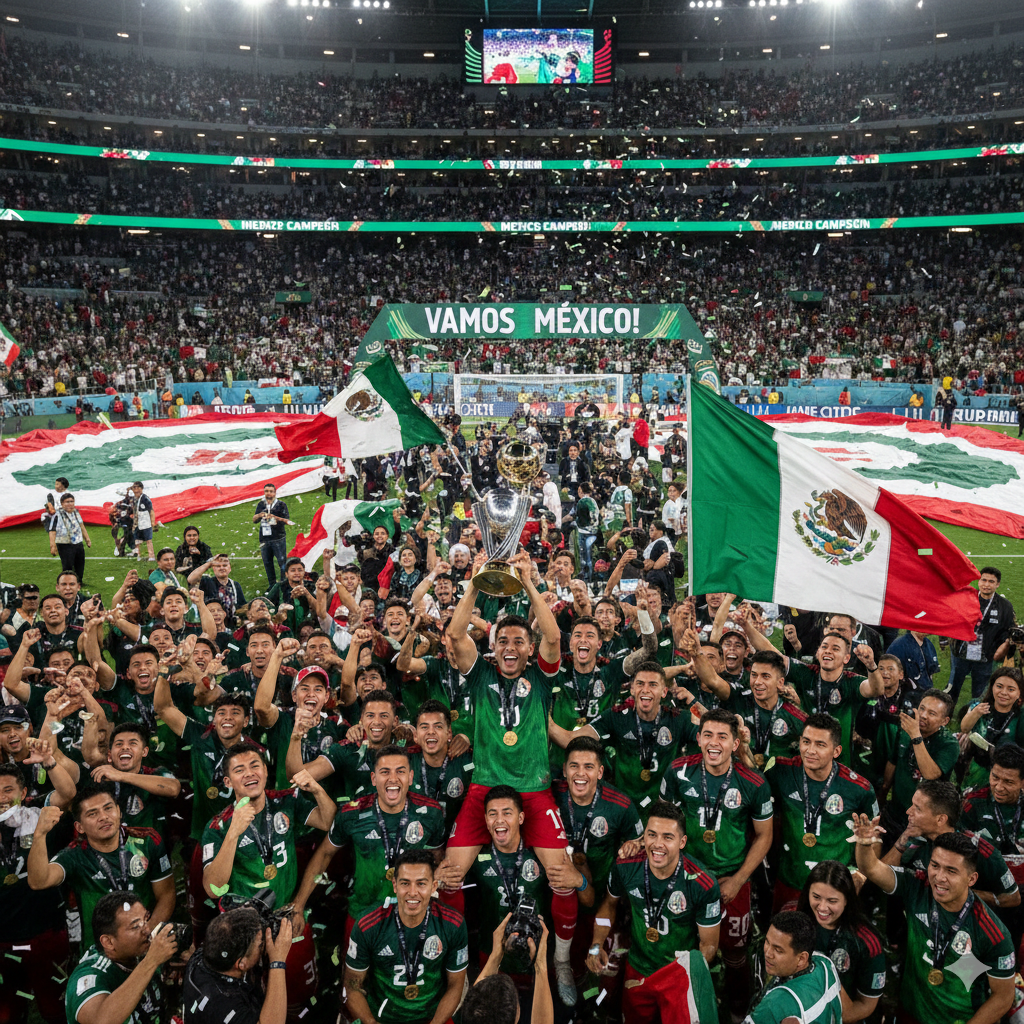
For many nations, football (or soccer) is merely a sport; a Sunday distraction or a tournament bracket to follow. But in Mexico, the game is a fundamental thread woven into the fabric of national identity, a passionate religion celebrated in the streets and across generations. The moment the national team, affectionately known as El Tri, takes the pitch, a wave of green, white, and red washes over the country, from the capital’s historic plazas to the farthest reaches of the diaspora. It is a spectacle defined by both dazzling skill and heart-wrenching frustration, a cycle that has cemented its place as a true Mexico soccer dynasty in the CONCACAF region and a perennial dark horse on the world stage.
This guide is an in-depth exploration of the sport that commands a nation’s soul. We will journey through the fascinating early history of Mexican football, dissect the legendary World Cup moments and the pervasive “Curse of the Fifth Match,” and honor the iconic players who have elevated the global standing of El Tri. From the fierce rivalries of Liga MX to the tactical evolution of the national squad and the soaring anticipation for the co-hosted 2026 World Cup, prepare to dive deep into the culture and competition that makes mexico soccer one of the world’s most compelling sports stories.
Table of Contents
The Genesis of the Green Tide (History)
The story of Mexican football is not merely a tale of goals and matches; it is a captivating historical account of cultural transmission and adaptation. Unlike many South American nations where the sport arrived directly via British ports in major cities, Mexico’s introduction to the beautiful game was somewhat unique, tied closely to industrial development and foreign investment at the turn of the 20th century.
Early Beginnings: The Role of European Migrants
The foundations of Mexican football were laid primarily by European immigrants, particularly the British. While sailors introduced the game to coastal cities, the sport truly took root in the central state of Hidalgo. Here, in the city of Pachuca, British miners—specifically those hailing from Cornwall—arrived to work the rich silver deposits. These miners brought with them more than just their engineering expertise; they brought their sporting passion.
The Pachuca Athletic Club, often cited as the oldest existing football club in Mexico, was formally established around 1901. It was founded by these Cornish immigrants who needed a way to recreate their life back home. This British influence, combined with Spanish and French industrial interest, rapidly popularized the sport over the established traditional games like pelota mixteca. By 1902, the Liga Mexicana de Football Amateur Association, the precursor to Liga MX, was established, signaling the official beginning of organized competition.
The First World Cup and the Path to Professionalism
The transition from an amateur pastime to a national obsession was solidified by two major events: the establishment of professional leagues and the country’s early entry onto the world stage.
In 1927, the Federación Mexicana de Fútbol Asociación (FMF) was founded, and just three years later, Mexico soccer was invited to participate in the inaugural 1930 FIFA World Cup in Uruguay. Despite suffering three consecutive losses, including a 4-1 defeat to France in the opening game of the entire tournament—the sheer act of participation proved to be a pivotal moment. It placed El Tri on the global map and ignited domestic pride and interest in international competition. This early participation, despite the results, reinforced that mexico soccer was destined to be a permanent fixture in the global sports landscape.
The amateur era officially ended in 1943 with the launch of the professional Liga Mayor, the direct predecessor to Liga MX. This professionalization brought stability, formalized contracts, and allowed clubs to invest heavily in talent, leading to the rise of the first generation of true Mexican football stars. Teams like Guadalajara (Chivas) and Club América began their storied histories, building the massive rivalries that would define the domestic game for the next century.
The ‘Ya Mereció’ Era: Regional Powerhouse Status
The mid-20th century was defined by a steady, grinding effort to achieve regional dominance. For decades, the national team was constantly striving for a major international breakthrough, a feeling captured by the popular phrase, “Ya mereció” (It’s about time / It is deserved).
Mexico soccer struggled to consistently qualify for the World Cup throughout the 1930s and 40s, and when they did, they often fell victim to heavy defeats. However, by the 1960s, the nation’s commitment to the sport began to yield results. Mexico started to assert its authority in the CONCACAF region, establishing a pattern of regional control that continues to this day. They became the primary force in the CONCACAF Championship (now the Gold Cup), winning titles and developing a reputation for tactical discipline and defensive tenacity.
This regional supremacy was a crucial step. It proved that organized, professional mexico soccer could consistently compete and win on a continental scale, generating the momentum and confidence needed to host the world’s most prestigious tournament and enter its own Golden Age.
The Golden Age and Iconic Eras
The 1970s and 1980s represent a watershed moment for mexico soccer. This period not only saw El Tri achieve its best-ever international results but also witnessed the profound cultural fusion of the game with the nation’s soul. These two decades established the identity of the Mexican national team as a flamboyant, passionate, and sometimes tragically flawed force on the world stage.
Hosting the World: 1970 and 1986
The greatest successes for the national team have always occurred on home turf. Mexico achieved the rare distinction of becoming the first country to host the FIFA World Cup twice, staging the tournaments in 1970 and 1986.
The 1970 World Cup was an event of technological and cultural firsts: the first tournament broadcast in color worldwide, and an event that launched the infamous “Mexican Wave.” For the national team, it marked their debut in the knockout stage, where they reached the quarter-finals before losing to eventual runners-up Italy. More significantly, it was a showcase for Pelé and the legendary Brazil side, who cemented the Estadio Azteca as a cathedral of world football.
The 1986 World Cup returned to Mexico when Colombia withdrew as host. El Tri, led by stars like Hugo Sánchez, delivered an equally historic performance. They again advanced to the quarter-finals, defeating Bulgaria 2-0 in the Round of 16 thanks to Manuel Negrete’s famous bicycle kick goal. Their tournament ended in a heartbreaking penalty shootout loss to West Germany, but reaching the quarter-finals remains the benchmark for Mexican achievement in the competition. These two tournaments provided the iconic moments that fans still chase today.
Copa América and CONCACAF Dominance
While the World Cup defined the passion for Mexican football, regional tournaments established its dominance. Mexico is the undisputed heavyweight of North and Central American football.
In the Confederation of North, Central America and Caribbean Association Football (CONCACAF), Mexico holds the record for the most titles in the premier regional tournament. Since the competition was rebranded as the Gold Cup in 1991, El Tri has lifted the trophy multiple times, underscoring their superiority and consistency against their regional rivals. This regular success has established a powerful reputation, providing the team with continental swagger.
Furthermore, Mexico’s participation as an invited guest in the Copa América, South America’s prestigious championship, has frequently demonstrated their quality against top-tier global opposition. They finished as runners-up in their first appearance in 1993, and again in 2001, proving that they could hold their own against giants like Brazil and Argentina. This dual success in continental play confirms El Tri‘s status as a consistent powerhouse. You can view the full history of their CONCACAF tournament records on the official CONCACAF website.
The ‘Curse of the Fifth Match’
In stark contrast to their regional triumphs and historic home World Cup runs, an enduring source of anguish defines the modern era: The Curse of the Fifth Match (El Quinto Partido).
Since the 1994 World Cup, El Tri has consistently navigated the group stage but has been eliminated in the Round of 16—the fourth match of the tournament, in every single subsequent World Cup until 2022. This failure to reach the quarter-final (the elusive “fifth match”) has become a national obsession and a psychological hurdle. Whether it was the penalty shootout loss to Bulgaria in 1994, the extra-time defeat to Argentina in 2006, or the controversial last-minute loss to the Netherlands in 2014, the pattern of falling just short has haunted generations of players and coaches, creating a narrative of heartbreak that fuels the immense desire to break the cycle in 2026.
The Pantheon of Mexican Football Legends
The intensity and longevity of mexico soccer are ultimately defined by the heroes who have worn the green jersey and dominated the pitches of Liga MX and Europe. These legends have not only set records but have also defined the style, spirit, and global reputation of Mexican football, serving as benchmarks for every generation that follows.
The Goalkeeping Gods
Mexican football has an extraordinary tradition of producing world-class goalkeepers, often known for their acrobatic flair and dramatic saves.
- Antonio Carbajal (The Cinco Copas): Carbajal is a foundational figure. He was the first player in history to appear in five separate FIFA World Cups (1950 to 1966), a record that stood for decades. His presence between the posts for so long epitomized the early resilience and dedication of the national team.
- Guillermo Ochoa (Memo): A modern icon, Ochoa has inherited the mantle of the heroic goalkeeper. Known for his sensational performances on the biggest stages—particularly his legendary showing against Brazil in the 2014 World Cup, Ochoa is revered for his uncanny ability to perform miracles when El Tri needs them most, carrying the torch for the unique spirit of mexico soccer on the global stage.
Midfield Maestros
The engine room of El Tri has been anchored by leaders whose tactical intelligence and tireless work ethic set the tone for the entire squad.
- Rafael Márquez (The Kaiser): Arguably the greatest Mexican defender/midfielder of all time, Márquez’s career defined an era. His exceptional tenure at FC Barcelona, where he won multiple league titles and Champions League trophies, cemented his status as a world-elite player. Critically, Márquez shares Carbajal’s record of playing in five World Cups (2002 to 2018), always serving as a commanding presence and an essential captain.
- Andrés Guardado (The Eternal Captain): Guardado is the standard-bearer for longevity and loyalty. A versatile player who can command the left flank or the center midfield, he holds the record for the most appearances for the Mexican national team, a testament to his consistent quality and enduring importance across different generations of El Tri squads. Guardado’s remarkable career showcases commitment at the highest level. You can see the official international statistics for Guardado and other El Tri players on the FIFA website.
Strikers and Goalscorers
The history of Mexican football is also illuminated by brilliant goalscorers, players who brought flair and clinical finishing to the attack.
- Hugo Sánchez (The European Pioneer): Before Márquez, there was Sánchez. He is perhaps the most revolutionary Mexican player, known for his spectacular overhead kicks and sheer scoring power. His five-season run at Real Madrid in the 1980s was legendary, culminating in the Pichichi Trophy (top scorer) four consecutive times and winning the European Golden Boot in 1990. Sánchez proved that Mexican talent could not only compete but could dominate the most demanding leagues in Europe.
- Javier ‘Chicharito’ Hernández: Chicharito became the face of El Tri in the 2010s. Known for his electric pace and opportunistic finishing, he was a key striker for clubs like Manchester United and Real Madrid. He holds the record as the Mexican national team’s all-time top goalscorer, often delivering crucial goals in World Cup qualifying and tournament matches, making him a beloved figure whose intensity matched the passion of the fans.
These players, spanning six decades of competition, are the spiritual core of the national team, providing both inspiration and a concrete legacy for the new generation of stars to build upon.
The heart of mexico soccer beats loudest and most consistently within its domestic league: Liga MX. Unlike the singular, season-long format of most major European leagues, the Mexican system is a complex, fast-paced tournament structure that ensures maximum drama and keeps the championship race fiercely competitive year-round. Understanding Liga MX is essential to grasping the constant cycle of pressure and triumph that shapes the national team players.
The Structure: Apertura, Clausura, and the Liguilla
The Liga MX season is split into two independent tournaments within a single calendar year:
- Apertura (Opening): Runs from July to December.
- Clausura (Closing): Runs from January to May.
Each tournament features the 18 clubs playing each other just once in a 17-match regular season. The key to the excitement is the Liguilla (little league or playoffs). At the end of the regular season phase of either the Apertura or the Clausura, the top teams advance to a dramatic knockout stage:
- The top six teams qualify directly for the Liguilla Quarterfinals.
- Teams ranked 7th through 10th compete in a Play-In round to claim the final two spots.
This playoff system means two champions are crowned annually, guaranteeing multiple high-stakes finals and sustaining an intense atmosphere that rarely allows for a quiet season. This structure, which culminates in a sudden-death knockout, trains players for the intense pressure of the World Cup elimination matches.
The Giants: The Big Four
The history of Mexican professional football has been dominated by a select group of clubs known as the Cuatro Grandes (The Big Four). These teams command the largest fan bases, have the most historical titles, and maintain the league’s highest profile.
- Club América (Mexico City): Historically the most successful club, often representing wealth, power, and the establishment. They are the team everyone else loves to hate, symbolized by their unofficial slogan: “Ódiame Más” (Hate Me More).
- Chivas de Guadalajara (Guadalajara): The fierce rivals of América, Chivas are unique globally as they enforce a strict policy of fielding only Mexican-born players. They symbolize nationalism and tradition, making them the equipo del pueblo (the people’s team).
- Cruz Azul (Mexico City): Known as La Máquina (The Machine), this club traditionally represents the working class and enjoys a passionate following that spans the entire country.
- Pumas UNAM (Mexico City): Backed by the National Autonomous University of Mexico, Pumas are recognized for their strong youth academy and are often associated with academic and middle-class fans.
While clubs from the north like Tigres UANL and Monterrey have risen to prominence in recent years, the Big Four continue to set the narrative and fuel the essential rivalries of the league.
The Clásico Nacional:
No discussion of Liga MX is complete without highlighting the most intense rivalry in Mexican sports: El Súper Clásico or Clásico Nacional between Club América and Chivas.
This derby transcends sport, pitting two vastly different philosophies against each other. It is the clash of the capital’s wealth (América, with its international stars and major media ownership) against the nation’s traditional, all-Mexican identity (Chivas, the proud club of Guadalajara). When these two teams meet, the nation stops. The game is a proxy battle for Mexican identity, urban versus regional, glitz versus grit, and establishment versus nationalism, making it one of the most culturally significant derbies in all of world football. The passion in these contests is a direct, localized reflection of the intense national spirit that surrounds mexico soccer.
The New Generation: Current Stars and Future Prospects
While the legends of the past set the standard, the continued competitive edge of mexico soccer relies entirely on the quality and ambition of its current crop of players. The modern generation is characterized by a drive to prove themselves in Europe’s most demanding leagues, pushing the national team’s talent ceiling higher than ever before.
Current European Talent: The Vanguard of El Tri
A successful Mexican national team depends heavily on its “European Legion”, those players who have left the comfort of Liga MX to compete daily against the world’s best.
- Edson Álvarez (The Machín): Currently one of the most respected defensive midfielders in the world, Álvarez is the undisputed midfield anchor for El Tri. After a successful spell in the Netherlands, his move to the English Premier League confirmed his status as a relentless ball-winner and vital defensive shield. His presence gives the team a solid platform from which to attack.
- Santiago Giménez (Santi): The powerful center-forward represents the future of the Mexican attack. Having rapidly established himself as a prolific goalscorer in Europe, Giménez is the heir apparent to the likes of Chicharito. His combination of size, aggression, and clinical finishing makes him the focal point of the team’s attack.
- Hirving ‘Chucky’ Lozano: Known for his electric pace and direct attacking play, Lozano has long been a key source of creativity and goals for the national team. His success in Italy with Napoli proved his ability to deliver at the top level, and he remains a constant threat on the wing.
Other key players like Johan Vásquez (defender) and César Montes (defender) also ply their trade in major European leagues, ensuring that the spine of the national team is forged in high-pressure, world-class environments.
The U-23 Pipeline and Strategic Importance
The long-term health of mexico soccer is secured by the impressive output of its youth system, which focuses on developing players capable of managing major international tournaments.
Mexico has a storied history of success at the U-17 and U-23 levels, including winning the FIFA U-17 World Cup multiple times and achieving Olympic glory. The pinnacle of this development was the Gold Medal victory at the 2012 London Olympics, a feat that launched the careers of many current senior national team members, including Héctor Herrera and Raúl Jiménez. More recently, the team secured a Bronze Medal at the 2020 Tokyo Olympics, reinforcing the consistency of the youth structure.
This consistent success is no accident. Liga MX clubs invest heavily in their fuerzas básicas (youth academies), and the Mexican Football Federation (FMF) has a strategic focus on identifying talent early, even within Mexican communities in the United States. This commitment to the youth pipeline is a critical strategy for guaranteeing a continuous stream of competitive talent. This emphasis on mexico soccer‘s developmental framework is key to breaking the “Fifth Match Curse” in the future by ensuring the squad is deep, talented, and tactically modern.
Tactics and Managerial Philosophies
The strategic direction of El Tri is subject to constant public scrutiny and pressure. Unlike the stability often seen in European national teams, the Mexican managerial position is notoriously volatile, often changing hands every World Cup cycle, sometimes even mid-cycle. This constant turnover reflects the immense national expectations placed on the team to not just qualify, but to break the elusive Round of 16 barrier.
From Tuca to the Present: The Evolution of Coaching Styles
Historically, Mexican national team managers have faced a tug-of-war between two main approaches: embracing a dynamic, offensive style (al ataque) that matches the flair of Mexican players, or adopting a more cautious, pragmatic approach designed specifically for tournament survival.
Managers like Ricardo “Tuca” Ferretti, known for his long, successful tenures in Liga MX, brought a focus on defensive organization and discipline, prioritizing results over spectacle during his interim stints. In contrast, foreign managers, particularly those from Argentina or Colombia, have often been hired to instill a more international, modern tactical philosophy, emphasizing high pressing and quick transitions. However, the tenure is rarely long, as the intense media and fan pressure can derail even the most promising projects after a handful of poor results.
The Preferred Formation: The Flexible 4-3-3
Despite the managerial instability, El Tri often defaults to formations that maximize its strengths on the wing. The 4-3-3 formation has become a staple. This structure allows the team to utilize its quick, technically gifted wingers (like Lozano) and encourages the fullbacks to push high up the pitch, generating width and crosses.
The mexico soccer formation relies heavily on an intelligent central midfield trio (often anchored by a player like Edson Álvarez) to provide both defensive cover and a platform for possession-based attacks. When faced with superior opposition, however, managers often switch to a more conservative 5-3-2, using five defenders to solidify the defense and relying on quick counter-attacks, particularly in tournaments like the World Cup.
The Fan Factor: The Crucial Relationship
The Mexican national team manager must manage more than just the players; they must manage the relationship with the famously demanding and passionate fan base. The fans often demand the jogo bonito (beautiful game), but the high-stakes reality of qualification means many coaches are pragmatic. This conflict, the desire for beautiful football versus the need for pragmatic winning, is the source of much of the volatility, but it also underscores the deep, emotional connection between the country and mexico soccer.
The Global Stage: Major Tournaments and Head-to-Head Rivalries
For mexico soccer, success is often measured on two distinct fronts: absolute dominance in its own region (CONCACAF) and proving its competitive mettle against the giants of South America. These twin pursuits, regional supremacy and global validation, fuel the team’s year-round schedule of competitive matches.
The Clásico de la CONCACAF:
The most intense and defining rivalry for El Tri is undoubtedly the Mexico–United States soccer rivalry. Known as the Clásico de la CONCACAF, this fixture is more than a game; it is a battle for regional identity and bragging rights.
Historically, Mexico dominated the rivalry for decades, holding a substantial advantage until the 1990s. However, the American victory in the Round of 16 at the 2002 World Cup, the famous “Dos a Cero” (2–0) scoreline, marked a dramatic shift. Since the turn of the century, the competition has been fiercely contested and often sees the US take the upper hand in competitive matches, particularly those played on American soil. This rivalry is characterized by immense crowd passion, deep psychological warfare, and often a clash of playing styles, making every encounter a must-watch event. This border rivalry is widely considered one of the most important and emotional in all of international football.
Continental Competitions: The Role in Copa América
To test themselves beyond their regional peers, Mexico has regularly participated as a guest nation in the Copa América, South America’s major championship. This invitation, extended by CONMEBOL, is a testament to the high competitive regard in which Mexican football is held.
Mexico soccer has used the Copa América as a vital proving ground, often showcasing impressive performances against world-class opposition like Brazil, Argentina, and Uruguay. El Tri is the most successful invited nation in the history of the tournament, having reached the final twice (in 1993 and 2001) and secured third place on three other occasions. Although they have yet to lift the trophy, their frequent success in navigating groups and reaching the semi-final stages confirms their place as a top-tier team in the Western Hemisphere. You can read more about the historic rivalry with the USA and Mexico’s overall record on this in-depth international sports analysis page.
The Commercial and Cultural Impact
The passion for mexico soccer is an economic and cultural force that stretches far beyond the borders of Mexico itself. The national team, El Tri, is consistently ranked among the most valuable sports brands in the Americas, transforming patriotic fervor into a massive commercial operation.
Sponsorship and Global Reach: The Power of the Brand
The Mexican Football Federation (FMF) has leveraged the mexico soccer team’s enormous following into lucrative sponsorship deals and high-value media rights contracts. The collective market value of the national team and the top Liga MX clubs ensures significant financial muscle. Media rights for El Tri are highly sought after, particularly in the United States, where there is a massive and highly engaged audience. This commercial success allows the federation to invest in better training infrastructure, youth development programs, and top-tier managerial talent, fueling the entire football ecosystem.
The mexico soccer jersey itself is one of the top-selling national team kits globally, confirming the vast consumer base that follows the team. This financial strength provides a stable platform, ensuring that El Tri can afford to be a perennial competitor on the world stage, even when sporting results are inconsistent.
The Diaspora’s Role: A Unifying Force
Perhaps the most unique and commercially powerful aspect of mexico soccer is its relationship with the vast Mexican diaspora, particularly in the United States. The Mexican national team is often considered the most popular soccer team in the U.S., regardless of nationality.
This massive fanbase is not just passive; it is active and highly visible. The Mex Tour, a series of friendly matches played by El Tri across major U.S. cities, regularly draws sellout crowds of 50,000+ fans, often making these “home away from home” matches more profitable than games played in Mexico. For millions of Mexican-Americans and first-generation immigrants, supporting El Tri is a vital cultural link to their heritage, a proud and loud expression of identity.
This enthusiastic support creates a vibrant, binational football culture. The power of mexico soccer lies in its ability to serve as a cultural bridge, connecting generations and geographies, and unifying a global community under the banner of green, white, and red.
The Road to 2026: Expectations and Challenges
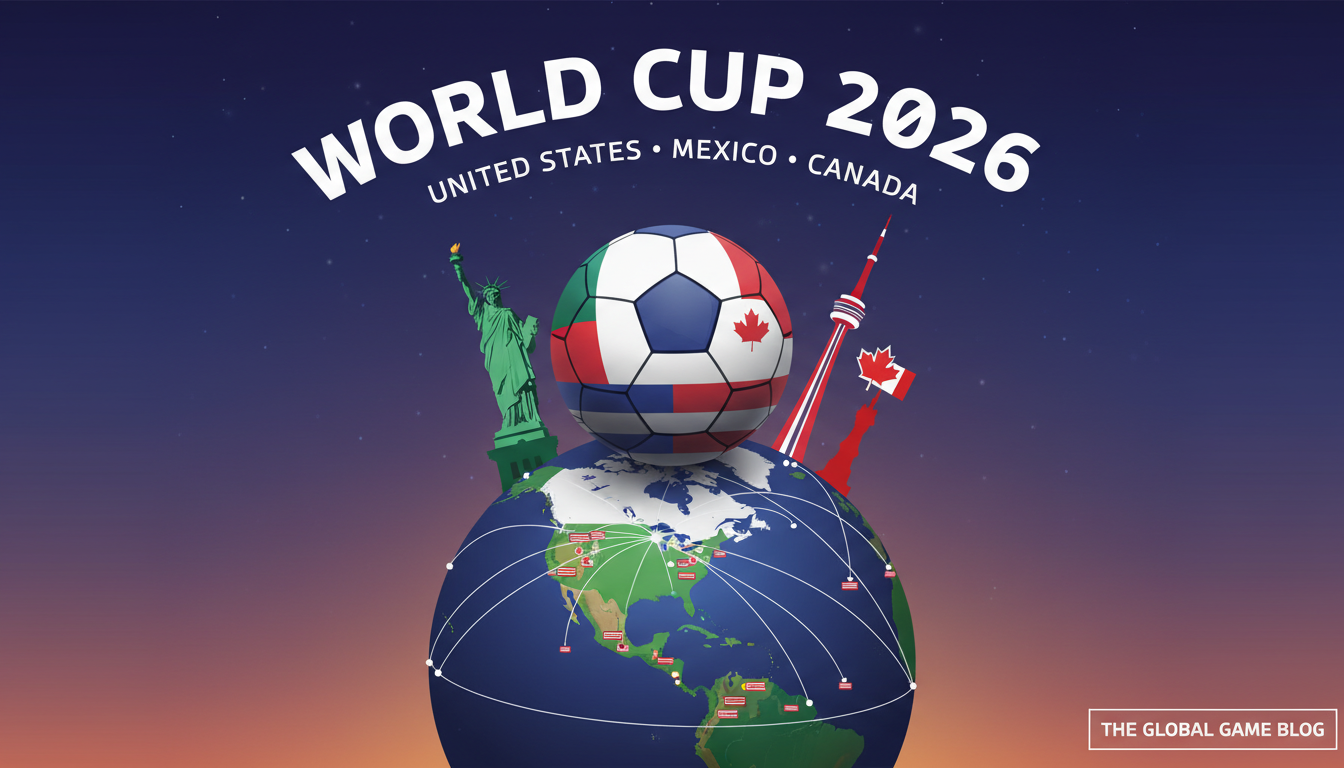
With the 2026 FIFA World Cup scheduled to be co-hosted by mexico soccer, the United States, and Canada, El Tri faces a period of unprecedented opportunity and crushing pressure. The tournament represents a chance for the national team to finally break the psychological barriers that have plagued them for decades, but playing host brings its own unique set of difficulties.
Co-Hosting the World Cup: The Unprecedented Opportunity
The significance of co-hosting is enormous. For the third time, mexico soccer will stage World Cup matches, including games in the historic Estadio Azteca. Playing at home provides an incredible boost in atmosphere, support, and familiarity. This advantage is seen by many as the best opportunity in a generation for El Tri to not only reach the elusive Quinto Partido(Fifth Match) but to potentially advance even further into the later stages of the tournament. The home support will be a powerful, almost tangible, force behind the squad.
Pressure and Preparation: The Qualification Challenge
The primary challenge facing the mexico soccer team is related to their guaranteed entry. As co-hosts, Mexico automatically qualifies for the 2026 World Cup. While this avoids the stress of the grueling CONCACAF qualifiers, it creates a unique problem: a lack of consistent, high-stakes competitive matches in the four years leading up to the tournament.
Managers must strategically utilize international friendlies and regional tournaments like the Gold Cup and Copa América to simulate the intensity of the World Cup. The pressure is immense, not merely to perform well, but to manage the long preparation period effectively and arrive at the tournament in peak competitive form. The entire footballing infrastructure, from the Liga MX schedule to the national team training camps, must be aligned to ensure that the squad is ready to face the world—and finally satisfy the nation’s deepest footballing desire.
Conclusion: More Than Just a Game
From the British miners of Pachuca to the global stars lighting up European leagues, the journey of mexico soccer is a rich tapestry woven with resilience, passion, and unparalleled drama. It is a story of national identity played out on the pitch, a collective narrative of breathtaking highs in regional championships and agonizing lows in the global knockout stages.
We have explored the structural intensity of Liga MX, celebrated the iconic legacy of players like Hugo Sánchez and Rafael Márquez, and acknowledged the immense commercial and cultural power of El Tri across the diaspora. All of these threads lead to one destination: the 2026 World Cup.
The enduring power of mexico soccer is its ability to unite an entire nation, transforming every match into a national holiday and every result into a collective emotional experience. The curse of the Fifth Match is a scar, but the opportunity ahead is a promise. As the national team prepares to host the world for a third time, the hope is not just for a victory, but for a new chapter of sporting history that finally matches the scale of the nation’s passion. The story of mexico soccer is far from over, it is simply waiting for its next, greatest climax.